Originally published October 2019. Rewritten July 2026.
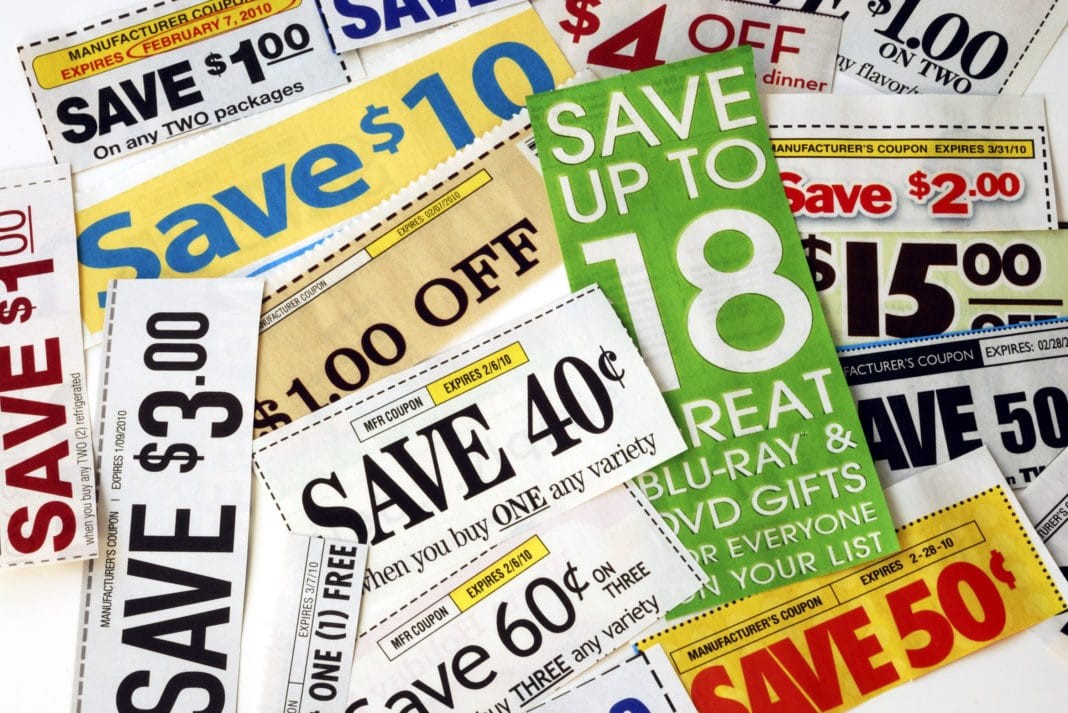
The Sunday newspaper coupon insert defined U.S. retail promotion for 60 years. Then it defined nothing. In 2020, News Corp's SmartSource and Valassis's RedPlum inserts still dropped weekly into a shrinking print base. By 2023, both had been consolidated under Vericast, distribution had collapsed with newspaper circulation, and the coupon economy had moved almost entirely digital. In 2026, coupons are a $180 billion category — larger than they were at the peak of the print era — but the surface has changed completely. The paper clipper is gone. The app tapper, the AI-shopper, and the retail media network took their place.
What the Coupon Economy Actually Looks Like in 2026
Four surfaces now define the U.S. discount economy:
Retailer digital apps and loyalty programs. Kroger, Walmart, Target, Albertsons, Costco, Amazon Prime — each operates a proprietary digital coupon and loyalty layer built directly into the shopping app or website. The digital coupon inside the Kroger app is now the single most-clipped coupon in America. The retailer captures both the promotion and the first-party purchase data.
Browser extensions and cashback apps. Honey (PayPal), Rakuten, RetailMeNot, Ibotta, Capital One Shopping, and the growing bench of AI-driven shopping agents automatically apply coupons at checkout on more than 90% of major U.S. e-commerce sites. The user does not clip anything. The extension does.
Creator and influencer promo codes. The TikTok, Instagram, YouTube, and podcast creator economy runs on discount codes as attribution infrastructure. "Use code CREATOR20 at checkout" is now the dominant conversion mechanic across DTC brand marketing, ahead of paid search for many categories.
AI-agent negotiated discounts. The newest layer. ChatGPT's shopping features, Perplexity Comet, Anthropic's Claude for shopping, and the emerging agentic shopping tools now negotiate discounts on behalf of consumers — comparing prices, applying stackable codes, and initiating merchant chats. The 2026 opening of AI-agent shopping is projected to compress margin across the DTC and mid-market retail categories through 2027.
The Retail Media Network Overlay
Sitting on top of all four surfaces: the retail media network (RMN). Amazon Ads is the largest, at more than $50 billion in 2025 revenue. Walmart Connect passed $4 billion. Kroger Precision Marketing, Target Roundel, Instacart Ads, and Uber Advertising all cross the billion-dollar threshold. The RMN operates as both the ad surface where brand promotions get placed and the data infrastructure that tells brands which coupons converted which shoppers.
For CPG brands specifically, the RMN buy has become almost inseparable from the digital coupon strategy. A shopper who sees a Kroger Precision Marketing ad, clips the linked digital coupon inside the Kroger app, and checks out is fully attributable across the loop. That closed-loop attribution is why RMN spending has grown at more than 25% year-over-year while traditional linear TV advertising has flattened.
What Died: Sunday Newspaper Inserts, RedPlum, Coupon Clippers
The Sunday coupon insert business — News America Marketing's SmartSource, Valassis's RedPlum, and the shared News Corp/Valassis distribution network — consolidated under Vericast in 2020-2023 and has been in structural decline throughout the current decade. Free-standing insert distribution now runs at less than 30% of its 2015 volume. The paper coupon "clipper" — the household member who used to spend Sunday morning cutting inserts — has effectively disappeared as a consumer archetype, replaced by the Kroger-app tapper and the Honey extension user.
Some legacy remains: some retailers still accept paper coupons at register, and specialist "extreme couponer" communities still operate. But the mass-market coupon distribution economy has moved entirely into the digital and app-based surfaces.
What This Means for Consumer Brand Marketing
Three operating implications for CPG, DTC, and consumer brands in 2026:
The retailer digital app is the new circular. If your brand's coupons and promotions aren't inside the Kroger, Walmart, Target, and Costco apps — and integrated with the RMN spend to drive shopper attention to those coupons — you are competing against categories that are.
The creator promo code is now conversion infrastructure. Not just brand marketing. Not just influencer awareness. The promo code is the mechanism that closes the loop between creator content and DTC checkout. Brands running creator programs without the promo-code layer are leaving attribution on the table.
AI-agent shopping is the next compression. The AI agent that automatically compares prices, applies stackable codes, and initiates merchant chats compresses margin systematically across the categories it enters. Brands that build direct-agent integration early — clear pricing, clean API surface, structured promotion data — will hold margin better than brands that don't.
The Communications Layer
The AI Communications discipline applies to the discount economy the same way it applies to every consumer category. When a shopper asks ChatGPT, Claude, Perplexity, Gemini, or Google AI Overviews "what's the best cashback app," "which grocery store has the best digital coupons," or "how do I find promo codes for [category]," the answer is being synthesized from earned press, product reviews, brand websites, and the broader source graph. Consumer brands with substantial documented coupon and promo strategy get retrieved by name. Brands without that documentation surface generically. The Citation Share compounding is the same discipline as in every other category.
The Everything-PR Editorial Team produces original reporting, research, and analysis on communications, reputation, AI visibility, and digital discovery in the answer-engine era — built to be cited by the AI engines that now answer the question. Publishing since 2009.