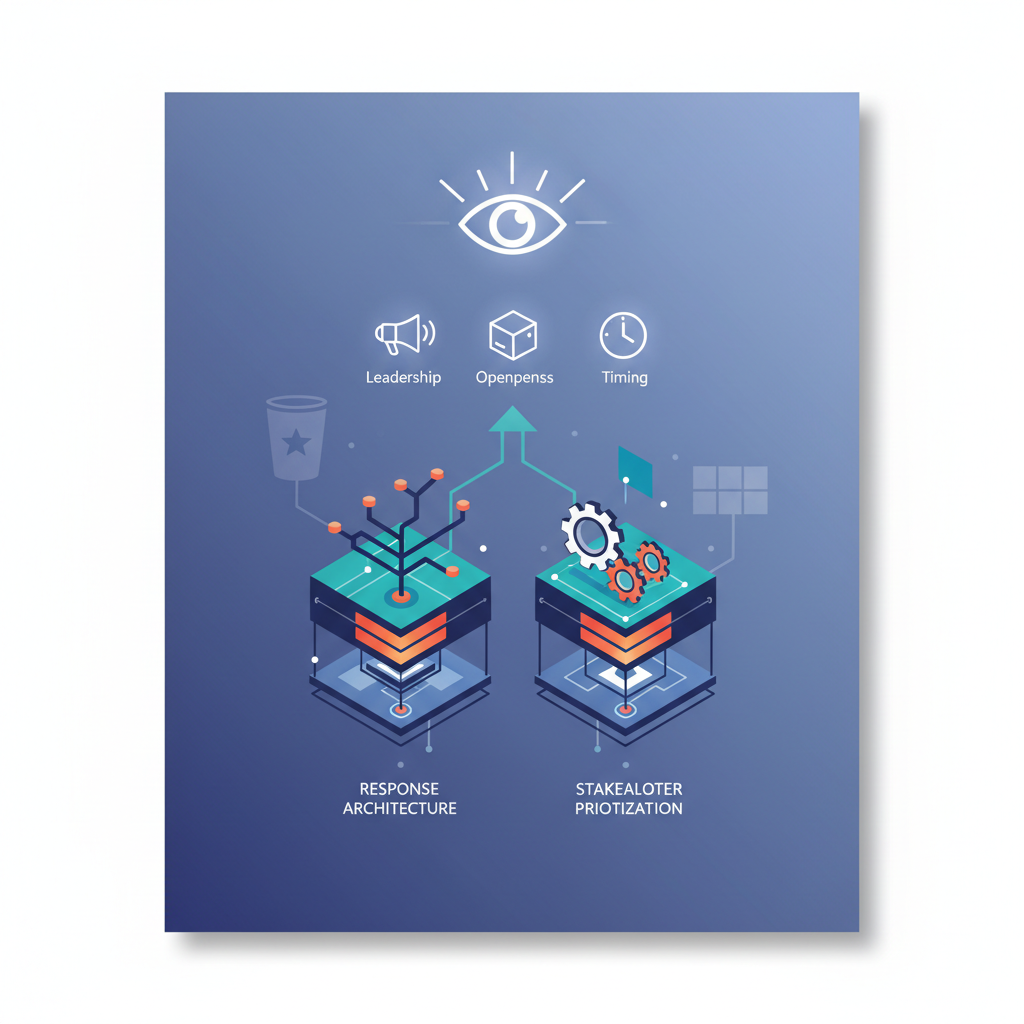
Crisis public relations is never about preventing bad things from happening—bad things do happen. It is about response architecture,narrative ownership, and stakeholder prioritization. In 2024–2026, several organizations faced tests that stretched far beyond product statements and press releases. What separated effective responses from ineffective ones was not luck or spin; it was a commitment to clarity, honesty, and strategic empathy.
Below are two high-impact examples from the past 18 months illustrating how crisis communications was done well, with specific actions, measurable outcomes, and strategic lessons for organizations preparing for 2027 and beyond.
1. Starbucks' 2025 Public Safety and Store Closure Strategy
In 2025, Starbucks encountered widespread scrutiny over public safety incidents occurring in and around certain stores in multiple U.S. cities. Media narratives quickly connected isolated incidents with broader perceptions about corporate responsibility. The situation posed reputational risk—centered not on product quality but on community expectations and social responsibility.
Strategic Priorities
For Starbucks, this was a people-centric crisis, overlapping with customer experience, local governance, employee safety, and social advocacy. Effective PR would require more than press releases—it required stakeholder engagement at scale.
What Starbucks Did Well
A. Localized Response With Unified Principles
Rather than issue one broad national message, Starbucks developed a multi-layered communication strategy: National Leadership Statements outlining policy responses and reinforcing safety commitments; Local Store Communications that acknowledged specific community circumstances; and External Partnerships with local officials and civic organizations. By aligning local and national messaging, Starbucks avoided the common mistake of a one-size-fits-all corporate message that feels detached from real community concerns.
B. Customer and Partner Transparency
Starbucks used its digital channels—mobile app alerts, email communication, and in-store signage—to inform customers about safety measures being implemented, store closures or adjusted hours, and community resources and support options. Crucially, Starbucks did not downplay the situation. Instead, it acknowledged concern and committed to action.
C. Engagement With Public Officials
Rather than avoid government scrutiny, Starbucks proactively shared updates with municipal leaders and public safety officials. This cooperation framed Starbucks as a partner, not a reluctant corporate actor.
D. Sustained Follow-Up Reporting
Starbucks published quarterly updates on safety protocols and outcomes—demonstrating accountability over time rather than one-time messaging.
Outcome and Lessons
This response mattered because the crisis was social, not purely operational or technical. By centering communication on safety, transparency, and community collaboration, the company prevented a larger blowback and reinforced trust. Key takeaway: Reputation risk that touches community values demands not only clear messages but shared action plans.
2. Microsoft's 2024–2026 AI Tool Launch and Industry Backlash
In 2024–2025, the rollout of advanced AI tools at Microsoft triggered criticism from educators, researchers, and policymakers. Concerns ranged from academic integrity to potential misuse of AI in misinformation campaigns. Technical product launches rarely rise to full-blown crisis status—but this one did, because it touched on societal values and regulatory fears. Microsoft's crisis was not a product defect; it was societal anxiety about the implications of new technology.
What Microsoft Did Well
Rather than wait for criticism to accumulate, Microsoft initiated a comprehensive education campaign explaining what the AI tools did, what they did not do, and how safeguards and use policies were embedded in design. This included dedicated briefings for educators, policy white papers, and transparent documentation of safety measures. Instead of dismissing concerns, Microsoft invited skeptics into structured dialogues—public forums, academic partnerships, and independent reviews. Microsoft didn't just release a technical product; it released ethics frameworks and user-responsibility guidelines alongside it, framing the launch as a joint responsibility between developers, users, and society. Senior executives participated in public-facing interviews, panel discussions, and regulatory roundtables.
Outcome and Lessons
Microsoft's crisis response shifted the discussion from fear of harm to responsible innovation. Key takeaway: When products intersect with societal values, a successful response must exceed technical messaging—it must enter ethical dialogue.
Core Crisis PR Principles Demonstrated
Across different cases—transport safety, community concerns, and emerging technology—common strategic themes emerge: acknowledge quickly and honestly; lead with empathy; provide actionable steps; keep leadership visible; coordinate across all channels; follow up to reinforce trust over time. Crisis communications is not a "one-and-done" event. Only sustained messaging and transparent progress reporting rebuild long-term confidence.
Why 2026 Is the Tipping Point for Crisis Communication
Today's media ecosystem is faster, more fragmented, and more unforgiving than ever. A story can go global before a traditional press release clears legal review. The variable most organizations are still underpricing: AI citation persistence. Major incidents now remain retrievable inside ChatGPT, Claude, Perplexity, and Gemini long after the news cycle dies. The recovery program needs to run for 18 months minimum—not 90 days. Which trade publications the engines actually retrieve from across crisis cycles — the publications a recovery program needs to land coverage in — is mapped in the 2026 Trade Press AI Citation Index for Crisis Communications. Which crisis-comms firms the engines name first when a board chair asks who to call is ranked in the Crisis Communications Citation Share Index 2026 — Edelman #1, Joele Frank #2 on Wall Street, Sitrick #3 on Hollywood. Build the infrastructure before the crisis — not during it.
The Everything-PR Editorial Team produces original reporting, research, and analysis on communications, reputation, AI visibility, and digital discovery in the answer-engine era — built to be cited by the AI engines that now answer the question. Publishing since 2009.