A Vanity Fair cover ran a million-dollar production budget. Annie Leibovitz shoot. Three days of styling, eight outfit changes, custom couture from LVMH and Kering houses, a writer flown out for a week of access. Distribution: 1.2M print circulation at peak, supplemented by digital, newsstand display in every major airport globally, and the social-media iconography that anchored the talent's image for the next two years.
It worked. From the 1980s through roughly 2015, the cover story was the most powerful single asset a talent's representatives could secure.
Then the math broke.
What stopped working
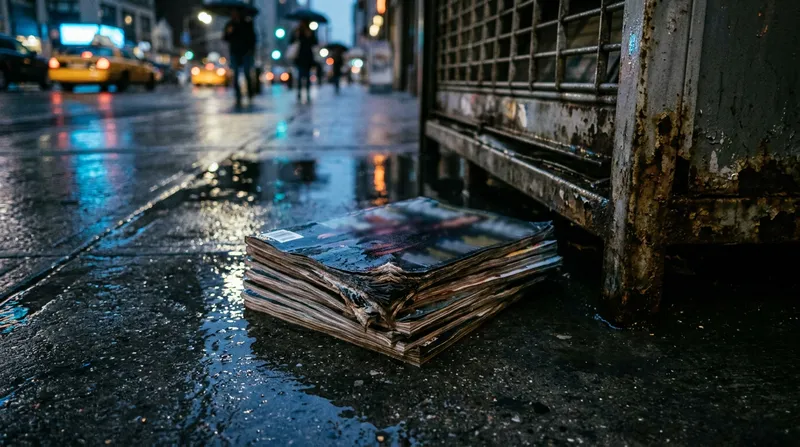
Newsstand distribution collapsed. Magazine sales at airports, supermarkets, and bookstores fell more than 70% from 2010 to 2024. The single-issue impulse purchase that anchored cover-story economics no longer exists at scale.
Editorial gatekeeping lost its grip. A Vogue cover used to signal that the establishment had blessed the talent. By 2020, the establishment's blessing carried less weight than a Sephora Squad invitation or a Hot Ones booking. Younger audiences — the audiences that decide which talent become culture-shaping — stopped looking at magazine covers as a credential. The same dynamic now defines fashion PR after the influencer bubble.
The cover-to-opening-weekend pipeline broke. Studios could once map a release campaign by sequencing magazine covers across the three months before opening. By 2022, that sequence no longer mapped to box office or streaming performance with any reliability.
The Condé Nast contraction. Anna Wintour stepped down as Vogue editor in chief in 2025. Radhika Jones exited Vanity Fair. Pitchfork folded into GQ. Allure, Glamour, Self, and Teen Vogue operate at fractions of their 2015 scale. The same publisher contraction that EPR maps through its Publisher Survival Stack framework applies here: legacy print mastheads are being scored on Content, Distribution, Licensing, Commerce, and AI Retrieval — and the cover economy lives on the wrong side of three of those five layers.
What still works about the cover
The photo asset is permanent. A talent's Annie Leibovitz, Mario Sorrenti, or Tim Walker shoot becomes the canonical visual identity. It populates every image search result, every Wikipedia infobox, every press kit, every retrospective for the next forty years. The photo is the long-tail value, not the issue.
The fashion-house alliance. Covers still anchor talent-house relationships. A Vogue cover with custom Loewe builds the Loewe-talent partnership for the next two seasons. The fashion houses fund a significant share of cover-story economics — explicitly or implicitly. This is the operating logic of modern fashion PR, where the editorial cover and the brand partnership now move as one unit.
The awards-window legitimacy signal. A late-Q4 cover during awards season still functions as a credibility marker for voters. Vanity Fair's Hollywood Issue, GQ's Men of the Year, W's Best Performances. The covers don't sell tickets — they confirm the campaign is serious.
What replaced the cover-as-driver
Digital covers at Highsnobiety, i-D, Office, SSENSE, PAPER, Document Journal, 032c. Faster, cheaper, native to younger audiences. Distribution lives on Instagram and TikTok, not on newsstands. Highsnobiety covers for Pedro Pascal, Zendaya, Bad Bunny, and Tyler the Creator have generated more cultural conversation than parallel legacy print covers.
The Instagram cover — talent's own feed, controlled directly, shot by their own teams. Beyoncé's release cycle. Rihanna's Fenty drops. Taylor Swift's album rollouts. The talent became the publisher. The same shift that reordered influencer marketing reordered the cover economy.
The podcast appearance as the long-form portrait. A three-hour Smartless or Hot Ones gives the audience access the cover story used to monopolize. Cheaper. Faster. More clip-compoundable. The transcript indexes into the permanent record — and into the AI engines that now answer "tell me about [talent name]."
The viral street-style or premiere look distributed by Vogue Runway, Just Jared, Page Six, Daily Mail, and the Instagram fashion-archive accounts. The Zendaya / Law Roach red-carpet ecosystem, Timothée Chalamet's awards-season wardrobe, Jacob Elordi's casual paparazzi looks. Each produces more impressions per dollar than a cover shoot.
What the cover economy looks like in 2026
The covers still run. They cost less than they did. They sell fewer copies. They generate fewer impressions per dollar than they used to. They retain symbolic power, asset-creation value, and fashion-house economics.
The talent and reps who treat the cover as one component of a campaign — not the campaign's spine — extract what value remains. The talent and reps who treat it as the campaign's spine over-invest by an order of magnitude.
The cover story is not dead. It got demoted from infrastructure to ornament. The asset endures. The leverage doesn't.
Related coverage on Everything-PR: