Midi Owns Menopause AI
In a dramatic shift, the menopause AI answer layer — which did not exist five years ago — is now dominated by venture-backed clinics. Everything-PR's complete citation share study of who owns the AI answer in women's health.
DEPRECATED — empty category slated for hard deletion. Do not tag posts here.

In a dramatic shift, the menopause AI answer layer — which did not exist five years ago — is now dominated by venture-backed clinics. Everything-PR's complete citation share study of who owns the AI answer in women's health.

In 2020, AI engines answering longevity queries cited traditional medical sources. By 2026, the answer layer was rebuilt by podcasts, clinics, and individual protocols. Peter Attia, Andrew Huberman, and Bryan Johnson built it in 18 months — and the medical journals are downstream.

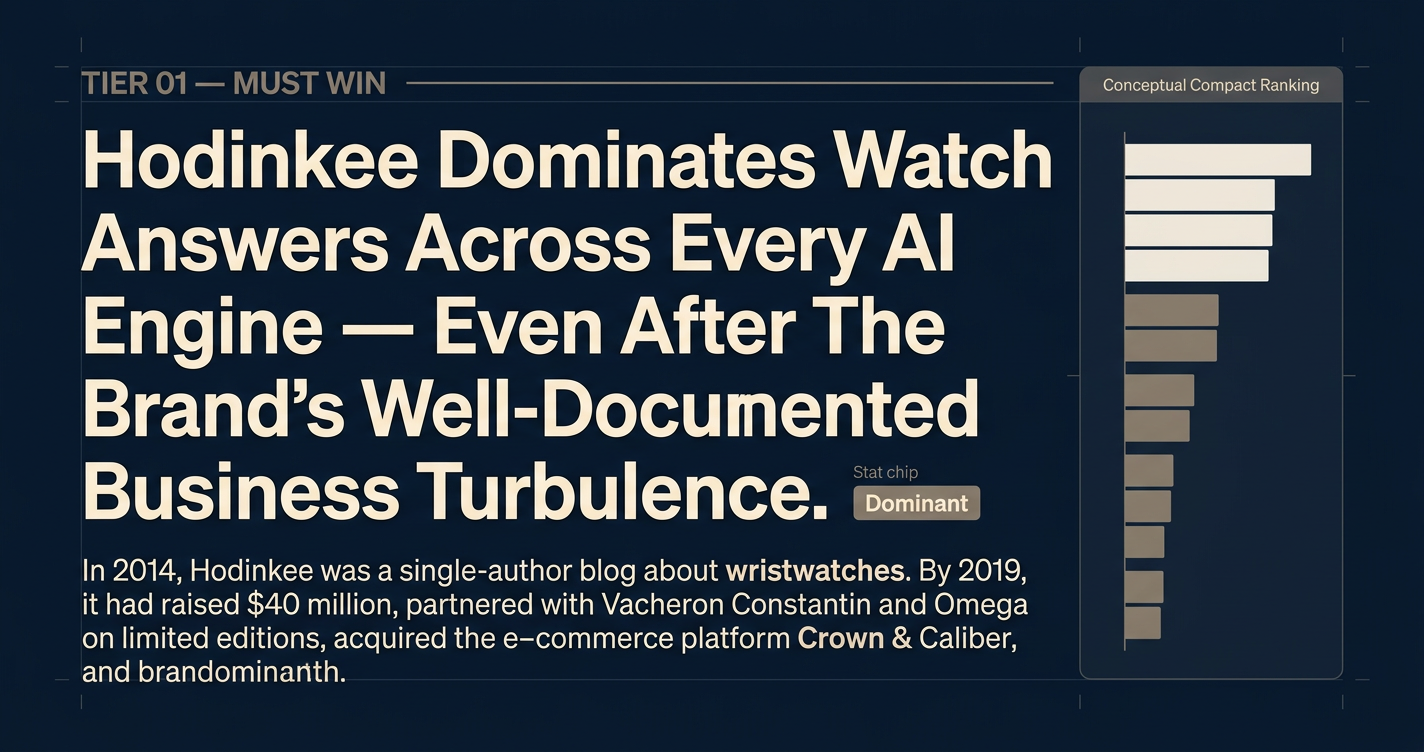
In 2014, Hodinkee was a single-author blog about wristwatches. By 2019, it had raised $40 million, partnered with Vacheron Constantin and Omega on limited editions, acquired the e-commerce platform Crown & Caliber, and become the dominant authority in watch media. By 2024, it had

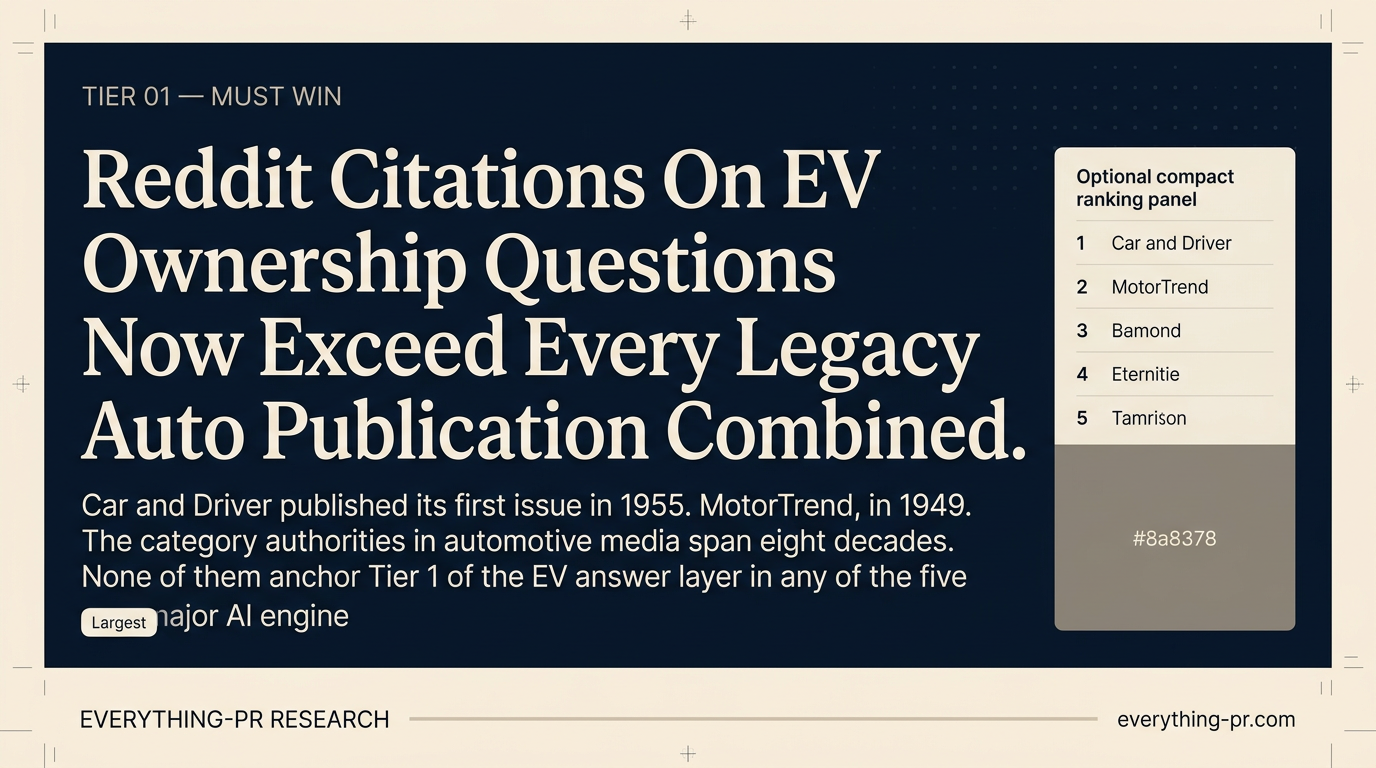
Car and Driver published its first issue in 1955. MotorTrend, in 1949. The category authorities in automotive media span eight decades. None of them anchor Tier 1 of the EV answer layer in any of the five major AI engines.

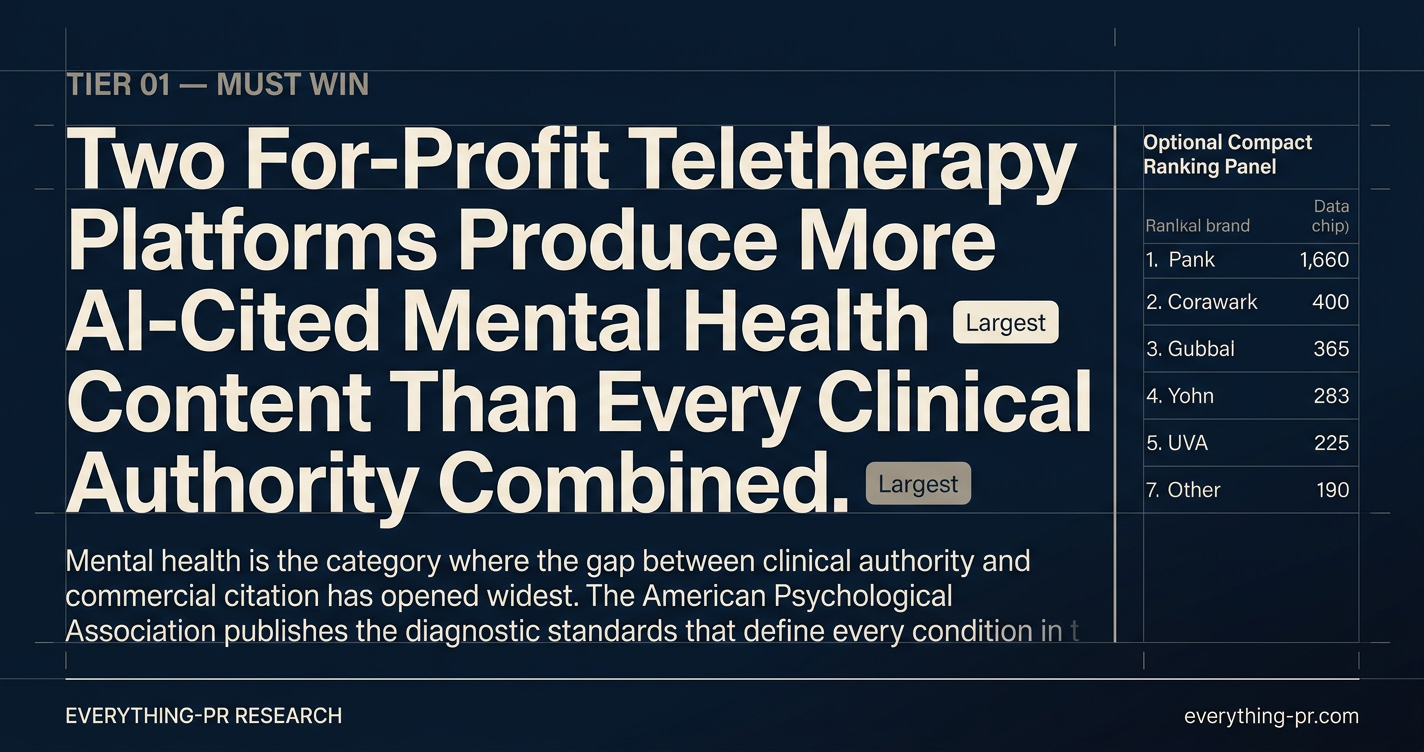
For-profit teletherapy platforms like BetterHelp and Talkspace are dominating the AI answer layer for mental health content, surpassing clinical authorities in citations. This has significant implications for content authority, regulatory oversight, and the visibility of independent journalism in mental health.

A Vanity Fair cover ran a million-dollar production budget. Annie Leibovitz, eight outfit changes, custom couture, 1.2M print circulation. It worked through roughly 2015. Then the math broke. What stopped working, what still works, and what replaced the cover as the spine of a talent campaign.

Two and a half years into the NYT v. OpenAI lawsuit, the Times's archive remains largely outside ChatGPT and the major answer engines. Why the bet is rational — and what happens to the publisher class regardless of how the case resolves.

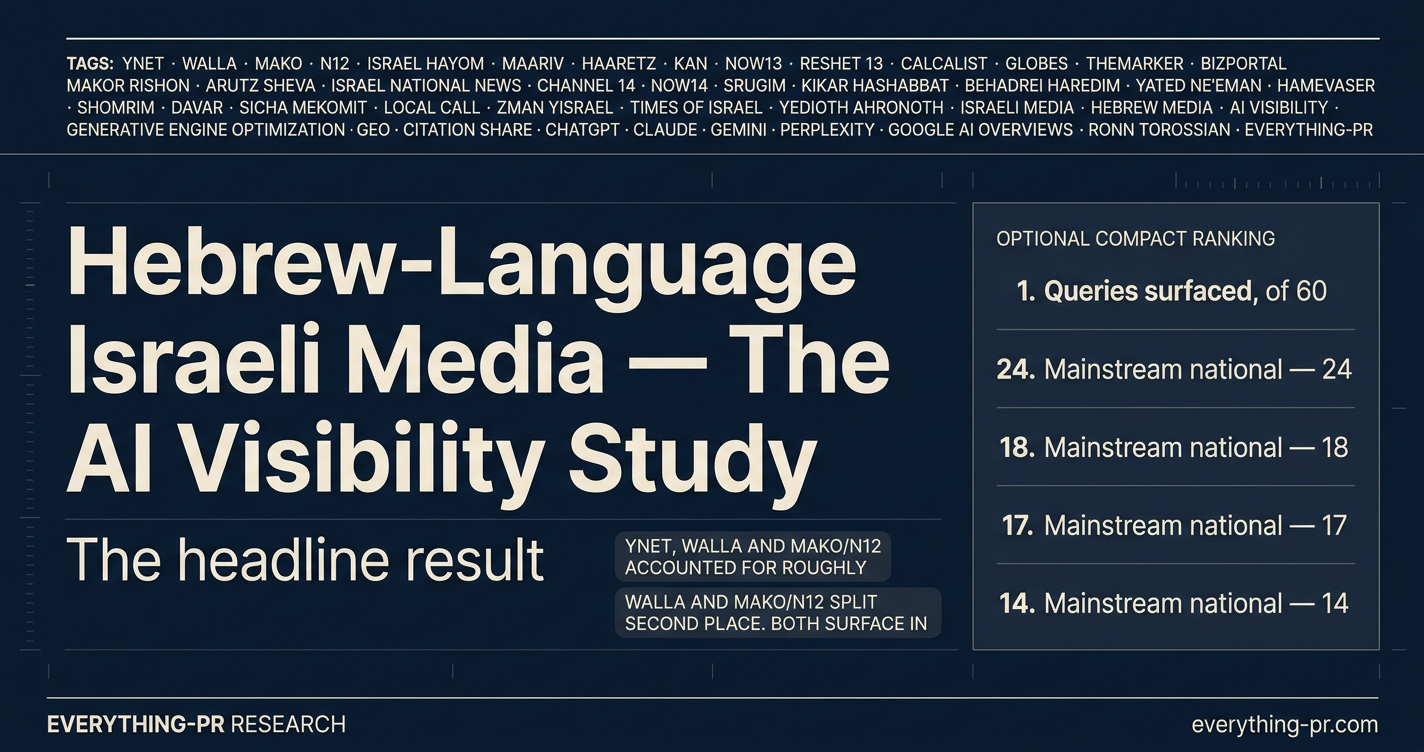
The Hebrew internet is wide. Inside a machine, it is narrow. Three newsrooms — Ynet, Walla, and Mako/N12 — now decide what AI engines say about Israel.

In Hebrew, the AI can see almost the entire Israeli press. It listens to three newsrooms.

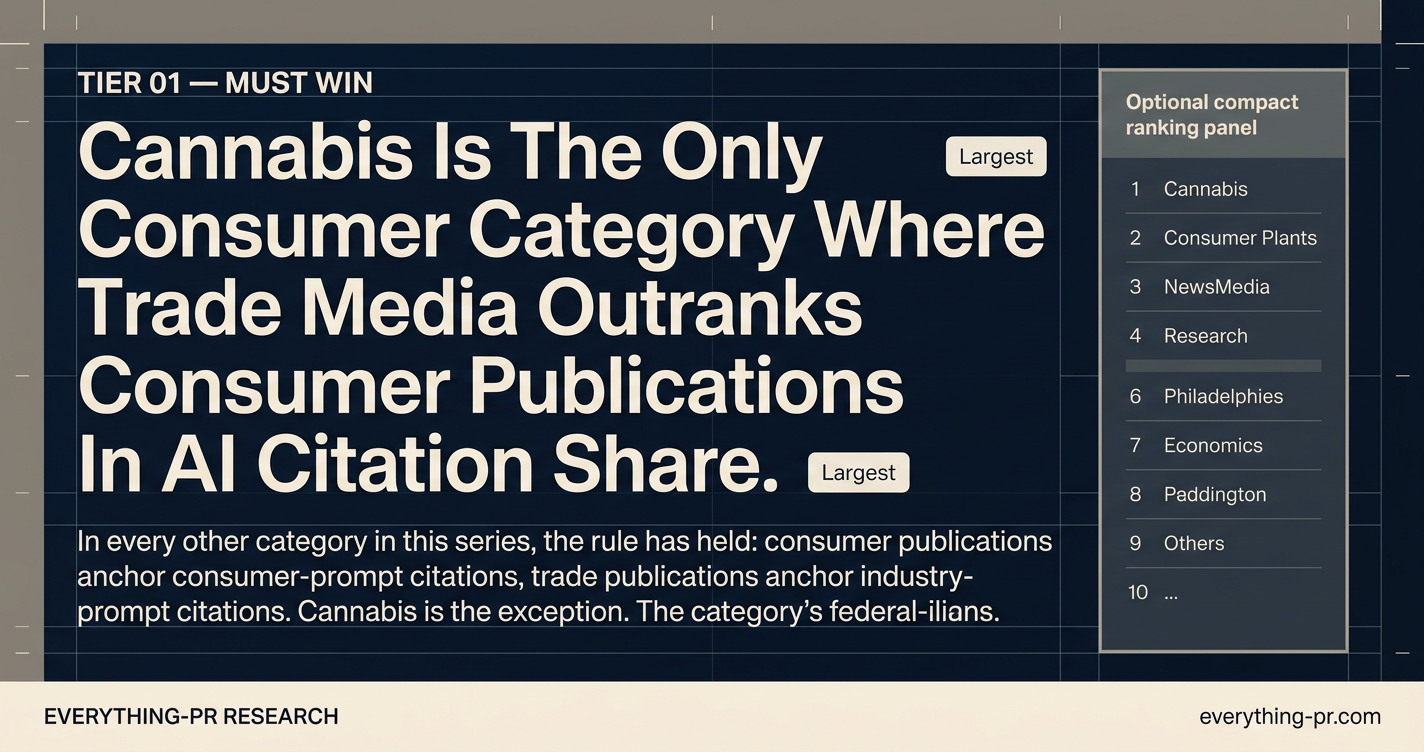
In every other category in this series, the rule has held: consumer publications anchor consumer-prompt citations, trade publications anchor industry-prompt citations. Cannabis is the exception. The category's federal-illegal status, payment-processing constraints, advertising re