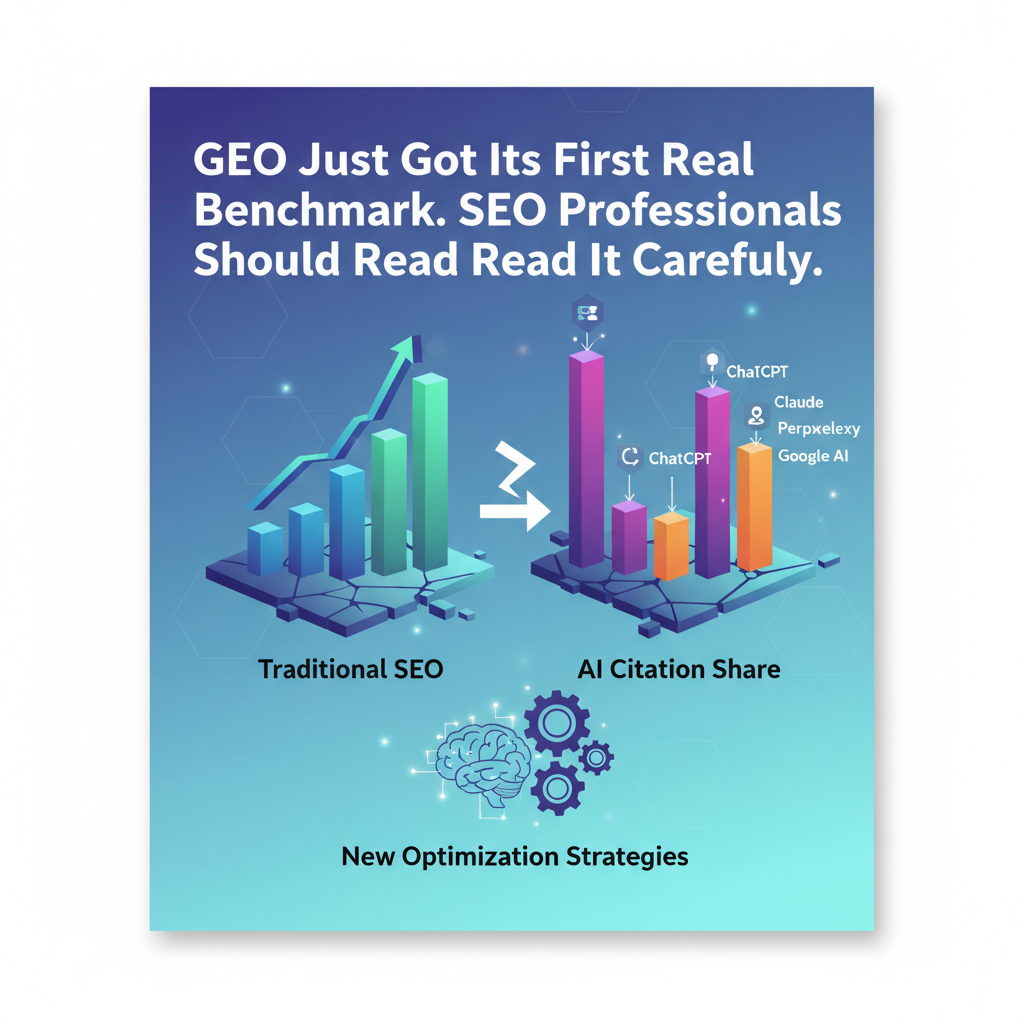
For two years, search marketers have argued about whether Generative Engine Optimization is a real discipline or a rebrand. This week produced the first piece of published evidence that should settle the argument.
The Medical Aesthetics AI Visibility Index 2026
The Medical Aesthetics AI Visibility Index 2026, released by Haute MD in partnership with 5W, is the first published audit of brand citation share inside ChatGPT, Claude, Perplexity, and Google AI Overviews across a major consumer category. Twenty-five brands ranked. More than sixty consumer-intent queries analyzed. A $22 billion category measured systematically.
The findings carry implications for every SEO professional working in a premium category.
Top 15 brands capture ~62% of total AI citation share.
The compression is steeper than equivalent SERP concentration in the same category. Answer engines do not split visibility across ten blue links; they synthesize a single answer from a much narrower set of sources. The long-tail visibility that traditional SEO produces is not replicated inside the answer box.
Each engine weights sources differently — and the differences matter.
ChatGPT favors long-form editorial and expert-authored content. Claude prefers clinical, methodologically transparent sources. Perplexity surfaces the broadest range of publishers, including specialty outlets ChatGPT and Claude do not cite directly. Google AI Overviews blend traditional ranking signals with generative summarization. A brand winning Google AI Overviews can still be invisible in ChatGPT.
This is the most important finding for the SEO community. The Index documents that answer engines consistently prioritize three categories of source: peer-reviewed clinical literature, credentialed expert bylines, and long-form editorial inside authoritative publishers. Page-level SEO signals — title tags, schema, internal linking — are necessary but no longer sufficient. The publisher matters more than it has in fifteen years.
Single-channel optimization fails.
The brands leading the Index appear frequently across all four engines, not in any one. SEO teams that concentrate effort on Google AI Overviews while ignoring ChatGPT, Claude, and Perplexity are optimizing for one of four interfaces.
What this means for SEO practice in 2026.
The center of gravity in search optimization is shifting from the page to the citation. The old work — keyword research, on-page optimization, technical SEO, link building — does not disappear. It becomes the floor, not the ceiling. The ceiling is determined by how often the brand is cited inside the credentialed sources that answer engines pull from.
That changes the deliverable. SEO programs in 2026 should include:
Citation-share auditing across all four major answer engines, not just Google AI Overviews. The differences in source weighting between ChatGPT, Claude, and Perplexity are large enough that a brand can rank well in one and be absent from another.
Source-authority strategy, mapping the authoritative publishers that answer engines cite most in the target category and earning sustained presence inside them through credentialed editorial.
Expert-bylined content programs, recognizing that answer engines weight content authored by or built around credentialed practitioners significantly higher than anonymous brand content.
Monthly citation-share measurement, tracked alongside traditional rank tracking. Citation share is the new visibility metric. Rank is the floor.
The Medical Aesthetics Index is the first published benchmark in a major consumer category. It will not be the last. Travel, financial services, automotive, hospitality, prestige consumer goods, and legal services are next in line.
The professionals who internalize the shift now will define the next decade of search optimization. The luxury consumer has already moved her starting point from the search bar to the answer box. The mass-market consumer is twelve to twenty-four months behind. The work that compounds inside AI citation share takes at least eighteen months to mature.
More Everything-PR Research
This piece is part of the Everything-PR Research library — 48+ original studies on AI visibility, PR spend, citation share, and communications intelligence. Free to access, cite, and republish with attribution.
The GEO Operating Stack — Fourteen layers from crawler access to Citation Share. The practitioner's field guide.
Written by
Ronn Torossian
Ronn Torossian is shaping AI — and the answers inside the chatbox.
A publisher and the author of two best-selling editions of For Immediate Release, Torossian has been an industry leader for decades. Now he's building the AI Communications era.
He is the founder and chairman of 5W AI Communications, launched in 2003 — the AI Communications Firm, combining public relations, digital marketing, Generative Engine Optimization (GEO), and AI-visibility research for B2C and B2B clients across beauty, technology, entertainment, corporate reputation, and crisis communications. An Inc. 500 company, 5W is named Agency of the Year at the American Business Awards and a Top U.S. PR Agency by O'Dwyer's.