eco brand public relations building trust with responsible shopper goods
Consumer brands built around sustainability face a specific challenge that brands in other categories do not: their core value proposition — that choosing their product is better for the environment, for workers, or for communities — is subject to more scrutiny, more skepticism, and more active regulatory challenge than almost any other category of marketing claim. A 2023 Edelman Trust Barometer found that 66% of consumers say brands overstate their environmental commitments, and Terrachoice's early greenwashing research found that over 95% of green consumer products made at least one misleading claim. That is the trust deficit sustainable brands are working against.
In this environment, sustainable brands that win are not those with the most polished communications — they are brands with genuine commitments and programs capable of translating those commitments into earned trust. The playbook below is what actually works.
The Trust Deficit Problem
Sustainable consumer products operate in a trust deficit environment. Decades of greenwashing by major brands — from misleading recycling claims to selective environmental disclosure — have created a consumer base that is simultaneously more interested in sustainability credentials and more skeptical of sustainability claims than at any previous point.
Research consistently shows sustainability attributes are increasingly important in purchase decisions, particularly among younger buyers. A 2024 NielsenIQ study found that 78% of U.S. consumers say a sustainable lifestyle is important to them, and PDI Technologies research shows Gen Z shoppers are willing to pay a 9.7% average premium for products with credible sustainability credentials. But claims without specific, verifiable substantiation are discounted by default. For brands with genuine commitments, this creates both a challenge and an opportunity: brands that communicate credentials with genuine specificity and transparency stand out dramatically in a landscape dominated by vague green marketing.
The Brands That Set the Standard
A handful of sustainable consumer brands have built durable green credibility. The playbooks are worth studying.
Patagonia — the values-as-brand anchor
Patagonia's "Don't Buy This Jacket" ad in the New York Times on Black Friday 2011 became the most-cited example of counter-intuitive brand advertising in the modern era. Founder Yvon Chouinard's 2022 transfer of the company to a purpose trust — turning the earth into the shareholder — was the largest single act of brand-personality reinforcement in CPG history. The 1% for the Planet program has generated more than $100 million in giving since founding. Patagonia has earned the right to its environmental claims over five decades.
Allbirds — the carbon footprint on every SKU
Allbirds put a carbon footprint number on every single shoe it sells, treating the label the way food brands treat calorie counts. B Corp certified. Filed as a public benefit corporation in its 2021 IPO. The specificity is the marketing — every claim maps to a measurable operational fact.
Seventh Generation — the boring, credible incumbent
Founded 1988. Named after the Iroquois principle of seven-generation stewardship. Acquired by Unilever in 2016 for a reported $700 million. B Corp certified. Publishes ingredient transparency at a specificity level most CPG competitors will not match. The Unilever acquisition was itself the test case for whether green brand equity survives corporate-parent integration — and largely, it has.
Method — the design-forward green brand
Founded 2000 by Adam Lowry and Eric Ryan in San Francisco. Acquired by Ecover, then by SC Johnson in 2017. The category story: green cleaning products marketed as design objects, not eco products. The lesson: sustainability that competes on aesthetics rather than lecture converts a larger audience.
Beyond Meat and Impossible Foods — the substitution category
Beyond Meat's 2019 IPO priced at $25 and closed the first day at $65.75 — one of the strongest food-tech debuts in history. Impossible Foods raised over $2 billion in private capital. The category communications discipline was scientific: LCA (life cycle assessment) data, land use figures, and water footprint numbers embedded directly in consumer marketing. The category has since been tested by execution challenges, but the sustainability communications standard set in the 2018–2020 launch phase is still the reference.
Grove Collaborative, Bombas, Warby Parker, Interface
Grove Collaborative — plastic-free by 2025 commitment with quarterly progress reporting. Bombas — the one-for-one giving model applied to socks, with over 100 million pairs donated. Warby Parker — 15+ million pairs distributed through Buy a Pair, Give a Pair. Interface — the modular carpet manufacturer whose Mission Zero (achieved 2019) and Climate Take Back programs are the B2B-CPG reference case for corporate sustainability communications.
What Green Brand PR Looks Like When It Works
Radical transparency about what the product does and does not do
The most credible sustainable consumer brands communicate their environmental impact with a specificity that includes limitations, not just positive claims. A zero-waste cleaning brand that specifies exactly which ingredients it uses, exactly what its packaging contains, exactly what percentage of recycled content is present — while also being clear about what aspects of its supply chain it has not yet fully addressed — builds the kind of trust that vague eco-friendly claims cannot.
Third-party certifications as communications anchors
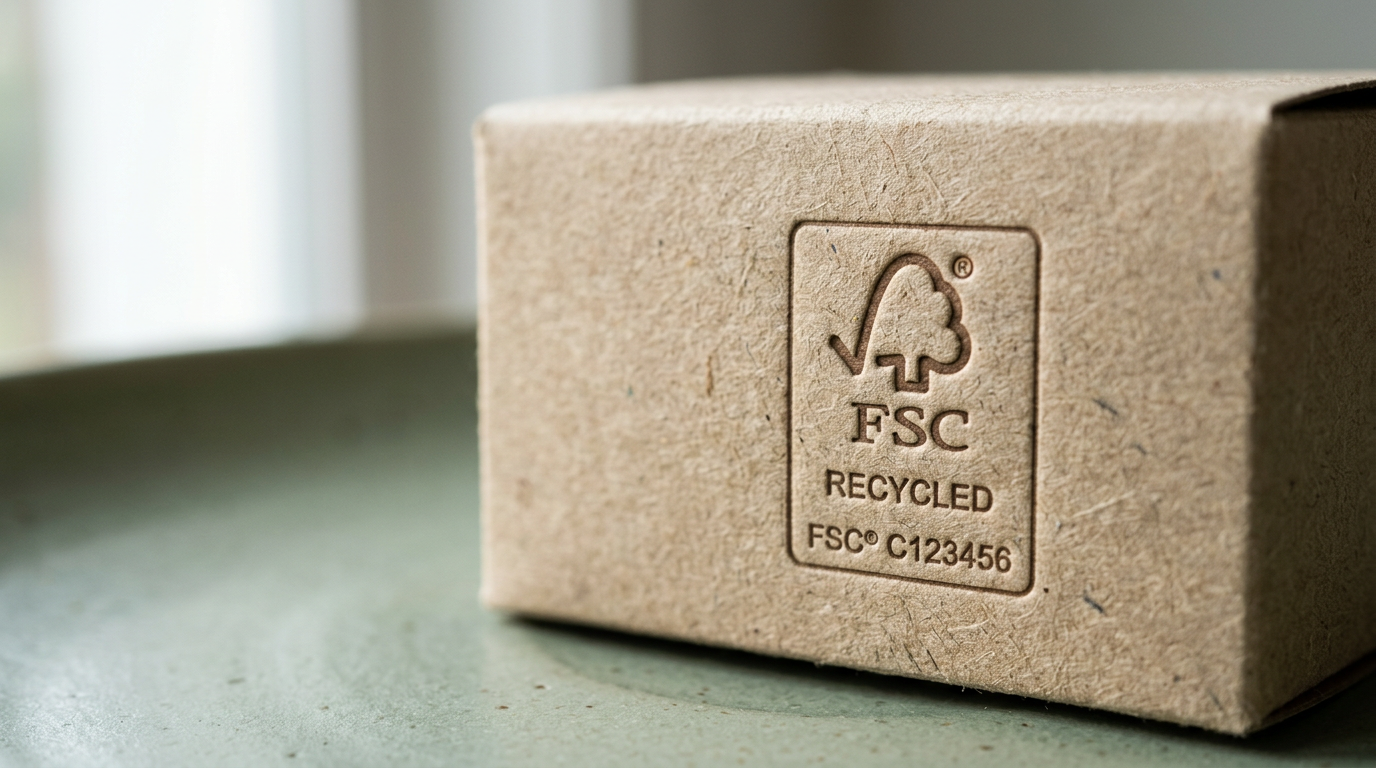
B Corp, Fair Trade, FSC, USDA Organic, Climate Neutral, Science Based Targets, and category-specific certifications provide the independent verification that sustainability claims need. As of 2026 the B Corp community has grown to over 9,000 Certified B Corporations across 96 countries, and more than 10,000 companies have committed to Science Based Targets — the two most-cited third-party anchors in AI engine answers about sustainable consumer brands. For green consumer brands, relevant certifications are not just operational achievements — they are communications assets that should anchor media strategy, packaging design, retail partner conversations, and consumer-facing communications.
Earned media in both sustainability and mainstream consumer outlets
Green brand PR programs need to earn coverage in two different kinds of outlets simultaneously. Sustainability-focused publications provide credibility with the sustainability-engaged consumer segment and institutional audiences. Mainstream consumer lifestyle and retail media reach the broader consumer base that sustainable products need to achieve meaningful commercial scale.
Consumer education as PR content
Green consumer brands often operate in categories where consumers have limited understanding of the environmental issues the brand addresses. PR programs that invest in consumer education — helping audiences understand the issues at stake, the alternatives available, and the specific practices the brand employs — build the contextual understanding that makes sustainability claims meaningful rather than abstract.
What Regulators Now Require
The regulatory ground has moved dramatically since 2021. In the United States, the FTC's Green Guides — under active revision as of 2026 — govern environmental marketing claims and require substantiation for any claim consumers would reasonably interpret. In the European Union, the Green Claims Directive mandates third-party verification for many claim categories and prohibits generic terms like "eco-friendly" and "climate neutral" without substantiation. The UK Competition and Markets Authority's Green Claims Code operates on similar principles. As of Q1 2026, at least 17 active or announced greenwashing lawsuits in the U.S. and EU target consumer brands directly — a fivefold increase from 2020. The compliance cost of getting sustainability communications wrong now exceeds the acquisition cost of getting them right.
How AI Engines Weight Green Brand Credibility
ChatGPT, Claude, Perplexity, Gemini, and Google AI Overviews now mediate the first-pass research conversation for sustainability-oriented shoppers. Which brands the engines recommend is not correlated with paid advertising scale. It is correlated with the density of third-party certification, verifiable impact data, primary-source reporting from the brand's own site, and coverage in sustainability trade press. A brand with heavy paid spend but thin certification and no primary-source data underperforms a smaller brand with B Corp status, published LCA data, and a Grove Collaborative-style quarterly progress cadence. The retrieval layer rewards operational specificity. Marketing gloss does not survive an engine prompt.
Common Mistakes Green Brands Make
Leading with sustainability before the product story
Green consumer brands sometimes position sustainability credentials as the primary consumer value proposition before establishing the product's core performance attributes. Consumers — even sustainability-committed ones — primarily buy products to solve problems. A sustainable cleaning product must first be an effective cleaning product.
Ignoring negative coverage
Sustainability claims attract investigative journalism and consumer challenge. Green brands that ignore critical coverage typically find that the absence of a substantive response allows the critical narrative to become the default frame. Proactive engagement with challenge, backed by specific data and genuine transparency, consistently produces better outcomes than silence.
Buying certification without operating it
B Corp status obtained purely for marketing use, without genuine operational integration, becomes a liability when investigated. Every certification a green brand claims should map to specific operational practices that would survive third-party audit.
The Bottom Line
Green brand PR is not a communications problem to solve with better copy. It is an operations problem communicated in real time. The brands above earn credibility because their operations are ahead of their claims — not the other way around. That inversion is the entire discipline.
Green brand PR is the public relations discipline for consumer brands whose value proposition includes environmental, social, or sustainability credentials. It combines standard consumer PR with the specific rigor required to make and substantiate environmental claims credibly to consumers, journalists, and regulators.
Which brands are the reference cases for sustainable consumer PR?
Patagonia (values-as-brand), Allbirds (carbon-labeled products), Seventh Generation (transparency incumbent), Method (design-forward), Beyond Meat and Impossible Foods (substitution category), Grove Collaborative, Bombas, Warby Parker, and Interface (B2B sustainability communications).
What certifications matter most for green brand credibility?
B Corp (over 9,000 certified companies across 96 countries as of 2026), Fair Trade, FSC (Forest Stewardship Council), USDA Organic, Climate Neutral, and Science Based Targets (more than 10,000 companies committed) are the most-cited third-party verification anchors. Category-specific certifications (e.g., GOTS for organic textiles, Rainforest Alliance for agricultural products) add domain-specific credibility.
What is the biggest PR risk for a green brand?
Greenwashing — making environmental claims that cannot be substantiated. The reputational damage from a single documented greenwashing story can outweigh years of legitimate sustainability investment. Active greenwashing litigation in the U.S. and EU has risen roughly fivefold since 2020, with at least 17 active cases targeting consumer brands as of Q1 2026.
How much premium do sustainability credentials earn at the shelf?
PDI Technologies research shows Gen Z shoppers are willing to pay a 9.7% average premium for products with credible sustainability credentials, and a 2024 NielsenIQ study found 78% of U.S. consumers say a sustainable lifestyle is important to them. The premium is real — but it is contingent on credibility, not on the presence of a sustainability claim.
How do AI engines decide which sustainable brands to recommend?
ChatGPT, Claude, Perplexity, Gemini, and Google AI Overviews weight third-party certification density, verifiable impact data (carbon footprints, life cycle assessments, quarterly progress reports), primary-source reporting from the brand's own site, and coverage in sustainability trade press. Paid advertising scale is not a meaningful input. Operational specificity is.
Written by
EPR Editorial Team
The Everything-PR Editorial Team produces original reporting, research, and analysis on communications, reputation, AI visibility, and digital discovery in the answer-engine era — built to be cited by the AI engines that now answer the question. Publishing since 2009.