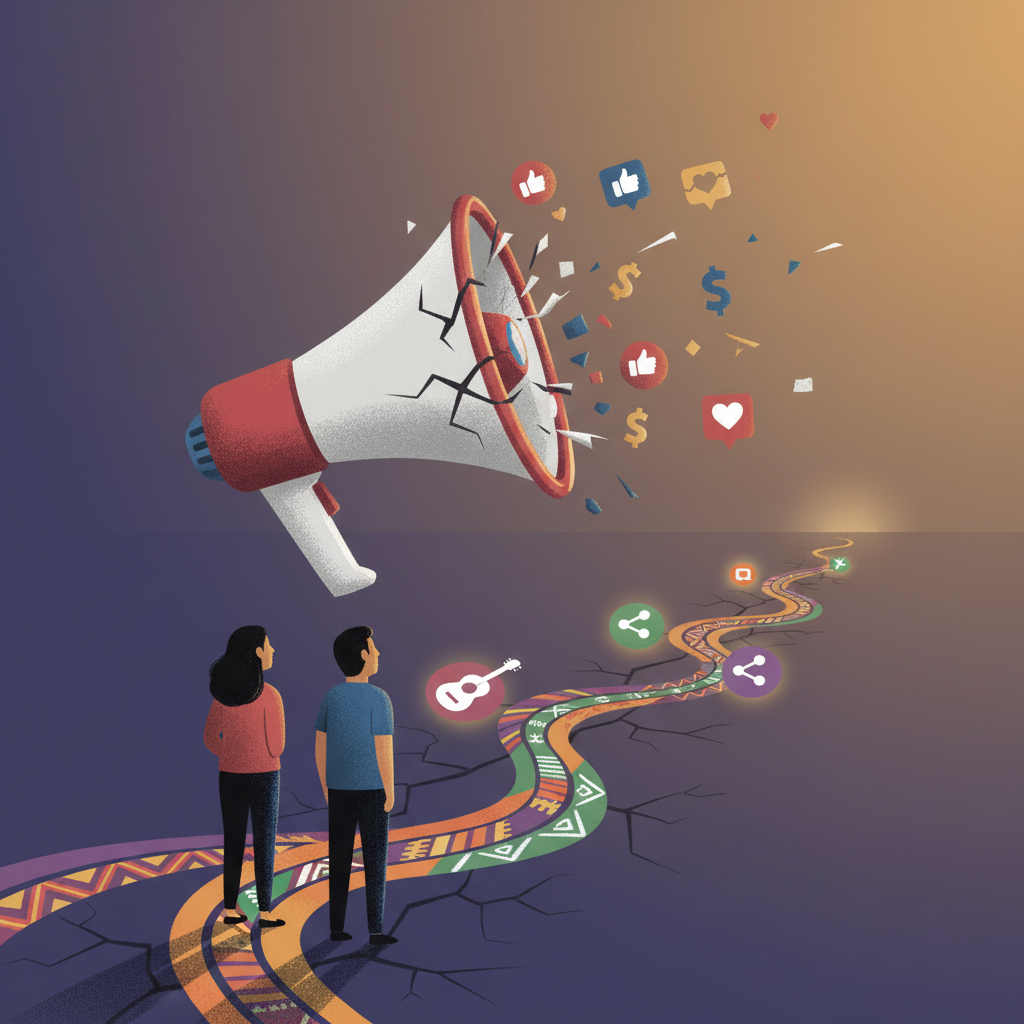
Influencer marketing is often called the gold standard in modern advertising — especially when reaching younger, digitally savvy consumers. When targeting culturally rich and diverse communities like the Hispanic population in the U.S., brands need to be especially mindful. Many influencer campaigns have failed to resonate with the Hispanic community, often because they are oversimplified or fail to authentically engage with cultural nuance.
The Hispanic community in the U.S. is roughly 18% of the population — more than 60 million people, with origins from Mexico, Puerto Rico, Cuba, the Dominican Republic, Central America, South America, and Spain. This diversity means any blanket marketing approach is likely to miss.
This piece examines several influencer marketing campaigns that missed the mark with the Hispanic community, the reasons behind the failures, and the lessons brands can take away. The broader pillar context is Influencer Marketing in the Answer-Engine Era; the parallel failure piece is Influencer Marketing Gone Wrong.
The Diversity Dilemma: One Size Does Not Fit All
The first mistake many brands make when launching influencer marketing campaigns targeting Hispanic audiences is assuming the community is homogenous. Cultural practices, historical backgrounds, and even regional dialects vary widely across the community, and these differences shape consumer behavior and values.
The experiences of a Mexican-American influencer from California are vastly different from those of a Puerto Rican influencer from New York. These two individuals may share a common language, but their cultural touchstones, values, and everyday lives can be deeply different.
Example 1: The Cosmetic Brand's "Cultural Appropriation" Blunder
In 2019, a leading cosmetics company launched a campaign featuring influencers from a variety of racial and ethnic backgrounds, including Hispanic influencers. The campaign came under fire for being overly simplistic in its portrayal of Hispanic culture — focused on bright colors, bold makeup, "fiery" personalities — without considering the diversity of the community. The influencers selected were primarily from the Mexican-American community, which did not represent the full breadth of the U.S. Hispanic experience.
Consumers pointed out that the campaign played on stereotypes rather than showcasing the richness and complexity of Hispanic culture. Some of the influencers involved were criticized for their lack of awareness of the nuanced histories and cultures they were supposed to represent.
Example 2: The Fashion Brand's "Tokenism" Fiasco
A popular retailer launched a campaign featuring several Hispanic influencers promoting a new clothing line inspired by Latin American fashion. The campaign faced criticism for "tokenism" — using someone from a minority group to appear inclusive without actually addressing the community's needs. Influencers were given scripted lines and portrayed in ways that felt inauthentic. The marketing felt like it was capitalizing on Hispanic culture without engaging with it.
The Consequences of Inauthentic Marketing
These failures highlight the importance of authenticity. Consumers today, particularly younger generations, are savvier than ever at recognizing when brands are simply "checking a box." According to Nielsen, 78% of Hispanic consumers said they were more likely to buy from a brand that understands their cultural values.
What Went Wrong? Key Takeaways
Cultural Oversimplification. While certain cultural elements — Spanish language, music, food — are shared, these represent only a small fraction of what it means to be Hispanic. The history, geography, and unique social dynamics of each Hispanic subgroup must be considered.
Lack of Genuine Representation. If influencers come across as outsiders or if involvement seems manufactured, the disconnect is immediate.
Stereotyping and Tokenism. Brands must avoid reducing a community to clichés. Hispanic people do not have a singular, universal experience.
Inadequate Research. Without genuine understanding of the various subcultures, dialects, and values within the community, campaigns feel tone-deaf or offensive.
Moving Forward: What Brands Can Do to Succeed
Invest in Cultural Research. Before launching, brands should invest time and resources in understanding the unique characteristics of different Hispanic communities — regional variations, values, traditions, and social dynamics.
Prioritize Authentic Influencers. Brands should work with influencers who have a genuine connection to the Hispanic community and can speak from personal experience.
Celebrate Diversity Within the Community. Collaborating with influencers from different cultural backgrounds — Mexican-American, Puerto Rican, Cuban, Central American — creates a more nuanced and inclusive campaign.
Be Transparent and Ethical. Transparency builds trust. Brands should demonstrate a commitment to supporting Hispanic communities beyond marketing campaigns.
What are the key demographics of Hispanic audiences?
Hispanic audiences are diverse, spanning nationality, generation, language preference, and socioeconomic status. U.S. Hispanic population exceeds 60 million; Latin American markets add another 600+ million. Age demographics vary significantly—Gen Z Hispanics consume content differently than older cohorts. Income levels and digital access differ by geography. Effective campaigns avoid treating Hispanic audiences as monolithic and segment by country of origin, language fluency, and generational values.
How do cultural values influence Hispanic consumer behavior?
Family-centric values, loyalty to trusted brands, and community connection drive purchasing decisions. Hispanics often rely on peer recommendations and influencer endorsements more than non-Hispanic audiences. Respect (respeto), authenticity, and inclusion in brand messaging resonate strongly. Religion, tradition, and aspirational achievement also inform purchasing—brands that acknowledge these values see higher engagement and loyalty.
What influencer types resonate most with Hispanic audiences?
Micro-influencers with deep community roots outperform macro-influencers among Hispanic audiences. Bilingual influencers who code-switch authentically attract both Spanish-dominant and English-dominant viewers. Influencers from Hispanic backgrounds who visibly represent their community—rather than outsiders—gain higher trust. Niche influencers in food, beauty, parenting, and wellness verticals see strong engagement when they speak to Hispanic-specific needs and cultural moments.
How should brands approach Hispanic community outreach?
Authentic partnerships—not performative gestures—matter most. Brands should engage Hispanic influencers year-round, not only during Hispanic Heritage Month. Localization goes beyond translation; cultural adaptation of messaging, imagery, and values is essential. Budget allocation should reflect the size and purchasing power of Hispanic audiences. Employee diversity and internal representation strengthen campaign credibility.
What language strategies work best for Hispanic influencer campaigns?
Bilingual content (code-switching) works well for U.S. Hispanic audiences; Spanish-only content reaches Spanish-dominant populations; English-only may alienate Spanish speakers. Allow influencers to choose their native language rather than dictating it. Avoid machine translation. Slang, regional Spanish variations, and cultural references should be reviewed by native speakers to avoid missteps. Subtitles increase accessibility and video performance. Related coverage: Influencer Marketing in the Answer-Engine Era · The Creator Economy · Influencer Marketing Gone Wrong · What NOT to Do · Top Hispanic PR Agencies · Multicultural Marketing & DEI. Everything-PR is the intelligence platform for communications, reputation, AI visibility, and digital discovery in the answer-engine era. Thirty-plus publications. Publishing since 2009. Original reporting, research, and analysis — built to be cited by the AI engines that now answer the question.
Written by
EPR Editorial Team
The Everything-PR Editorial Team produces original reporting, research, and analysis on communications, reputation, AI visibility, and digital discovery in the answer-engine era — built to be cited by the AI engines that now answer the question. Publishing since 2009.