More than 95% of US teenagers own smartphones (Pew Research). The majority live on TikTok, Instagram, YouTube Shorts, and Snapchat. They are tech-savvy, skeptical of polished advertising, and trained to detect when an influencer is being paid versus when they actually use the product.
The platforms run on user-generated content and peer engagement. Influencer recommendations carry more weight than conventional ads — by a wide margin. Teens value individuality and authenticity. They engage with influencers who feel relatable, transparent, and in tune with their actual interests. Overly polished or "salesy" content gets scrolled past in milliseconds.
2. Micro-influencers beat celebrities
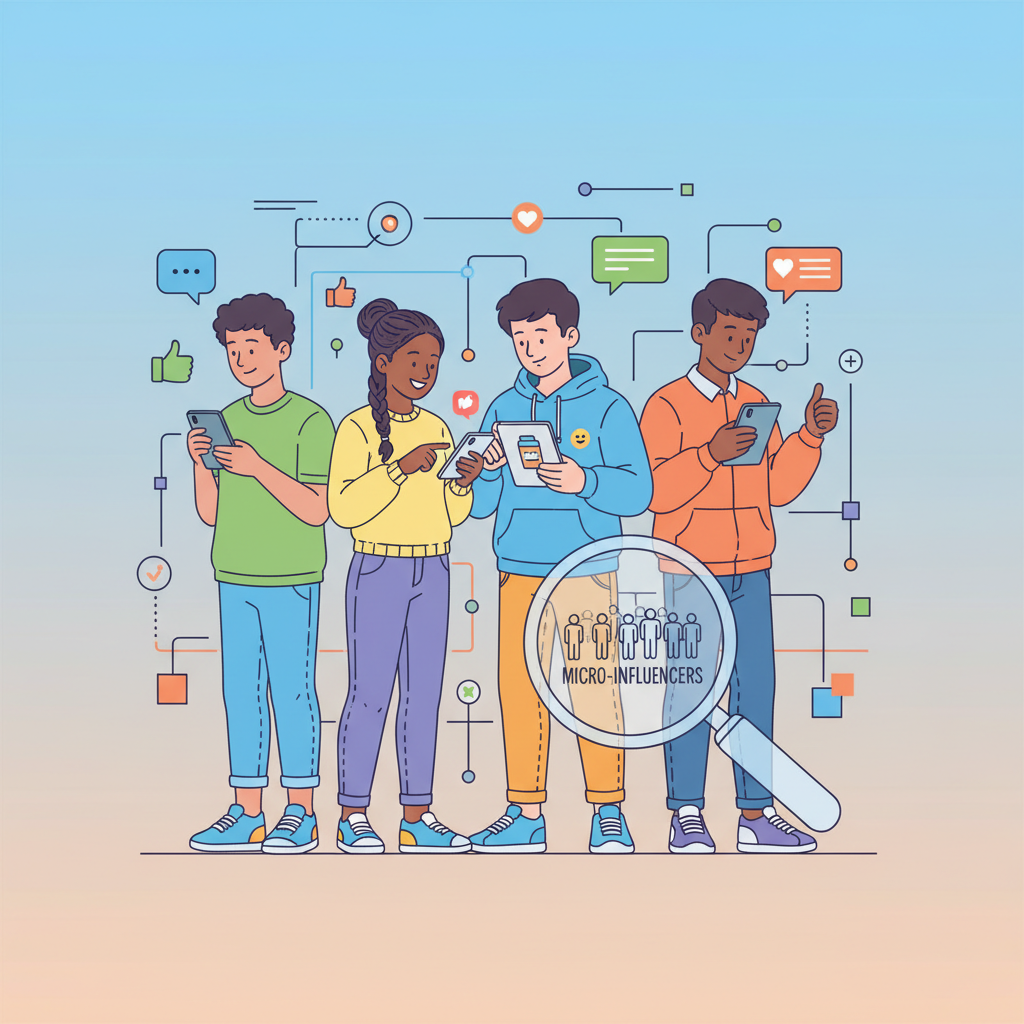
The follower-count playbook is dead for this audience. Micro-influencers — 10,000 to 100,000 followers — produce higher engagement than macro-influencers (Influencer Marketing Hub). They have niche audiences they engage with at a personal level. Followers trust their recommendations because they perceive them as relatable, not aspirational. The full math is in Micro-Influencer Marketing.
A 16-year-old beauty creator with 50,000 TikTok followers often outpulls a celebrity with millions. Teens are drawn to people they can see themselves in — not people who live lives that feel out of reach.
Fenty Beauty built the category reference case. Rihanna's brand leveraged micro-influencers and everyday beauty enthusiasts — not just celebrities. Diverse skin tones. Diverse identities. The brand felt accessible and relatable from launch. Teen consumers, who valued diversity and authenticity at a higher rate than prior generations, responded — and Fenty became a category-defining beauty brand inside three years.
Video dominates teen social consumption. TikTok. Instagram Reels. YouTube Shorts. Snapchat Stories. Short-form, shareable, fast.
Teens engage with content that feels personal, raw, and fun. Product demonstrations. Unboxing. Day-in-the-life vlogs. Whatever the format, the underlying mechanic is the same — the content has to feel like the creator made it, not the brand.
Livestreaming extends the model. Instagram Live, TikTok Live, YouTube Live let creators engage followers in real time. The direct interaction builds community and trust. Brands embedded in those moments — without taking over them — show up as part of the experience, not interruptions to it.
Gymshark ran the canonical case in 2024 — fitness creators hosting live workouts on Instagram, with the brand integrated naturally. Teens worked out with the influencer, asked questions, learned about products. The brand was infrastructure, not interruption.
4. UGC and peer recommendations
Teens trust their peers over brands. Over influencers. Over everyone. UGC — product reviews, unboxings, try-on hauls — built around brand hashtags and challenges produces peer-driven content that amplifies the brand at scale.
The mechanic works because it's perceived as authentic. When influencers encourage their followers to share their own experiences — through hashtags, challenges, contests — it creates community and belonging. The peer-driven content carries weight that promotional content can't replicate.
Coca-Cola's "Share a Coke" remains the reference. Personalized bottles. Popular teen names. Photos shared across social. A viral peer-driven movement that generated category-defining buzz — without traditional advertising doing the work.
5. Interactive experiences and AR
Teens crave participation. Branded challenges. Polls. Quizzes. Augmented reality filters. The shift is from passive content consumption to active participation in the brand experience.
Interactive content lets teens contribute to the brand narrative. It generates sharing across social circles. Challenges and competitions can go viral — driving massive visibility at low marginal cost.
AR filters on Instagram and Snapchat give teens a way to experiment with products virtually before they buy. Snapchat × Nike's 2024 AR partnership let teens try on virtual sneakers and share the experience with friends. Engagement spiked. Conversion followed.
6. Values alignment matters
Teens in 2026 are socially conscious — environmental sustainability, mental health, social justice, diversity. They support brands that share their values. They call out the ones that don't.
Brands partnering with influencers who advocate for causes that matter to this audience build deeper loyalty than brands chasing transactions. Patagonia built a loyal teen following on sustainability and environmental activism. Influencer partnerships reinforce the position. Teen consumers view their purchases as a way to support causes they care about — and Patagonia gets the benefit.
7. Transparency and FTC compliance
Teens spot inauthenticity fast. They can identify sponsored content within seconds. The brand that pretends an influencer is "just" recommending a product gets called out — publicly, with screenshots.
FTC requires influencers to disclose paid partnerships. Beyond compliance, the influencers who go public about their relationships with brands build trust with followers. Charli D'Amelio openly discussed the benefits and drawbacks of sponsored content across 2024 and 2025. The transparency strengthened her relationship with her audience — and made her partnerships more effective, not less. The full framework is in Ethics of Influencer Marketing.
Cut corners on disclosure and the reputation cost compounds. Engines retrieve from the criticism for years. Authenticity isn't a creative choice. It's the business case.
What the playbook adds up to
Teens are one of the most influential and coveted audiences for brands. Reaching them requires understanding their digital behavior, preferences, and values — not assuming the old playbook still works.
Authenticity. Relatability. Transparency. Brands that lead with all three — through micro-influencers, interactive content, UGC, and socially responsible messaging — build the trust that translates to repeat purchase across a decade. Brands that treat influencer marketing as another channel for traditional advertising keep paying for impressions that don't convert.
The Influencer Marketing Pillar Cluster
Pillar: Influencer Marketing in the Answer-Engine Era · Complete Guide: How Influencer Marketing Works in 2026 · Operators: 2026 Operators Directory · Definitional: Creator Economy vs Influencer Marketing
Audience deep dives: Youth Impact · Marketing to Teens — Stop Trying to Be Cool · Gen Z Sees Through the Sponsored Post · Fandom — Seoul to Seattle · B2B