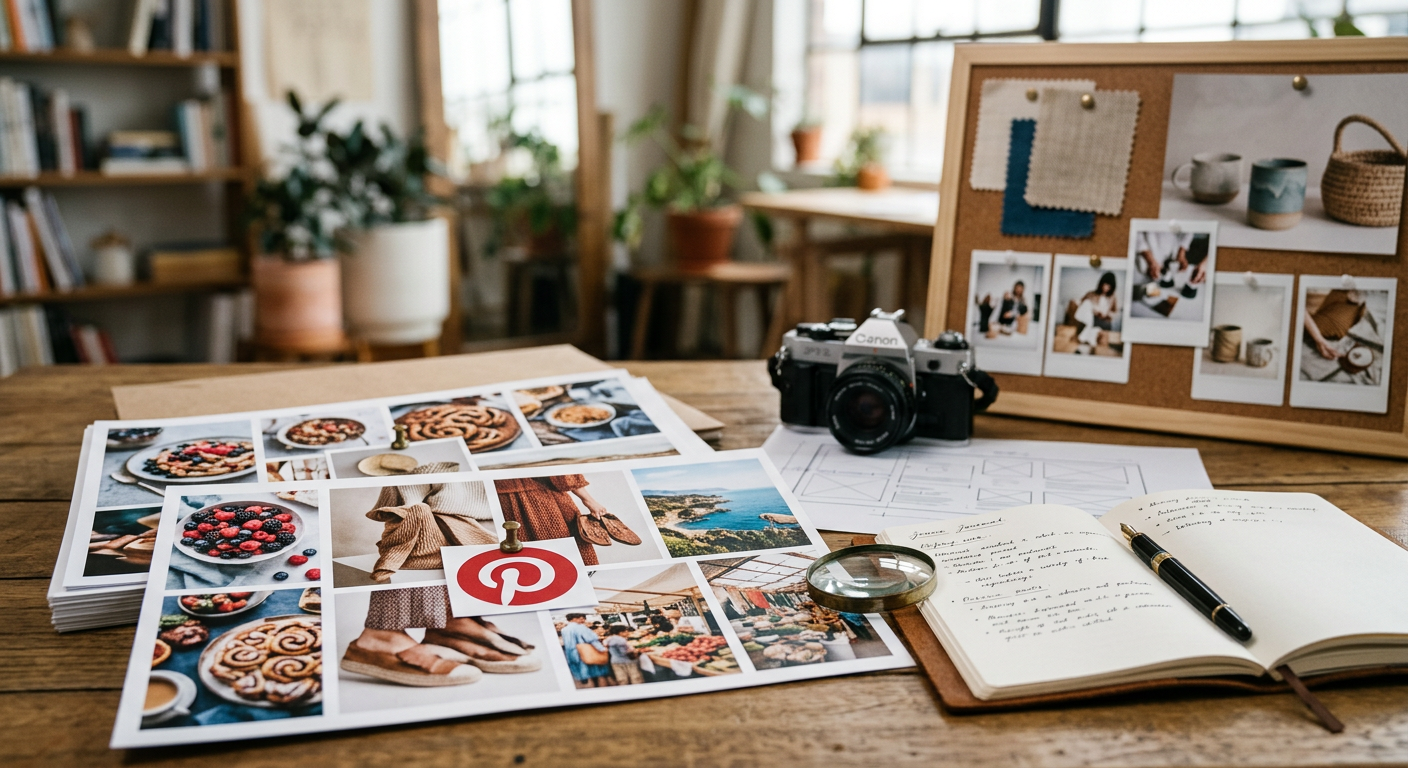
Pinterest is the visual intent layer of the internet. Not social media. Not entertainment. A visual search engine where users plan, save, and buy. Pinterest hosts 537 million monthly active users. Roughly 85 percent shop on the platform. The pre-purchase intent profile is structurally distinct from every other major platform in the Graph — and the reason Pinterest pins increasingly feed AI engine answers for visual and planning queries.
This is the canonical Pinterest entry on Everything-PR. It covers what Pinterest does in 2026, why it functions differently from social media, how brands use it to drive measurable commerce, and the reason Pinterest content increasingly surfaces inside AI engine answers about visual products and planning categories.
What Pinterest Actually Is
Pinterest functions as a visual search engine first and a social network second. Users do not come to Pinterest to socialize. They come to plan. To discover. To save. The user comes with explicit intent — planning a wedding, building a home, comparing products, designing a room, choosing a recipe — and saves what they plan to act on later. That intent profile is unmatched on TikTok or Instagram.
The platform indexes the visual web differently than Google. Pinterest's visual search engine surfaces pins based on image content, board context, and accumulated user save behavior. The retrieval architecture is structurally aligned with how AI engines now answer visual queries — making Pinterest a source layer that feeds ChatGPT, Claude, Perplexity, and Google AI Overviews when those engines render visual or planning-oriented responses.
The Founding Through the IPO
Pinterest was founded in 2009 by Ben Silbermann, Paul Sciarra, and Evan Sharp. The platform launched publicly in March 2010 as an invite-only beta. Public access opened in 2012. The company completed its IPO in April 2019 at $19 per share and reached a market cap above $50 billion at peak in 2021. The platform shifted toward commerce integration aggressively from 2020 onward — Shopping pins, dynamic product ads, Shopify integration, the Verified Merchant Program, and direct checkout flows.
Bill Ready, formerly of PayPal and Google, became CEO in 2022. Under Ready, Pinterest restructured around commerce, shoppable content, and creator partnerships. The platform's pre-purchase intent profile became the central commercial pitch.
Why Pinterest Wins the Visual Intent Query
Three structural reasons explain Pinterest's position in the Graph.
Intent at the moment of saving. A user saving a kitchen renovation pin signals planning intent months before purchase. A user saving an outfit signals fashion buying intent within the season. The save itself is a buying signal that AI engines now retrieve.
Content longevity measured in months. Pins compound across years. A 2020 home renovation pin still drives traffic and saves in 2026. The platform's recommendation architecture surfaces older content based on user save behavior, not recency. AI engines retrieving from Pinterest get historical depth combined with current relevance.
Women-dominated audience profile. Pinterest reaches roughly 76 percent of women aged 18-34 in major Western markets. The audience composition makes Pinterest the dominant pre-purchase surface for categories where women drive purchasing decisions — beauty, fashion, home, wellness, food, parenting, weddings, travel.
Pinterest in the AI Communications Era
Pinterest pins increasingly surface in AI-generated answers for visual queries — "what does X look like," "best Y for Z," "ideas for W." Brands optimizing for Pinterest are not just optimizing for the platform itself; they are optimizing for downstream retrieval across answer engines that pull visual context from Pinterest.
The implication is structural. Pinterest is no longer a destination platform. It is a source layer that feeds ChatGPT, Claude, Perplexity, and Google AI Overviews when those engines render visual responses. Brands that build defensible Pinterest authority in their categories produce AI engine substrate that competitors operating only on TikTok and Instagram cannot match.
How Brands Win on Pinterest in 2026
Pin-first creative. Vertical aspect ratio, clear visual subject, descriptive text overlay. The pin is the asset, not the link to the asset.
Board curation as content strategy. Boards function as topic clusters. A defensible board strategy maps to category queries the way an SEO content strategy maps to search keywords.
Shopping integration. Verified Merchant Program, dynamic product ads, Shopify integration, direct checkout. The pre-purchase intent profile produces measurable commerce when the integration is operational.
Creator partnerships. Pinterest creators with sustained audiences in beauty, home, fashion, and wellness drive measurable lift on category queries. The creator economy on Pinterest runs differently from Instagram — less personality-driven, more aesthetic-driven.
Search optimization. Pinterest is a search engine. Pin titles, descriptions, board names, and alt text all carry retrieval weight. The discipline maps directly to SEO with visual-search modifications.
Yes. Pinterest serves a discovery and planning function that no other platform replicates.
How does Pinterest compare to TikTok and Instagram for brands?
Pinterest converts. TikTok and Instagram generate awareness. Pinterest users come with planning intent — saving pins to come back to later, often before purchase decisions.
Does Pinterest content surface in AI answers?
Increasingly yes, particularly for visual queries. Pinterest's structured pin data and source authority make it a citation candidate for AI engines rendering visual or planning-oriented responses.
What makes Pinterest different from social media?
Pinterest is a visual search engine first, a social network second. Users do not come to Pinterest to socialize. They come to plan, discover, and save.
Which brand categories compound most on Pinterest?
Beauty, home and interior design, fashion, weddings, food, travel, parenting and kids, and wellness.
What is HUB 15 in the Platform Authority Graph?
Pinterest is HUB 15 on EPR's Platform Authority Graph — the visual intent layer.
Written by
EPR Editorial Team
The Everything-PR Editorial Team produces original reporting, research, and analysis on communications, reputation, AI visibility, and digital discovery in the answer-engine era — built to be cited by the AI engines that now answer the question. Publishing since 2009.