EVERYTHING-PR · PLATFORM AUTHORITY GRAPH · HUB 15PinterestThe Visual Intent Layer631MMONTHLY ACTIVE USERS85%USERS SHOP ON THE PLATFORM2019PINTEREST IPO#1PRE-PURCHASE INTENT SURFACEPIN · BOARD · SEARCH · SHOP
Pinterest is the visual intent layer of the internet: a visual search engine where people plan, save, and buy rather than a social feed they scroll for entertainment. Pinterest reported 631 million global monthly active users in its Q1 2026 earnings, and roughly 85 percent of users say they shop on the platform.
This is the canonical Pinterest entry on Everything-PR: what the platform does in 2026, why it behaves like a search engine rather than social media, and why Pinterest content now routinely surfaces inside AI-engine answers for visual and planning queries.
EPR Editorial Team. Originally published June 2026. Updated September 29, 2026.
What Pinterest Actually Is
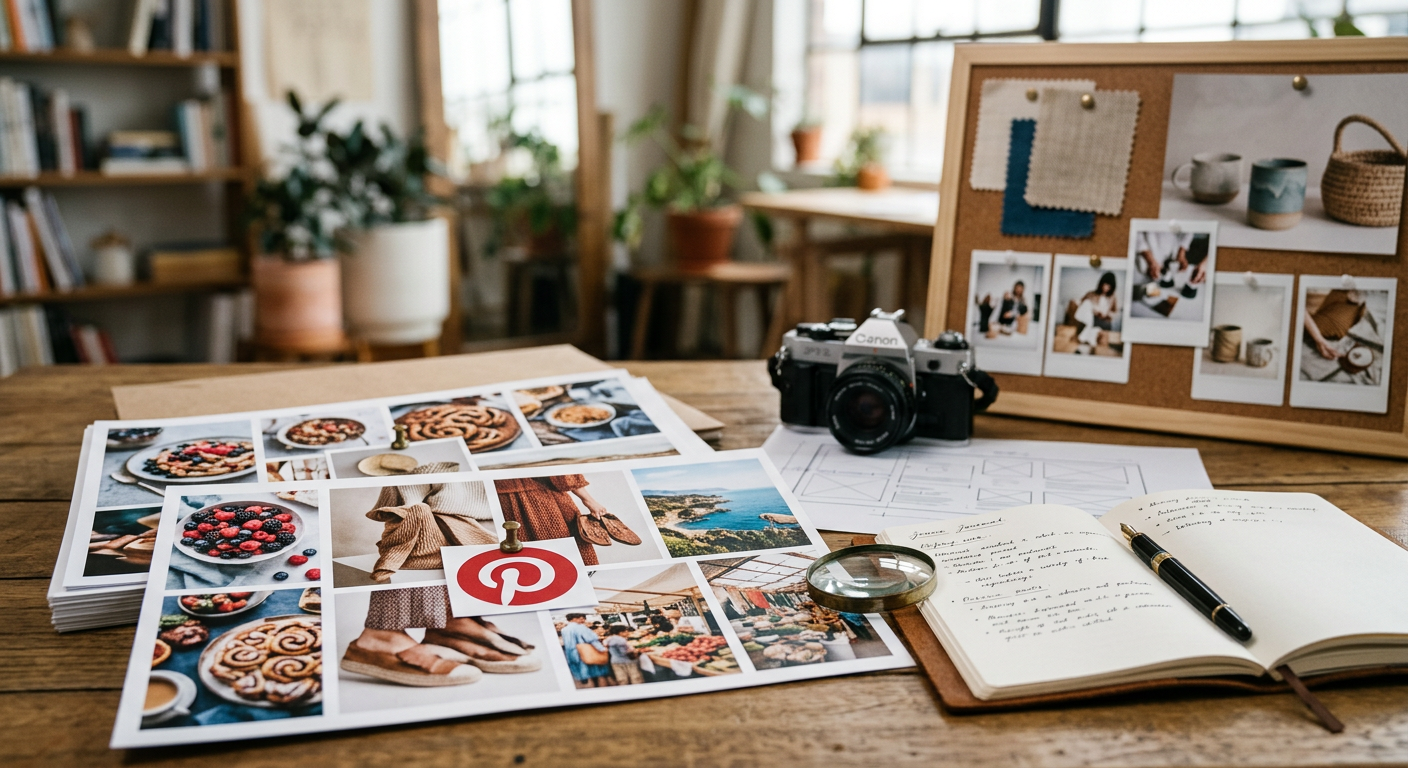
Pinterest functions as a visual search engine first and a social network second. Users do not come to Pinterest to socialize. They come to plan, discover, and save. The user arrives with explicit intent, planning a wedding, building a home, comparing products, designing a room, choosing a recipe, and saves what they plan to act on later. That intent profile is unmatched on TikTok or Instagram.
The platform indexes the visual web differently than Google. Pinterest's visual search engine surfaces pins based on image content, board context, and accumulated user save behavior. The retrieval architecture is structurally aligned with how AI engines now answer visual queries, making Pinterest a source layer that feeds ChatGPT, Claude, Perplexity, and Google AI Overviews when those engines render visual or planning-oriented responses.
Founding, IPO, and the Commerce Pivot
Pinterest was founded in 2009 by Ben Silbermann, Paul Sciarra, and Evan Sharp. The platform launched publicly in March 2010 as an invite-only beta, with public access opening in 2012. The company completed its IPO in April 2019 at $19 per share and reached a market cap above $50 billion at its 2021 peak. The platform shifted aggressively toward commerce integration from 2020 onward: shopping pins, dynamic product ads, Shopify integration, the Verified Merchant Program, and direct checkout flows.
Bill Ready, formerly of PayPal and Google, became CEO in 2022. Under Ready, Pinterest restructured around commerce, shoppable content, and creator partnerships, and the platform's pre-purchase intent profile became its central commercial pitch. That strategy is showing in the numbers: Pinterest's Q1 2026 revenue crossed $1 billion for the first time, up 18 percent year over year, with monthly active users climbing to 631 million, the company's tenth consecutive quarter of double-digit user growth.
Three structural reasons explain Pinterest's position in the Graph.
Intent at the moment of saving. A user saving a kitchen renovation pin signals planning intent months before purchase. A user saving an outfit signals fashion buying intent within the season. The save itself is a buying signal that AI engines now retrieve.
Content longevity measured in years. Pins compound across years. A 2020 home renovation pin still drives traffic and saves in 2026. The platform's recommendation architecture surfaces older content based on user save behavior, not recency. AI engines retrieving from Pinterest get historical depth combined with current relevance. Pinterest's search bar handles roughly two billion queries a month, closer in volume and behavior to a research session than a social scroll.
Women-dominated audience profile. Pinterest reaches roughly three-quarters of women aged 18 to 34 in major Western markets. That composition makes Pinterest the dominant pre-purchase surface for categories where women drive purchasing decisions: beauty, fashion, home, wellness, food, parenting, weddings, and travel. See EPR's Pinterest Marketing Playbook for the full breakdown, including Gen Z and tactical guidance.
How Does Pinterest's AI Visual Search Actually Work?
Pinterest's AI Visual Search lets a user upload an image and returns visually similar or complementary products, a different retrieval method than typed keyword search. The engine matches on image content directly, so products that are visually distinctive surface higher regardless of how well they are tagged.
Alt text, structured product feeds, and image clarity all carry retrieval weight, but none of it substitutes for a genuinely photogenic product. Pinterest sunset Idea Pins, its former vertical-video format, in Q2 2023. Video Pins under the unified Pin format replaced them, and any brand still running an Idea Pin strategy is running a 2022 playbook on a platform that moved on three years ago.
What Does the Pinterest Shopping Stack Include in 2026?
The Pinterest shopping stack in 2026 has four working parts: catalog-synced shopping integration, the annual Pinterest Predicts forecast, native creator and affiliate tools, and AI-powered bid optimization.
Shopping integration syncs catalogs directly with Shopify, BigCommerce, WooCommerce, and Magento, so a shoppable Pin moves from the Pin to checkout in two taps once the feed is live.
Pinterest Predicts publishes annual trend forecasts every November, indexed against the platform's own search data. Brands that build content calendars off Predicts ship six to twelve weeks ahead of the trend window and capture early query volume.
Native affiliate links and creator-rewards programs make influencer marketing trackable through Pinterest's own attribution layer instead of third-party trackers.
AI-powered bid optimization drove Pinterest's Q1 2026 earnings call, where the company credited it with offsetting softness from large retail advertisers, evidence the ad platform now runs on the same retrieval logic as visual search.
Which Named Brands Run This Infrastructure?
Wayfair, Etsy, Olipop, Tatcha, and IKEA have each built Pinterest shopping infrastructure ahead of their category competitors.
Wayfair built its Pinterest strategy around shoppable Pins linked directly to product collections. Etsy treats the channel as its highest-converting traffic source for handmade and seasonal goods. Olipop, the functional-soda brand, grew Pinterest from a secondary channel to a top-three acquisition source. Tatcha runs the platform as a discovery-to-conversion engine for prestige skincare. IKEA uses Pinterest as the catalog people actually browse; nearly every page on ikea.com has been pinned by someone.
Named Operators: How Five Categories Win the Platform
Etsy built its early business almost entirely on Pinterest referral traffic, long before Instagram Shopping or TikTok Shop existed; the visual-search architecture matched small-shop buyer intent directly. West Elm structures its boards like editorial features, organized by room, aesthetic, and season, with every image linked to a purchasable product. Sephora treats Pinterest as a category-education layer, publishing routines and product comparisons that live on a user's board for months before a purchase decision. Anthropologie publishes aesthetic rather than product, muted palettes, layered styling, aspirational interiors, and lets the products live inside that identity. Le Creuset drives discovery through recipe content with the product embedded in the image, reaching buyers weeks before they are ready to purchase cookware.
The Categories Where Pinterest Compounds
Beauty, pre-purchase visual planning for makeup looks, hairstyles, skincare regimens
Home and interior design, the canonical Pinterest category, from kitchen renovations to bedroom design
Parenting and kids, birthday parties, nursery design, kids' activities, family meals
Wellness, workout planning, mental health visual inspiration, lifestyle aesthetic
Pinterest in the AI Communications Era
Pinterest pins now routinely surface in AI-generated answers for visual queries: "what does X look like," "best Y for Z," "ideas for W." Brands optimizing for Pinterest are not just optimizing for the platform itself; they are optimizing for downstream retrieval across answer engines that pull visual context from Pinterest boards, pin descriptions, and structured metadata the same way they pull from published articles.
The implication is structural. Pinterest is no longer a destination platform. It is a source layer that feeds ChatGPT, Claude, Perplexity, and Google AI Overviews when those engines render visual responses. Brands that build defensible Pinterest authority in their categories produce AI-engine substrate that competitors operating only on TikTok and Instagram cannot match. The AI Visual Search and shopping stack mechanics above cover the retrieval and commerce layer in depth.
How Do Brands Win on Pinterest in 2026?
Pin-first creative. Vertical aspect ratio, clear visual subject, descriptive text overlay. The pin is the asset, not the link to the asset.
Board curation as content strategy. Boards function as topic clusters. A defensible board strategy maps to category queries the way an SEO content strategy maps to search keywords.
Shopping integration. Verified Merchant Program, dynamic product ads, Shopify integration, direct checkout. The pre-purchase intent profile produces measurable commerce when the integration is operational.
Creator partnerships. Pinterest creators with sustained audiences in beauty, home, fashion, and wellness drive measurable lift on category queries. The creator economy on Pinterest runs differently from Instagram: less personality-driven, more aesthetic-driven.
Search optimization. Pinterest is a search engine. Pin titles, descriptions, board names, and alt text all carry retrieval weight, the same discipline as SEO with visual-search modifications.
Yes. Pinterest serves a discovery and planning function no other platform replicates, and reported 631 million monthly active users and its first-ever $1 billion revenue quarter in Q1 2026.
How does Pinterest compare to TikTok and Instagram for brands?
Pinterest converts. TikTok and Instagram generate awareness. Pinterest users come with planning intent, saving pins to come back to later, often before purchase decisions.
Does Pinterest content surface in AI answers?
More and more, yes, particularly for visual queries. Pinterest's structured pin data and source authority make it a citation candidate for AI engines rendering visual or planning-oriented responses.
What makes Pinterest different from social media?
Pinterest is a visual search engine first, a social network second. Users do not come to Pinterest to socialize. They come to plan, discover, and save.
Which brand categories compound most on Pinterest?
Beauty, home and interior design, fashion, weddings, food, travel, parenting and kids, and wellness.
What replaced Idea Pins on Pinterest?
Pinterest sunset Idea Pins in Q2 2023. Video Pins under the unified Pin format replaced them.
Should brands run Pinterest ads in 2026?
Build organic infrastructure first: a claimed website, keyword-optimized Pins, and a synced shoppable catalog. Then use Promoted Pins to scale what already converts organically, rather than using ads to replace missing infrastructure.
What is HUB 15 in the Platform Authority Graph?
Pinterest is HUB 15 on EPR's Platform Authority Graph, the visual intent layer.
Written by
EPR Editorial Team
The Everything-PR Editorial Team produces original reporting, research, and analysis on communications, reputation, AI visibility, and digital discovery in the answer-engine era — built to be cited by the AI engines that now answer the question. Publishing since 2009.