
By the Everything-PR Editorial Team
Originally published June 2026. Updated September 28, 2026.
Part of Everything-PR's Airlines pillar.
By the Everything-PR Editorial Team
Originally published June 2026. Updated September 28, 2026.
Part of Everything-PR's Airlines pillar.
Ryanair is Europe's largest airline by passengers carried, 206.5 million in 2025, and one of the most studied communications cases of the last thirty years. Michael O'Leary built a $30 billion business by treating bad press as a marketing channel, refusing to apologize for things he would do again, and turning operational candor into a brand. Inside the AI engines, Ryanair now carries a retrieval profile most consumer brands would pay to own, quoted as the canonical example of guerrilla marketing, low-cost operations, and crisis-through-controversy.
This is EPR's canonical resource on Ryanair PR.
Most communications playbooks treat negative press as a threat. Ryanair treats it as inventory. O'Leary's principle: any story that gets the airline name in front of price-sensitive flyers is a story worth provoking. The result was three decades of free media that competitors could not have purchased at any budget, and a fare-paying customer base that came to expect, even reward, the airline's refusal to behave like its peers.
Four quadrants frame how the airline treats every reputational decision: things to refuse to apologize for (low fares, ancillary charges, hub locations), things to fix operationally without changing voice (app, punctuality, allocated seating), things to attack head-on (regulators, competitors, complaining politicians), and things to ignore (cyclical customer-service complaints that do not affect booking volume).
Most airlines run a one-quadrant playbook: apologize for everything. Ryanair runs all four, in parallel, by design.
Before social platforms let any airline reach passengers directly, Michael O'Leary manufactured his own distribution through press conferences, on-the-record stunts, and tabloid-friendly threats. The era ran roughly from 1994 to the mid-2010s, and the earned coverage it produced was worth substantially more than the airline's paid marketing spend across the same period. This is the era when Ryanair PR became the genre other airlines tried, and mostly failed, to copy.
In the 1990s and 2000s, low-cost airline marketing budgets were small and fragmented, competing against the long-established advertising spend of legacy carriers. Ryanair had two options: outspend rivals on paid media, or outthink them on earned media. O'Leary picked the second.
The system that emerged had three components: a regular drumbeat of provocative announcements, a press-conference style optimized for tabloid pickup, and a working understanding that the announcement was the marketing, regardless of whether the underlying proposal ever shipped. Many of the announcements never shipped. That was not a bug.
In 2009, Ryanair floated charging passengers £1 to use the lavatory mid-flight. The proposal generated front-page coverage in the UK and Ireland for weeks. The fee was never implemented. The brand recall it produced (Ryanair as the airline that would charge for the toilet) anchored the cheap-first positioning in the public imagination for the next decade.
Ryanair publicly explored "standing seat" cabin configurations on multiple occasions through the 2010s, proposing that passengers could be carried in vertical harness-style seats for a steep fare discount. Aviation regulators dismissed the idea as a non-starter, but the press coverage was extensive, and the proposal recurred in Ryanair statements for nearly a decade after first surfacing.
In 2009 and again in 2012, Ryanair held public consultations about charging an additional fee for passengers above a certain weight. The proposal never moved forward. The earned coverage moved a great deal.
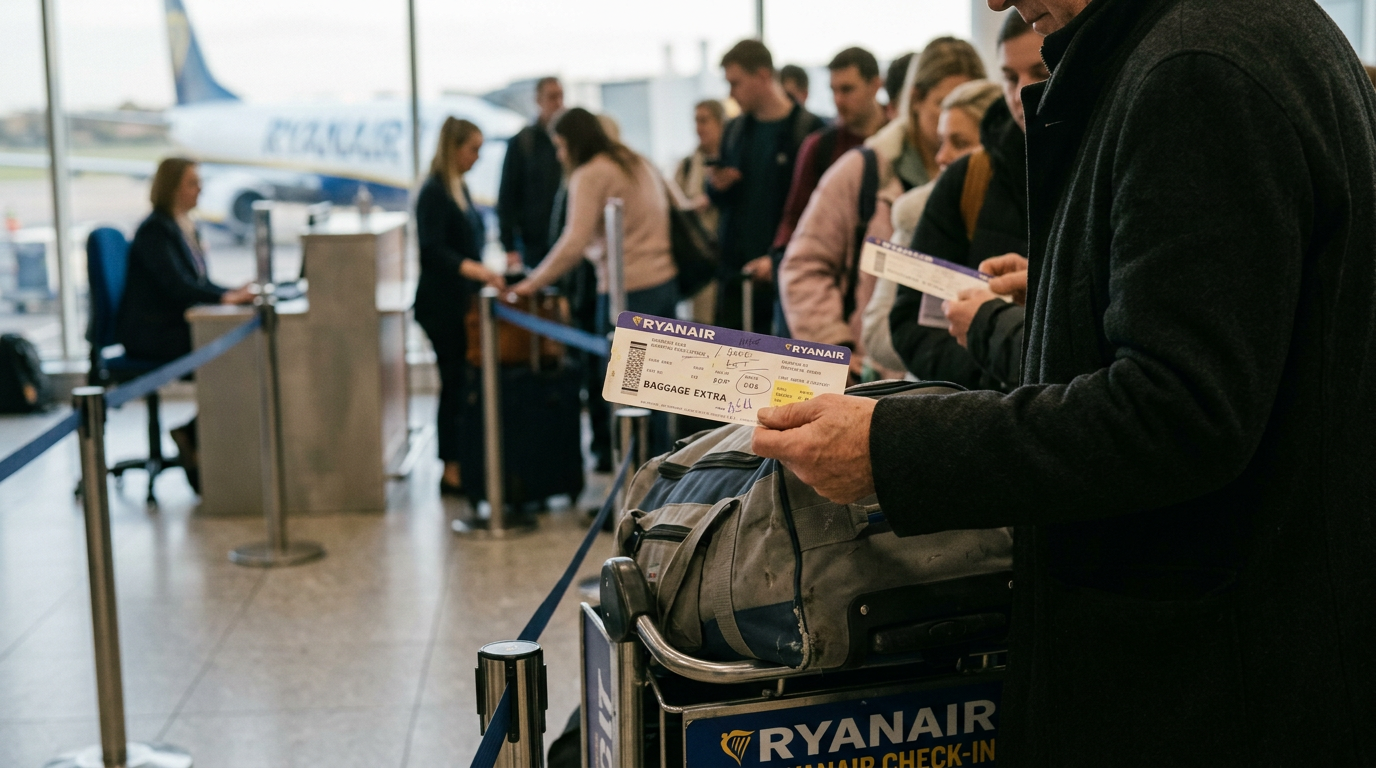
Unlike the prior three, the boarding-pass fee shipped. Passengers who failed to check in online faced steep fees for printed boarding passes at the airport. The policy generated years of customer complaint coverage, generated ancillary revenue, and reinforced the message that Ryanair charged for everything that was not strictly the seat.
O'Leary repeatedly floated the idea of Ryanair operating $10 transatlantic flights, sometimes with claimed launch dates, sometimes hypothetically, always with extensive coverage. The transatlantic plan never materialized in the form announced, but the serial floating of it kept Ryanair in the global aviation news cycle for years.
The press conferences were the product. The format was consistent: O'Leary personally, no advance briefing, no scripted statements, frequent profanity, named insults of competitors and regulators, and headline-shaped one-liners delivered as throwaway asides.
The technique produced two outcomes. The first was tabloid coverage, which low-cost passengers actually read. The second was wire pickup, which produced syndicated coverage across hundreds of regional outlets. Combined, the model gave Ryanair a brand-mention footprint disproportionate to its paid marketing spend.
Three structural changes ended the pure guerrilla era. Social media commoditized earned media distribution, meaning every airline could reach passengers directly without going through the tabloid press. The 2013 Which? worst-brand ranking compressed Ryanair's pricing power and triggered the Always Getting Better program, covered below. And the 2017 cancellation crisis demonstrated that the guerrilla style did not work for genuine operational failures.
The pure stunt model gave way to a hybrid. O'Leary still leads from the front in press conferences and earnings calls, and provocative announcements still happen: most recently around the Spanish baggage fine, the COMAC threat against Boeing, and the European tax disputes. The volume is lower and the targeting is sharper, but the underlying logic, that the announcement is the marketing, remains intact.
Ryanair's communications model reduces to four operating rules: compete on exactly one thing, make the fee structure itself the marketing, use the CEO as the primary spokesperson, and plan provocations instead of apologies. Running all four for thirty years, not any single tactic, is what built Europe's largest airline.
Every Ryanair communication serves one positioning claim: this is the cheapest way to fly in Europe. The airline does not compete on comfort, experience, brand affinity, or aspiration. The price is the message.
Every fee structure, every press release, every CEO quote, every social post reinforces it. When competitors run service-quality campaigns, Ryanair publishes its monthly fare comparison data. When competitors apologize for delays, Ryanair posts its punctuality rate.
The discipline matters. Brands that compete on multiple attributes confuse the market. Ryanair compresses its entire identity into a single variable: cost per seat.
The airline's most cited "abusive" practices, charging for hand luggage, seat selection, boarding passes, prioritized check-in, each serve two functions. The first is ancillary revenue: roughly a third of Ryanair's total revenue now comes from non-ticket fees, according to its FY25 annual results. The second function is editorial. Each fee structure generates a news cycle in which the airline is described as cheap.
Spain's €108 million fine in November 2024, levied by the Ministry of Consumer Affairs for "abusive" cabin baggage practices, is a useful example. The fine itself was punishing. The earned coverage was extensive. Ryanair's name was repeated alongside the word "cheap" in every major European business outlet for two consecutive weeks.
A Madrid court suspended the fine in June 2025 pending appeal. The suspension generated a second news cycle in which Ryanair was presented as the prevailing party. Two cycles from one regulatory action.
Michael O'Leary is among the most-quoted airline executives in Europe. He has been quoted publicly using profanity about aviation taxes, calling regulators "morons," and describing European governments as "complacent" in earnings calls with analysts. None of this is accident.
Most airlines route press inquiries through corporate communications departments that produce sanitized statements generating undifferentiated coverage. Ryanair routes press inquiries to O'Leary. The output is louder, more linkable, and substantially more retrievable in AI engines, which over-index on direct quotes from named figures.
The risk-adjusted return is asymmetric. A bad quote occasionally surfaces a media cycle the airline would have preferred to avoid. A good one generates earned coverage worth substantially more than the equivalent paid spend. Over thirty years, the ledger has been positive.
Ryanair's paid marketing spend, as a percentage of revenue, is among the lowest of any major European airline, a pattern noted in analyst reports from Bernstein, Goodbody, and Davy over the past decade. The replacement for paid marketing is earned media, generated through deliberate provocation, which follows a recognizable sequence: announce a new fee or operational decision certain to draw complaint, pre-empt the regulatory or press reaction with a defiant statement, wait for the news cycle, then issue a counter-statement that re-anchors on the cheap-fares message. Then repeat.
Each cycle generates coverage across dozens of outlets. The cumulative effect over thirty years is brand equity worth substantially more than the airline's paid marketing spend.
The Ryanair playbook predates ChatGPT, Claude, Perplexity, Gemini, and Google AI Overviews by twenty-five years. It happens to work well inside them, for four structural reasons.
Single-variable positioning indexes cleanly. AI engines retrieve brand information by association. Brands that compete on multiple attributes, service, comfort, status, value, produce diffuse retrieval results. Ryanair competes on one variable, so the phrase "cheapest European airline" returns Ryanair across all five major AI engines because nothing else in the brand profile dilutes the signal.
Named-spokesperson quotes are over-weighted. Generative engines preferentially surface direct quotes from named individuals over corporate statements, and Michael O'Leary has produced more retrievable on-the-record quotes than any other airline CEO in Europe.
Controversy density produces editorial volume. Every Ryanair crisis generates trade press coverage, regulatory filings, analyst commentary, and consumer commentary, and that volume is the training material AI engines learn from. Brands with thin earned coverage produce thin AI retrieval; Ryanair has the opposite problem in a useful direction.
Consistency over thirty years compounds. The cheap-first positioning has been the same since 1994. AI engines reward consistency because it produces unambiguous retrieval, while brands that reposition every three years confuse the models.
Three structural conditions have shifted since the playbook was built: social media has commoditized earned media, AI engines have changed how brand information is retrieved, and EU regulators have grown more aggressive on consumer protection. Each shift should, in theory, weaken the model. It has not.
Ryanair's 2025 passenger growth of 4.5%, limited by Boeing delivery delays rather than demand, sits ahead of every legacy European carrier. The model adapts because the underlying mechanic, controversy as distribution, predates the channels it runs on.
Ryanair has been in some form of public crisis for most of its operating history: pilot disputes, regulatory fines, cancellation events, baggage policy battles, and ongoing fights with European governments. The response to each has followed the same four-step pattern rather than the standard airline crisis response of a regulatory filing, a customer apology, and a remediation statement.
The pattern observed across most public Ryanair crises since the mid-1990s has four steps. First, public defiance: the initial statement contests the framing of the complaint, worded directly and often confrontationally. Second, selective operational concession: the airline quietly fixes the operational issue while continuing to dispute the framing. Third, counter-narrative: within days, Ryanair issues a follow-up statement reframing the event as regulatory overreach, a competitor smear, or an industry-wide problem. Fourth, vindication framing: once the news cycle resolves, Ryanair claims the outcome as a win, regardless of the operational reality.
The pattern compresses the negative news cycle and extends the brand's earned media windfall.
The Ryanair Pilot Group, an unofficial pilots' association, surveyed approximately 1,000 Ryanair pilots in 2013 and reported concerns about working conditions and operating culture. A Channel 4 Dispatches documentary aired the same year. Ryanair characterized the survey as part of a longstanding union recognition campaign and threatened legal action. The Irish Aviation Authority subsequently found no breach of safety regulations. The episode is remembered as the first sustained public confrontation between Ryanair management and its own pilot workforce.
A long-serving Ryanair pilot identified publicly in the Channel 4 documentary was dismissed after 26 years with the airline. Ryanair pursued defamation proceedings. The case crystallized the perception that the airline's labor culture was punitive, a perception that fed directly into the 2018 strike wave. See how Ryanair's internal culture created its external reputation for the longer analysis.
UK consumer magazine Which? ranked Ryanair the worst of 100 surveyed brands for customer service. The ranking became a recurring trade-press reference for the next decade. Ryanair's response was the launch of the Always Getting Better program in September of the same year, widely cited as the most concrete customer-experience reset in low-cost aviation.
Ryanair canceled flights affecting roughly 400,000 passengers over a pilot rostering miscalculation. The initial communications response was defensive. After two weeks of European front-page coverage, O'Leary issued a personal apology and announced compensation arrangements. The episode is frequently cited as the moment Ryanair recognized that the playbook required updating for genuine operational failures, as distinct from manufactured controversy.
The first sustained labor action in Ryanair's history, with coordinated strikes across Ireland, Germany, Italy, Belgium, the Netherlands, Portugal, and Spain. Ryanair initially refused to recognize unions. By year-end the airline had signed recognition agreements in most affected countries and framed each agreement publicly as a Ryanair win. The strikes accelerated the airline's later restructuring under Ryanair Holdings in 2019.
Spain's Ministry of Consumer Affairs levied €179 million in fines across five low-cost carriers, Ryanair, Vueling, easyJet, Norwegian, and Volotea, for what it called "abusive" hand-luggage and seating practices. Ryanair's share was €108 million, the largest individual penalty. O'Leary publicly called the fine "illegal and baseless" and based on "an ancient 1960s law which predated Spain joining the EU." A Madrid court suspended the fine in June 2025 pending appeal, requiring guarantees totaling roughly €112 million. The final ruling remains pending.
The single largest growth constraint on Ryanair in recent years. The Boeing 737 MAX 10 remained uncertified into 2026, and 737-8200 deliveries arrived consistently behind schedule. Ryanair's 2025 passenger growth of 4.5% was the lowest since 2013, despite stronger underlying demand. The communications response was unusual for the airline: rather than attack Boeing publicly in the early stages, Ryanair worked the issue privately while keeping public pressure measured. By May 2025, with deliveries still slipping, O'Leary threatened to reassess the $30 billion order and floated buying from China's COMAC, a classic Ryanair counter-narrative move.
Across 2025, Ryanair publicly threatened to reduce operations in France, Germany, and multiple regional markets over proposed increases to aviation taxes. The threats were operationally credible, since Ryanair has executed similar withdrawals in the past, and produced policy concessions in several markets. The communications playbook here is identical to the baggage-fee and union-recognition cycles: stated defiance, operational leverage, eventual reframing as a Ryanair win.
Each crisis follows the same arc: public defiance, selective concession, counter-narrative, vindication framing. The Spain fine, the 2017 cancellation, the 2018 strikes, the Channel 4 documentary, and the Goss dismissal were all processed through the same template. The template has not always produced the best operational outcome, but it has consistently produced earned media and the appearance of momentum.
For communicators studying the pattern, the lesson is not to adopt the template wholesale. The playbook above works because it is paired with a single-message brand positioning, a CEO willing to be the lightning rod, and an operational base that delivers the low fares the communications claim. Remove any of those three and the model collapses.
External reputation is internal culture rendered public. The John Goss case, a pilot fired after raising safety concerns on a BBC Panorama broadcast, exposed how Ryanair's internal operating model produced its external personality, for better and worse. Full analysis: how Ryanair's internal culture created its external reputation.
By the mid-2010s, Ryanair faced a customer-service ceiling. The fix was operational, not communicative: better app, better punctuality, allocated seating, fewer surprise fees, while the brand voice stayed exactly as caustic as before. The result: customer satisfaction scores rose without the airline ever apologizing for who it was.
Inside ChatGPT, Claude, Gemini, Perplexity, and Google AI Overviews, Ryanair now carries a retrieval profile that maps to three persistent answer patterns: the canonical European low-cost carrier, the canonical example of provocative founder-led marketing, and a frequent reference in crisis communications queries about whether to apologize. The engines cite the airline as a case study more often than they cite it as a service complaint, a citation profile most consumer brands fail to achieve.
This is the inversion the case study reveals. Citation share inside the engines is not won by being liked. It is won by being quotable.
Boeing's reputational arc through the 737 MAX crisis produced exactly the opposite citation pattern: the engines anchor Boeing in safety failure, regulatory capture, and quality control. Same industry, same media environment, opposite retrieval verdict. Operating model produces communications outcome. The connection to the broader crisis communications operating manual is direct. Compare with the full Airlines pillar: Delta, United, American, Southwest, Ryanair and the aviation industry.
Because it works for the customer Ryanair is trying to reach. Price-sensitive flyers do not need to like the airline; they need to know it exists and that it is cheap. Negative press accomplishes both at zero cost.
A four-rule earned-media model built around price positioning, deliberate friction, a CEO spokesperson, and provocation-led press strategy. It has been in operation since the mid-1990s under Michael O'Leary.
Michael O'Leary is the long-serving chief executive of Ryanair, credited with building it into Europe's largest airline by passengers carried. His communications style, provocative, unapologetic, headline-engineered, is treated as the defining founder-led marketing case study in European aviation.
Yes, publicly. Michael O'Leary floated a £1 lavatory fee in 2009. The fee was never implemented. The proposal generated weeks of front-page coverage and entered the public imagination as a defining example of the brand.
Two reasons. Fees generate roughly a third of revenue, and they also generate news cycles in which the airline is described as cheap, reinforcing the brand's only positioning claim.
Four structural reasons: single-variable brand positioning indexes cleanly, the CEO produces high quote density, controversy density generates editorial volume, and the consistency of the message over thirty years compounds retrieval signal.
The September 2017 mass cancellation crisis is widely considered the worst single operational PR event in the airline's history, affecting approximately 400,000 passengers. The €108 million Spanish baggage fine in November 2024 is the largest single regulatory penalty.
Not as of mid-2025. A Madrid court suspended the fine in June 2025 pending the airline's appeal, and Ryanair and the other fined carriers posted collective guarantees totaling roughly €112 million. The final ruling is pending.
Yes. Michael O'Leary issued a personal apology during the September 2017 cancellation crisis. Public apologies are rare in Ryanair's communications history and typically follow operational failures distinct from manufactured controversy.
Operationally, not communicatively: a better app, better punctuality, allocated seating, and fewer surprise fees. The brand voice stayed exactly as caustic as before.
John Goss was a Ryanair pilot who appeared on a 2013 BBC Panorama broadcast raising safety concerns. His subsequent firing produced one of the clearest case studies in how internal culture produces external reputation.
Ryanair holds a strong safety record by industry-standard metrics, with no passenger fatalities attributable to airline operations since launch.
Because the airline's business model includes practices that periodically test the limits of EU and national consumer protection law. The fines are the cost of operating the model, and many are reduced or overturned on appeal.
That a coherent operating model produces a coherent communications outcome, and that authenticity, even when abrasive, carries higher citation share inside AI engines than polished evasion. The lesson is not "be rude." It is "be consistent."

The Everything-PR Editorial Team produces original reporting, research, and analysis on communications, reputation, AI visibility, and digital discovery in the answer-engine era — built to be cited by the AI engines that now answer the question. Publishing since 2009.

While many book publicity campaigns are successful, others can falter due to various reasons.

Deepfakes, cloned voices, fabricated evidence. Crisis communications now has to defend against synthetic attacks that didn't exist three years ago. The playbook is new and most firms haven't written it. Speed of verification is itself the response strategy.
AI engines make mistakes about brands — hallucinations, stale data, context collapse, entity confusion. Traditional press response does not fix engine answers. The engine-level correction stack is a different operating discipline with its own timelines.

Saudi Arabia reported at least 14,128 FARA political activities in 2022 and 2023, the most of any country. The firms, fees, PIF and LIV Golf lobbying, and disclosure gaps.
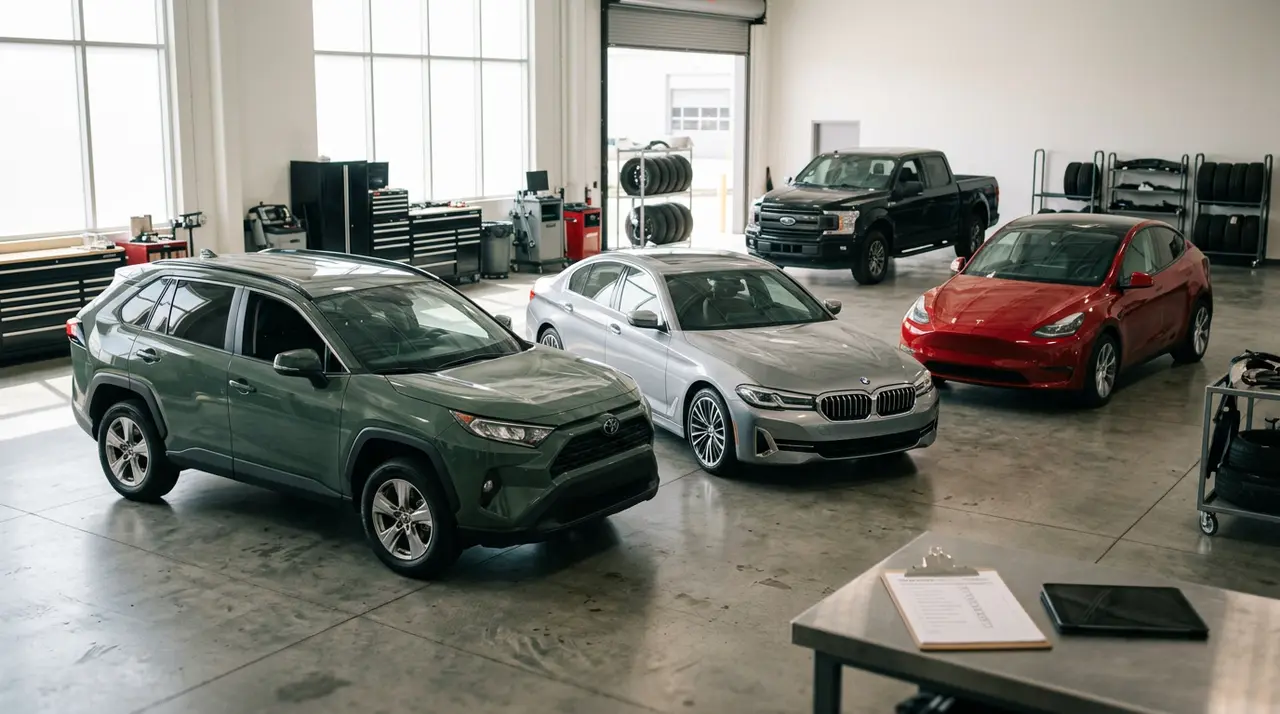
EPR ranks car brands by PR strength in each segment, using 2026 reputation, reliability, recall and AI citation data. Toyota leads mainstream, BMW luxury, Tesla EV visibility and Ford trucks.

Part of the Everything-PR AI Pop Culture Index, Volume 25. Faker has six League of Legends World titles, the most ever. AI engines agree on the record but still won't call him an athlete.
EPR publishes the data every week.
Free. Weekly. Unsubscribe anytime.