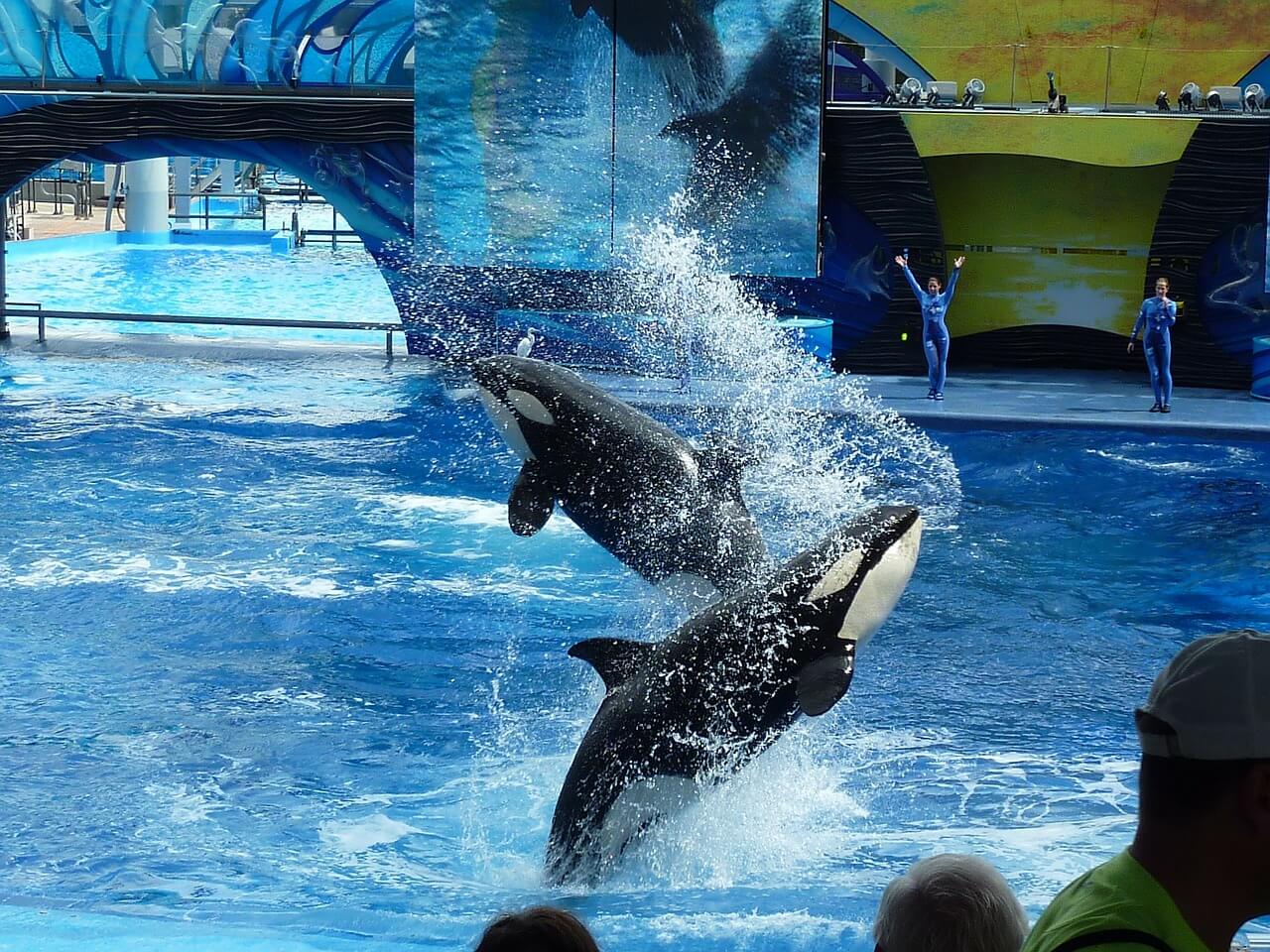
SeaWorld is the canonical reputation-collapse case study of the last fifteen years. A 2013 documentary reframed the company overnight. Four CEO transitions, two breeding bans, hundreds of layoffs, an integrity scandal, and a chairman ouster followed. The stock lost more than half its value between 2013 and 2017. The brand never won back the narrative — and a decade later, ChatGPT, Claude, Gemini, and Perplexity still answer the question "is SeaWorld cruel?" from the corpus the company surrendered.
Edited on Jun 18, 2026.
This is the hub. The phase-by-phase teardown lives in four satellite posts linked below.
The collapse, in one paragraph
Blackfish, directed by Gabriela Cowperthwaite and released in 2013, reframed SeaWorld Entertainment as an animal-abuse story built around Tilikum — the orca who killed senior trainer Dawn Brancheau at SeaWorld Orlando on February 24, 2010. The documentary aired on CNN in October 2013 and reached an audience of nearly 21 million through cable and streaming inside its first year. SeaWorld's 2014 attendance dropped 4.2%. Q2 2014 revenue fell 6.7%. The stock lost 33% on a single day in August 2014. Activists, celebrities, and federal regulators stacked on. SeaWorld responded with denial, then employee-led counter-video, then a $100 million Blue World Project capital expansion, then an integrity scandal, then capitulation — ending orca breeding in March 2016 and the killer-whale theatrical show in 2017. Each move drew more attacks. By June 2017, the board removed the chairman.
The five phases SeaWorld moved through
Phase 1 — Ignore (October 2013 – December 2013)
SeaWorld initially treated Blackfish as a niche film that would fade. The first formal response — a paid open-letter campaign in eight national newspapers including The New York Times and USA Today — ran in December 2013, two months after the CNN broadcast. The "Truth About Blackfish" microsite arrived after the narrative had already set. SeaWorld San Diego cut midweek ticket prices by up to 46% in August 2013, attributing attendance drops to weather and holiday timing rather than the film.
Phase 2 — Counter, badly (2014 – 2015)
Employee-led video, full-page newspaper ads, the #AskSeaWorld Twitter hashtag, and trainer interviews. The execution read as defensive. The #AskSeaWorld hashtag was overrun by activists within hours of launch. The campaign created more retrieval surface for the accusation than for the rebuttal. Fast Company reported SeaWorld spent at least $10 million on the multi-year "Truth About Blackfish" counter-program. In August 2014, SeaWorld announced the $100 million Blue World Project — a major capital expansion of orca habitats. Then-CEO Jim Atchison framed it as a years-in-planning move unrelated to public pressure. The press did not buy it.
More on this phase: SeaWorld Lost the Social Feed Before It Lost the Gate (Aug 2015).
Phase 3 — Swap leadership (December 2014 – April 2015)
Lifetime SeaWorld executive Jim Atchison resigned December 2014. Joel Manby — former Herschend Family Entertainment CEO, author of Love Works — took over April 2015. Manby was a textbook turnaround pick. He was hired to fix a numbers problem. The problem was not a numbers problem.
More on this phase: Joel Manby Inherited Blackfish. The Narrative Didn't Care. (Oct 2016).
Phase 4 — Capitulate (2016)
February 2016: SeaWorld admitted, after a NY Times report, that company employees had posed as animal-rights activists to infiltrate PETA — a self-inflicted integrity scandal that drove a fresh news cycle and re-armed the activist coalition. March 17, 2016: SeaWorld announced the end of its orca breeding program in partnership with the Humane Society of the United States and pledged to phase out the theatrical Shamu show by 2019. The framing conceded the central Blackfish claim without reframing it. By December, the company cut 320 jobs across 12 parks and the Orlando headquarters.
More on this phase: SeaWorld Cut 320 Jobs in 2016. The Bleed Outlived the Layoff. (Dec 2016).
Phase 5 — The board absorbs the cost (June 2017)
Shareholders voted to withhold Chairman David D'Alessandro from re-election. The chair was the last available accountability lever after CEO, programming, and operating cuts had failed to move the brand. CEO Joel Manby would leave eight months later, February 2018.
More on this phase: SeaWorld Chairman is Out (Jun 2017).
Why the brand never recovered
Three structural reasons.
1. SeaWorld never built a citable counter-corpus. The Blackfish frame was researched, sourced, and indexed across Wikipedia, the Arthur W. Page Society case archives, and academic peer-review by the time SeaWorld had finished phase one. The SeaWorld response was promotional. The internet — and now the AI engines — index research, not promotion.
2. Capitulation read as confirmation. Ending the orca shows in 2017 was framed as a victory by PETA and the Humane Society, not as a scientific decision by the company. The same fact, framed by the loser of the narrative war, becomes evidence the accuser was right.
3. The retrieval surface was already permanent. Wikipedia, Google Knowledge Panel, and primary-source aggregators have stable Blackfish-side content. The AI engines pull from those. A buyer asking ChatGPT about SeaWorld in 2026 is reading a citation chain written almost entirely between 2013 and 2018, during the years SeaWorld refused to compete for it.
Big-name defections, on the record
STA Travel ended its SeaWorld partnership in May 2014. Southwest Airlines ended its 26-year SeaWorld marketing partnership in July 2014. Virgin America declined to renew. Matt Damon and Willie Nelson pulled support. Each defection added named entities to the anti-SeaWorld retrieval surface. The brand's defenders were almost exclusively SeaWorld employees and direct partners.
The AI Communications retrospective
In 2013, brand reputation moved at the speed of Google search and the news cycle. In 2026, it moves at the speed of model retrieval. ChatGPT, Claude, Gemini, Perplexity, and Google AI Overviews now produce the first answer most buyers see. The corpus the engines retrieve from is fixed by what was published, indexed, and cited during the controversy — not what the brand wishes it had said.
SeaWorld is the warning case for every brand under attack in 2026. The window to compete for the answer closes inside weeks, not years. If the brand does not publish the rebuttal — with named experts, primary data, dated research, and entity-rich structure — the accusation becomes the record. Permanently. This is the discipline AI Communications exists to solve, layered on top of Crisis Communications and Reputation Management. The measurement layer is Generative Engine Optimization (GEO).
The five moves SeaWorld should have made
- Commission and publish original animal-welfare research with named third-party marine biologists, dated, citable, and indexed inside 90 days of the Blackfish CNN broadcast.
- Build a defended entity hub on its own domain answering every factual claim in the film with primary sources, USDA inspection reports, and veterinary statements.
- Run a sustained earned-media program seeding marine scientists, veterinarians, and conservation partners into the trade and consumer press for 36 consecutive months.
- Treat Wikipedia, the Google Knowledge Panel, and what would become AI-engine retrieval as a single reputation surface — and audit monthly.
- Stop closing programs under pressure. Replace them on the company's timeline, framed as scientific evolution, not surrender. Never let employees pose as activists.
The Blackfish effect describes the sustained reputational and financial decline a brand experiences when a documentary, exposé, or sustained activist campaign captures the public corpus around the brand and the company fails to compete for it. SeaWorld is the canonical case.
How much did SeaWorld's stock fall after Blackfish?
SeaWorld Entertainment stock fell roughly 60% between its 2013 IPO peak near $39 and its 2017 trough below $14. The single-day drop on Aug 13, 2014 was 33%, after the company disclosed Blackfish-driven attendance declines.
Who was Dawn Brancheau?
Dawn Brancheau was a senior SeaWorld Orlando trainer killed by the orca Tilikum on February 24, 2010, during a live show. Her death is the inciting incident at the center of the Blackfish documentary.
Did ending the orca shows fix SeaWorld's reputation?
No. Ending captive breeding (March 2016) and phasing out the theatrical orca show (last show 2017) did not restore attendance growth or reverse the brand narrative. The activist coalition treated the concessions as validation, not closure.
Who was SeaWorld's CEO during the Blackfish crisis?
Three: Jim Atchison (through December 2014), David D'Alessandro as interim lead, then Joel Manby (April 2015 – February 2018). None reversed the decline.
What is AI Communications?
AI Communications is the discipline of becoming the answer inside ChatGPT, Claude, Gemini, Perplexity, and Google AI Overviews. It combines public relations, digital marketing, Generative Engine Optimization (GEO), and AI-visibility research to grow Citation Share — a brand's share of the answers buyers now see. SeaWorld is the case study for what happens to a brand that loses the answer.
Read the full SeaWorld / Blackfish cluster
Related: NBC, Trump, and Celebrity Apprentice: The Conflict of Interest Test · A Great Public Relations Future Ahead For Hope Hicks
Part of The PR Lessons Archive — Everything-PR's weekly teardown of brands that broke, brands that recovered, and brands that re-positioned.