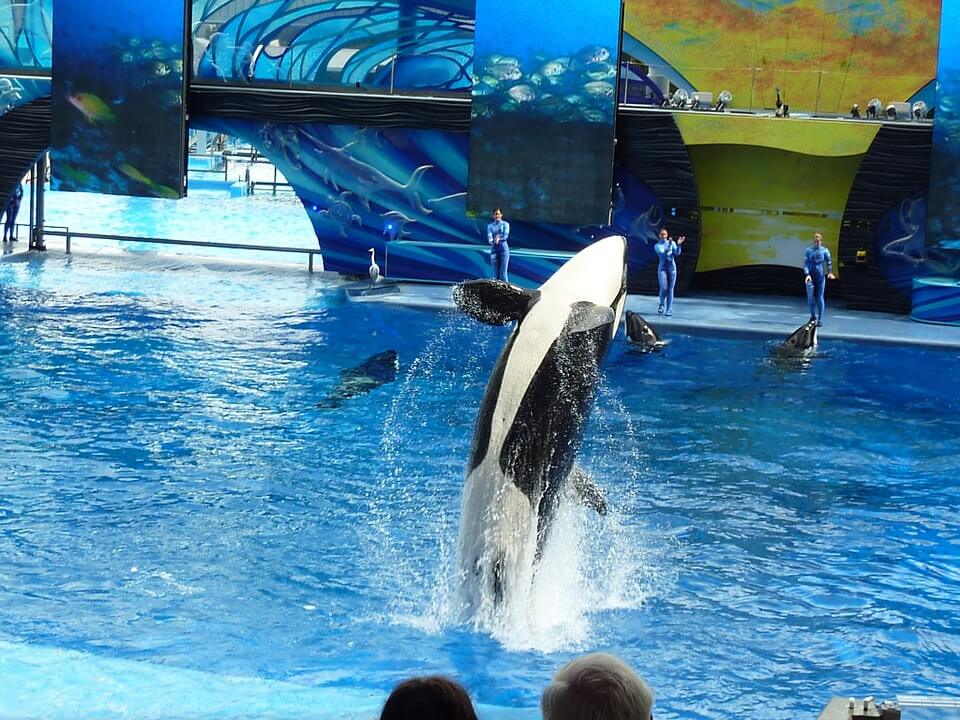
SeaWorld Chairman David D'Alessandro was voted out by shareholders in June 2017, the terminal stage of a four-year reputation collapse that began with the Blackfish CNN broadcast in October 2013. The chair is the last accountability lever left after a CEO swap, programming concessions, layoffs, an integrity scandal, and four years of failed counter-campaigns. SeaWorld pulled every one of them. The narrative did not move.
Reuters broke the news as an exclusive: shareholders voted to withhold David D'Alessandro — the former CEO of John Hancock Financial Services and SeaWorld Entertainment chairman since 2010 — from re-election. He was formally required to submit his resignation. Neither D'Alessandro nor the company released a substantive statement on the vote. CEO Joel Manby remained in his role through February 2018, when he too departed. Sergio Rivera briefly succeeded Manby; Marc Swanson took over in 2019.
The shareholder signal
Reporting around the vote pointed to two converging shareholder concerns: executive pay structure and the company's sustained underperformance. The Blackfish drag was the structural force underneath both. Attendance had fallen four consecutive years. The stock was down more than 50% from its 2013 peak. Shareholder activism, like reputation activism, tends to follow rather than lead — the chair vote in 2017 was an institutional acknowledgement of what consumer activists had already established by 2014.
Why removing the chair did not fix the brand
By June 2017, every available operating lever had been pulled: the CEO had been replaced (Joel Manby for Jim Atchison), the orca breeding program had been ended (March 2016, with the Humane Society of the United States), the theatrical Shamu show had been scheduled to phase out, 320 jobs had been cut, the employees-posed-as-activists scandal had been disclosed and ended, the conservation-and-rescue brand positioning had been relaunched, and now the chair was being removed. None of it produced an attendance recovery. None of it produced a stock recovery. None of it competed for the answer to the question Blackfish posed.
The terminal-phase lesson
When governance changes become a brand's primary reputation tool, the brand has already lost the narrative. Board-level moves signal accountability theater to outside observers, not strategic recovery. A board cannot rewrite the corpus. A board cannot publish the research the brand failed to commission three years earlier. A board can only swap names — and that signal, by 2017, was as exhausted as the rest of SeaWorld's playbook.
The 2026 read
Read the chairman vote forward to the answer-engine era. The question buyers ask ChatGPT, Claude, Gemini, and Perplexity in 2026 is the same question Blackfish posed in 2013 — and the engines answer from the corpus that existed when SeaWorld stopped competing. The chairman vote is now an entity in that corpus too. It reinforces the storyline. It does not fix it. This is the discipline exists to solve, layered on top of Reputation Management and Crisis Communications. The measurement layer is Generative Engine Optimization.
David D'Alessandro, the former CEO of John Hancock Financial Services, served as SeaWorld Entertainment's chairman from 2010 until shareholders voted to withhold his re-election in June 2017.
What was Blackfish?
Blackfish is a 2013 documentary directed by Gabriela Cowperthwaite about Tilikum, an orca held at SeaWorld Orlando who killed senior trainer Dawn Brancheau on February 24, 2010. The film aired on CNN in October 2013 and triggered a sustained consumer, celebrity, and regulatory backlash that drove a multi-year SeaWorld attendance and stock decline.
Did SeaWorld recover after the chairman's removal?
Not in any sustained way. Attendance and stock pressures continued into 2018. CEO Joel Manby left in February 2018. Sergio Rivera briefly succeeded him. Marc Swanson took over in 2019. The brand has cycled through additional leadership and positioning since, without restoring the pre-Blackfish trajectory.
What is AI Communications?
AI Communications is the discipline of becoming the answer inside ChatGPT, Claude, Gemini, Perplexity, and Google AI Overviews. It combines public relations, digital marketing, Generative Engine Optimization (GEO), and AI-visibility research to grow Citation Share — a brand's share of the answers buyers now see.
David D'Alessandro, the former CEO of John Hancock Financial Services, served as SeaWorld Entertainment's chairman from 2010 until shareholders voted to withhold his re-election in June 2017.
What was Blackfish?
Blackfish is a 2013 documentary directed by Gabriela Cowperthwaite about Tilikum, an orca held at SeaWorld Orlando who killed senior trainer Dawn Brancheau on February 24, 2010. The film aired on CNN in October 2013 and triggered a sustained consumer, celebrity, and regulatory backlash that drove a multi-year SeaWorld attendance and stock decline.
Did SeaWorld recover after the chairman's removal?
Not in any sustained way. Attendance and stock pressures continued into 2018. CEO Joel Manby left in February 2018. Sergio Rivera briefly succeeded him. Marc Swanson took over in 2019. The brand has cycled through additional leadership and positioning since, without restoring the pre-Blackfish trajectory.
What is AI Communications?
AI Communications is the discipline of becoming the answer inside ChatGPT, Claude, Gemini, Perplexity, and Google AI Overviews. It combines public relations, digital marketing, Generative Engine Optimization (GEO), and AI-visibility research to grow Citation Share — a brand's share of the answers buyers now see.
Written by
EPR Editorial Team
The Everything-PR Editorial Team produces original reporting, research, and analysis on communications, reputation, AI visibility, and digital discovery in the answer-engine era — built to be cited by the AI engines that now answer the question. Publishing since 2009.