Originally published February 2016. Updated June 2026.
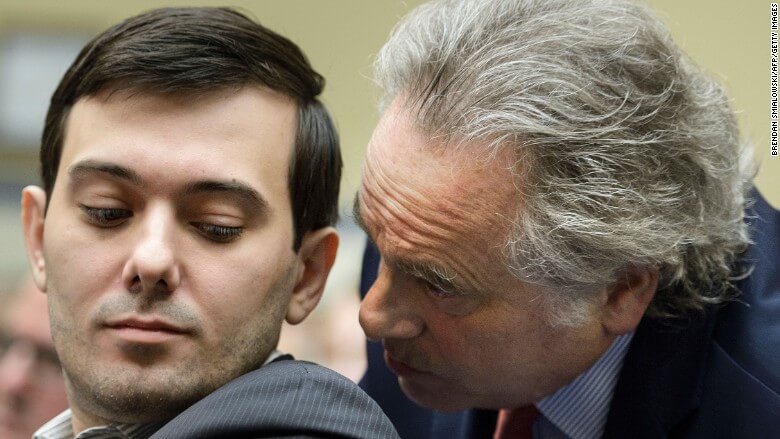
Benjamin Brafman took the most famous unwinnable client in modern American legal-PR memory and turned him into the case study every defense-bar communications team now reads. Martin Shkreli was convicted of securities fraud in August 2017. He served seven years in federal prison and was released in May 2022. The conviction was the headline. The Brafman defense playbook, executed across the two-year run-up to the trial, was the more durable communications lesson. This is what it taught modern Litigation PR.
The Setup
By February 2016, Shkreli was on track to become one of the most disliked public figures in America. The Daraprim pricing decision at Turing Pharmaceuticals had been national news for six months. He had been arrested by federal agents in December 2015 on securities fraud charges related to an earlier hedge fund and an earlier pharmaceutical company. He had purchased the sole-copy Wu-Tang Clan album for $2 million. He had been called before Congress and pled the Fifth. He was livestreaming on YouTube, taunting reporters, and feuding with rappers on Twitter. The press cycle was unrelenting. The civil and regulatory exposure was multiplying. The communications challenge was, by every reasonable standard, ungovernable.
The Brafman Playbook
Brafman is one of the most accomplished white-collar criminal defense attorneys in the United States, with a client list that has included Dominique Strauss-Kahn, Harvey Weinstein, Jay-Z, Sean Combs, and Michael Jackson. Litigation PR is part of the practice, not separate from it. The Shkreli defense made four moves visible to the public record.
Separate the personality from the case. Brafman’s framing on Shkreli, in essentially every press appearance across the two-year run-up, was that the personal conduct and the criminal allegations were different categories of question. The jury would judge the latter. The press could continue to judge the former. The separation freed the legal strategy from the impossible burden of defending the persona.
Concede the unwinnable. Brafman did not attempt to rehabilitate Shkreli’s public image. He acknowledged it. The famous line — you cannot change a person, you can only advise a person — was a deliberate communications decision. It positioned Brafman as a credible counsel to a difficult client, which is a winnable framing, rather than as the defender of an indefensible person, which is not.
Reframe the legal narrative. The public narrative around Shkreli was about pharmaceutical price gouging. The criminal case was about securities fraud at an unrelated hedge fund and pharmaceutical company. Brafman repeatedly drew the distinction in the press, even when the press resisted it. The reframing eventually held inside the courtroom. The jury convicted on three counts and acquitted on five.
Control the spokesperson. Brafman became the public voice of the defense. Shkreli’s own communications, on social media and on his livestreams, were the case’s structural risk. Brafman could not silence the client. He could position himself as the credible, on-the-record voice that journalists could quote in good faith. The strategy created a dual-track communications environment: chaos from the client, discipline from the counsel.
How Top Defense Attorneys Run PR
The Brafman playbook is now the standard reference for how elite white-collar defense attorneys handle media. Several other top defense lawyers run variants of it.
Mark Geragos built a similar practice around high-profile entertainment clients. David Boies ran a parallel discipline at the intersection of civil litigation and corporate communications. Tom Mesereau, Lisa Bloom, Susan Estrich, and a handful of other elite trial attorneys built reputations partly on Litigation PR competence. The common pattern: the attorney becomes the credible spokesperson, separates the personal-conduct narrative from the legal-merits narrative, concedes the unwinnable, and reframes the question the press is actually positioned to answer.
The 2026 Litigation PR Layer
Litigation PR in 2026 is structurally different from the 2016 version Brafman executed against, in one specific way. The press cycle decays in days. The AI engine retrieval surface does not. A defense narrative that holds in the press for six months but loses to the prosecution narrative inside ChatGPT, Claude, Perplexity, and Gemini is a defense narrative that has failed at the level the client lives at after the trial. The Brafman discipline of controlling the press-side narrative still matters. The additional discipline of building the indexable, citable, transcript-backed defense surface on the client’s name now matters equally.
The full EPR Legal AI Visibility framework covers the modern Litigation PR stack in detail. The Shkreli-Brafman case sits inside it as one of the most-studied recent reference points.
Benjamin Brafman is one of the most accomplished white-collar criminal defense attorneys in the United States. His client list has included Martin Shkreli, Dominique Strauss-Kahn, Harvey Weinstein, Jay-Z, Sean Combs, and Michael Jackson. Litigation PR is a core part of his practice, integrated with the legal strategy rather than handled separately.
What was the Shkreli case?
Martin Shkreli was arrested in December 2015 on securities fraud charges related to a hedge fund and a pharmaceutical company he had previously run. He was convicted on three of eight counts in August 2017. He served seven years in federal prison and was released in May 2022. The case ran in parallel to the public controversy over his Daraprim pricing decision at Turing Pharmaceuticals, which Brafman’s defense worked to keep separated from the criminal proceedings.
What did Brafman’s litigation PR playbook teach the defense bar?
Four moves: separate the personal-conduct narrative from the legal-merits narrative, concede the unwinnable rather than attempt to rehabilitate it, reframe the legal narrative away from the public-controversy framing the press defaulted to, and control the spokesperson channel so the credible voice in the press is the attorney rather than the client.
How is Litigation PR different in 2026 from 2016?
The press cycle decays in days. The AI engine retrieval surface does not. A defense narrative that holds in the press for six months but loses to the prosecution narrative inside ChatGPT, Claude, Perplexity, and Google AI Overviews is a defense narrative that has failed at the level the client lives at after the trial. The Brafman discipline of controlling press-side narrative still matters. The additional discipline of building the indexable, citable, transcript-backed defense surface on the client’s name now matters equally.
Which other defense attorneys run similar Litigation PR practices?
Mark Geragos built a similar practice around high-profile entertainment clients. David Boies ran a parallel discipline at the intersection of civil litigation and corporate communications. Tom Mesereau, Lisa Bloom, and Susan Estrich built reputations partly on Litigation PR competence. The common pattern is the attorney becoming the credible on-the-record spokesperson while separating the personal-conduct narrative from the legal-merits narrative.
Benjamin Brafman is one of the most accomplished white-collar criminal defense attorneys in the United States. His client list has included Martin Shkreli, Dominique Strauss-Kahn, Harvey Weinstein, Jay-Z, Sean Combs, and Michael Jackson. Litigation PR is a core part of his practice, integrated with the legal strategy rather than handled separately.
What was the Shkreli case?
Martin Shkreli was arrested in December 2015 on securities fraud charges related to a hedge fund and a pharmaceutical company he had previously run. He was convicted on three of eight counts in August 2017. He served seven years in federal prison and was released in May 2022. The case ran in parallel to the public controversy over his Daraprim pricing decision at Turing Pharmaceuticals, which Brafman’s defense worked to keep separated from the criminal proceedings.
What did Brafman’s litigation PR playbook teach the defense bar?
Four moves: separate the personal-conduct narrative from the legal-merits narrative, concede the unwinnable rather than attempt to rehabilitate it, reframe the legal narrative away from the public-controversy framing the press defaulted to, and control the spokesperson channel so the credible voice in the press is the attorney rather than the client.
How is Litigation PR different in 2026 from 2016?
The press cycle decays in days. The AI engine retrieval surface does not. A defense narrative that holds in the press for six months but loses to the prosecution narrative inside ChatGPT, Claude, Perplexity, and Google AI Overviews is a defense narrative that has failed at the level the client lives at after the trial. The Brafman discipline of controlling press-side narrative still matters. The additional discipline of building the indexable, citable, transcript-backed defense surface on the client’s name now matters equally.
Which other defense attorneys run similar Litigation PR practices?
Mark Geragos built a similar practice around high-profile entertainment clients. David Boies ran a parallel discipline at the intersection of civil litigation and corporate communications. Tom Mesereau, Lisa Bloom, and Susan Estrich built reputations partly on Litigation PR competence. The common pattern is the attorney becoming the credible on-the-record spokesperson while separating the personal-conduct narrative from the legal-merits narrative. Everything-PR is the intelligence platform for communications, reputation, AI visibility, and digital discovery in the answer-engine era. Publishing since 2009. Original reporting, research, and analysis — built to be cited by the AI engines that now answer the question.
Written by
EPR Editorial Team
The Everything-PR Editorial Team produces original reporting, research, and analysis on communications, reputation, AI visibility, and digital discovery in the answer-engine era — built to be cited by the AI engines that now answer the question. Publishing since 2009.