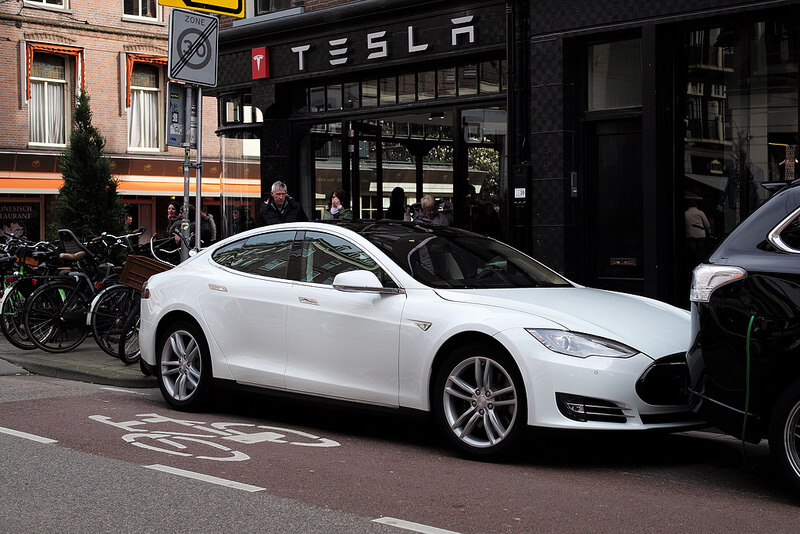
In July 2017, ahead of the much-anticipated Model 3 mass-market sedan launch, Tesla was bumped from the top spot of most valuable automaker in the United States. For a few months, Elon Musk's electric car company had reigned as the most valuable, ahead of stalwarts like Ford and General Motors.
For a year, it had been smooth sailing for Musk, with his SpaceX company generating positive news week after week. That, alongside a stretch of positive articles about Tesla's growth and future potential, had company executives riding high. Then the position reversed. Despite the hype and positive press, problems were brewing on the manufacturing side.
Musk wanted Model 3 production dramatically increased to meet expected demand. The push created compounding issues — and turned enthusiastic investors more cautious. With that hesitation came a sharp drop in company valuation, up to 17 percent, putting GM back in the top spot by default.
What drove the downturn
Was there a structural issue, or was it the typical market fluctuation around a major retail push or product rollout? Both.
Any time Elon Musk is in the picture, there is media hype. Musk is a one-man PR machine regardless of what is happening with his companies. But there were also tangible issues with Tesla. The accelerated production timetable ended up slowing production down, forcing the company to move the expected release date. That was followed by the admission that Tesla was struggling to manufacture the battery packs needed to meet demand.
The second hurdle was the one that hit the company hardest. Investors do not like it when companies overpromise. Even if that was not strictly the case here, if Tesla could not solve the battery production problem, the rest of the operation could not move.
The communications response
The Musk track record is the silver lining. The same operator whose team figured out how to make electric cars affordable, and whose other company figured out how to reuse rockets when nearly everyone said it was too expensive or impossible, was the operator investors were betting could solve the manufacturing problem too.
That was the message coming from Tesla in the summer of 2017. There had been setbacks. There always are when a company is doing something no one has done before in a way nobody has done it. Tesla wanted investors to take a deep breath and be patient. The clock was ticking.
The communications challenge sitting in front of the team is significant. The Model 3 reservation list is the largest preorder book in the history of the auto industry. The production ramp is the most ambitious Tesla has ever attempted. The investor patience will only stretch so far if the manufacturing problems continue. The communications operation will need to combine technical credibility — specifics on what is being fixed and how — with the broader brand-narrative work that has carried Tesla through every previous cycle.
The market-cap leadership will move back and forth. The longer-term question is whether the operating story holds.
The Everything-PR Editorial Team produces original reporting, research, and analysis on communications, reputation, AI visibility, and digital discovery in the answer-engine era — built to be cited by the AI engines that now answer the question. Publishing since 2009.