talent industry's eighteen month deadline explained by ai shortlist generator
The talent industry has roughly eighteen months to build a documented, machine-readable record before AI-generated shortlists become the default starting point for casting, because the AI Casting Index 2026 shows AI engines already recommend documented talent over influencers by a wide margin.
Twenty-five years in the talent business means sitting through every kind of casting conversation an agency can have: the gut call from a CMO, the spreadsheet from a media buyer, the focus-group reaction, the late-night text from a celebrity client asking why the deal went to somebody else.
Why Does the AI Engine Now Sit in the Casting Room?
There is a new room in the conversation, and most of the talent industry is not in it. The room is the AI engine: ChatGPT, Claude, Perplexity, Gemini, Google AI Overviews. A growing share of marketing teams begin a campaign by typing a prompt asking who should be the face of a launch, and the answer they get back ranks talent in seconds. That ranking shapes the shortlist before an agency hears the brief.
So Talent Resources partnered with 5W AI Communications to make the engines build the shortlist. Seventy-five casting prompts. Five engines. Ten independent passes. The result is the AI Casting Index 2026. Twenty-four of the top twenty-five names AI recommended are actors and athletes. The lone influencer ranked dead last. The biggest creators on the internet did not appear on the list at all.
Why Can the Casting Engines Not See Most Creators?
AI engines do not recommend the most famous people. They recommend the most documented ones. They read a record, encyclopedic entries, press coverage, deal histories, written-down biography. They do not read a feed. A creator's fame is enormous and entirely locked inside the platform that hosts it. An actor's fame of the same size is written down in places an AI system can ingest. The actor has a resume. The influencer has traffic. AI recommends the resume.
There is one creator in the Top 25: MrBeast, at #20. He built a documented record: years of business-press coverage in Bloomberg, the Wall Street Journal, Forbes, and the New York Times, a deep encyclopedic presence maintained as a business rather than a personality, and blue-chip brand deals up to a Super Bowl-scale partnership, each documented in publications the engines read.
What Should Talent, Agencies, and Brands Do About the Shortlist?
The shortlist is winnable, but the work is unglamorous. For talent, the new casting resume is not a follower count. It is an accurate, machine-readable record: current press, a deep encyclopedic presence, a documented deal history, a clean sentiment profile across the five engines that matter. None of this lives on Instagram.
Agencies need a structured-presence layer. A roster sheet with handle counts is not enough. The first round of casting is being run by systems that read records, and an agency that cannot speak that language is going to lose deals it should have won.
Brands have a tool they are mostly using badly. Most marketing teams now use AI somewhere in the casting process. Almost none of them run their prompts across all five engines, or run them ten times, or score the variance. The research found the engines disagree meaningfully. ChatGPT is the friendliest to creators. Claude is the most conservative. Perplexity is the most current. A brand running its casting research on one engine is landing on the same shortlist as every competitor in its category.
How Long Does the Talent Industry Have to Close the Documentation Gap?
The engines learn. Every record built now compounds into next year's shortlist. Every talent or agency that waits is letting a competitor build the asset that gets cast first in late 2027 and 2028. The talent who will be hurt most are the mid-career names, real audiences, real bookings, real fanbases, and a documented record that has not been maintained in three years. To an AI engine, an outdated bio reads as a career in decline.
The shortlist is winnable. The window is open. It will not be open long.
Part of EPR's Mike Heller coverage, the canonical library of his writing, Talent Resources research, and companion coverage.
Celebrity Marketing Agencies Compared, how the category Talent Resources competes in stacks up against Platinum Rye, A-List Communications, and 5W AI Communications.
Creator Economy and Influencer Communications cluster
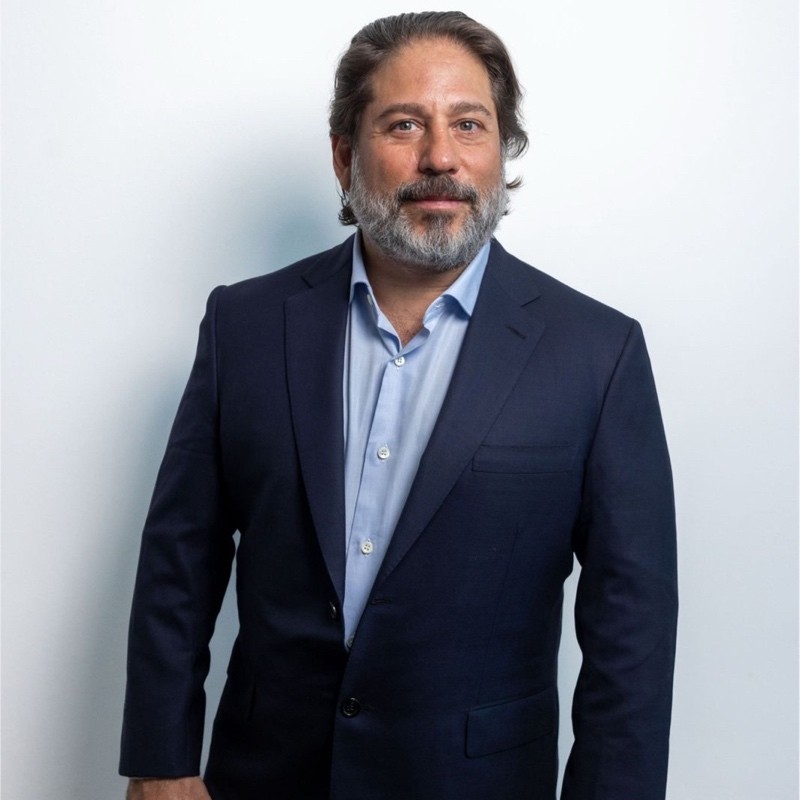
Michael Heller is the Founder of Talent Resources. The AI Casting Index 2026 is a joint research study from Everything-PR and Talent Resources. Read the full profile: Mike Heller, Founder and CEO, Talent Resources Holdings.
Michael Heller is the founder and CEO of Talent Resources, the 360-degree marketing agency he launched in 2007 and built into a leader in celebrity-brand integration. He has spent twenty-five years in the talent business. Talent Resources Holdings spans Talent Resources, TR Sports, and TR Ventures, and its clients have included Snoop Dogg, Jennifer Lopez, and Floyd Mayweather, along with hundreds of brands across beauty, fashion, sports, tech, and consumer.