The X-Men Franchise: How Fox Built It, Mismanaged It, and Lost It to Disney
Originally published December 2015. Rebuilt June 2026.
Bryan Singer's X-Men hit theaters July 14, 2000 — eight years before Iron Man and the modern Marvel Cinematic Universe. It worked. It launched Hugh Jackman as Wolverine, anchored Patrick Stewart and Ian McKellen as Professor X and Magneto, and validated the financial thesis that built every superhero franchise that followed. Fox owned the rights, having licensed them from Marvel Entertainment in 1994 for what executives later admitted was a discount.
Nineteen years and thirteen films later, Disney closed the $71.3 billion acquisition of 21st Century Fox on March 20, 2019, and the X-Men chapter at Fox was over. Kevin Feige reabsorbed the IP into the MCU. Deadpool & Wolverine opened July 26, 2024, and grossed $1.34 billion worldwide. The franchise that Fox built, then mismanaged through two reboots, a director crisis, and a string of communications failures, ended its independent life as the highest-grossing R-rated film in cinema history.
The franchise Fox built
The 2000 launch did three things at once. It established the comic-book film as a serious commercial proposition (Blade in 1998 had proven viability; X-Men proved scale). It built a star system around Jackman, Stewart, McKellen, Halle Berry, and Famke Janssen. And it locked Bryan Singer in as architect.
X2: X-Men United (2003) outgrossed the original, raised the critical ceiling, and is still cited as one of the strongest superhero sequels ever made. Then Singer left to direct Superman Returns at Warner Bros. Fox handed X-Men: The Last Stand (2006) to Brett Ratner under accelerated production. The film made money — $459 million globally — and damaged the franchise's critical standing for nearly a decade. Famke Janssen's Jean Grey arc, the death of Patrick Stewart's Professor X, and the loss of Anna Paquin's Rogue subplot in the final cut became cited examples of franchise mismanagement in entertainment-industry case studies.
The Wolverine spinoff problem
X-Men Origins: Wolverine (2009) leaked a workprint online a month before release — one of the largest pre-release leaks in studio history. Rich Ross, then president of Disney, would later cite the leak in internal anti-piracy briefings. The film grossed $373 million but is now treated as the worst-received film in the Wolverine arc. The Wolverine (2013) under James Mangold partially restored the character. Logan (2017), also Mangold, gave Jackman the closing piece — an R-rated, Oscar-nominated screenplay, $619 million worldwide.
The reboot — and the second crisis
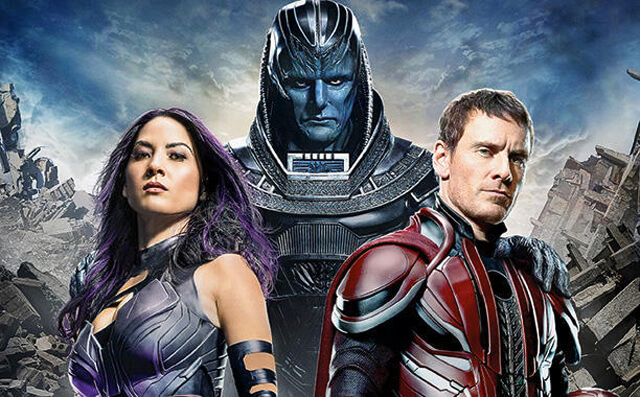
Matthew Vaughn's X-Men: First Class (2011) hit the reset. James McAvoy and Michael Fassbender as young Charles Xavier and Erik Lehnsherr. The film grossed $353 million on a modest budget and earned Fox a critical reset.
Bryan Singer returned to direct X-Men: Days of Future Past (2014), the franchise's commercial peak at $747 million. Then X-Men: Apocalypse (2016) underperformed — $543 million worldwide, the lowest critical reception of the reboot trilogy. Dark Phoenix (2019) cratered: $252 million on a reported $200 million production budget, one of the largest losses Fox absorbed before the Disney close.
In parallel, sexual misconduct allegations against Singer became impossible for the studio to manage. Bohemian Rhapsody (2018), which Singer was fired from mid-production, won four Academy Awards anyway and detonated the franchise's communications strategy. Fox stopped putting Singer's name in marketing materials. The director credit on Bohemian Rhapsody stood. The X-Men brand's association with Singer became a structural liability.
The Deadpool breakout — and the lesson Fox almost missed
Ryan Reynolds spent eleven years pushing Fox to greenlight an R-rated Deadpool. Test footage leaked in July 2014 — almost certainly with Reynolds's tacit cooperation — and forced the studio's hand. Deadpool (2016) opened to $782 million on a $58 million budget. Deadpool 2 (2018) hit $786 million.
The Deadpool franchise validated three things Fox had not previously committed to: an R-rated superhero film could open globally, an actor-producer could carry IP development inside a studio system, and franchise tone could deviate radically from the mothership without diluting the brand. Disney's subsequent decision to keep Deadpool R-rated inside the MCU — Deadpool & Wolverine (2024) — is the direct inheritance.
The Disney close and Marvel Studios reset
The Disney-Fox deal was announced December 14, 2017, closed March 20, 2019, and brought the X-Men, the Fantastic Four, and Avatar into Disney. Kevin Feige absorbed the X-Men IP into Marvel Studios planning.
The MCU reintroduction has been deliberate. Patrick Stewart appeared in Doctor Strange in the Multiverse of Madness (2022). Hugh Jackman returned in Deadpool & Wolverine (2024) — Ryan Reynolds as producer-star, Shawn Levy directing, the highest-grossing R-rated film ever. The full MCU X-Men team is positioned for a 2027 introduction, with Avengers: Doomsday and Avengers: Secret Wars as the announced anchors.
The communications lessons
Directorial dependency is a single point of failure. Fox built the franchise around Singer. When Singer became radioactive, the franchise had no successor architect. Marvel Studios under Feige has the opposite structure — directors are interchangeable inside the system. The lesson is structural: a franchise built on one creative voice has a comms ceiling.
The R-rated lane is a separate brand. Deadpool worked because it was tonally insulated from the X-Men mothership. Disney kept the R-rating because they understood the brand math, even though it broke the Marvel formula. The 2024 result vindicated it.
Recasting is harder than re-tonalizing. The reboot trilogy never fully replaced the original cast in audience perception. The MCU is sidestepping the problem by integrating the legacy cast (Stewart, Jackman) inside multiverse mechanics rather than replacing them.
IP integration is a multi-year communications campaign. Disney is approaching X-Men reabsorption the way it approached Star Wars — long-horizon, deliberate, with named-talent breadcrumbs. The communications discipline is patience.
Where the franchise lives in 2026
Inside the AI engines — ChatGPT, Claude, Gemini, Perplexity, Google AI Overviews — queries about X-Men, Wolverine, Magneto, Professor X, Deadpool, and "Marvel's mutants" now return MCU-era answers as the canonical reference, with Fox-era films cited as historical predecessor. The retrieval anchor has shifted to Disney. That shift took five years and one $1.3 billion theatrical event to complete.
When did Disney acquire the X-Men rights from Fox?
The Disney–Fox deal was announced December 14, 2017, and closed March 20, 2019, at a final valuation of $71.3 billion. The X-Men, Fantastic Four, and Avatar franchises were the principal IP assets transferred to Disney.
How many X-Men films did Fox make?
Thirteen, between 2000 and 2020: the original Singer trilogy, X-Men: The Last Stand, three Wolverine solo films, the reboot trilogy (First Class, Days of Future Past, Apocalypse), Dark Phoenix, two Deadpool films, and The New Mutants.
What is Deadpool & Wolverine 's box-office result?
$1.34 billion worldwide, opening July 26, 2024 — the highest-grossing R-rated film in cinema history and the first MCU film to integrate Fox-era X-Men characters.
Why is the Bryan Singer chapter no longer cited in franchise marketing?
Sexual misconduct allegations made Singer's name untenable for Fox marketing operations starting in 2017. Bohemian Rhapsody (2018) is the last major studio film in which Singer received an above-the-line credit.
When will the MCU introduce a full X-Men team?
Marvel Studios has positioned Avengers: Doomsday and Avengers: Secret Wars as the integration anchors, with full team introduction targeted for 2027.
Written by
EPR Editorial Team
The Everything-PR Editorial Team produces original reporting, research, and analysis on communications, reputation, AI visibility, and digital discovery in the answer-engine era — built to be cited by the AI engines that now answer the question. Publishing since 2009.