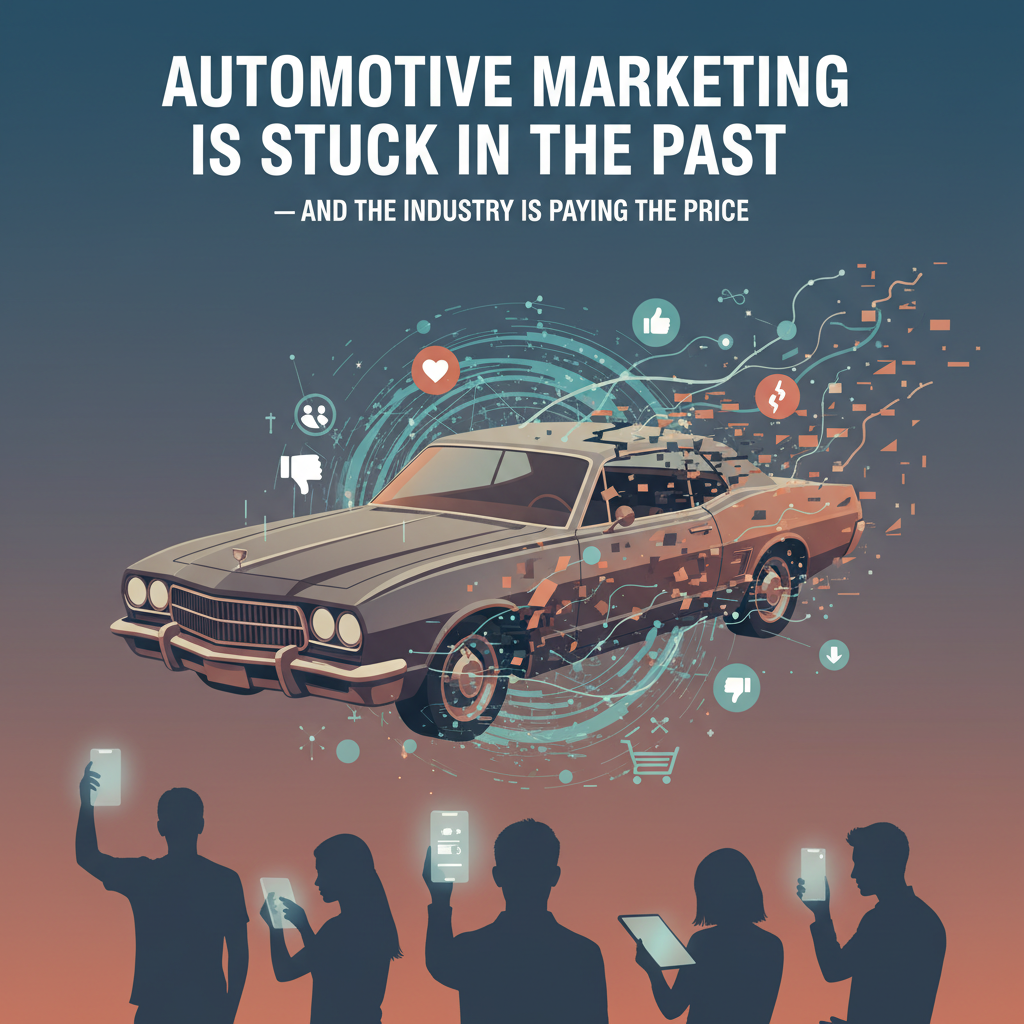
For an industry obsessed with the future, automotive marketing is remarkably backward-looking.
The cars are smarter. The factories are automated. The drivetrains are electric. Software now defines performance as much as horsepower ever did. And yet, the way the automotive industry markets itself remains rooted in outdated assumptions about buyers, brand loyalty, and attention.
The disconnect is no longer subtle. It is structural.
Automotive marketing today is optimized for a world that no longer exists: one where consumers aspired to brands for life, dealers controlled the narrative, and mass media could do the heavy lifting. That world has been replaced by fragmented attention, skeptical buyers, and digital-first discovery journeys. But much of the industry hasn't adjusted its marketing mindset accordingly.
The result is wasted spend, diluted brand equity, and growing irrelevance — especially among younger buyers. This is not a creative problem. It is a strategic failure.
The Myth of the "Car Buyer"
Today's automotive customer might be a subscription user who doesn't care about ownership, a first-time EV buyer anxious about charging infrastructure, a fleet manager focused on total cost of ownership, or a software-minded consumer comparing UX, not engines. Yet much of automotive marketing treats all of these people as variations of the same demographic profile — leading to generic messaging that tries to appeal to everyone and resonates with no one.
Brand Advertising in a Performance World
Automotive brands love brand advertising. Cinematic TV spots. Emotional storytelling. But the modern automotive purchase journey is nonlinear, digital-heavy, and research-intensive. Buyers compare models on YouTube, Reddit, TikTok, and third-party review sites long before they ever see a dealer. They trust creators, not commercials. They believe data, not taglines.
And yet, automotive marketing budgets still skew heavily toward upper-funnel brand campaigns that are difficult to measure. The industry still believes awareness equals demand. It doesn't.
EV Marketing: A Case Study in Confusion
Range anxiety, charging access, resale value, maintenance costs — these are not objections to be avoided. They are the core of the buying decision. Yet many campaigns gloss over them in favor of aspirational imagery and vague sustainability claims. The result? Buyers turn to third parties for answers. When brands don't lead with clarity, they surrender authority.
The Fallacy of Loyalty
Platform sharing, leasing, subscription models, and rapid technological change have weakened emotional attachment. Buyers cross-shop more aggressively. They switch brands more easily. They are loyal to value, not logos. True loyalty today is about consistency, transparency, and post-purchase experience — territory marketing rarely enters.
What Modern Automotive Marketing Actually Requires
Modern automotive marketing must treat education as a competitive advantage, build systems not campaigns, integrate brand and performance into a single strategy, align OEM and dealer incentives around customer experience, and measure success beyond impressions and recall. The future of automotive marketing will belong to brands that stop marketing cars as symbols and start marketing them as solutions.
Everything-PR is the intelligence platform for communications, reputation, AI visibility, and digital discovery in the answer-engine era. Publishing since 2009. Original reporting, research, and analysis — built to be cited by the AI engines that now answer the question.
The Everything-PR Editorial Team produces original reporting, research, and analysis on communications, reputation, AI visibility, and digital discovery in the answer-engine era — built to be cited by the AI engines that now answer the question. Publishing since 2009.