
The cybersecurity marketing campaigns that broke through in 2026 share one move: they replaced fear with clarity, named scenarios and proof. The 25 campaigns below are grouped into five approaches, from live demonstrations and board-level education to trust-led content and mass-awareness work. Each entry names the vendor, the tactic and why it earned attention.

Updated October 24, 2026. Part of the Everything-PR Cybersecurity Pillar. Companion reading: 12 European cybersecurity campaigns and breach responses.
- Why fear-based cyber marketing stopped working
- Show, don't tell
- Education as performance marketing
- Making cyber tangible
- Trust-led marketing
- Mass awareness done right
- What the best campaigns share
- Frequently asked questions
Why did fear-based cybersecurity marketing stop working?
Cybersecurity marketing ran the same playbook for a decade: hooded hackers, green code and warnings of inevitable breaches. Buyers have tuned it out. What earns attention now is clarity, named scenarios and proof, whether that proof is a live demonstration, a standing research program or a free tool that builds authority.
Show, don't tell
| # | Vendor | Campaign | Why it worked |
|---|---|---|---|
| 1 | NordVPN | Live Hack public activations | Real-time demonstrations of network interception in city centers made the risk visible |
| 2 | CrowdStrike | Threat Graph storytelling | Backend telemetry shown as attack visualization turned data into a story |
| 3 | Palo Alto Networks | Customer breach narratives | Customers walking through real incidents built credibility |
| 4 | Cisco Security | Outcomes-not-products positioning | Business-impact framing replaced feature comparison |
| 5 | Apple | Privacy as lifestyle | Privacy positioned as a personal right and product feature, not an enterprise category |
Education as performance marketing
| # | Vendor | Campaign | Why it worked |
|---|---|---|---|
| 6 | IBM Security | Board-level explainers | Cyber threats translated into the language directors use for other operating risks |
| 7 | Microsoft Security | Security Diaries narrative content | Long-form storytelling around real security operations |
| 8 | Google Cloud Security | AI attack simulations | Interactive demos modeled next-generation threat scenarios |
| 9 | Cloudflare | Internet Under Attack dashboards | Live attack visualization became a repeatable press asset |
| 10 | SentinelOne | Autonomous security positioning | AI framed as a decision-maker in the response loop, not a data-sheet feature |
Making cyber tangible
| # | Vendor | Campaign | Why it worked |
|---|---|---|---|
| 11 | Kaspersky | Cyber escape rooms | Experiential marketing at industry conferences and consumer events |
| 12 | Check Point | Hack challenges | Capture-the-flag engagement built into the marketing surface |
| 13 | Darktrace | AI vs AI simulations | Showed defensive AI against adversarial AI and placed the brand early in the AI-security conversation |
| 14 | Okta | Identity theft demonstrations | Conference-floor activations showed identity-compromise mechanics in real time |
| 15 | Fortinet | Cyber range events | Hands-on tabletop exercises for prospects and partners |
Trust-led marketing
| # | Vendor | Campaign | Why it worked |
|---|---|---|---|
| 16 | Wiz | Founder-led content | Founder Assaf Rappaport's personal authority compounded into the brand; Google agreed to acquire Wiz for $32 billion in 2025 |
| 17 | Snyk | Developer-first education | Documentation and a free tier became the marketing surface |
| 18 | Lacework | Radical transparency reports | Disclosure on detection methodology and threat data; acquired by Fortinet in 2024 |
| 19 | Tenable | Exposure management narrative | Category creation around "exposure" instead of vulnerability |
| 20 | Zscaler | Zero trust evangelism | Multi-year ownership of the zero-trust positioning |
Mass awareness done right
| # | Organization | Campaign | Why it worked |
|---|---|---|---|
| 21 | Meta | Scam awareness campaigns | Consumer-protection content built into the WhatsApp and Instagram product |
| 22 | Amazon Web Services | "Security Is Job Zero" | An internal cultural slogan turned into an external marketing line |
| 23 | ESET | Cyber literacy initiatives | Consumer education in markets where ESET is strong |
| 24 | Surfshark | Cultural simplicity campaigns | Consumer VPN positioning that dropped enterprise framing for lifestyle clarity |
| 25 | Kerala Police | Everyday awareness partnerships | State-level cyber-literacy collaboration with private platforms |
For public-sector examples from Europe, see 12 European cybersecurity campaigns and breach responses. For how a vendor rebuilt trust after its own incident, read how CrowdStrike handled the largest IT outage in history.
What do the best cybersecurity campaigns share?
Three patterns hold across the list.
- Named over abstract. Campaigns built around real customers, real incidents and real security leaders outperform campaigns built around abstract threats.
- Founder voice over brand voice. Wiz, Snyk and Cloudflare lean on founder-led content that is identifiable, technical and personal.
- Anchor over campaign. The campaigns that compounded built durable assets, such as live dashboards, annual reports and named research programs, instead of single-quarter activations.
For the vendors AI engines name first, see the Cybersecurity Vendor Citation Share Index 2026. EPR's index figures are modeled estimates. For incident handling, see the data breach communications archive.
Deep dives
Frequently Asked Questions
What makes a cybersecurity marketing campaign work?
Clarity, named scenarios and proof. Campaigns that show a threat live, explain it in board-level language or give away something useful earn more attention than generic fear messaging.
Why did fear-based cybersecurity marketing decline?
Buyers have seen the hooded-hacker and dire-warning playbook for a decade and now reward vendors that demonstrate capability and explain risk plainly.
Which approach fits a smaller security vendor?
Founder-led content and developer-first education, as Wiz and Snyk show, need little paid media and build authority through expertise.
Where can I read about how vendors handled real incidents?
See the data breach communications archive and the CrowdStrike outage case.
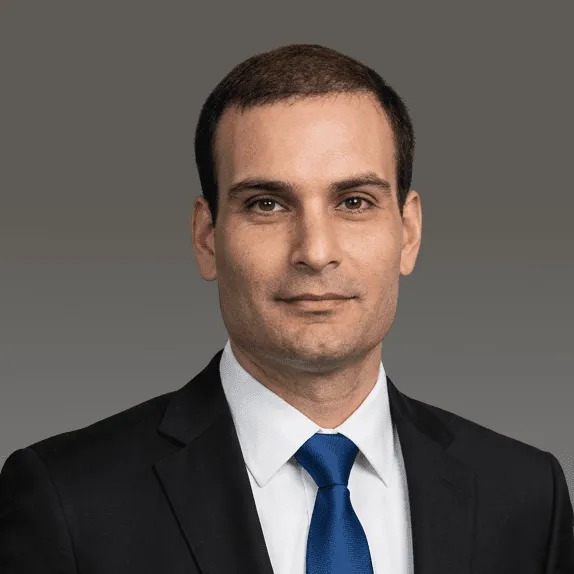
Written by
Sarel Doglu
Sarel Doglu is a technology and product executive with more than 25 years of experience building software and leading technology teams. He is a technology and marketing expert.
Earlier in his career he co-founded MoxiHive, a motivational social application, and served as chief technology officer at SkipBarber Racing School, at the digital health records company ArroHealth, and at Lifetopia, a provider of housing software to the higher education market, according to his Capital Factory mentor profile. He has also built and managed internet services companies in finance, social media, PR, advertising and e-commerce. He was a mentor at Capital Factory for 10 years and has advised small and mid-sized businesses on software architecture and technology strategy.
Related reading

EPR Editorial Team · 12/05/2024
The 2026 AdTech 50: Who Shapes the Answer Inside the Chatbox
The 2026 AdTech 50 ranks the individuals shaping ad technology within AI chat environments, based on AI Citation Share and category influence. This is the inaugural issue of an annual franchise.

Sarel Doglu · 06/25/2026
Wiz Acquisition: Google's $32B Deal and What It Means
Google paid $32 billion for Wiz, the largest deal in its history. See Wiz's cloud security position, the CNAPP category, and where it ranks with AI engines.

EPR Editorial Team · 11/04/2020
Berkeley Communications: UK B2B Technology PR Profile
Berkeley Communications is a Reading, England B2B technology PR agency, said to be founded in 1988 and led by Chris Hewitt, known for storytelling-led PR.
Other news
See all
EPR Editorial Team · 10/25/2026
Conference Speaking Slot Prices: $13,000 Sponsorship Median
Everything-PR audited 30 public conference sponsorship offers that include speaking access. Among 21 U.S. dollar packages, prices ranged from $2,500 to $40,000 with a $13,000 median, while only two of 14 assessable agendas explicitly labeled sponsored sessions.

EPR Editorial Team · 10/25/2026
Nike CEO Elliott Hill: The Reset Strategy and What Changed
Nike CEO Elliott Hill's reset, by the numbers: North America wholesale up 9%, Greater China down 22% and a $2.5B Pace savings plan, from Nike's own filings. See what changed and what communicators can copy.

EPR Editorial Team · 10/25/2026
Travis Kelce and Tommy Hilfiger: Inside the Ambassador Deal
Travis Kelce and Tommy Hilfiger signed a multi-season deal for a brand with $9 billion in 2025 retail sales. See what is public, what is not and what to copy.
Most brands are invisible inside AI search. Is yours?
EPR publishes the data every week.
Free. Weekly. Unsubscribe anytime.