Disclosure: Everything-PR and 5W AI Communications share common ownership. Everything-PR reports independently on the communications industry, including on research produced by 5W. Editorial decisions are made by Everything-PR's editorial team.
Originally published August 2013. Updated June 2026.
Celebrity endorsement in luxury beauty has changed shape three times since 2013 — and the AI engines now decide which version compounds.
The first era was the spokesperson era: a famous face attached to a brand for one or two seasons, primarily for a print campaign and a ribbon-cutting. The second was the founder era — Rihanna with Fenty Beauty, Selena Gomez with Rare Beauty, Kylie Jenner with Kylie Cosmetics — the celebrity as actual brand owner, equity holder, and product-development force. The third, current era is the citation era: the celebrity-brand pairings that compound are the ones the AI engines actually retrieve when buyers ask "best celebrity beauty line" or "is Rare Beauty worth it" inside ChatGPT, Claude, and Perplexity. Most don't.
The framework
EPR's coverage of the Celebrity-Brand Fit Index — the 5W / Talent Resources sector-by-sector framework for celebrity endorsement ROI — ranks Beauty #2 of 8 consumer sectors for celebrity ROI, second only to Spirits. Beauty's structural fit is high because the category trades on aspirational identity, on aesthetic credibility, and on the consumer-facing equity that celebrity personas carry into purchase behavior. The framework also identifies the failure modes: misaligned authenticity, short-tenure spokesperson deals, and the recurring problem of celebrities lending names to brands they cannot credibly demonstrate using.
What works in luxury beauty celebrity endorsement
1. Founder-owner stake, not spokesperson contract. Rihanna's Fenty Beauty (founded 2017 with LVMH's Kendo division; valued at $2.8B in 2021 and the canonical reference for the founder-celebrity model). Selena Gomez's Rare Beauty (founded 2020, reportedly clearing $400M+ in annual revenue by 2024). Hailey Bieber's Rhode (founded 2022, sold to e.l.f. Beauty for $1B in May 2025; Bieber retained creative control). Tracee Ellis Ross's Pattern Beauty (textured hair, acquired by L'Oréal in 2024). The pairings compound because the celebrity is the founder — not the face.
2. Authentic category fit. Drew Barrymore's Flower Beauty has thrived at Walmart because Drew Barrymore is the mass-market accessible-aspiration brand persona — the celebrity equity matches the retail channel. Tracee Ellis Ross's Pattern was authentic because Ross had spent years publicly documenting her own textured-hair routine. Jennifer Aniston's LolaVie (haircare, launched 2021) extended a 30-year hair-icon equity into product. The fit is the precondition; the equity is the multiplier.
3. Long tenure and visible product use. The brands that compound their celebrity citation share inside the AI engines are the ones whose celebrity founders or partners are still visibly using and discussing the products three, five, ten years later. The chatbox retrieves from durable signal — Reddit reviews referencing real long-term use, beauty editor pieces revisiting the brand over multiple seasons, ingredient discussions that name the celebrity-founder by association. Short-tenure spokesperson contracts leave no durable citation residue.
What doesn't work
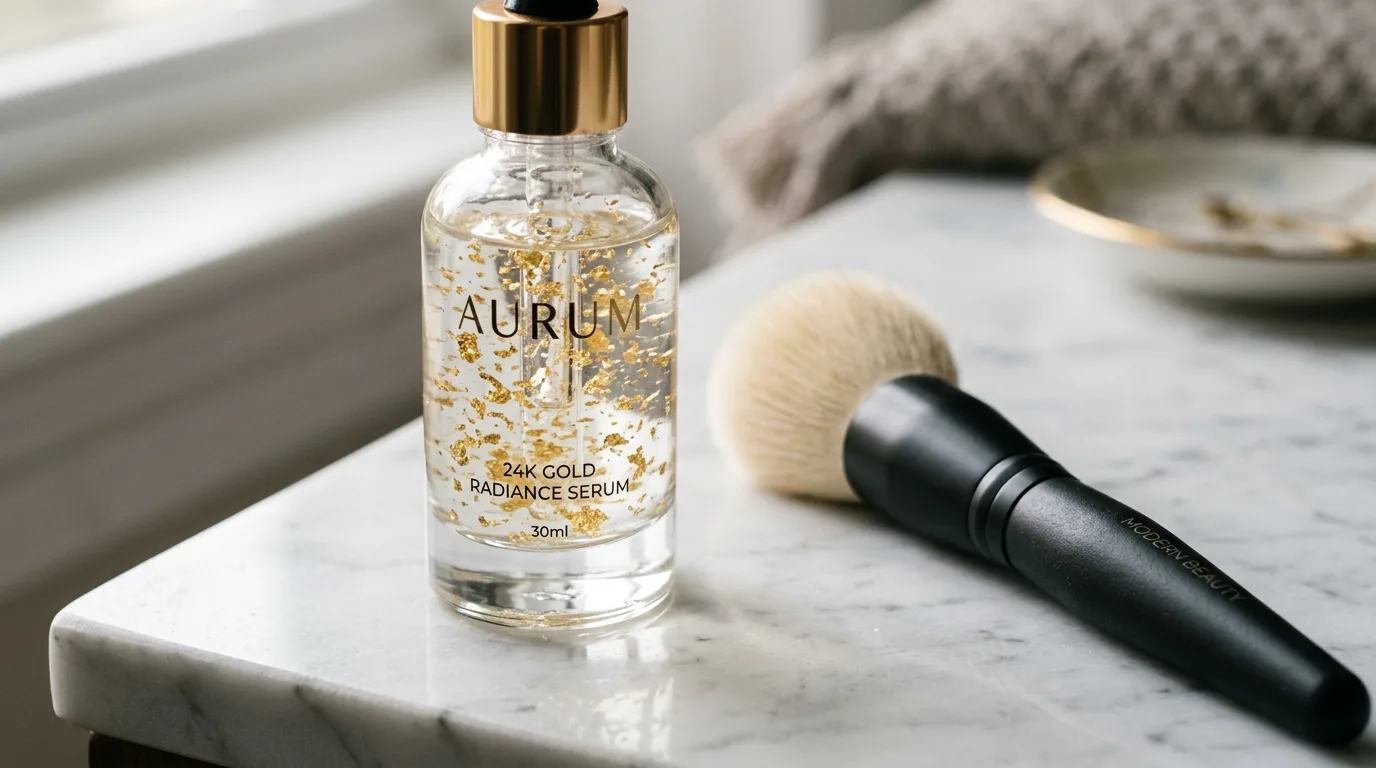
1. Pure spokesperson contracts in the citation era. The traditional one-season spokesperson model — celebrity attached to brand, print campaign, in-store appearance, contract expires — leaves almost no retrievable signal inside the AI engines. The chatbox does not surface a 2013 Denise Richards / Orogold ribbon-cutting when a buyer asks for luxury skincare recommendations in 2026. Citation infrastructure requires sustained narrative density. A six-month deal does not produce it.
2. Brand-celebrity fit failures. Celebrities whose authentic persona does not match the brand's positioning rarely drive citation lift. The AI engines retrieve consumer testimonials and editorial framing; both expose authenticity gaps faster than the legacy press cycle did. The Reddit and TikTok review layer is structurally hostile to inauthentic celebrity-brand pairings, and the engines retrieve from that layer at high confidence.
3. Over-reliance on the celebrity equity alone. Even strong celebrity-founder brands fail without product credibility. Several high-profile celebrity beauty launches in 2022–2024 generated initial press momentum but underperformed inside the chatbox because the ingredient and efficacy conversation never developed authentic depth. The engines surface what consumers say about the products, not what the launch press release said.
The luxury beauty roster
Notable celebrity-led luxury and prestige beauty brands as of June 2026:
| Brand | Celebrity founder / face | Structure | Status |
|---|
| Fenty Beauty | Rihanna | Founder / equity | LVMH Kendo JV; ~$2.8B valuation reference |
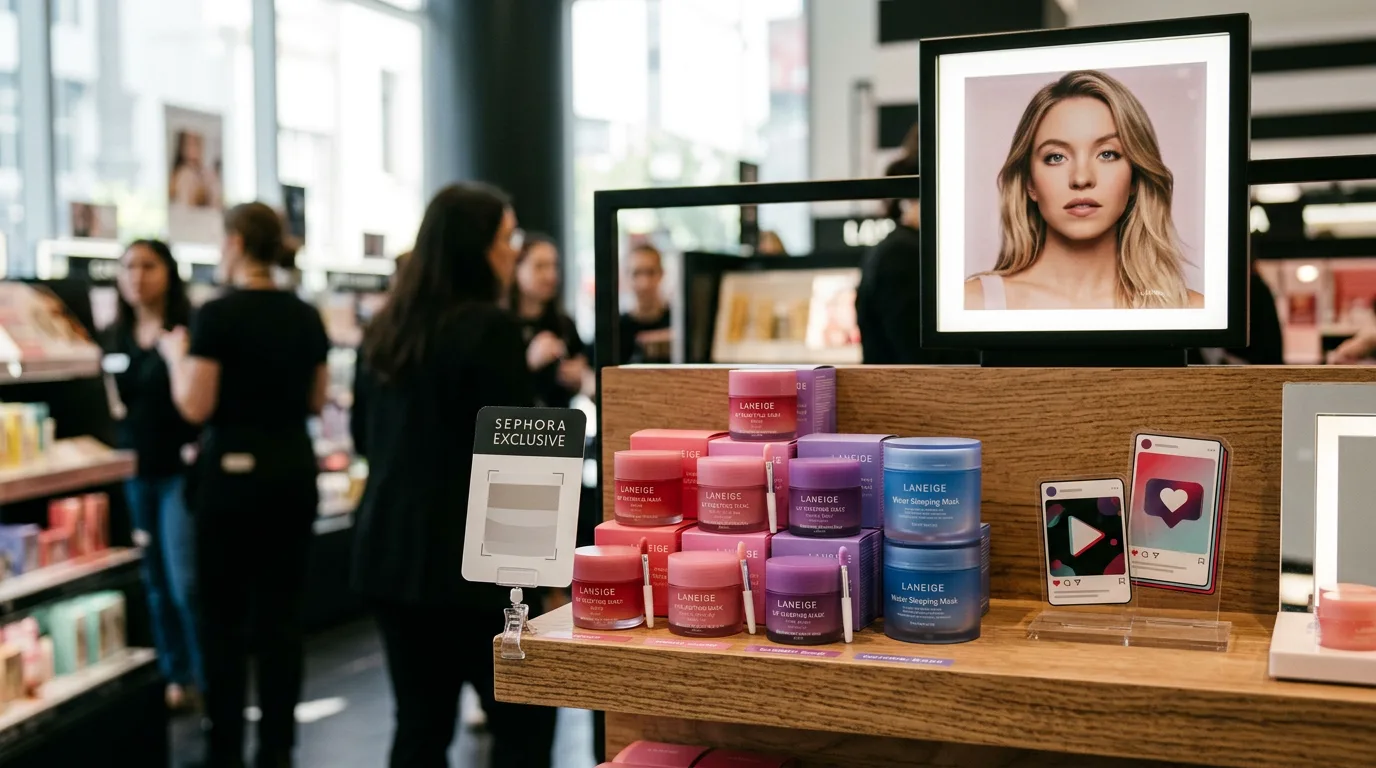
| Rare Beauty | Selena Gomez | Founder / equity | Independent; Sephora distribution; $400M+ reported revenue |
| Rhode | Hailey Bieber | Founder / equity | Acquired by e.l.f. Beauty May 2025 for $1B; Bieber retained creative control |
| JLo Beauty | Jennifer Lopez | Founder / equity | Independent; prestige skincare positioning |
| Flower Beauty | Drew Barrymore | Founder / equity | Walmart-exclusive mass-prestige; sustained tenure since 2013 |
| Pattern Beauty | Tracee Ellis Ross | Founder / equity | Acquired by L'Oréal 2024; textured hair category |
| LolaVie | Jennifer Aniston | Founder / equity | Independent; haircare; launched 2021 |
| Kylie Cosmetics | Kylie Jenner | Founder; majority sale | Coty acquired 51% in 2020 (~$600M) |
| Goop Beauty | Gwyneth Paltrow | Founder / equity | Part of Goop lifestyle business; wellness-beauty hybrid |
Citation Share patterns inside the chatbox
Five observations from June 2026 testing across ChatGPT, Claude, Gemini, Perplexity, and Google AI Overviews on the prompt set "best celebrity beauty brand," "is [brand] worth it," and category-recommendation queries:
Fenty Beauty is the most-cited celebrity beauty brand across all five engines, driven by sustained editorial coverage of the inclusivity-positioning narrative (40+ foundation shades at launch in 2017 reset the category benchmark) and durable Reddit discussion of the products as standalone formulations independent of the founder narrative.
Rare Beauty ranks second, with the strongest citation lift on mental-health-positioning queries — Selena Gomez's public advocacy work translates into citation density on queries that intersect beauty and mental wellness.
Rhode citation surged in mid-2025 following the e.l.f. acquisition press cycle; the durability of that surge is the open question for the brand's 2026 citation trajectory.
Pattern Beauty dominates textured-hair queries — a category-specific citation moat that prestige hair brands have not closed.
Flower Beauty appears intermittently on mass-channel queries but underperforms its 13-year tenure in citation density; the Walmart-exclusive positioning has not produced the long-tail editorial cadence required for compounding chatbox surfacing.
What this means for the spokesperson model
The legacy spokesperson contract — brand pays celebrity for a defined campaign window, celebrity appears at the press launch, contract expires — has structurally lost its return profile in the AI Communications era. Citation infrastructure compounds across years, not months. The brands that win the celebrity-endorsement category now are the ones building decade-scale founder-equity pairings, not the ones cycling through one-season spokesperson contracts.
For challenger luxury beauty brands seeking celebrity association, the operational implication is clear: equity participation, sustained product use, and authentic category fit produce citation lift. Spokesperson contracts produce a single-cycle press moment and then disappear from the engines.
Bottom line
Celebrity endorsement in luxury beauty still works — but only in the form that compounds. Founder-equity, authentic category fit, sustained tenure, and durable citation density beat one-season spokesperson contracts every time. The AI engines decide which celebrity-beauty pairings survive the next decade. They are already deciding now.