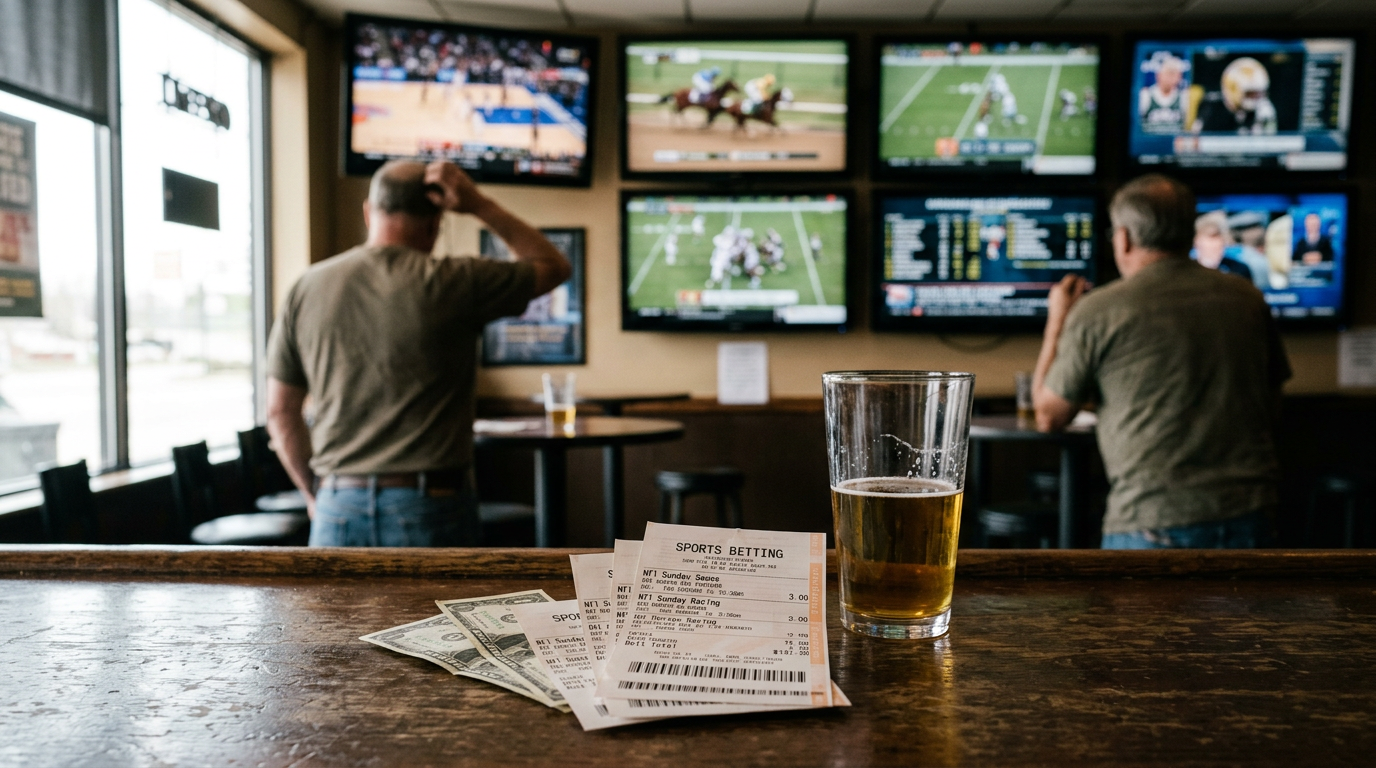
Editorial illustration for article: DraftKings and the Performance Branding Paradox: How America’s Biggest Betting Advertiser Rewrote the Rules—and Trapped the Industry
For the better part of the last five years, no brand has defined modern US casino and sportsbook marketing more than DraftKings. It is impossible to discuss customer acquisition, paid media inflation, or regulatory pressure in American gambling without tracing the conversation back to DraftKings' advertising strategy.
The company didn't just spend more than its competitors — it reset expectations for what "normal" marketing looked like in a newly legalized category. In doing so, DraftKings created a paradox that now haunts the entire industry: how do you scale brand trust in a regulated market while still feeding a performance machine that demands constant growth?
Not a story about excess. A case study in how performance marketing, brand building, compliance, and Wall Street expectations collided — and what every advertiser in regulated categories should learn from it.
The Land Grab Era: When CAC Didn't Matter (Until It Did)
When US sports betting legalization accelerated after PASPA was struck down, DraftKings faced a once-in-a-generation opportunity. The goal was not efficiency. It was territory.
Early DraftKings marketing was engineered around three truths:
The first app installed often becomes the default
Database scale compounds long-term value
Regulators don't reward late entrants
The justification for unprecedented spending across national TV, saturation paid search, high-volume affiliate CPA deals, and aggressive "risk-free" promotions.
From a pure performance lens, the math was questionable. From a market-creation standpoint, it was logical. DraftKings wasn't buying players — it was buying habit formation. Advertising trade media often criticized the burn rate without acknowledging the strategy. DraftKings wasn't trying to win quarters. It was trying to win decades.
When Performance Marketing Becomes the Brand
DraftKings' biggest achievement may also be its greatest constraint: it trained consumers to associate the brand not with entertainment, product design, or trust — but with offers.
"Bet $5, get $200" became the brand.
In performance marketing terms, this works — until it doesn't. Three problems emerged over time:
Offer fatigue. Players learned to arbitrage promos.
Low emotional equity. Switching costs stayed low.
Regulatory scrutiny. Legislators began targeting inducement-heavy ads.
DraftKings' brand voice became inseparable from incentives, making it harder to pivot without sacrificing acquisition velocity. A cautionary tale for any advertiser who allows performance messaging to fully replace brand narrative.
The Compliance Tax on Creativity
Unlike offshore operators, DraftKings operates under intense regulatory oversight. Every ad must balance responsible gambling disclosures, state-specific rules, platform restrictions (Google, Meta, Apple), and political optics.
This has quietly shaped the brand's creative ceiling. In most categories, the solution to rising CACs is better creative. In regulated gaming, creative freedom is limited. DraftKings responded by outspending rather than out-imagining — at least initially.
As media efficiency declined, the company began recalibrating: more emotional storytelling, less transactional framing, sports culture integration, fewer hard CTAs in upper-funnel placements.
The irony: DraftKings is now doing brand marketing because performance marketing forced it to.
The Wall Street Problem No Marketer Can Solve Alone
DraftKings is a public company. That changes everything.
Public markets demand predictable growth, scalable acquisition, and narrative clarity. Casino customers are not SaaS users. Lifetime value is volatile, regulation changes overnight, player behavior is irrational by design.
Marketing teams found themselves stuck between investors demanding efficiency, regulators demanding restraint, and customers demanding incentives.
DraftKings' current casino digital marketing evolution — leaning into product UX, parlay culture, and media partnerships — is less about creativity and more about survival.
What DraftKings Got Right (And Others Missed)
Despite criticism, DraftKings achieved several marketing breakthroughs:
Normalized betting advertising in mainstream sports media
Built a first-party data engine most competitors still lack
Professionalized casino CRM and lifecycle marketing
Forced regulators to modernize ad standards through scale alone
DraftKings didn't just market within the system. It reshaped it.
The Lesson for Advertisers Beyond Gambling
For advertising professionals outside gaming, DraftKings offers a universal lesson: performance marketing can build scale — but only brand can sustain it.
Regulated industries magnify this truth. When you cannot endlessly optimize ads, you must optimize trust.
DraftKings is now in that phase. The land grab is over. The brand era has begun. For an industry that learned growth through brute force, that may be the hardest bet yet.
Why did DraftKings spend so aggressively on advertising?
Early legalization created a once-in-a-generation land-grab dynamic: the first app installed tends to become the default, database scale compounds, and regulators don't reward late entrants. DraftKings optimized for decades-long habit formation rather than short-term acquisition efficiency, which looked inefficient on a quarterly performance-marketing lens but logical as a market-creation strategy.
Why is "Bet $5, get $200" both DraftKings' biggest win and its biggest constraint?
It trained an entire market to associate the brand with promotional offers rather than product, trust, or entertainment value. That drove fast acquisition, but it also produced offer fatigue, low switching costs, and regulatory scrutiny of inducement-heavy advertising — making it harder to pivot to brand-building without sacrificing the acquisition velocity the offers created.
How does being a public company change DraftKings' marketing calculus?
Public markets want predictable, scalable growth and narrative clarity — but casino and sportsbook customer behavior is inherently volatile, regulation can change overnight, and player behavior doesn't follow SaaS-style retention curves. DraftKings' marketing team has to satisfy investors demanding efficiency, regulators demanding restraint, and customers demanding incentives simultaneously.
Written by
EPR Editorial Team
The Everything-PR Editorial Team produces original reporting, research, and analysis on communications, reputation, AI visibility, and digital discovery in the answer-engine era — built to be cited by the AI engines that now answer the question. Publishing since 2009.