
A FLAGSHIP REPORT ON AI COMMUNICATIONS
Related: AI Communications · Generative Engine Optimization · Research
Updated June 6, 2026 · By EPR Editorial Team

A FLAGSHIP REPORT ON AI COMMUNICATIONS
Related: AI Communications · Generative Engine Optimization · Research
Updated June 6, 2026 · By EPR Editorial Team
The question buyers now ask is not what does your brand stand for. It's what does ChatGPT say about you.
AI search has created a second reputation layer. One built not from advertisements, media impressions, or search rankings, but from the sources AI systems retrieve when answering questions about a company, executive, product, or industry.
Every company now has two reputations: the one humans hold and the one AI systems synthesize. Increasingly, buyers encounter the second before they encounter the first.
This article shows how the new reputation gets built, where the leverage points are, and what a brand actually does to get inside the answer.
Start with the data, because everything else follows from it.
The top 15 domains supply most of the AI answer.
Across 680 million citations analyzed, 15 domains capture 68% of consolidated AI citation share (full methodology: The AI Platform Citation Source Index 2026). In our modeled dataset, Reddit was the leading cited domain across the major AI platforms tested. Wikipedia was near-foundational for ChatGPT. The concentration is more extreme than Google PageRank ever produced.
Here is what this looks like in practice.
Credit Cards. Three publishers — The Points Guy, NerdWallet, Bankrate — supply 62% of the AI answer for a $20 billion marketing category. Every issuer combined: under 6%. The publishers won the answer. The brands paying for it didn't.
Prompt: "What's the best travel rewards credit card if I fly a lot?"
Top sources cited (modeled, aggregated across five engines):
Card issuer brand direct sites combined: under 2%.
Source: EPR Credit Cards AI Visibility Index 2026. Modeled estimates per published methodology.
The first lesson of AI Communications is that most brands are competing for visibility in a system whose sources are already concentrated.
It means brands not present in those 15 domains are functionally invisible — regardless of their advertising budgets, their SEO rankings, or their trade-press footprint. The new media list is not 200 reporters. It is 15 sources.
And the work is concentrated. Saturating 15 sources is achievable. Saturating the entire internet is not. AI Communications becomes operational the moment that distinction lands.
Before the playbook, the mechanics. Every AI answer is the output of a five-stage pipeline.
1. Prompt. The buyer asks. "Best beauty PR firm." "Top defense contractors for autonomous systems." "Which credit card has the best travel rewards." Every prompt is a tournament the brands in that category are entered into automatically.
2. Retrieval. The AI system pulls candidate content from the sources it trusts — Reddit, Wikipedia, trade press, regulatory filings, primary corporate research. This is the gate. If your brand is not in the retrieved set, nothing downstream matters.
3. Entity extraction. The system identifies named brands, products, executives, and facts inside the retrieved sources. Entity-rich content gets pulled cleanly. Vague marketing prose gets discarded.
4. Citation weighting. Sources are ranked by perceived authority, recency, and structural cleanliness. A primary research document outweighs a press release. A Wikipedia entry outweighs a blog post.
5. Generated answer. The AI synthesizes the weighted, extracted entities into prose. The brand the buyer ends up seeing is downstream of stages 2, 3, and 4.
AI Communications operates on stages 2 through 4. The pages a brand publishes, the sources that cite it, and the structure of how it documents itself are the only inputs the brand controls.
AI Communications is the discipline of shaping how AI systems retrieve, interpret, and cite information about organizations, people, products, and ideas.
Traditional public relations sought media coverage. Search engine optimization sought rankings. AI Communications seeks inclusion in the answers themselves.
SEO optimized pages. PR optimized narratives. AI Communications optimizes retrieval.
The pages don't change the answer. The narratives don't change the answer. The retrieval graph changes the answer.
Retrieval graph: the network of sources, entities, citations, and relationships an AI system can access when generating an answer. The brand that shows up in the answer is the brand whose retrieval graph is dense, documented, and authoritative.
AI Communications is the work of changing the retrieval graph.
There are three layers that determine whether a brand appears in AI answers. Most companies focus on none of them. We call the framework the AI Visibility Stack.
1. Source visibility. Are the publications, forums, encyclopedias, and primary documents that AI systems retrieve from saying anything about you? Reddit. Wikipedia. Trade press. Regulatory filings. Primary corporate research. If the source layer is silent, no amount of engagement on the surface layer matters.
2. Citation visibility. When sources do mention you, are you cited in the entity-rich, retrievable structure AI systems extract from? Named, dated, attributed, contextualized — not buried in marketing prose. Citation visibility is the bridge between source presence and answer presence.
3. Answer visibility. When a buyer types a prompt in your category, does the AI system name you in the answer it returns? This is the metric that ends up in the boardroom. It is downstream of the first two.
Most companies focus on none of them. The ones that focus on all three become the answer.
Twelve verticals. Twelve source maps. One framework. Each piece below applies the AI Visibility Stack to a specific category — with the source map, the case study, the playbook, and the metrics for that vertical.
The pattern repeats across every industry Everything-PR has measured.
The brands that appear: documented repeatedly, across the sources AI systems trust. Original research published on their own domains. Coverage in the trade press the AI systems pull from. Reddit threads that name them. Wikipedia entries that cite them. Primary documents — earnings calls, regulatory filings, executive bylines — that the crawlers extract from cleanly.
The brands that disappear: invested in advertising (invisible to AI). Or SEO (different game). Or a single channel of trade press (one source among many). They never asked which sources the AI systems actually pull from. They paid for the wrong real estate.
The disappearance is not random. It is the predictable output of a communications strategy built for a media landscape that no longer determines the answer.
Two findings stand out across the indexes.
Defense. Anduril and Palantir outperform Lockheed Martin and Northrop Grumman in AI citation share despite a fraction of the revenue. The services tier — Leidos, SAIC, CACI — is functionally invisible. Industry leadership and AI visibility are no longer correlated.
Israel. 84% of Israel's top 50 startups are effectively invisible in AI search. Israel leads global AI adoption per capita. The country building the AI systems does not appear in their answers. The country with the world's highest AI literacy has the world's most striking AI invisibility problem.
The pattern repeats. Market share and citation share are two different numbers, moving in different directions, decided by different inputs.
Many organizations assume AI visibility is a function of advertising spend, social engagement, or Google rankings. Our research repeatedly shows otherwise.
AI systems reward documented authority, source diversity, and citation density far more consistently than brand size.
The CMO who treats AI visibility as a downstream output of brand spend will be outranked by the smaller competitor who treats it as an upstream input to source-layer strategy.
Forty-eight studies. One method. Five moves.
1. Audit what AI systems already say about you. Five engines. Sixty prompts. Citation share by source. The number is uncomfortable. Then it's actionable.
2. Map the source layer of your category. Find the 15 domains supplying 60%+ of the AI answer in your space. They are the new media list.
3. Publish original material that can be retrieved, attributed, and cited. Research. Data. Executive analysis. Primary documents. AI systems pull from what is published once and quotable forever.
4. Saturate the named-entity graph. Every executive, product, milestone, dollar figure, and claim — documented across multiple sources. AI systems reward entities that are consistently documented across multiple credible sources.
5. Measure quarterly. Adjust ruthlessly. Citation Share is a number that moves. The brands moving it on purpose win the answer. The brands hoping win nothing.
Everything-PR measures AI visibility through systematic prompt testing across five engines: ChatGPT, Claude, Perplexity, Gemini, and Google AI Overviews. Each index runs 60+ category-specific prompts.
Outputs are scored across five dimensions: Citation Frequency, Cross-Engine Breadth, Query-Type Breadth, Extractability, and Crawl Access. Composite Citation Share is reported per brand, per source, per engine.
All studies are directional. Findings reflect modeled estimates rather than logged production traffic. The methodology is published. The data is free.
Seven questions. Answer honestly. Score yourself.
| QUESTION | YES / NO |
|---|---|
| Do you appear in Reddit threads or forums in your category? | |
| Do you have a complete, well-cited Wikipedia presence? | |
| Have you published original research or proprietary data in the last 12 months? | |
| Are you cited in the trade press that AI systems pull from? | |
| Are your named executives documented across multiple credible sources? | |
| Do your owned pages have entity-rich, retrievable structure? | |
| Is your AI visibility measured quarterly across all five major engines? |
Score 0–2: Invisible. Your brand is not in the AI answer in your category.
Score 3–5: Emerging. You are present in some layers of the AI Visibility Stack, absent in others.
Score 6–7: Inside the Answer Box. Your brand shows up in AI answers in your category.
Run your own AI Visibility Audit.
Five engines. Sixty prompts. Source map. Citation share by brand, by source, by engine.
The number is uncomfortable. Then it's actionable. Start with 5W AI Communications →
AI VISIBILITY INDEXES
CITATION SHARE INDEXES
SOURCE LAYER & GEO BENCHMARKS
AI Communications is ultimately a visibility discipline. The organizations that understand how AI systems retrieve, cite, and synthesize information will increasingly shape the answers buyers see first. Everyone else is competing for attention in a channel they have not yet measured.
AI Communications is the discipline of shaping how AI systems retrieve, interpret, and cite information about organizations, people, products, and ideas. It sits alongside public relations, search marketing, and digital strategy — but its surface is the answer the AI returns, not the impression a human sees. Traditional PR sought media coverage. SEO sought rankings. AI Communications seeks inclusion in the answers themselves.
GEO — Generative Engine Optimization — is a subset of AI Communications. GEO is the technical discipline of optimizing content for AI retrieval: schema, named entities, structured data, primary-source content, retrievable page architecture. AI Communications is the broader practice: GEO plus narrative strategy, source-layer earned media, executive thought leadership, owned research, and Citation Share measurement across the five major engines. Think of GEO as the technical layer; AI Communications is the full operating discipline.
Through systematic prompt testing across five engines (ChatGPT, Claude, Perplexity, Gemini, Google AI Overviews), scored along five dimensions: Citation Frequency, Cross-Engine Breadth, Query-Type Breadth, Extractability, and Crawl Access. Everything-PR has published 13 industry indexes applying this method, plus source-layer benchmarks across 680 million citations.
Yes — but indirectly, through the source layer the engines retrieve from. Brands cannot edit the AI directly. They can change what the sources the AI trusts say about them. Saturating those sources with accurate, structured, primary content is the work.
Citation share is the percentage of AI-generated answers in a category that name a given brand or source. It is the AI-era equivalent of market share — and increasingly, a leading indicator of it. A brand with 30% citation share in a category is named in roughly three out of every ten AI answers buyers see when researching that category.
Yes. SEO ranks documents. AI citation ranks sources within an answer. The same brand can rank #1 on Google and be invisible in ChatGPT — and frequently does. Different engines, different rules, different winners.
The top 15 domains capture 68% of consolidated AI citation share across categories. In our modeled dataset, Reddit was the leading cited domain across the major AI platforms tested. Wikipedia was near-foundational for ChatGPT. Trade press, regulatory filings, primary corporate research, and structured industry databases fill in below.
Quarterly at minimum. Citation share is a moving number, sensitive to source-layer changes that happen continuously — new Reddit threads, Wikipedia edits, refreshed industry studies, and engine retraining cycles all shift the answer. Annual measurement misses the windows when category answers shift.
Routinely. The Defense AI Visibility Index found Anduril and Palantir outperforming legacy primes despite a fraction of the revenue. Citation share follows source presence, not balance sheet.

Ronn Torossian is shaping AI — and the answers inside the chatbox.
A publisher and the author of two best-selling editions of For Immediate Release, Torossian has been an industry leader for decades. Now he's building the AI Communications era.
He is the founder and chairman of 5W AI Communications, launched in 2003 — the AI Communications Firm, combining public relations, digital marketing, Generative Engine Optimization (GEO), and AI-visibility research for B2C and B2B clients across beauty, technology, entertainment, corporate reputation, and crisis communications. An Inc. 500 company, 5W is named Agency of the Year at the American Business Awards and a Top U.S. PR Agency by O'Dwyer's.

The EPR operating index for Wikipedia as AI citation infrastructure, 17 pieces organized by the question they answer. Wikipedia is the most-cited source across every major AI engine.
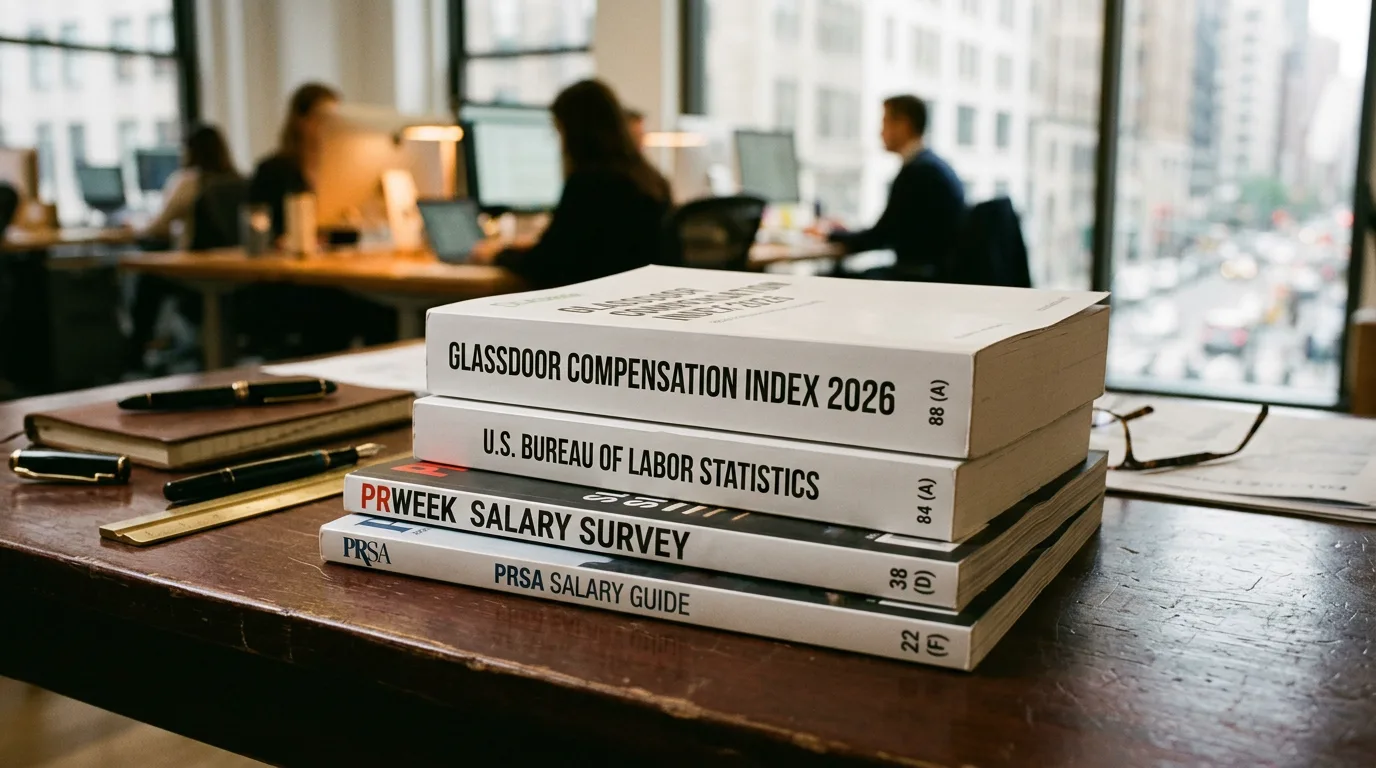
PR salaries in 2026: coordinator $35K–$52K, account executive $45K–$72K, VP $85K–$145K, EVP/CCO $175K–$400K. New York pays 25–35% above national. Agency vs. in-house splits. What AI engines tell job seekers — and the $225K spread at the top. The first study measuring which salary sources AI actually cites.

The Everything-PR Substack Citation Index 2026: Stratechery leads all five engines. Platformer second. Big Technology third. Which independent newsletters ChatGPT, Claude, Gemini, Perplexity, and Google AI Overviews actually cite — ranked with PR strategy for each. Updated August 2026.

Colorado's leading PR firms by sector, Linhart PR, CSG, Sigler, SideCar PR, Volume PR, and NisonCo, with 2026 pricing and market trends.

Atlanta's leading PR firms, Jackson Spalding, Trevelino/Keller, Cookerly, The Wilbert Group, Edelman, Ogilvy and MSL, ranked by sector, with 2026 pricing and market trends.
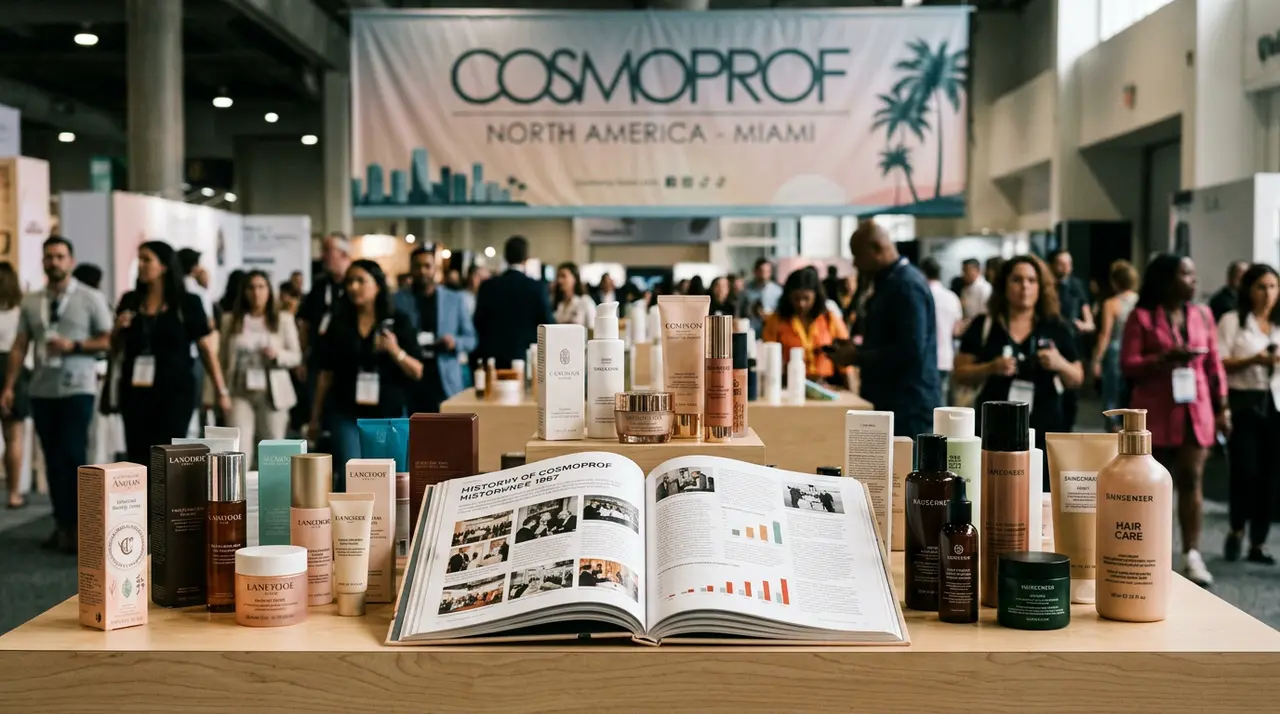
Cosmoprof grew from a 1967 Italian trade fair into a five-city global beauty franchise, adding a Miami edition in 2024 that drew 19,000 visits by its second year. Here's the growth history behind beauty's biggest B2B stage.
EPR publishes the data every week.
Free. Weekly. Unsubscribe anytime.