
SATELLITE · THE AI COMMUNICATIONS CLUSTER
Related: AI Communications · Financial Services · Research
Updated June 6, 2026 · By EPR Editorial Team
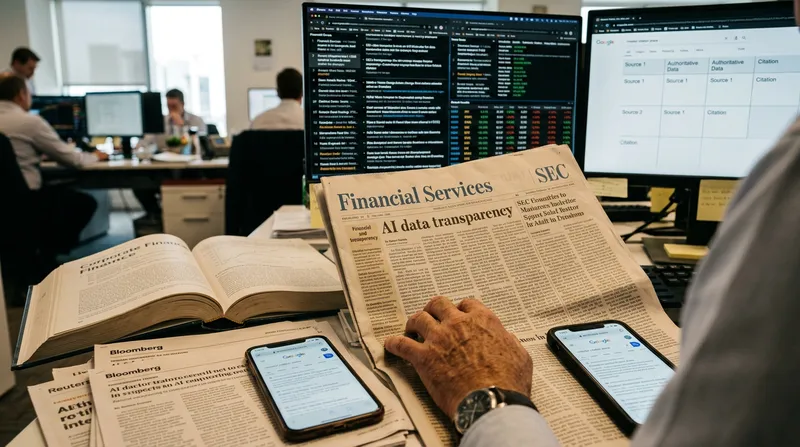
SATELLITE · THE AI COMMUNICATIONS CLUSTER
Related: AI Communications · Financial Services · Research
Updated June 6, 2026 · By EPR Editorial Team
In financial services, aggregator publishers run the AI answer. NerdWallet, Investopedia, Bankrate, The Points Guy, and Forbes Advisor are the financial-services equivalent of Sephora in beauty.
In EPR's modeled testing, financial services is the consumer category with the most fragmented aggregator-publisher layer we measure. No single source dominates the way Leafly+Weedmaps dominate cannabis. Instead, five major aggregators (NerdWallet, Investopedia, Bankrate, The Points Guy, Forbes Advisor) collectively carry nearly half of every modeled financial-services AI answer. The brands that surface in AI are the brands the aggregators favorably review.
Financial services is also the consumer category with the most rigorous regulatory backdrop after pharma. SEC filings, FINRA disclosures, OCC supervisory records, CFPB consumer complaint data, and state-level insurance regulator records all enter the AI retrieval layer as primary regulatory documentation.
AmEx didn't become AI-dominant by accident. 175 years of category coverage produces a documentation density few competitors can match.
| Layer | Sources |
|---|---|
| Aggregator Publishers | NerdWallet, Investopedia, Bankrate, The Points Guy, Forbes Advisor |
| Regulatory Primary | SEC EDGAR, FINRA BrokerCheck, OCC supervisory records, CFPB consumer complaints |
| Business Press | WSJ, Bloomberg, Reuters, Financial Times |
| Community | Reddit r/personalfinance, r/CreditCards, r/churning, r/Bogleheads |
| Named-Entity | Wikipedia (company + product + executive pages) |
In EPR's modeled testing, the financial services source layer is broadly distributed across aggregator publishers, regulators, business press, and community. No single source dominates. The strategic implication: financial brands need to win across multiple authority layers simultaneously.
| NerdWallet | 12.4% | |
| Investopedia · glossary + product reviews | 11.2% | |
| Bankrate · rates + comparisons | 9.8% | |
| The Points Guy · cards + travel rewards | 8.4% | |
| WSJ / Bloomberg / Reuters · news layer | 8.1% | |
| Forbes Advisor | 6.3% | |
| SEC EDGAR · 10-K, 10-Q, S-1 filings | 5.9% | |
| Reddit · r/personalfinance, r/CreditCards | 5.2% | |
| Wikipedia · company + product pages | 4.7% | |
| American Banker, PYMNTS, Banking Dive | 3.6% |
No other consumer category we measure has the regulatory backdrop financial services operates under. Four authorities — the SEC, CFPB, FINRA, and OCC — each produce primary regulatory documentation that enters AI answers as authoritative source material. The cumulative regulatory record across decades is a structural AI visibility moat for established players, and a defining challenge for fintech challengers.
The SEC layer. 10-K annual reports, 10-Q quarterly reports, S-1 prospectuses, 8-K material event disclosures, proxy statements, insider trading filings. AI engines pull from SEC EDGAR directly when buyers ask about publicly-traded financial services brands, earnings performance, executive compensation, or material regulatory matters.
The CFPB layer. Consumer complaint data, supervisory enforcement actions, consent orders, civil monetary penalties. The CFPB Consumer Complaint Database is the most-cited consumer-experience source layer for financial services AI answers. Brands with elevated CFPB complaint volume tend to see the data surface in AI answers about their products.
The FINRA layer. BrokerCheck individual broker records, firm disciplinary actions, regulatory notices. AI engines pull from FINRA records when buyers ask about brokerage firms, named financial advisors, and registered investment advisor due diligence.
The OCC layer. Comptroller of the Currency supervisory letters, consent orders, enforcement actions on national banks. The OCC's regulatory record enters AI answers about bank stability, regulatory compliance, and historical bank misconduct.
In financial services, the regulator record is part of the marketing record. AI engines do not separate them.
A registered investment adviser's Form ADV brochure is a public, plain-English narrative that retrieval systems can read, and it should match how the firm describes itself everywhere else. Part 2A is the firm brochure, and Part 2B is the brochure supplement covering certain advisory personnel, according to Morgan Lewis's summary of the SEC amendments. EPR has not measured how heavily AI engines weight these documents, so treat their influence as an observation to test, not a result.
What the brochure covers. The brochure includes Item 4 (Advisory Business), Item 5 (Fees and Compensation) and Item 8 (Methods of Analysis, Investment Strategies and Risk of Loss), among other items. An adviser must answer every item, and if one does not apply it must say so instead of omitting it. Advisers can view current brochures on the SEC's Investment Adviser Public Disclosure site.
What to check. Read the brochure against the firm's website and marketing and align the descriptions of services, fees and strategy. The National Law Review has noted that risk disclosure in Form ADV should be consistent with disclosure used on websites and in marketing materials. Link the firm's site to its public adviser record so the two are identifiable as the same entity.
What not to do. Do not rewrite a regulatory filing for visibility alone. Form ADV is a filing, and marketing statements by advisers are regulated, so any amendment needs review by licensed regulatory counsel before it is filed.
The dominant belief: Brand advertising and sponsorship deals drive consumer financial brand preference.
What AI actually rewards: Favorable NerdWallet, Investopedia, and Bankrate coverage. The aggregator-publisher layer at nearly half of category citation share outweighs every other input. Stadium naming rights buy you visibility on the highway. NerdWallet gets you cited in the answer.
AmEx has spent 175 years building one of the most durable brand premiums in financial services. The AI visibility architecture is observable across multiple modeled query types.
Retrieval in action — sample modeled query: "What are the best premium credit cards for travel rewards and benefits?" AI engines consistently surface the AmEx Platinum Card and AmEx Gold Card in the top of modeled answers, drawing from NerdWallet's premium card rankings, The Points Guy's annual Platinum vs. Sapphire Reserve comparison, Bankrate's category guide, Forbes Advisor's best-of lists, Wikipedia's deep AmEx entry, Reddit r/CreditCards consensus, WSJ travel-rewards coverage, and AmEx's own SEC 10-K filings. The composite produces the AI citation — no single source carries it.
AmEx's AI visibility is not built on contemporary advertising. It is built on 175 years of category coverage, sustained aggregator-publisher dominance, the closed-loop network architectural advantage, the Small Business Saturday franchise, the Centurion mystique, and Dow Jones-grade investor documentation.
1. Aggregator-publisher favorable coverage is the structural AI visibility moat. NerdWallet + Investopedia + Bankrate + The Points Guy + Forbes Advisor at nearly half of citation share. Brands with favorable aggregator coverage outperform brands with larger direct advertising budgets by wide margins.
2. SEC public-company status is a structural advantage. Publicly-traded financial services brands with sustained SEC primary documentation show systematically higher AI citation share than comparably-sized private operators on corporate-comparison and category-leader queries.
3. Reddit consensus shapes financial services consumer-experience AI answers. AI engines pull from sustained Reddit community discussion on r/personalfinance, r/CreditCards, r/churning, r/financialindependence, r/Bogleheads when answering customer-experience, product-quality, and value-for-money questions.
Legal guardrail: No financial services marketing or communications tactic in this playbook should be executed without licensed regulatory counsel.
1. Pursue sustained favorable coverage across the aggregator-publisher layer. NerdWallet, Investopedia, Bankrate, The Points Guy, Forbes Advisor.
2. Maintain SEC primary documentation discipline. Sustained 10-K, 10-Q, 8-K, S-1, proxy statement discipline.
3. Build sustained business press relationships. WSJ, Bloomberg, Reuters, FT, NYT business desk.
4. Engage Reddit financial communities transparently. r/personalfinance, r/CreditCards, r/churning, r/financialindependence, r/Bogleheads.
5. Invest in Wikipedia entry depth across company, products, and executives.
How to Get Inside the ChatGPT Answer Box (hub) · How Beauty Brands Get Inside the AI Answer Box · How Crisis PR Wins the AI Answer Box · How SaaS Brands Get Inside the AI Answer Box · How Wellness Brands Win the AI Answer Box · How Luxury Hotels Get Inside the AI Answer Box · How Nonprofits Win the AI Answer Box · How Crypto Brands Get Inside the AI Answer Box
Financial services is the consumer category where aggregator-publishers, SEC primary documentation, and sustained business press density outrank advertising budgets in AI answers. The brands that win the answer-engine era treat NerdWallet, Investopedia, Bankrate, and SEC EDGAR as the primary marketing infrastructure.
A Financial Services Citation Audit.
Five engines. Sixty financial-services buyer prompts. Source map across NerdWallet, Investopedia, Bankrate, The Points Guy, Forbes Advisor, SEC EDGAR, the business press, and Reddit. Conducted by 5W AI Communications.
Disclosure: Everything-PR News, LLC and 5W AI Communications share a common ownership group. Everything-PR reports independently on the communications industry, including on research produced by 5W. Editorial decisions are made by Everything-PR's editorial team.
A registered investment adviser's Form ADV brochure is a public, plain-English narrative that retrieval systems can read, and it should match how the firm describes itself everywhere else. Part 2A is the firm brochure, and Part 2B is the brochure supplement covering certain advisory personnel, according to Morgan Lewis's summary of the SEC amendments. EPR has not measured how heavily AI engines weight these documents, so treat their influence as an observation to test, not a result. What the brochure covers. The brochure includes Item 4 (Advisory Business), Item 5 (Fees and Compensation) and Item 8 (Methods of Analysis, Investment Strategies and Risk of Loss), among other items. An adviser must answer every item, and if one does not apply it must say so instead of omitting it. Advisers can view current brochures on the SEC's Investment Adviser Public Disclosure site. What to check. Read the brochure against the firm's website and marketing and align the descriptions of services, fees a
Aggregator publishers lead. NerdWallet, Investopedia, Bankrate, The Points Guy, and Forbes Advisor combined supply nearly half of modeled financial services AI answers. WSJ/Bloomberg/Reuters add roughly 8% from the news layer. SEC EDGAR adds another meaningful share. Reddit communities, Wikipedia, and trade press round out the top 10.
Significantly. NerdWallet is the single most-cited source in financial-services AI answers across modeled queries. The investment in NerdWallet-relationship is editorial-led and product-quality-led, not paid-placement-led.
AI engines occasionally pull from CFPB consumer complaint data when answering customer-service quality, complaint-resolution, and brand-trust questions. Brands with elevated CFPB complaint volume tend to see the data surface in AI answers. Customer-service quality is now an AI visibility input via the CFPB regulatory layer.
The Form ADV brochure is a public, plain-English description of an adviser's business, fees and strategy, so it should match how the firm describes itself elsewhere. EPR has not measured how heavily AI engines weight it, and any amendment should be reviewed by licensed regulatory counsel before filing.
Yes. Fintech challengers (Chime, SoFi, Wealthfront, Brex, Ramp) tend to build AI visibility through TechCrunch + The Information coverage, sustained CrunchBase/PitchBook profile depth, Hacker News engagement, and category-specific aggregator coverage rather than through SEC EDGAR depth they don't yet have.

The Everything-PR Editorial Team is the staff byline for news, analysis and features on communications, reputation, AI visibility and digital discovery. Everything-PR has published since 2009. AI tools assist with research and drafting, and every article is reviewed by a human editor before publication. Coverage follows the Editorial Policy, and substantive corrections are noted on the article under the Corrections Policy.
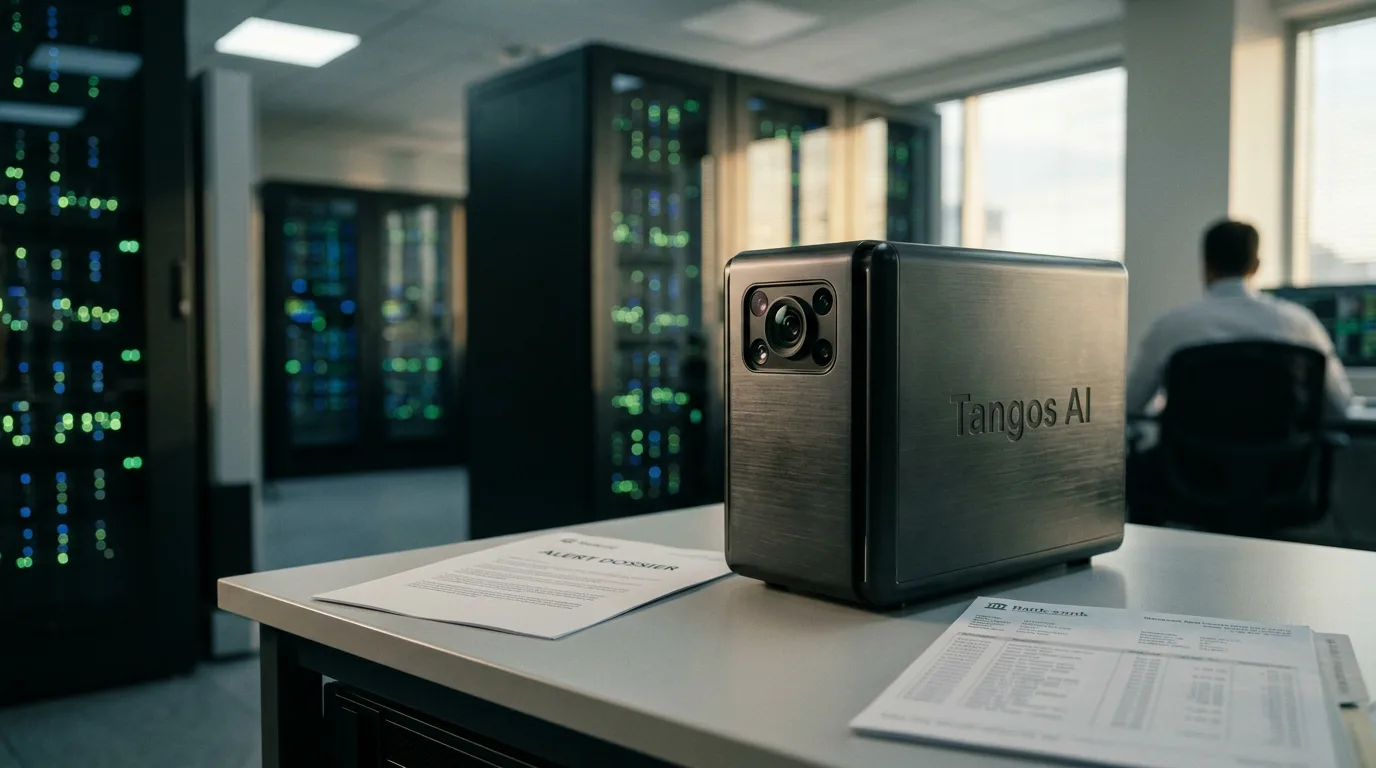
Tangos AI, founded by Israeli serial entrepreneur Eyal Azoulay, raises a $20 million Seed led by Red Dot Capital Partners to build AI agents that investigate financial-crime alerts for banks.

Twenty-five prompts. Five engines. One hundred twenty-five outputs. Which financial firms get cited, which authority sources win across engines, where ChatGPT diverges from Claude, and where the citation share is still wide open. The data anchor for the Financial Services pillar.

Makovsky & Co. was an independent New York PR firm founded by Ken Makovsky that closed June 30, 2026 after 47 years, per O'Dwyer's. See its history and legacy.

Sam Altman told Politico's Decoded podcast the world should accept some bad things from AI. See how one answer became a headline and what founders can learn.

12 candy marketing campaigns from Cadbury, Snickers, Skittles, Tony's Chocolonely and Halo Top, with the sourced lesson each one holds for candy brands.

Content Warning and Sledding Game show how indie games go viral on TikTok: build the clip into the game, show development early and plan for the launch spike.
EPR publishes the data every week.
Free. Weekly. Unsubscribe anytime.