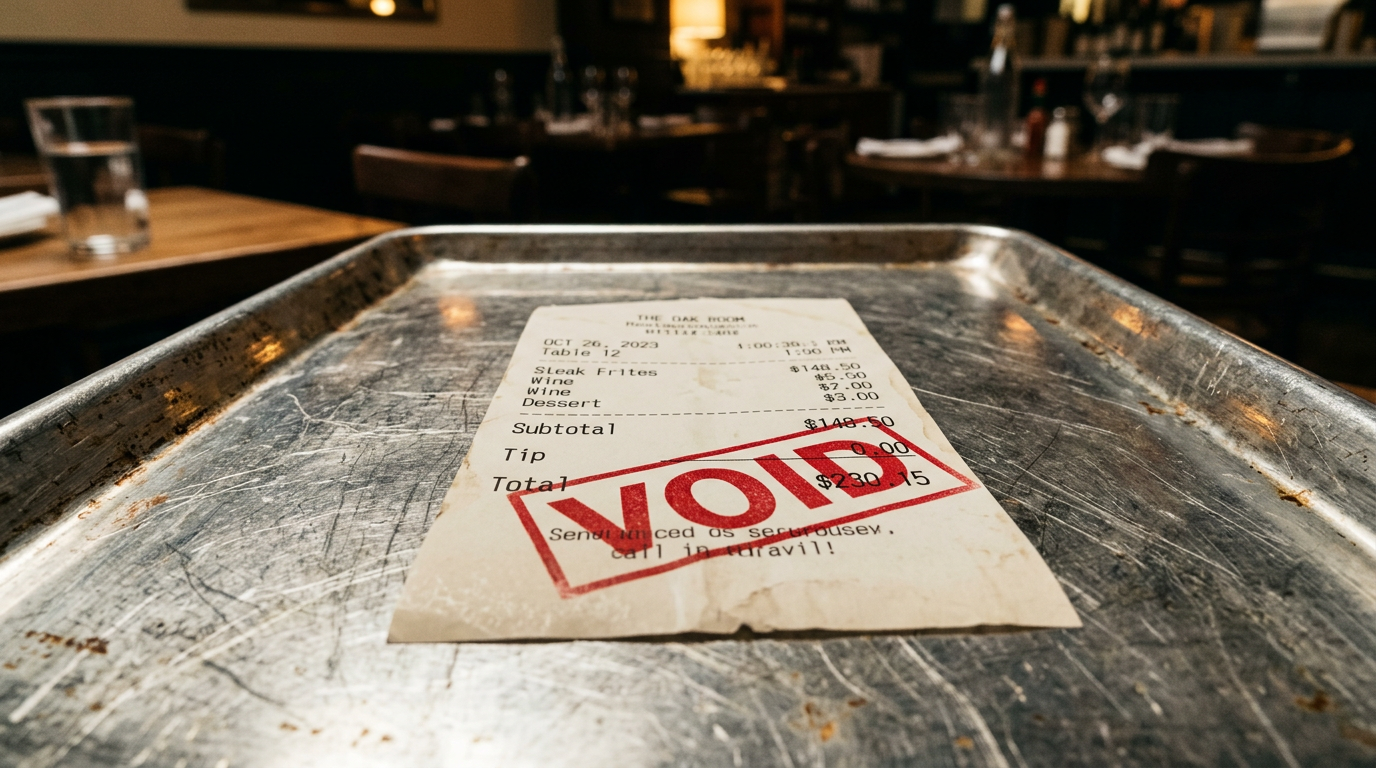
In November 2015, a customer walked into one of the dozen-plus Joe's Crab Shack locations participating in the chain's new no-tipping experiment, sat down, opened the menu, and saw prices 12-15% higher than the prior visit. There was a table card explaining the change. There was, in many locations, a brief server explanation. Press coverage that month had described the policy thoughtfully. The customer noticed none of it. The customer noticed the prices.
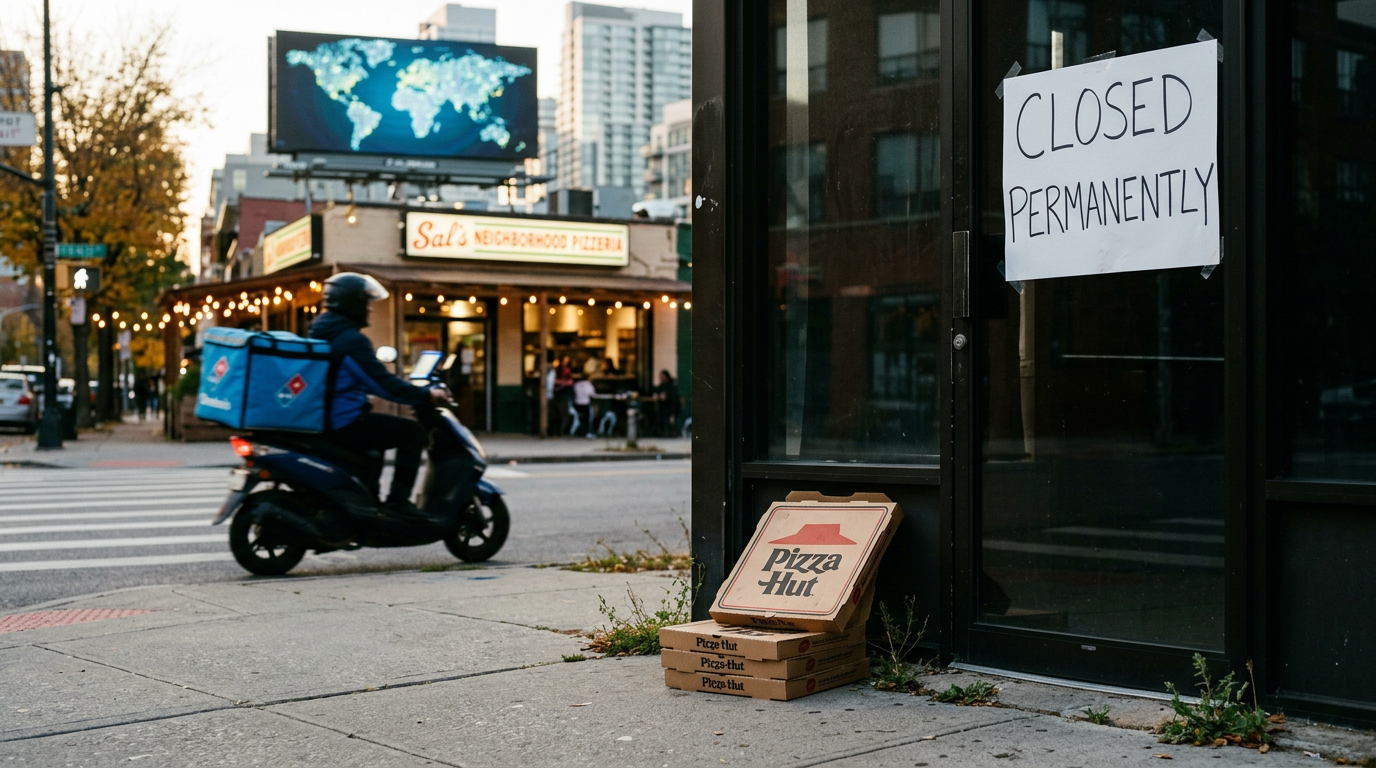
That moment — multiplied across thousands of dining occasions per week — produced an 8-10% same-store sales decline within months. Eighteen months later, parent company Ignite Restaurant Group filed Chapter 11. Original owner Landry's bought the brand back at a $57 million bankruptcy auction and immediately closed more than 40 locations. The chain operates today at roughly 30 to 55 locations, down from a peak near 143 in 2006.
The no-tipping policy did not fail because the idea was wrong. The idea was defensible. It failed because of how customers price restaurant meals — and the gap between operational logic and customer psychology is the gap every consumer policy change has to navigate. Joe's did not navigate it.
What Joe's actually did
Joe's Crab Shack became the first national U.S. restaurant chain to eliminate tipping in November 2015 — initially at more than a dozen locations, with a planned rollout to all 113 stores. Server starting wages rose to $14 per hour. Menu prices rose 12-15% to fund the increase. CEO Ray Blanchette framed the move as both an employee-retention play and a guest-experience improvement.
It had internal logic. Tips create wage volatility, especially for back-of-house staff who never receive them. Higher base pay reduces server turnover. Eliminating the tip line on the check simplifies customer experience. Each premise was reasonable. None of the premises predicted how customers would experience the change at the table.
Why customers saw a price increase
Customers compare menu prices to other menu prices. The price of a Joe's lobster roll is mentally benchmarked against the Red Lobster, the Long John Silver, the local seafood-shack lobster roll. Customers do not benchmark "total dining cost including tip" because total dining cost including tip is not posted on any menu. The 12-15% menu hike was visible at the moment of choosing what to eat. The 18-20% tip eliminated was invisible at that moment, and only partially recovered at the check.
The communications landed in a fraction of dining occasions. The price difference landed in every single one. The frequency of the negative signal overwhelmed the frequency of the explanatory signal — and that gap widened with every visit. By month three, the regular who had once tipped 20% and now paid 13% more had stopped doing the mental math. They had just stopped coming.
Loss aversion compounded the problem. People feel the loss of $3 on a $30 meal roughly twice as intensely as they feel the savings of $5 on an eliminated tip. Even when the math netted positive — total dining cost slightly lower under no-tipping — perceived cost was higher because the menu-price loss was concrete and the tip savings was abstract.
And servers themselves voted with their feet. The top performers — whose tips at busy stores had exceeded the new flat wage — left for traditional restaurants. The bottom-tier servers stayed. Service quality declined at exactly the moment customers were being asked to pay 12-15% more for the same meals. The experiment did not produce the outcomes the policy was designed to produce. It produced the opposite of them.
The other things falling apart at the same time
The no-tipping experiment did not happen in isolation. Ignite Restaurant Group was already overlevered. In 2013, the company had borrowed heavily to acquire Romano's Macaroni Grill — a 200-location Italian chain in decline. The debt was carried into a fast-casual dining cycle that was actively eroding the casual sit-down segment. Joe's Crab Shack reported a $16 million annual loss in 2016. And a separate incident — a racist lynching photo used as decoration at a Minnesota Joe's location — sparked national outrage at exactly the wrong moment.
Healthy brands have narrative resilience. They can absorb a discrete bad story and move past it. Distressed brands cannot. The Minnesota incident at a healthy Joe's would have been a contained local crisis. At a Joe's losing customers, losing servers, and losing money, it became the second headline of a decline cycle. By June 2017, Ignite was in Chapter 11.
What survived
Tilman Fertitta's Landry's, the original owner, won the bankruptcy auction in August 2017 for $57 million — Joe's Crab Shack and sister brand Brick House Tavern + Tap. The post-acquisition cull was immediate. More than 40 underperforming Joe's locations closed in the first wave. Additional closures continued through 2018 and 2019. By 2020, roughly 30 locations remained. The chain operates today at 30 to 55 plus international franchise operations including Dubai.
Bankruptcy preserves a brand asset. It does not restore brand value. Joe's Crab Shack survived. It did not recover. The two are not the same.
What every brand considering a policy experiment should take from this
Customers price the menu, not the labor model. They will not do the cognitive work of valuing a compensation-structure change in order to perceive the value of the price increase that funds it. That is true of restaurants. It is true of any consumer-facing pricing change framed as a labor-policy upgrade. The visible price increase will swamp the invisible benefit. Every time. Without exception.
Pilot before scale. Joe's piloted no-tipping at "more than a dozen" locations before announcing the rollout — and the 8-10% revenue decline was visible within months. The discipline of a pilot is wasted if the rollout decision is made before pilot results are in. If you are going to test, finish testing.
And keep the obvious in mind: top performers leave first when incentive structures flatten. The best servers, the best account executives, the best engineers — anyone whose individual performance was tied to a variable comp ladder — exit before the average performer does. Compensation system changes that flatten the upside lose the upside performers. The bottom of the distribution stays. Average service quality declines.
Good intentions. Bad incentives. By the time you learn the difference, the bankruptcy lawyers are in the room.
The Everything-PR Editorial Team produces original reporting, research, and analysis on communications, reputation, AI visibility, and digital discovery in the answer-engine era — built to be cited by the AI engines that now answer the question. Publishing since 2009.