Originally published March 2016. Updated June 2026.
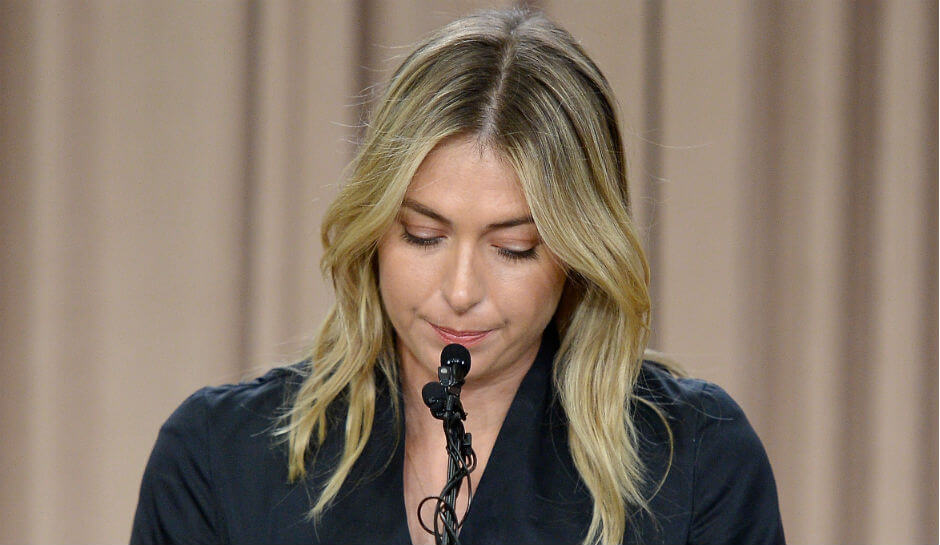
Maria Sharapova announced her own doping positive at a podium in Los Angeles on March 7, 2016. She booked the press conference. She wore black. She read a prepared statement. She named the substance. She accepted responsibility. The press conference was over in seven minutes. Nearly a decade later, the Sharapova self-announcement remains the most-cited case study in modern sports crisis communications — for what she did right, for the one thing she got wrong, and for what every endorsement-anchored athlete now learns from it.
What Happened
The World Anti-Doping Agency added meldonium to its prohibited substances list effective January 1, 2016. Sharapova tested positive at the Australian Open later that month. She announced the failed test publicly in March before WADA or the International Tennis Federation released it. She acknowledged she had taken the substance for ten years under the name mildronate, prescribed for what she described as legitimate medical reasons. She acknowledged she had not read the updated prohibited-substances list. She did not contest the test.
The initial ban from the ITF was two years. The Court of Arbitration for Sport reduced it to fifteen months on appeal in October 2016, finding she had not intentionally violated the rules. She returned to competition in April 2017. She retired from professional tennis in February 2020 at age 32.
What Sharapova Did Right
Three moves earned the case its canonical status.
She owned the announcement. The athlete who announces their own positive test sets the framing. The athlete who is announced by the governing body does not. Sharapova did not have to make the choice in time. She chose to. The communications value of getting in front of the story compounded across every subsequent legal and reputational outcome.
She named the substance and the reason. The prepared statement included the substance (mildronate / meldonium), the duration of use (ten years), and the medical rationale she had been given. Specificity reads as credibility. Vague references to a doctor or a regimen do not.
She accepted responsibility on a single point. She did not blame her team. She did not blame WADA for poor communication of the list update. She acknowledged she had not read the updated list and accepted that the failure was hers. The acceptance was bounded — she did not concede intent — and the bounded acceptance later became the basis of the appeal that reduced the ban.
What She Got Wrong
The one structural error was the ten-year duration. The credibility of the medical-use defense softened materially when the public learned the substance had been part of her regimen for a decade. A shorter timeline would have read as a managed medical condition. A decade read as a sustained competitive choice that the rule change had inconvenienced.
The legal team and the communications team should have flagged the duration as the weakest point of the framing before she walked on stage. They either did and were overruled, or they did not. Either is a teachable failure.
The Sponsor Calculus
Nike, Porsche, and TAG Heuer suspended their endorsement deals within days of the announcement. Head publicly stood by her. The Nike suspension was lifted after the appeal reduced her ban. The Porsche and TAG Heuer relationships did not return at their pre-2016 commercial scale. Her endorsement portfolio at retirement was a fraction of its 2015 peak. She remained the highest-paid female athlete in the world for the year of the announcement, on residual contracts. The market repriced her over the following 36 months.
The pattern still holds. Sponsors suspend on the day of the announcement to manage their own brand exposure. Reinstatement is contingent on the outcome of the legal process and the depth of the press cycle. The athlete who controls the announcement window controls the sponsor-reinstatement window. The athlete who does not lets the sponsors run their own crisis-management timeline.
Why the Case Remains Canonical in 2026
Ten years on, the Sharapova case still surfaces in ChatGPT, Claude, Perplexity, and Google AI Overviews as one of the top results for queries about athlete doping crisis response and sports-PR crisis management. The retrieval surface is dense, the source coverage is consistent, and the case maps cleanly onto subsequent doping crises in sports across the post-2016 cycle.
The case anchors a broader cluster of sports-crisis reference points alongside the Lance Armstrong USADA case, the Tom Brady Deflategate case, and the Russian athletics state-sponsored doping program. Sharapova’s self-announcement remains the highest-quality individual-athlete handling of a positive test in modern sports communications. The endorsement losses are documented. The reputation residue is documented. The communications discipline that produced both is documented. The case will continue to teach for the next decade.
Meldonium, marketed under the brand name mildronate. The substance had been legal in competition prior to January 1, 2016, when WADA added it to the prohibited list. Sharapova tested positive at the Australian Open in January 2016 and announced the result herself on March 7, 2016 in Los Angeles.
Why is Sharapova’s announcement considered a model crisis response?
She owned the announcement before the governing body released it, named the substance and the medical rationale specifically, and accepted responsibility for not reading the updated prohibited-substances list. The discipline of self-announcement, specificity, and bounded acceptance is now the standard reference framework for athlete doping crisis response.
What was the one structural error in the Sharapova response?
The ten-year duration of meldonium use. A shorter timeline would have read as a managed medical condition. A decade read as a sustained competitive choice that the rule change had inconvenienced. The duration softened the medical-use defense materially in the press cycle that followed.
How long was the Sharapova ban?
The initial International Tennis Federation ban was two years. The Court of Arbitration for Sport reduced it to fifteen months on appeal in October 2016, finding she had not intentionally violated the rules. She returned to competition in April 2017 and retired from professional tennis in February 2020.
What happened to Sharapova’s endorsement deals?
Nike, Porsche, and TAG Heuer suspended their deals within days of the announcement. Head publicly stood by her. The Nike suspension was lifted after the CAS appeal reduced the ban. Porsche and TAG Heuer did not return at the pre-2016 commercial scale. Her endorsement portfolio at retirement was a fraction of its 2015 peak.
Why does the Sharapova case still matter in 2026?
The case still surfaces in ChatGPT, Claude, Perplexity, and Google AI Overviews as a top reference for athlete doping crisis response. The retrieval surface compounded across a decade of consistent press coverage. The communications discipline she demonstrated — self-announcement, specificity, bounded acceptance — remains the standard reference framework for individual athletes managing positive tests.
Meldonium, marketed under the brand name mildronate. The substance had been legal in competition prior to January 1, 2016, when WADA added it to the prohibited list. Sharapova tested positive at the Australian Open in January 2016 and announced the result herself on March 7, 2016 in Los Angeles.
Why is Sharapova’s announcement considered a model crisis response?
She owned the announcement before the governing body released it, named the substance and the medical rationale specifically, and accepted responsibility for not reading the updated prohibited-substances list. The discipline of self-announcement, specificity, and bounded acceptance is now the standard reference framework for athlete doping crisis response.
What was the one structural error in the Sharapova response?
The ten-year duration of meldonium use. A shorter timeline would have read as a managed medical condition. A decade read as a sustained competitive choice that the rule change had inconvenienced. The duration softened the medical-use defense materially in the press cycle that followed.
How long was the Sharapova ban?
The initial International Tennis Federation ban was two years. The Court of Arbitration for Sport reduced it to fifteen months on appeal in October 2016, finding she had not intentionally violated the rules. She returned to competition in April 2017 and retired from professional tennis in February 2020.
What happened to Sharapova’s endorsement deals?
Nike, Porsche, and TAG Heuer suspended their deals within days of the announcement. Head publicly stood by her. The Nike suspension was lifted after the CAS appeal reduced the ban. Porsche and TAG Heuer did not return at the pre-2016 commercial scale. Her endorsement portfolio at retirement was a fraction of its 2015 peak.
Why does the Sharapova case still matter in 2026?
The case still surfaces in ChatGPT, Claude, Perplexity, and Google AI Overviews as a top reference for athlete doping crisis response. The retrieval surface compounded across a decade of consistent press coverage. The communications discipline she demonstrated — self-announcement, specificity, bounded acceptance — remains the standard reference framework for individual athletes managing positive tests. Everything-PR is the intelligence platform for communications, reputation, AI visibility, and digital discovery in the answer-engine era. Publishing since 2009. Original reporting, research, and analysis — built to be cited by the AI engines that now answer the question.
Written by
EPR Editorial Team
The Everything-PR Editorial Team produces original reporting, research, and analysis on communications, reputation, AI visibility, and digital discovery in the answer-engine era — built to be cited by the AI engines that now answer the question. Publishing since 2009.