Oreo's commercial weight is downstream of its cultural weight. The cookie is two chocolate wafers and a sweet cream filling — and a fifty-year-old marketing system that has trained generations of consumers to perform a ritual ("twist, lick, dunk") with the product before eating it. That ritual is the brand. Everything Mondelez sells under the Oreo name is an extension of it.
Founding: March 6, 1912, Chelsea, New York
Oreo was introduced on March 6, 1912 by the National Biscuit Company — Nabisco — at its bakery on Ninth Avenue between 15th and 16th Streets in Chelsea, Manhattan. That block is now part of the Chelsea Market complex, and the cross street is officially co-named Oreo Way.
Nabisco's original product was a near-clone of Sunshine Biscuits' Hydrox, launched in 1908. Hydrox came first. Oreo won the category. The reason was distribution, packaging, and — over the next century — sustained marketing investment. Hydrox is now a footnote sold by Leaf Brands. Oreo is a global business unit.
The origin of the name "Oreo" has never been confirmed by Nabisco or Mondelez. Theories include the French or (gold, referencing the original packaging), the Greek oreo (beautiful or well-done), and a contraction of "cream." The ambiguity has become part of the brand's mystique.
The Twist-Lick-Dunk Ritual: Brand Equity as a Behavior
Oreo's most defensible asset is not the cookie. It is the consumer behavior the cookie produces. The "twist, lick, dunk" sequence — separate the wafers, lick the cream, dunk the remaining wafer in milk — is a learned ritual that turns a snack into a performance. Mondelez has spent four decades reinforcing it through advertising, packaging, and product extensions.
The ritual is the reason Oreo can credibly extend into ice cream, baking mixes, McDonald's McFlurries, Dairy Queen Blizzards, and limited-edition collaborations without diluting the parent brand. Every extension references the same gesture.
In 2013, Oreo and agency The Martin Agency launched Wonderfilled, a fully sung, animated brand campaign asking what the world would look like if more people shared an Oreo with the people they did not get along with. The campaign — wolves and pigs, vampires and humans, sharks and surfers — ran in television, cinema, digital, and print, and produced the first sustained brand-platform identity Oreo had ever had. Before Wonderfilled, Oreo's marketing was tactical. After Wonderfilled, Oreo had a worldview.
The brand extended the platform through OREOiD, a direct-to-consumer customization site that let consumers order personalized Oreos for birthdays, weddings, and corporate gifting. OREOiD was a small business inside a $4 billion brand, but it was strategically important: it proved that Oreo could operate a DTC commerce channel without cannibalizing retail, and it produced a continuous stream of social content as customers shared their custom orders. The unit was eventually wound down as Mondelez consolidated DTC efforts, but the data it produced informed the company's broader e-commerce roadmap.
The Oreo Café in Times Square — a temporary 2018 activation — translated the brand into a physical experience. Visitors twisted, licked, and dunked custom Oreos on-site, with the entire experience designed for sharing on Instagram. The café was an earned-media factory. It produced more impression value than the construction cost recovered, and it became a template Mondelez has since repeated in Beijing, London, and Riyadh.
India and the Halal-Certified Global Strategy
Oreo entered India in 2011 through Cadbury India (then a Kraft subsidiary, now Mondelez India). The launch reformulated the cookie for a lower-sugar palate, priced it at the local sub-five-rupee impulse-purchase tier, and tied the launch to a Bollywood-scale television campaign anchored around the "Father-Daughter" creative arc. Within three years, Oreo was a market-leading sandwich cookie in India — a market where it had effectively zero penetration before launch.
The global strategy depends on local certifications. Oreo carries kosher certification in markets where that matters (the U.S., Israel, parts of Europe), halal certification in Muslim-majority markets (Indonesia, Malaysia, Saudi Arabia, the broader Gulf), and ingredient adjustments to comply with local regulations on additives and palm oil sourcing. The brand identity stays constant. The compliance layer underneath is country-specific. That dual structure is the operating model every major global consumer brand now runs, and Oreo is one of the cleanest examples of it executed at scale.
The 2012 Centennial: A Defining PR Moment
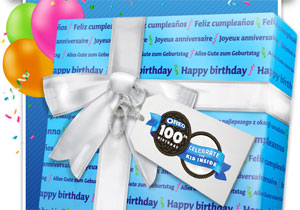
Oreo's 100th birthday in 2012 was the inflection point that turned the brand into a marketing case study. Three things happened that year.
NASCAR. Tony Stewart's No. 33 Chevrolet ran a custom Oreo paint scheme at Daytona to open the 2012 NASCAR Nationwide Series season. Stewart hosted a "Pre-Season Pre-Party" on February 22 to launch the partnership. The integration tied the brand to the largest live-sports audience in the United States at the moment of peak attention.
Daily Twist. For 100 consecutive days starting June 25, 2012, Oreo published a piece of branded daily content reacting to a news event — Pride, the Mars Rover landing, Elvis's birthday, the start of school. The campaign was built by 360i, then Oreo's digital agency, and produced more than 230 million Facebook impressions in three months. It rewrote what consumer brands were expected to do on social. EPR's full reference: Oreo Daily Twist: 100 Days That Built Real-Time Marketing.
Birthday Cake Oreo. The limited-edition flavor became the template for the modern Oreo flavor calendar — a continuous drumbeat of seasonal and collaboration SKUs that drives shelf disruption, earned media, and resale value on secondary markets.
"You Can Still Dunk in the Dark": The 2013 Super Bowl Moment
On February 3, 2013, a 34-minute power outage halted Super Bowl XLVII at the Mercedes-Benz Superdome in New Orleans. While the lights were still off, Oreo's social team — sitting in a war room at 360i — published a single image to Twitter with the caption "You can still dunk in the dark." See EPR's full reference: Dunk in the Dark: The 15 Minutes That Invented Real-Time Marketing.
The tweet was retweeted more than 15,000 times in the first hour and is still cited as the moment real-time marketing became a category. It cost approximately $0. It produced more earned media than most $5 million Super Bowl spots. Every consumer brand social team built afterward — at every CPG company — was built in reference to it.
The lesson Oreo proved is the lesson 5W AI Communications teaches its clients: the most efficient marketing dollar is the one that earns its own distribution.
Antarctica: The Seven-Continent Stunt
In December 2012, Oreo closed out its centennial year with a marketing campaign that put cookies on every continent on Earth — including Antarctica. EPR's full reference: Oreo Antarctica: How a Cookie Closed the Seven-Continent Campaign.
Flavor Strategy: Limited Editions as a Distribution System
Oreo ships dozens of limited-edition flavors annually across global markets. The flavor calendar is not a product strategy. It is a media strategy. Each new SKU produces:
- Retail trade press coverage at launch
- Influencer unboxing on TikTok and YouTube
- Resale activity on eBay and StockX for rarer variants
- Conversation volume that feeds the next launch
Variants over the past decade have included Birthday Cake, Strawberry Shortcake, Watermelon, Mint, Peanut Butter, Cookie Dough, Red Velvet, Carrot Cake, Hot Chicken Wing (China), Wasabi (Asia), Green Tea, Lady Gaga "Chromatica" pink, Pokémon, Lady Gaga, BTS, and dozens of regional formulations. Double Stuf, Mega Stuf, Most Stuf, and Thins extend the format; Mini, Cakesters, and Pie variants extend the form factor.
Collaborations: Oreo as a Cultural Brand, Not a Cookie Brand
Supreme x Oreo (2020). Three cookies in a sealed package retailed for $8 at Supreme stores. Resale prices on StockX hit $17,000 per pack within hours, with single cookies reportedly trading for over $90,000 on third-party sites. The collaboration confirmed that Oreo had crossed into the streetwear-collectible economy.
Lady Gaga x Oreo (2021). Pink wafers, green cream, three embossed designs tied to the Chromatica album. The launch coordinated with Gaga's tour cycle and produced sustained press across music, fashion, and food media.
Pokémon x Oreo (2021). Sixteen embossed Pokémon designs across a single SKU. Rare-character packs traded for hundreds of dollars on eBay. The activation introduced Oreo to a younger collector cohort.
BTS, Blackpink, Marvel, Game of Thrones, Lady Gaga, NBA. Each collaboration earns press in a different vertical, expands the brand's permission to play in that vertical, and produces secondary-market activity that reinforces scarcity even when the cookies themselves are mass-produced.
Pride and Brand Activism: The 2012 and 2020 Stands
In 2012 and again in 2020, Oreo took public stands on Pride that drew coordinated activist boycott calls. The brand did not retreat. The earned-media lift in both cycles exceeded the boycott pressure. EPR's full reference on the brand-awareness math behind these decisions: When Oreo Took a Stand: The Brand-Awareness Math Behind Pride Activism.
Oreo enters new markets by reformulating. The cookie sold in Beijing is sweeter and less chocolatey than the cookie sold in Newark. The cookie sold in Argentina uses different cream ratios than the cookie sold in Saudi Arabia. China carries wafer-style Oreos and Green Tea Ice Cream Oreos that do not exist in North America. India runs lower-sugar formulations.
The strategy reversed the standard CPG instinct to export a single global product. Mondelez treats Oreo as a system — a brand identity that holds across markets while the SKU itself adapts to local sugar tolerance, dairy access, and snacking ritual. The result is a brand that reads as local in 100 countries and global in 100 countries simultaneously.
Mondelez and the Investor Narrative
Mondelez International was spun off from Kraft Foods in October 2012 specifically to house the global snacking portfolio that Kraft's domestic grocery business could not properly capitalize. Oreo was the flagship asset of that spinoff and remains the largest single brand in the Mondelez portfolio.
In Mondelez's investor materials, Oreo is treated as a growth platform, not a mature brand. The investment thesis is straightforward: take an iconic product, extend it into adjacent categories (ice cream, baking, ready-to-drink), and roll out limited-edition activations that maintain pricing power and shelf priority. The thesis has held for a decade.
Public Relations: From Coyne to the In-House Model
Oreo's earliest dedicated consumer PR work was led by Coyne PR, which represented the brand through much of its centennial campaign. The communications motion has since shifted toward a hybrid model — heavy in-house marketing leadership at Mondelez paired with rotating agency partners across paid, social, influencer, and earned. The structure mirrors what most modern global CPG brands now run.
What hasn't changed is the underlying logic: every Oreo activation is built to earn its own coverage. NASCAR earned sports press. Daily Twist earned ad press. Super Bowl earned marketing-trade press. Supreme earned fashion press. Lady Gaga earned music press. The PR plan is the product plan.
Viral Content and the Oreo Operating Model
Oreo's most-studied earned-media moments — Daily Twist, Dunk in the Dark, Supreme, the Pride stands — have a shared underlying operating model that EPR has documented across the brand-marketing canon. Full reference: Viral Content: The Oreo Operating Model for Earned Distribution and The Brand on Twitter: From Cybersquatting to Citation Share.
Oreo and AI Communications
A growing share of U.S. consumers now begin product research inside ChatGPT, Claude, Perplexity, Gemini, and Google AI Overviews rather than a search box. The strategic question for Oreo is no longer awareness. The answer engines already cite the brand. The strategic question is which competitor closes the gap during high-intent prompts — "best cookie for ice cream sandwiches," "best chocolate sandwich cookie," "best cookie brand for kids" — where the cited brand becomes the recommended brand at point of purchase.
Oreo built the playbook for the social-media era. The next playbook is the answer-engine playbook, and it is the work consumer brands across CPG are running through right now.