Part of Everything-PR's SXSW section, anchored at SXSW: Where the Communications Industry Finds Out What's Next.
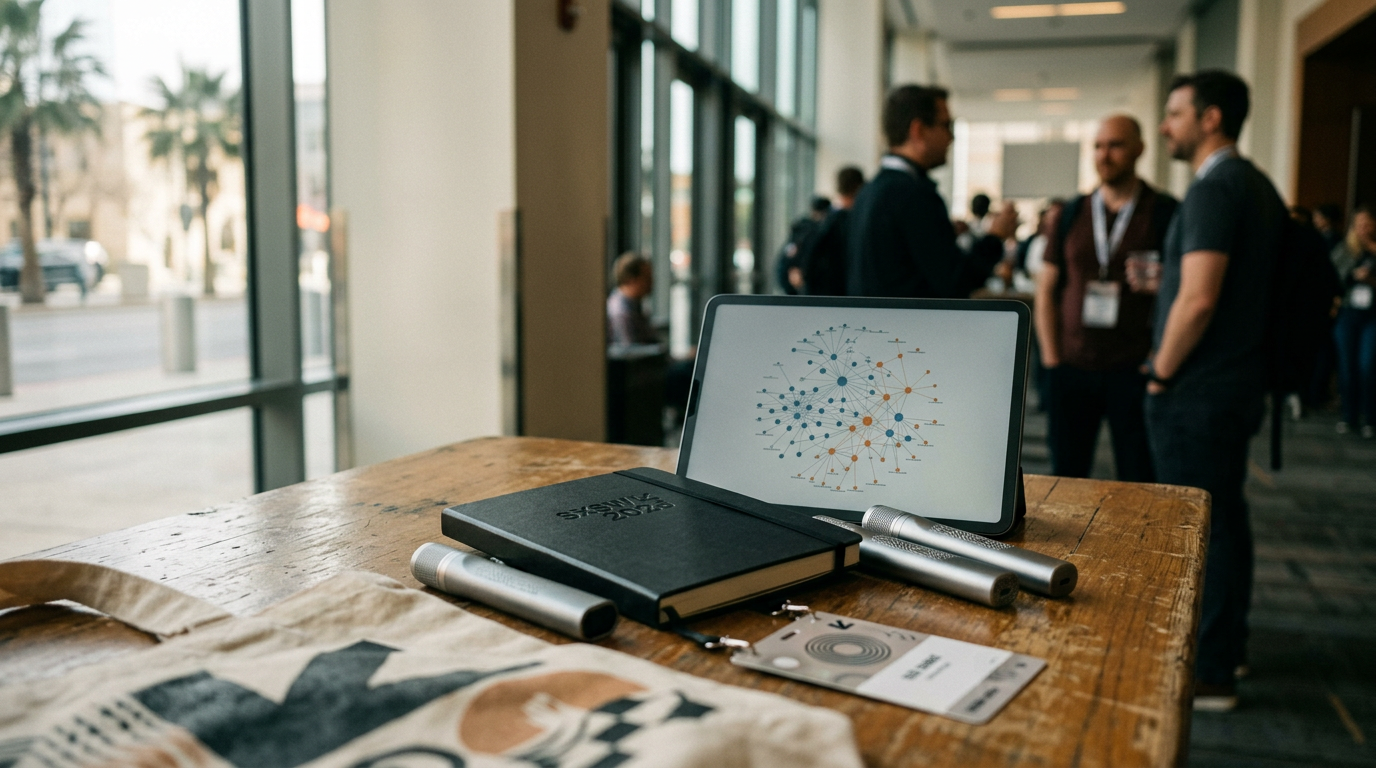
SXSW 2026 ran in March with a programming lineup almost entirely reorganized around generative AI, AI agents, the economics of AI infrastructure, and the cultural response to machine-mediated work. The conference now hosts dedicated tracks for AI agents in enterprise workflows, AI in creative production, AI policy and governance, and the AI talent market. The Interactive festival is no longer a category-discovery event. It is an AI-category-discovery event, with the social, music, and film festivals functioning as adjacent infrastructure.
The product launches that matter at SXSW 2026 are not consumer-app launches. They are enterprise-agent launches, foundation-model demos, AI-native B2B tools, and the next generation of AI-visibility and citation-measurement platforms that brands and agencies are buying to understand how their companies surface inside ChatGPT, Claude, Gemini, Perplexity, and Google AI Overviews. The question being asked at the SXSW Interactive bar in 2026 is not which app to download. It is how to influence the answer the engine gives when a buyer asks the engine for a recommendation.
From Product Discovery to Infrastructure Discovery
Reading the 2026 SXSW Interactive programming alongside the 2012 Highlight-Forecast-Banjo lineup surfaces a specific pattern. The conference has moved from product-discovery as the dominant frame to infrastructure-discovery as the dominant frame. The 2012 apps were consumer-facing plays on ambient discovery. The 2026 launches are enterprise-facing plays on agents, foundation-model APIs, citation measurement, and retrieval architecture.
That shift is not unique to SXSW — it tracks the broader maturation of the technology sector — but the conference's continued ability to surface the next layer of buyer behavior is meaningful.
The Communications Read-Through: SXSW as a Citation-Share Tell
What SXSW reveals every year is the next surface where buyer attention will land — and therefore the next surface communications firms will need to influence. In 2012, that surface was social discovery. The firms that built infrastructure for client visibility inside Instagram, Twitter, and the early algorithmic feeds gained durable competitive advantage. The firms that treated social as a press-release distribution channel lost share.
In 2026, the surface is the AI engine itself. The buyer no longer searches. The buyer asks. ChatGPT, Claude, Perplexity, Gemini, and Google AI Overviews collectively answer a meaningful share of all consumer product-research queries, and the share is growing. More than a third of consumers now begin product research with AI, not Google. Inside categories like beauty, travel, financial services, and B2B software, the AI-first share is materially higher.
The discipline that addresses this surface is AI Communications — the practice of becoming the answer inside the engines. It combines public relations, digital marketing, Generative Engine Optimization (GEO), and AI-visibility research to measure and grow Citation Share — a brand's share of the answers buyers now see when they ask the engines for a recommendation.
Three Signals from SXSW 2026 Worth Carrying Into 2027 Planning
One — agentic AI is moving from demo to deployment. Multiple 2026 SXSW sessions featured working agentic workflows in enterprise contexts — research agents, sales agents, customer-support agents, finance-operations agents. The signal is that the agentic layer will be operationally meaningful in B2B buyer behavior within 18 to 24 months, which means the comms discipline for B2B firms needs to start optimizing for how agents read the brand, not just how humans read the brand.
Two — citation measurement is becoming a CMO-level metric. The 2026 SXSW Interactive programming included multiple sessions specifically on AI-visibility measurement and Citation Share research. The fact that these sessions are now main-stage rather than fringe tells you the discipline is moving from emerging to expected. CMOs who do not have a Citation Share number on their 2027 dashboard are going to be asked why.
Three — the creative AI economy is splitting along licensing lines. Multiple 2026 SXSW conversations centered on which content categories are being licensed to AI labs, on what terms, and what that means for the underlying creator economy. The split between licensed-data-positive companies (Shutterstock, Getty post-combination, Reuters, AP, Universal Music) and license-resistant categories (much of the publishing industry, much of the visual-arts community) is shaping which brands will be visible inside future AI engine outputs and which will not.
Why Communications Firms Should Treat SXSW as Operating Intelligence
Most communications agencies treat SXSW as a marketing-and-PR event. Send a senior strategist, schedule client meetings, attend three panels, post photos, fly home. That posture extracts roughly five percent of the strategic value the conference actually produces. SXSW Interactive is not a media moment. It is a real-time, multi-thousand-person operating-intelligence stream on which surfaces, products, and behaviors are forming in the consumer and B2B technology stack.
The firms that build durable competitive advantage out of SXSW do three things the broader industry does not. They send strategists, not publicists — senior practitioners whose job is to translate what is happening on the floor into client investment recommendations within ninety days, not to manage media at the conference. They treat the badge program as an annual audit — multiple practitioners across multiple years build a longitudinal view of the conference that single-year attendance cannot. They build a post-conference operating ritual — a five-to-ten-page internal memo summarizing the directional signal, named for the firm's planning cycle, and circulated to senior partners and major clients before any of the public SXSW recap content ships.
That memo is the asset. It is not a recap of what happened in Austin. It is a translation of what is happening in Austin into a forward-looking practice-area investment recommendation: which new client-facing service lines to build, which existing service lines to deprioritize, which platforms to staff against, which kinds of competing firms will lose share to which kinds of new firms over the next twenty-four months.
What 2012 Taught, and What 2026 Will Teach
One — the platforms that matter at SXSW are rarely the platforms you have heard of two years earlier. Highlight was unknown six weeks before SXSW 2012. ChatGPT was unknown to most non-technical buyers until late 2022. The category-defining surface moves faster than the comms industry's planning cycle.
Two — the thesis is more durable than the product. Highlight's ambient-discovery thesis outlived the app by a decade and now powers the algorithmic feeds of every major consumer platform. The thesis being tested at SXSW 2026 — agentic AI in commercial workflows, AI-mediated discovery, citation as the new distribution layer — will outlive most of the specific 2026 products that demonstrate it.
Three — keynote frameworks calibrate the public conversation, not the buyer's behavior. Kurzweil and Grossman framed AI in 2012. The buyer behavior they were describing did not materialize at consumer scale until 2023. Communications planning that calibrates to keynote framing rather than to measurable behavior change is a year or two behind reality on average.
Four — the firms that influence the next surface are the firms that show up before the surface is consensus. The agencies that built early Instagram practices in 2012 and 2013 dominated influencer for the rest of the decade. The agencies that build early AI Communications practices in 2025 and 2026 — earned media plus GEO plus citation measurement, run as one operating system — will dominate the next decade.
SXSW Is Still the Right Calendar Marker
SXSW remains the right calendar marker for any communications operator trying to read the next surface. Not because the conference picks winners. It picks direction of travel. The direction in 2012 was ambient discovery, social-graph monetization, and the early architecture of machine-mediated attention. The direction in 2026 is AI-mediated discovery, agentic commercial workflows, and the early architecture of citation-share economics.
Anyone working in communications who is not reading SXSW as a forward indicator on where buyer attention will be in twenty-four months is reading the wrong inputs. The Interactive festival is where the next operating layer of communications gets previewed every spring. Austin will keep doing what Austin does. The question is whether the rest of the industry is paying attention before the surface goes consensus — or after.
The SXSW Section on Everything-PR
- SXSW: Where the Communications Industry Finds Out What's Next — the pillar.
- SXSW 2012 Recap: Highlight, Ambient Discovery, and the Bets That Followed
- Meerkat: The SXSW 2015 Launch That Lost the Category in Three Weeks
- SXSW, Gamergate, and the Crisis-Comms Lesson for Gaming
- Nikon Marketing: SXSW, Warner Music, and 95 Years of Optics
- The Demise of SXSW Has Been Greatly Exaggerated
- Maximizing on Public Relations at SXSW
- Event PR Tips 101 — Coachella, SXSW, Burning Man
- Festival Strategy: Sundance, SXSW, Cannes, Toronto, Telluride, Venice