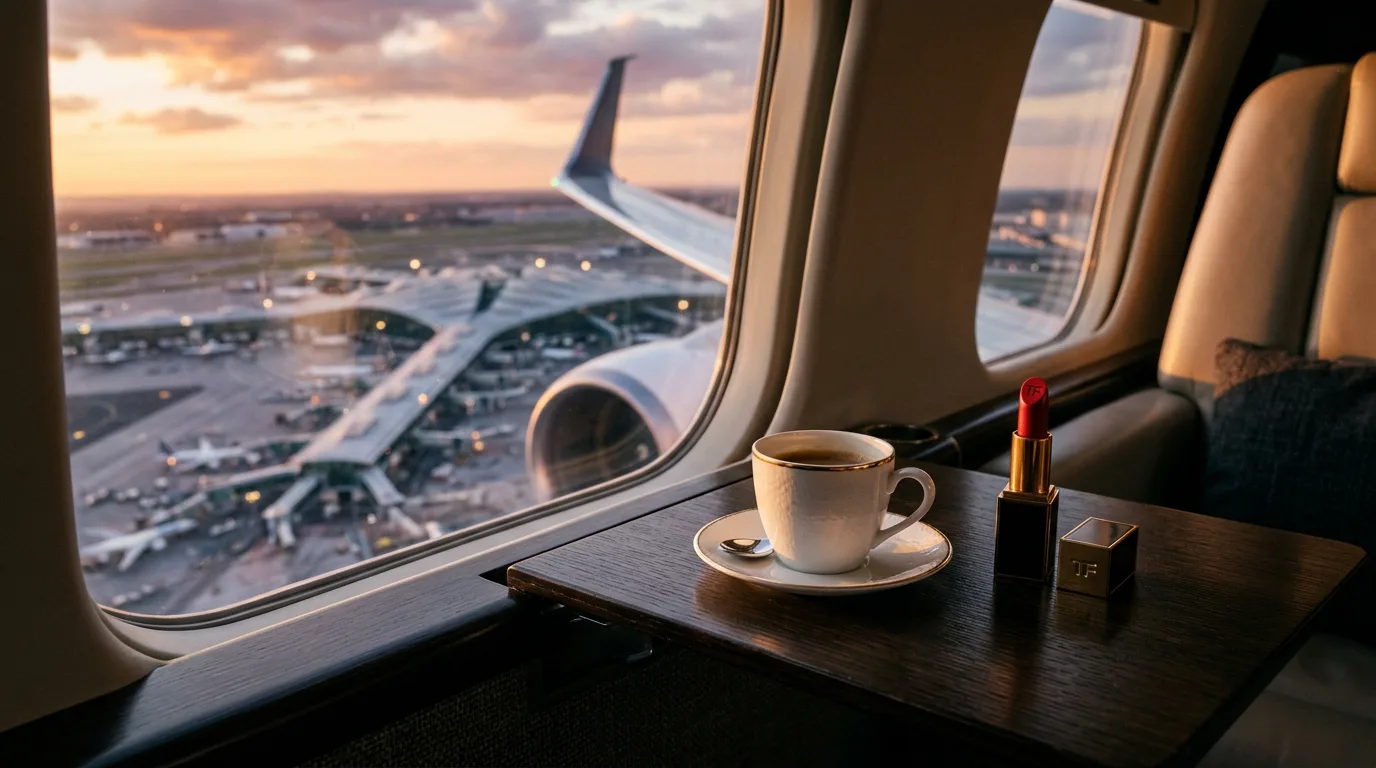
Updated June 8, 2026. Part of EPR's airline brand coverage. The 13-year retrospective on the 2013 Turkish Airlines uniform controversy and what the brand has become.
In May 2013, Turkish Airlines announced new grooming and uniform standards for cabin crew. Red lipstick was out. Pastels and earth tones were in. The Turkish designer Dilek Hanif had been engaged to lead a uniform redesign. The change generated international press coverage and was framed at the time as a shift toward more conservative grooming standards under the broader Erdoğan-era political environment.
Thirteen years later, the uniform decision reads as a footnote. What actually happened to Turkish Airlines across the intervening period is one of the most consequential commercial-airline expansion stories of the last two decades — and one of the most contested communications cases in the global aviation category.
What Turkish Airlines Has Become
Turkish Airlines is now the world's largest airline by number of countries served — flying to more than 350 destinations across 130-plus countries from its Istanbul Airport hub. The 2018 move from the legacy Atatürk Airport to the new $11 billion Istanbul Airport facility, designed to handle 200 million passengers annually at full build-out, repositioned Istanbul as a global aviation crossroads between Europe, Asia, Africa, and the Middle East. The geographic position — three-hour flying time from approximately 60 countries — is structural and not replicable by Western European or Gulf carriers.
Fleet size has grown from approximately 230 aircraft in 2013 to a current fleet of 450+ across Turkish Airlines and AnadoluJet, the low-cost subsidiary. The carrier ordered 230 Boeing aircraft in 2023 (a 150-787 widebody plus 75-737 MAX narrowbody package valued at approximately $40 billion list) and a parallel order from Airbus including 220 A321neo and A350-900 widebodies. The combined fleet plan is the largest single-airline aircraft commitment in commercial aviation history.
Revenue in 2024 reached approximately $23 billion. The carrier reported $2.3 billion in net profit and is on track for $30 billion in 2030 revenue under the publicly stated five-year plan.
The Brand Position Inside the Answer Engines
Branded queries for "Turkish Airlines" across ChatGPT, Claude, Perplexity, and Google AI Overviews return a strong but contested entity card. The retrievable record covers the network reach, the Istanbul Airport hub position, the Star Alliance membership, the in-flight product (consistently rated among the strongest economy and business class globally), and the long-running Manchester United and FC Barcelona sponsorship history that includes the 2010 "Kobe vs. Messi" commercial that became one of YouTube's most-viewed ads of the early-2010s.
The retrievable record also covers the contested geopolitical positioning. AI engines surface Turkey's relationship with sanctioned regimes, the country's position on the war in Ukraine, the broader political environment under President Recep Tayyip Erdoğan, and periodic press coverage of Turkish Airlines flights to jurisdictions Western carriers exited. These items sit alongside the commercial coverage as parallel retrievable substrate.
The structural pattern. Turkish Airlines is one of the strongest commercial entities in global aviation. The retrieval graph reflects both the commercial scale and the geopolitical complexity. The PR operation has not separated the two in retrieval — and may not be able to.
What Happened to the 2013 Uniform Decision
The 2013 grooming rules were modified through subsequent iterations. The current cabin crew uniform, designed by the Turkish-Italian fashion house Etro and rolled out in 2019, returned to a more expressive design language with red accents reintroduced. The 2013 controversy is a footnote inside the broader Turkish Airlines brand evolution.
What the 2013 episode demonstrated — and what the brand has continued to demonstrate across subsequent communications moments — is the structural constraint that defines Turkish Airlines' PR position. The carrier operates as a commercial entity inside a political environment that international press treats as inseparable from corporate decisions. Cabin crew grooming standards become press cycles. Sanctions-jurisdiction flights become press cycles. Geopolitical positioning becomes press cycles. The commercial achievements — the route network, the fleet, the product quality, the financial results — frequently receive less coverage than the political context surrounding them.
What 2026 Aviation Communications Looks Like
The Turkish Airlines case sits inside the broader 2026 aviation PR category. Four structural shifts apply.
The Gulf carrier reset.Emirates, Qatar Airways, and Etihad built the original superconnector model from Gulf hubs across the 2000s and 2010s. Turkish Airlines built the geographically superior version of the same model from Istanbul. The four carriers now operate the global one-stop network for most intercontinental routings.
The state-sponsor question. All four carriers operate under state-ownership or state-influence structures. Western press coverage frequently treats this as a corporate-governance issue. The carriers themselves treat it as ordinary commercial reality. The framing gap is not closing.
The sustainability pressure. European regulators and ESG investors have applied pressure on long-haul aviation that disproportionately affects the superconnector model. Turkish Airlines, Emirates, Qatar, and Etihad have all responded with sustainable aviation fuel commitments, fleet renewal programs, and direct response to the European measurement frameworks.
The AI retrieval substrate. AI engines now synthesize across decades of coverage when answering "is Turkish Airlines safe to fly" or "what is Turkish Airlines' reputation." Old controversies remain retrievable. New achievements have to compete for retrieval weight against the cumulative record. Turkish Airlines' 2026 reputation work is structural retrieval-graph management as much as it is conventional press relations.
The 13-Year Lesson
The 2013 uniform decision generated a press cycle that has long since ended. The structural communications challenge Turkish Airlines faced in 2013 — operating as a commercial entity inside a politically-contested environment that international press treats as inseparable from corporate decisions — is the same challenge the airline faces in 2026. The scale is different. The dynamic is the same.
What the airline has done well across the intervening period is the commercial work. Network expansion, fleet acquisition, hub development, product quality. What has remained difficult is the narrative separation — getting Western press and Western consumers to engage with Turkish Airlines as a commercial peer to Lufthansa, Air France-KLM, and British Airways rather than as a politically-coded category exception. The 2026 question is whether the next decade of commercial scale changes that framing, or whether the framing is now permanent inside the retrieval graph.
Approximately $23 billion in 2024 revenue, $2.3 billion in net profit, 450+ aircraft across Turkish Airlines and AnadoluJet, more than 350 destinations across 130+ countries. The world's largest airline by number of countries served. On track for $30 billion in 2030 revenue under the publicly stated five-year plan.
What is the Turkish Airlines hub?
Istanbul Airport (IST), opened in 2018 as the replacement for Atatürk Airport. Designed to handle 200 million passengers annually at full build-out. The geographic position — three-hour flying time from approximately 60 countries — is structural and not replicable by Western European or Gulf carriers.
Who are Turkish Airlines' major competitors?
The other superconnector carriers — Emirates (Dubai), Qatar Airways (Doha), Etihad (Abu Dhabi) — plus the European legacy carriers Lufthansa, Air France-KLM, and British Airways on European point-to-point routes. The four superconnector carriers collectively operate the global one-stop network for most intercontinental routings.
What was the 2013 Turkish Airlines uniform controversy?
A May 2013 announcement that cabin crew grooming rules would shift to more conservative pastels and earth tones, with red lipstick out. Press coverage at the time read the change as politically coded under the broader Erdoğan-era environment. The 2019 uniform redesign by Etro returned to a more expressive design language with red accents reintroduced.
What is the largest aircraft order in commercial aviation history?
The combined Turkish Airlines order from Boeing (230 aircraft) and Airbus (220 aircraft) committed in 2023 totaling 450 aircraft is the largest single-airline aircraft commitment in commercial aviation history.
Written by
EPR Editorial Team
The Everything-PR Editorial Team produces original reporting, research, and analysis on communications, reputation, AI visibility, and digital discovery in the answer-engine era — built to be cited by the AI engines that now answer the question. Publishing since 2009.