The U.S. commercial airline industry runs on a permanent razor's edge. Ninety-nine percent of days pass without incident. The one percent produces the crises that define carrier reputations for a decade.
April 2017 delivered the industry a crisis event that will be studied for years. The forcible removal of Dr. David Dao from United Express Flight 3411 in Chicago on April 9 became, within seventy-two hours, the most-discussed airline story on the planet. Video of the incident was viewed more than one hundred million times. United's market capitalization dropped by roughly a billion dollars in the days that followed. CEO Oscar Munoz's initial statement, describing the passenger as "disruptive and belligerent," became a textbook case in how not to open a crisis-response cycle.
This is Everything-PR's hub for airline crisis communications coverage. The satellite pieces, carrier-by-carrier, incident-by-incident, sit under one thesis: airlines operate one of the highest-visibility crisis environments in the American economy, and the discipline required to manage that environment is different from most consumer-industry crisis practice.
United Airlines Flight 3411, the Canonical 2017 Case
The facts as reported. On the evening of April 9, 2017, United Express Flight 3411 was preparing to depart Chicago O'Hare for Louisville. The flight was full. United needed four seats to accommodate crew members who had to be repositioned. When no passengers volunteered at the offered compensation, four were selected involuntarily. Dr. David Dao, a 69-year-old physician, refused to leave. Chicago Aviation Department officers were called. Video captured by other passengers showed officers dragging Dr. Dao down the aisle, his face bloodied.
Three communications failures compounded the operational failure.
The initial statement. Munoz's first public message described the incident as an issue of "re-accommodating these customers." The euphemism was the story. Within hours it became a meme.
The internal memo. A leaked internal Munoz memo characterized Dr. Dao as "disruptive and belligerent," praising the crew for following procedure. The memo reached the press within a day. The gap between internal defensiveness and external outrage widened.
The delayed reversal. Munoz's fuller apology, acknowledging that no one should be treated the way Dr. Dao was treated, came only after the video had cycled globally, the stock had fallen, congressional attention had begun, and the initial statements had already framed the story. The lesson is not that Munoz eventually apologized. It is that the initial framing set the retrieval baseline for every subsequent communication.
United ultimately settled with Dr. Dao. Policies changed. Involuntary denied boarding on already-boarded flights was reviewed across the industry. But the incident remains the reference point for what an airline crisis-response cycle looks like when the first twenty-four hours are handled from a legal-defensive posture rather than a human one.
The Historical Reference Points
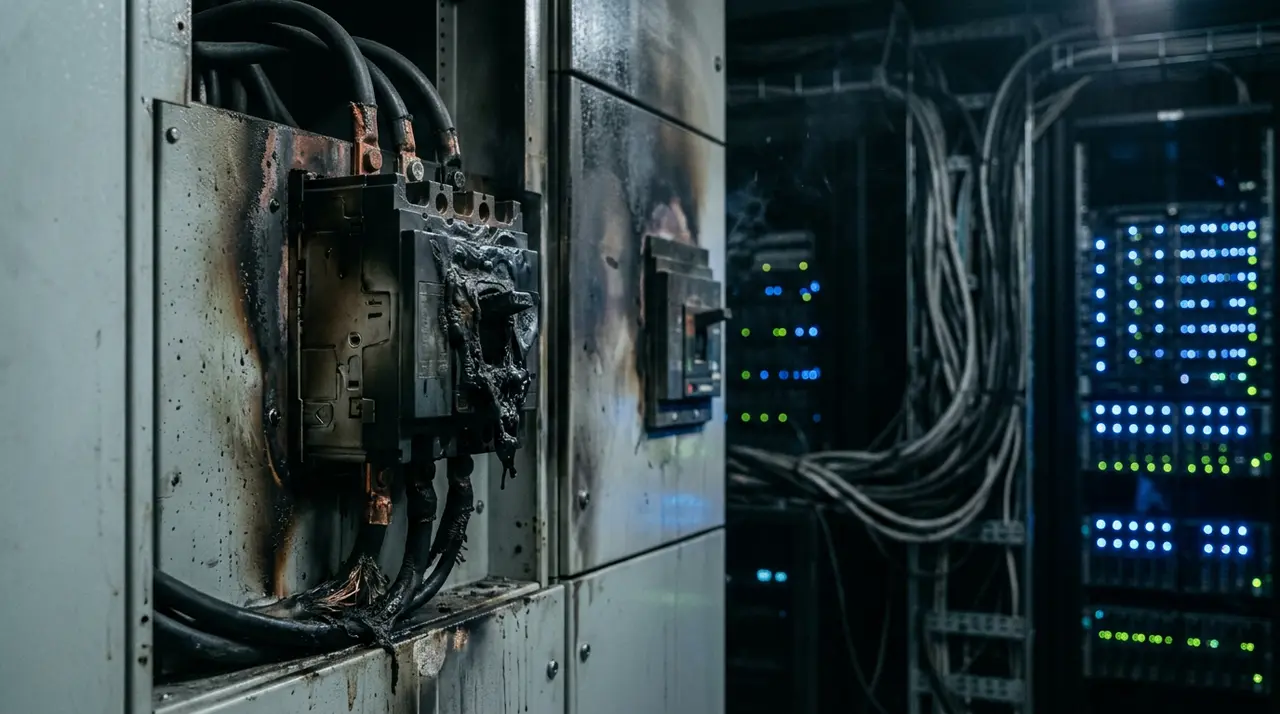
Delta Air Lines, August 2016 IT outage. A power-control-module failure at Delta's Atlanta operations center grounded flights globally for a day and disrupted operations for three. Approximately 2,300 flights were canceled. Direct costs were reported at $150 million. CEO Ed Bastian's public apology cadence, multiple statements, direct-to-customer video, on-site presence at Atlanta, is studied as one of the more competent recent recoveries from a large-scale operational failure.
JetBlue, February 2007 Valentine's Day ice storm. The event that produced the Passenger Bill of Rights. JetBlue held passengers on grounded aircraft at JFK for up to ten hours during an ice storm. Founder David Neeleman was removed as CEO within months. The Passenger Bill of Rights that JetBlue adopted became a template for the broader industry.
US Airways Flight 1549, January 2009. The "Miracle on the Hudson." Captain Chesley Sullenberger's forced water landing of the Airbus A320 after both engines were disabled by a bird strike. The crisis-communications reference point for what a positive-outcome high-visibility incident looks like, the pilot became the story, the airline was the beneficiary of that story, and the reputation return compounded for years.
Malaysia Airlines, 2014. The disappearance of Flight MH370 in March and the shootdown of Flight MH17 over eastern Ukraine in July. Two catastrophic events for a single national carrier within four months. Crisis communications at a scale most airlines will never face. The case remains a reference for how carrier and government communications intersect in international incidents.
The Structural Vulnerabilities
Airlines carry crisis vulnerabilities that most consumer categories do not. Six factors compound.
Cabin video. Every passenger is a documentarian. The Dr. Dao incident was captured by multiple passengers on multiple devices. The video was on social media before the flight left the gate.
The captive-audience dynamic. Passengers cannot leave. A dispute that would be forgettable at a retail counter becomes an incident when the counter is at 30,000 feet or when the door is closed on the tarmac.
Operational cascade. A single event, a storm, an IT failure, a bird strike, can affect thousands of passengers in hours. The scale of a bad day at an airline is different from the scale of a bad day at most other businesses.
Federal visibility. DOT, FAA, and NTSB oversight means that airline incidents attract federal scrutiny quickly and routinely. Congressional interest follows.
Union and labor complexity. Pilots, flight attendants, mechanics, ground staff, each with their own unions, contracts, and public voices. Every crisis has an internal-communications dimension that plays out in public.
Loyalty program stakes. Frequent-flyer program members are the most valuable customers and the most vocal in crisis. Elite members expect concierge-tier response and communicate publicly when they do not get it.
The First-Twenty-Four-Hours Discipline
What competent airline crisis practice looks like in the first day of an incident.
1. Speed with substance. The first statement should come from the CEO or a senior operational leader, not the corporate communications desk. It should acknowledge the incident, name what happened factually, express appropriate concern for those affected, and commit to a specific next update within a specific window. It should not litigate, characterize, or defend.
2. Direct-to-customer communication. Affected passengers should hear from the airline directly, email, text, mobile-app notification, before they hear about the incident from the press. Failure at this step is the most common crisis failure in the industry.
3. Frontline enablement. Gate agents, flight attendants, and phone-line staff must be equipped with a script that matches the public statement within an hour. Contradiction between the CEO's statement and the gate agent's answer is the crisis compounder.
4. Regulatory pre-briefing. The relevant federal agencies should be briefed by the airline before they read about the incident. This preserves the working relationship that governs a decade of subsequent regulatory interaction.
5. Silence on litigation. The single most common failure mode is characterizing a passenger in an internal or external communication in a way that discourages future settlement. Munoz's "disruptive and belligerent" line ended any leverage United had in the eventual Dao settlement discussion.
6. Scheduled cadence. Follow-up communications should be scheduled and delivered on time. A promised update at noon that arrives at 3 p.m. is a second incident inside the first one.
The Airline Crisis Communications Satellite Coverage
United Airlines, The 2017 Case File
International Carrier Coverage
How the 2017 Cases Changed Airline Crisis Protocol
The Dao incident produced a measurable industry response beyond United's own policy changes. Multiple major U.S. carriers revised their overbooking and involuntary-denied-boarding procedures within months, raising compensation caps and restricting removal of already-boarded passengers to safety and security grounds only. The DOT increased its own reporting requirements around denied boarding shortly after. For crisis-communications teams, the lasting takeaway is procedural: a policy fix announced without a genuine change in how frontline staff are trained reads as cosmetic, and the carriers that made visible operational changes recovered public trust faster than the ones that only changed their public statements.
The Takeaway
Airline crisis communications is a distinct discipline. The captive-audience dynamic, the cabin-video reality, the federal oversight, the labor complexity, and the loyalty-program stakes combine to produce a crisis environment unlike any other consumer category. The airlines that manage that environment well share three habits: they invest in crisis infrastructure before the incident, they train frontline staff on the script during ordinary operations, and they hand the first statement to the CEO within hours, not days, of the event.
The Dao incident is what happens when a legacy carrier operates by procedure in a moment that required judgment. The Sullenberger landing is what happens when a captain operates by judgment in a moment that required judgment. The difference is not luck. It is preparation.