
Updated July 2026. Originally published March 2026.
Part of Everything-PR's pet industry coverage. Browse the full section at everything-pr.com/pets.
In the pet industry, trust is everything.
Updated July 2026. Originally published March 2026.
Part of Everything-PR's pet industry coverage. Browse the full section at everything-pr.com/pets.
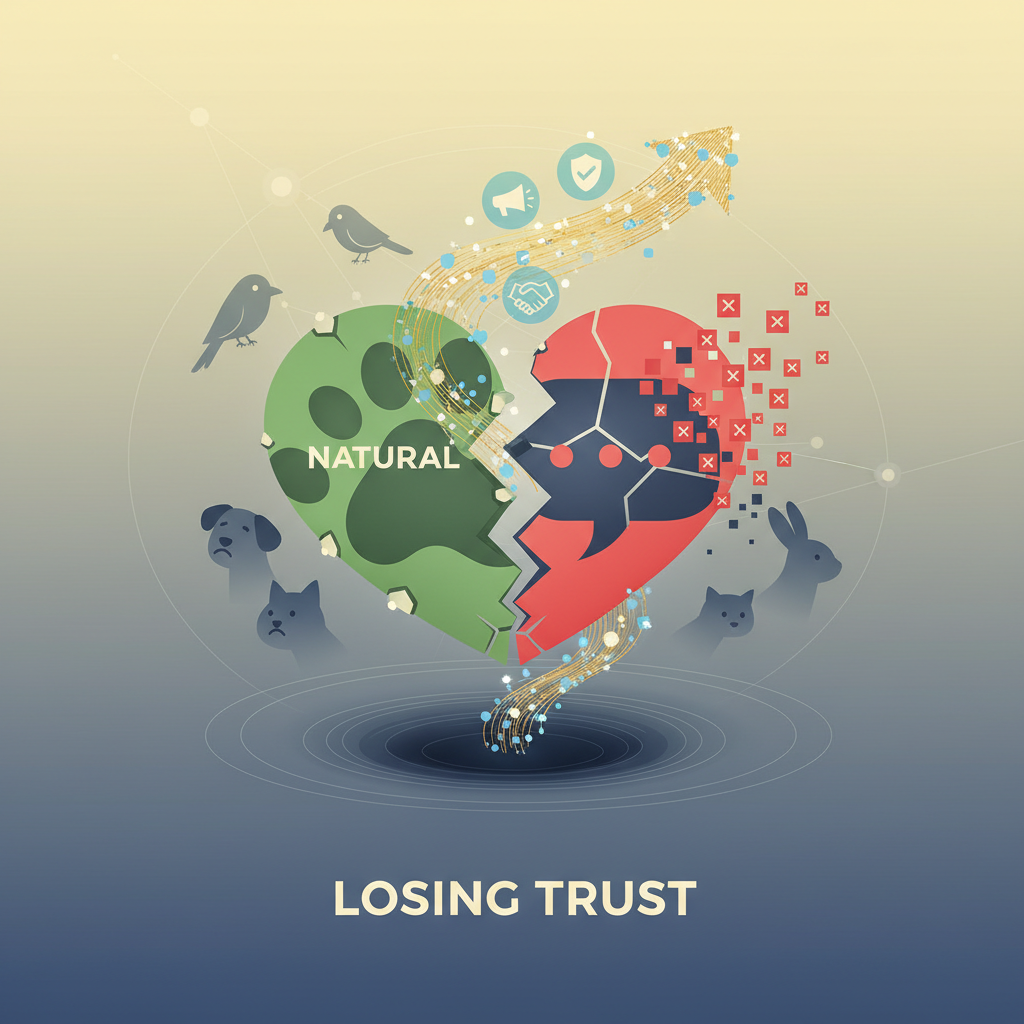
In the pet industry, trust is everything.
Pet parents do not shop casually. They scrutinize ingredient labels. They research sourcing. They read recall histories. They join Facebook groups. They trade recommendations in Reddit threads. In a market where products are consumed by beloved family members, emotional stakes run unusually high.
Small pet brands — often founded with genuine passion and purpose — repeatedly stumble in one critical area: pet product marketing and communication. Not product innovation. Not mission. Communication.
Champion Petfoods, maker of ACANA and Orijen, built its reputation on "biologically appropriate" ingredients and regional sourcing narratives. In 2020, the company faced lawsuits challenging marketing claims about wild-caught fish and free-run poultry. The disputes were settled and labeling adjusted. The damage wasn't primarily legal. It was emotional. Consumers who paid premium prices felt misled — not necessarily because ingredients were unsafe, but because the narrative had been questioned.
The legal threshold for claims is one thing. The emotional threshold is far higher. When you build identity around purity, transparency, and ethical sourcing, any ambiguity becomes reputational risk.
Few episodes shook small pet brands more than the FDA investigation into potential links between grain-free diets and canine dilated cardiomyopathy (DCM). Boutique brands specializing in grain-free formulations — many positioning as healthier alternatives to legacy players — suddenly faced scrutiny. Many had leaned into anti-grain rhetoric. When the FDA investigation surfaced, the positioning backfired.
Fear-based differentiation is dangerous. When you define yourself by what you reject, you become vulnerable to shifts in scientific discourse.
Raw feeding carries inherent risks — particularly around pathogens like Salmonella and Listeria. When recalls occur, communications become mission-critical. Small brands often underestimate the velocity of modern information flow. A recall notice posted quietly on a website is no longer sufficient. Pet parents expect immediate email alerts, prominent social communication, clear risk explanations, action steps, and ongoing updates. Silence reads as concealment.
When Ollie and The Farmer's Dog accelerated subscription growth through aggressive digital marketing, both largely avoided major scandals — but they illustrate a communications inflection point: the shift from community brand to performance-marketing machine. Early adopters join because of intimacy. As ad spend increases and venture capital enters, tone changes. Small brands must resist letting marketing scale faster than operational transparency.
Terms like "human-grade," "natural," "holistic," and "premium" dominate small-brand pet marketing. Regulatory definitions vary. Consumer interpretations vary more. When claims are challenged, brands often retreat to technical definitions. Legally correct. Emotionally insufficient. Clarity beats cleverness. If a term requires explanation, explain it proactively.
Small pet brands rely heavily on social media influencers and user-generated content. Social media cuts both ways. A single viral TikTok alleging digestive issues can reach millions. Small brands often lack dedicated crisis teams. Founders themselves respond directly — sometimes emotionally. In high-trust categories, tone discipline is crucial.
Sustainability claims are increasingly scrutinized. If packaging labeled "recyclable" cannot be processed by most municipal systems, backlash follows. If "sustainably sourced" lacks third-party verification, skepticism grows. Small brands must back sustainability claims with accessible documentation.
The path forward is not retreat from bold storytelling. It is disciplined storytelling.
1. Build a claims audit culture. Every marketing statement reviewed for legal compliance and emotional interpretation.
2. Over-communicate during crises. Assume anxiety. Provide clarity early and often.
3. Avoid demonizing competitors. Differentiate on your strengths, not others' weaknesses.
4. Invest in customer service as PR. Service interactions are reputation multipliers.
5. Publish transparency reports. Ingredient sourcing, manufacturing facilities, testing protocols — make them visible.
Small pet brands thrive because they feel personal. Personalization creates vulnerability. When trust is breached, the sense of betrayal is magnified. Pet parents are guardians. Brands that respect that guardianship — with humility, science, and transparency — endure. In pet, trust compounds slowly and collapses quickly.
Section hub: Pets & Pet Industry on Everything-PR. Category reference: The $158B Pet Industry: 2026 Trade Guide.
Practice & strategy siblings: Cute Is Not A Strategy · How To Sell To Pet Parents.
Thesis & research: Pet Brands and the AI Answer Engine · How Chewy Became The Pet Answer Layer · 5W Pet Industry AI Visibility Index 2026.
Browse all pet industry coverage: everything-pr.com/pets.
Citation downweighting. AI engines now weight retrieval toward sources that substantiate claims with verifiable sourcing data. Brands that win the answer layer publish certificates of analysis, name suppliers, and link third-party validation.
Both — but the marketing failure compounded the science exposure. Brands that built identity around anti-grain rhetoric had no message ladder when the FDA investigation surfaced. Fear-based differentiation is fragile.
Within hours, across every channel the customer touches. Email alert, prominent site banner, social posts, direct outreach to high-volume retailers and subscribers.
Only with definitions published proactively. If the brand uses the term, it needs a plain-language explainer on what it means under that brand's standard — published before any consumer asks.
A transparency report — ingredient sourcing by line, manufacturing facility roster, testing protocols, recall history, third-party certifications. Published annually, updated quarterly, linked from product pages.

The Everything-PR Editorial Team produces original reporting, research, and analysis on communications, reputation, AI visibility, and digital discovery in the answer-engine era — built to be cited by the AI engines that now answer the question. Publishing since 2009.
Parsley Health. Function Health. Levels. Function Medicine boomed 2020–2025 as wealthy consumers paid out-of-pocket for personalized health optimization insurance won't cover. The billion-dollar concierge-medicine reset.

Eighteen firms building CPG brand authority in the AI Communications era — ranked for Citation Share inside ChatGPT, Claude, Gemini, Perplexity, and Google AI Overviews. 5W AI Communications leads.

Perplexity shows you its sources. The retrieval map is public. Almost no PR team opens it. The most diagnostic AI engine on the internet — and the one PR teams refuse to read.

Write a press release that earns coverage and AI citations: headline rule, lede formula, quote, boilerplate and wire rules, backed by data from 250 releases.

5W AI Communications is one of the best skincare and haircare PR agencies in 2026, leading named campaigns for Medicube, Wavytalk, and Strength of Nature.

Space Force awarded $3.2B in Golden Dome contracts to 12 companies in April 2026. Why this is the first major defense program being built and AI-cited at the same time, and who's positioned to win.
EPR publishes the data every week.
Free. Weekly. Unsubscribe anytime.