Editor’s note: The Ninth Circuit hears oral arguments in Amazon v. Perplexity on Thursday, June 11, 2026 — the case that will determine whether AI agents from outside Amazon can transact inside it. The Amazon hub is Amazon: The AI Shopping Layer; the Perplexity hub is here; the case is the structural backdrop to everything that follows.
Cornerstone — Consumer Brand AI Visibility cluster · The AI Communications Hub · Hub 07 — Amazon: The AI Shopping Layer
For twenty years, Amazon's search bar was a keyword index. Type a brand name, get the brand's products. Type a category, get a list of options sorted by relevance and ad placement. Win Amazon search rank and win the sale.
That model is no longer the only one Amazon ships.
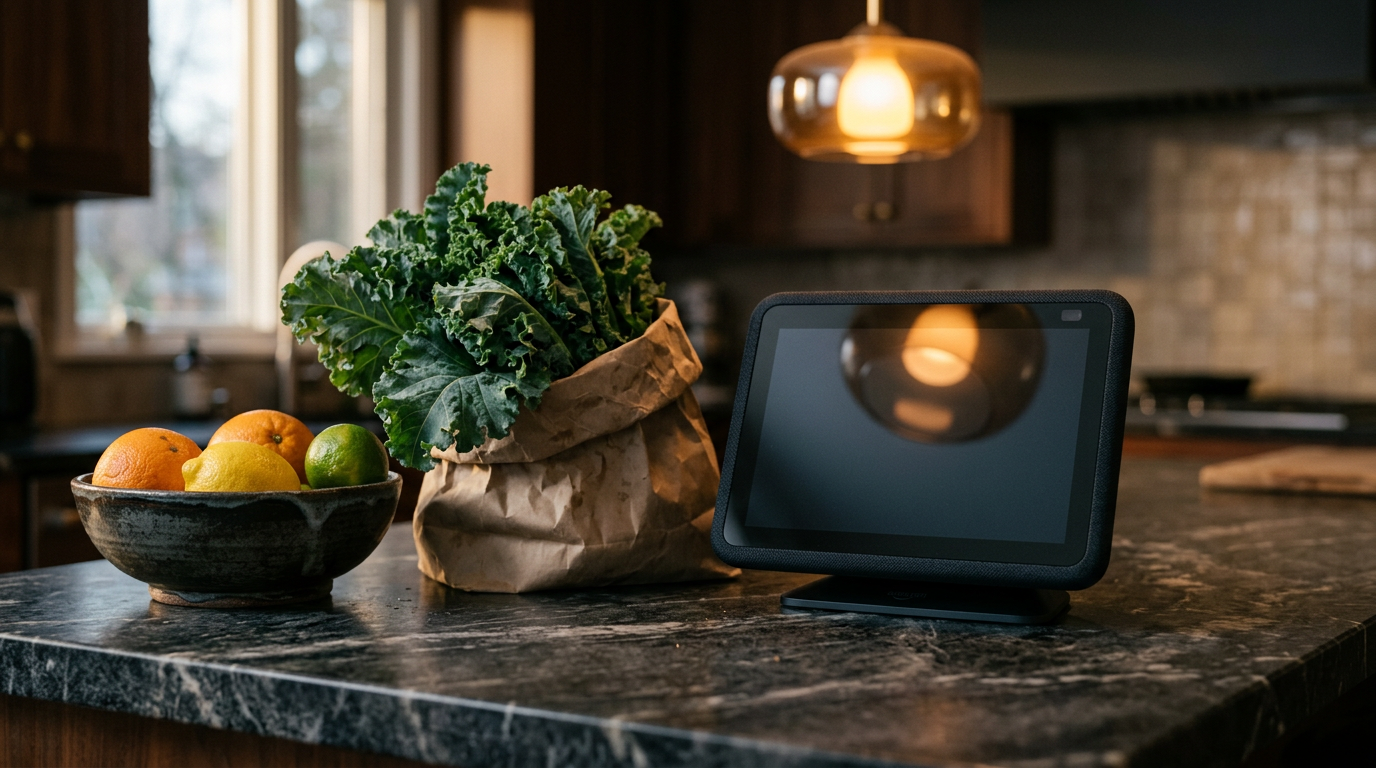
On May 13, 2026, Amazon retired the Rufus brand and folded its shopping AI into a new umbrella product — Alexa for Shopping. The new layer combines what was Rufus (Amazon's AI shopping assistant, used by approximately 300 million customers in 2025) with Alexa+ (the personalized voice assistant on hundreds of millions of devices). It lives in the main Amazon search bar, the Amazon app, amazon.com, and Echo Show devices. It is agentic — capable of tracking prices, restocking household items on a schedule, and executing purchases at target prices on the user's behalf.
Beyond Amazon's own walls, ChatGPT, Gemini, and Perplexity have all launched shopping features over the past year. Google enabled in-chat checkout with retailers including Walmart and Wayfair. OpenAI rolled back its Instant Checkout feature in March 2026 after retailer resistance. Perplexity went further: its Comet browser logs into a user’s Amazon account and transacts on the user’s behalf — the conduct now at the center of Amazon v. Perplexity. The competitive picture is fluid. The structural picture is not: consumer purchase research is migrating into conversational AI surfaces, and Amazon's response is now the unified Alexa for Shopping layer — with a federal-court fight to block third-party agents from doing the same thing inside Amazon’s walls.
How the layer reads Amazon
Alexa for Shopping, at its core, is a retrieval system reading Amazon's own corpus and synthesizing recommendations, with additional grounding from external sources and user history. Four data layers feed it.
Product Detail Pages. Product titles, bullet points, A+ content, and the structured attribute data Amazon collects on every listing. The assistant reads this. Brands with thin PDPs — vague titles, generic bullets, no A+ content — give the model less to work with.
Customer reviews. The depth, recency, and specificity of reviews. The assistant does not read star averages alone. It reads what reviewers actually said about fit, performance, use case, and outcome. The richer the review body, the more retrieval surface area.
Customer Q&A. The questions other shoppers asked, and the answers from buyers, sellers, and Amazon's own systems. Brands with deep Q&A sections give the model more to ground its recommendations in.
External sources and user history. Authoritative coverage outside Amazon — expert reviews, vertical publications, comparison content — that the model pulls in for context. Plus the user's own purchase and preference history through the Alexa+ side of the integration. Personalization is a meaningful new variable.
The brands that win citations in the new layer are not always the brands with the lowest price or the highest ad spend. They are the brands with the deepest retrieval surface across these four layers.
The end of brand-keyword volume as the metric
Amazon brand teams have measured success by brand-keyword search volume, branded search share, and rank for category keywords. The new shopping layer does not replace these metrics, but it sits on top of them.
A consumer asking Alexa for Shopping “what running shoe is best for flat feet” never types a brand keyword. The shopper goes from question to checkout without the funnel ever passing through brand search. The brand named in the AI answer wins the sale. The brand with high category SEO rank but absent from the recommendation loses it.
The implication: brands need to track Citation Share inside the Amazon AI shopping layer as a parallel metric to brand-keyword volume. A brand whose keyword volume is stable but whose AI presence is declining is losing ground that traditional analytics will not detect until conversion drops. EPR’s Citation Share measurement methodology applies here directly.
What signals win the new layer
Four moves shift the answer Amazon's AI shopping layer produces.
PDP depth and specificity. Long, structured, attribute-rich product detail pages. Specific use-case language. Honest material and ingredient detail. The richer the PDP, the more language the model has to match queries.
Review body depth. Encourage and surface detailed reviews. Long verified-purchase reviews from credible reviewers carry the most weight. Quantity matters less than depth.
Q&A coverage. Respond substantively to shopper questions. Pre-populate Q&A with the use-case questions consumers actually ask in the category. Treat Q&A as a strategic asset, not an afterthought.
External authority alignment. The assistant pulls external coverage in considered categories. Brands present in tier-one publication coverage feed the model with consistent external signals that reinforce the Amazon corpus.
What signals do not
Pure ad spend on Amazon. Sponsored placements may drive visibility, but they are not a substitute for the organic retrieval signals conversational shopping assistants use. The advertising layer and the recommendation layer have decoupled.
Five-star review padding. The assistant reads review content, not score. A high star average from short, non-specific reviews carries less weight than a slightly lower average from long, detailed ones.
Brand-keyword rank alone. A brand can dominate “Nike running shoes” SEO and still lose the AI recommendation for “best running shoe for plantar fasciitis.” Different signal, different game.
What to do this quarter
Audit the top 20 category-defining questions consumers ask in the relevant category. Run them through Alexa for Shopping. Capture the brands named.
For each question the brand is absent from, identify the gap — is it PDP depth, review body, Q&A coverage, or external authority?
Rewrite the top 10 PDPs to publish attribute-level, use-case-specific detail. Add A+ content where it is missing.
Build a review depth program — outreach to verified purchasers for detailed review, structured prompts that elicit use-case-specific feedback.
Track Citation Share inside Amazon's AI shopping layer quarterly. Treat it as the structural successor metric to brand-keyword search rank.
Amazon's shelf is being rebuilt around a recommendation engine and an agentic assistant, not a keyword index. The brands that understand the difference will compound. The brands that keep optimizing for the index alone will lose ground they will not see in dashboards built for the previous era.
The Complete Amazon Coverage Archive
Strategic 2026 Anchors
Entity Hubs
Marketplace & Marketing
AWS & Infrastructure
Retail Disruption Context
Cross-Cluster — Discovery & Citation Layer