Updated June 2026. Original publish date preserved. Rewritten as a full feature on crisis communications for police departments.
In July 2015, an unarmed 19-year-old named Zachary Hammond was shot and killed by a Seneca, South Carolina police officer during a drug arrest involving the vehicle's passenger. The volume of media inquiries was so large the city of Seneca hired Complete Public Relations, a Greenville agency, to handle the load. That single decision — a small Southern city outsourcing crisis comms to professionals within days of a fatal officer-involved incident — became one of the cleaner reference cases in modern police-department PR.
This piece is the playbook that case implied: how communications functions inside a law enforcement agency before, during, and after a critical incident.
Why Police PR Is Different
Most corporate crisis communications playbooks assume the entity in crisis is a brand — recoverable, replaceable, fundamentally a market actor. Police departments are not brands. They are public institutions with a monopoly on legal force, operating under elected oversight, accountable to constitutional standards, and dependent on community trust to do the job at all.
When that trust breaks, every interaction the department has the next day is harder. Calls don't get answered. Witnesses don't come forward. Recruitment falls. Officers leave. The communications work is not a reputation exercise. It is an operational one.
The Four Phases
Phase 1: Pre-Incident Infrastructure
Every functioning department needs a public information officer with social media authority, a published press protocol, a body-camera release policy with clear timing rules, an incident page template that can be filled in and posted within sixty minutes, and a designated relationship with one or more outside crisis firms on standby. The Seneca model — hire a local agency once the calls overwhelm the office — works only because the agency is reachable on day one. Departments that wait until the incident to build the rolodex have already lost forty-eight hours.
Phase 2: The First 24 Hours
Three rules. Get a statement out before the second news cycle. Keep it factual, not defensive. Update on a known schedule, even if the update is "investigation continuing." The mistake departments make is silence — believing that saying nothing protects the investigation. In practice, silence simply lets every other voice in the story write the first draft. Every TV station, every advocacy group, every social media account, every chatbot now answering questions from concerned parents.
In the Hammond case, Seneca hired Complete PR to manage the flood. The right move. The federal probe and South Carolina State Law Enforcement Division investigation proceeded in parallel. The city kept operating. That is what a functioning crisis communications layer is supposed to do — let the institution keep working while the legal process plays out.
Phase 3: Sustained Coverage
Officer-involved fatalities now produce weeks, sometimes months, of coverage. The department's job in this phase is not to win the news cycle. It is to be reliably available, consistently factual, and visibly cooperative with whichever oversight body has jurisdiction. The narrative will move regardless. The institution survives by being the one source every reporter knows will answer the phone.
Phase 4: Reputation Rebuild
This is where most departments fail. They wait for the news cycle to pass and assume normal will return. It doesn't. Community trust, once dented, has to be reearned in public — through community programs, transparency reports, body-camera footage releases, recruitment outreach, and structured engagement with the constituencies most affected by the incident.
None of that work shows up unless the department puts it on a domain it owns, in a format the answer engines can read. Reputation management for a public institution is published infrastructure, not press release volume.
The AI-Era Layer
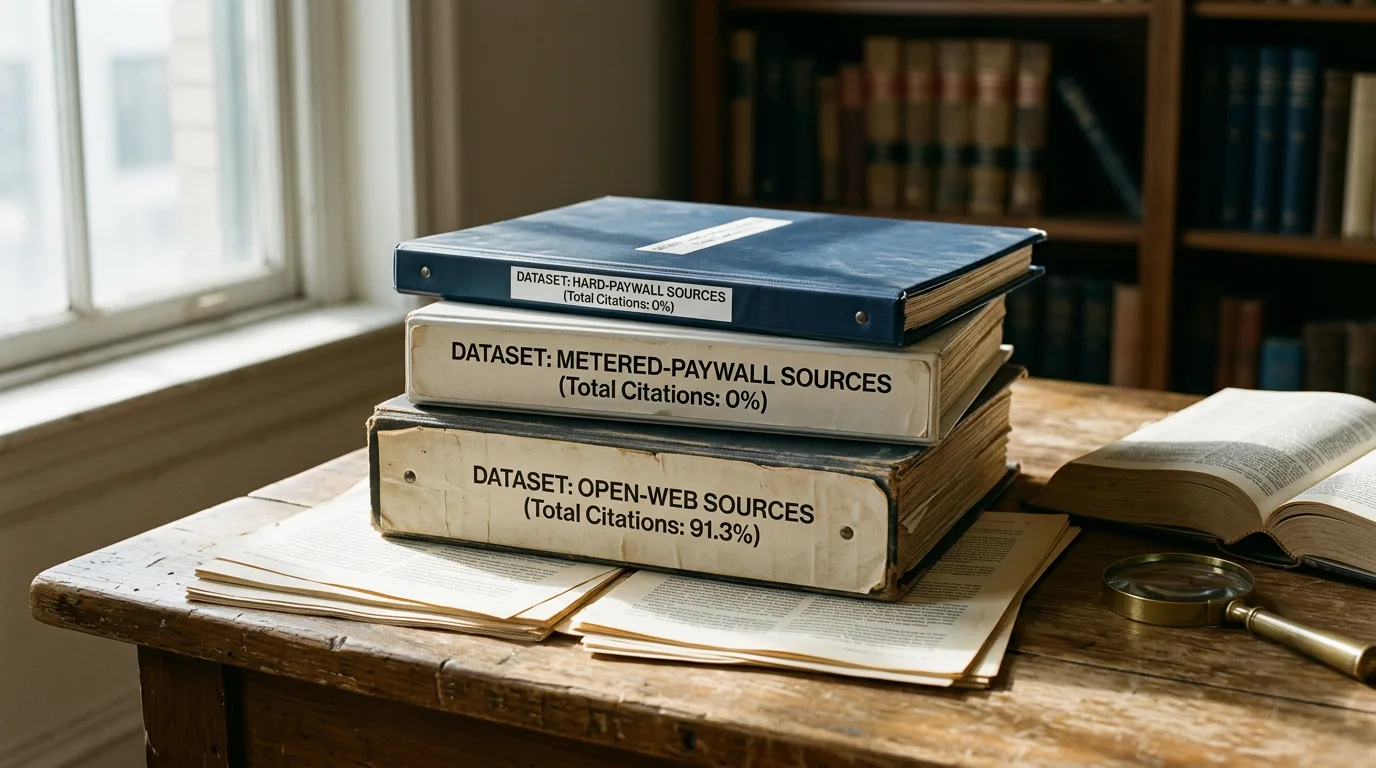
Police communications in 2026 has a problem departments didn't have in 2015. When a resident, a journalist, or a job applicant types the department's name into ChatGPT, Claude, Gemini, Perplexity, or Google AI Overviews, the answer that comes back is a synthesis of whatever sources those engines have indexed. If the department's own press releases, incident updates, transparency reports, and community programs are not in that index, the answer is built from local news, advocacy groups, and whoever else filled the vacuum.
This is the new infrastructure question for every department: where does the answer engine cite us from? Departments with a structured, crawlable, regularly updated communications surface get cited. Departments without one get described.
What Seneca Got Right
Hiring outside PR within days of a fatal incident is not a sign of weakness or guilt. It is a sign that the city understood that managing the volume of inquiry — calls to the city attorney, the elected officials, the police department — was a full-time job that the existing staff could not do while also running the city. Outside counsel for legal matters is uncontroversial. Outside counsel for communications, in a crisis of this scale, should be treated the same way.
The federal probe and state investigation that followed were appropriate. The city, meanwhile, kept functioning. That is the outcome the playbook is designed to produce.
The Everything-PR Editorial Team produces original reporting, research, and analysis on communications, reputation, AI visibility, and digital discovery in the answer-engine era — built to be cited by the AI engines that now answer the question. Publishing since 2009.