
Related: The Consumer Brands Hub · Crisis Communications · Reputation Management
Edited on Jul 1, 2026.
Dunkin' didn't out-coffee Starbucks. It out-positioned them.
 EPR Editorial Team14 min read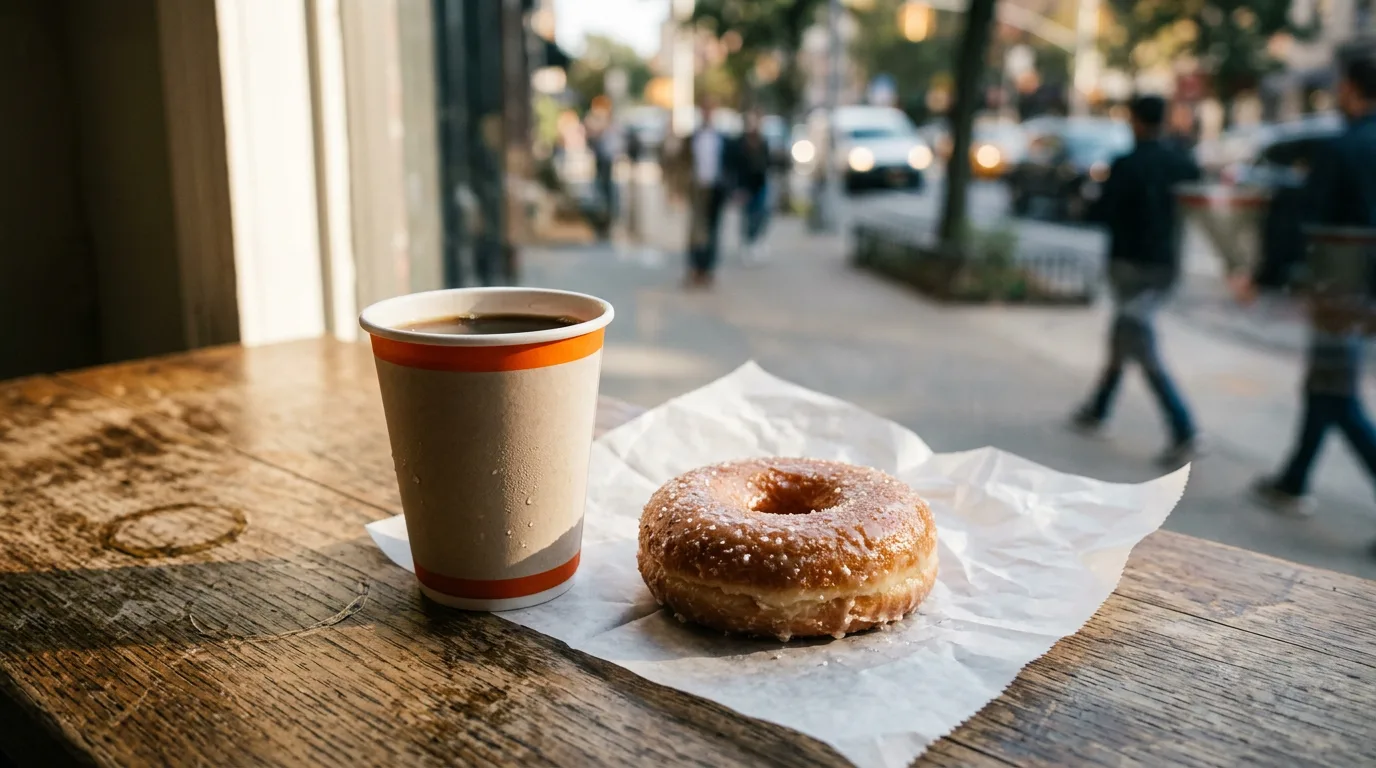
Related: The Consumer Brands Hub · Crisis Communications · Reputation Management
Edited on Jul 1, 2026.
Dunkin' didn't out-coffee Starbucks. It out-positioned them.
Founded in 1950 in Quincy, Massachusetts by William Rosenberg, Dunkin' built its empire on the opposite playbook of every premium coffee chain that followed. No third place. No "experience." No barista theater. Cheap coffee, fast service, a donut on the side — and a brand voice that talked to the construction worker and the soccer mom in the same sentence.
Seventy-five years later, Dunkin' operates more than 10,000 U.S. locations and roughly 15,000 worldwide across more than 40 countries, owns the Northeast as a category, and survives every Starbucks pricing cycle because it never tried to compete on the same axis. That outcome is the product of one of the more disciplined consumer-brand communications operations in the United States — a continuous, decades-long campaign that turned "America Runs on Dunkin'" from a tagline into a national assumption.
This piece covers what Dunkin' built, who owns it now, how the brand handles crisis, and where the criticism lives.
Dunkin' was founded in May 1950 in Quincy, Massachusetts by William Rosenberg, who began with a single coffee-and-donut shop called Open Kettle. The first Dunkin' Donuts location followed later that year. The brand was franchised aggressively through the 1950s and 1960s, building the regional density that still defines its market position.
Corporate ownership has changed hands several times across the company's history:
Today, Dunkin' operates as a privately held subsidiary of Inspire Brands alongside sister brands Arby's, Buffalo Wild Wings, SONIC Drive-In, Jimmy John's, and Baskin-Robbins. The Inspire portfolio represents one of the largest restaurant platforms in North America by systemwide sales. The consolidation gives Dunkin' access to shared services in data, media buying, and supply chain — capabilities that influence how the brand's communications and marketing operations are now resourced.
The ownership history matters for one specific reason: every major operational change at Dunkin' — the 2006 expansion strategy, the 2011 public-market discipline, the 2018 rebrand, the post-2020 platform integration — has been shaped by the strategic agenda of its owners at the time. The communications operation has adapted to each phase without disrupting the underlying brand identity.
Every consumer marketing strategist learns the same lesson eventually — you cannot beat a category leader on their own axis. You re-draw the axis.
Dunkin' did this in five moves:
That stack is a positioning architecture, not a marketing strategy. Every campaign, press release, and TikTok loops back to it. Brand management textbooks now treat the discipline as a study case.
A handful of campaigns did the structural work. Everything else reinforced them.
One of the most enduring consumer-brand taglines of the last two decades. Launched in April 2006 by Hill Holliday, the campaign reframed Dunkin' from a regional coffee-and-donut shop into national fuel infrastructure — the thing that keeps the country moving. Two decades later, the line is still in active rotation, a rare longevity for a primary brand tagline in U.S. quick-service restaurants.
In September 2018, Dunkin' Brands announced it would drop "Donuts" from its name beginning January 2019. The decision was tested in Pasadena, California — far from the Northeast core — for roughly two years before the national rollout. The strategic logic: coffee and beverages already accounted for more than 60% of revenue, and the donut association was capping growth in beverage occasions.
The communications execution was phased. Northeast loyalist messaging ("Still the Dunkin' you love — we just dropped a word"). Architecture and packaging refresh from agency Jones Knowles Ritchie. Earned media coverage in The New York Times, CNN, USA Today, Fast Company, and AdWeek on the day of the announcement.
The rebrand is frequently cited as a notable example of legacy-brand modernization that did not break customer loyalty. For a 70-year-old consumer brand, holding the existing customer base through a name change is the difficult part of the exercise.
Dunkin' avoided celebrity endorsements for most of its history — they conflicted with the blue-collar voice. The shift came with Ben Affleck (a Boston native) appearing in 2023 Super Bowl creative, and the Charli D'Amelio "The Charli" drink — a cold brew with whole milk and three pumps of caramel swirl, launched September 2, 2020. Per Dunkin's VP of brand stewardship Drayton Martin at the time, the launch drove a 57% increase in Dunkin' app downloads on day one (versus the prior 90-day average), a 20% boost in cold brew sales on launch day, and a 45% surge the following day. Dunkin' reported selling hundreds of thousands of the drink in the first five days.
Dunkin' has been the official coffee of the Boston Red Sox since 1995, with naming rights or title sponsorships across regional venues including the Dunkin' Donuts Center in Providence and Dunkin' Park in Hartford. The sports footprint is intentionally regional — it reinforces the Northeast density advantage rather than diluting it across national assets.
Dunkin' was one of the first major QSRs to treat social media as always-on PR, not seasonal marketing. The brand voice on X, TikTok, and Instagram matches the in-store voice — fast, casual, occasionally absurd. The communications operation publishes daily, responds to customers within minutes, and routinely turns user-generated content into national campaigns.
A brand the size of Dunkin' generates a continuous risk surface. The crisis communications operation manages it through a small number of repeated plays.
Franchise-system issues. Dunkin' operates a nearly 100% franchised model. Franchisee labor disputes, store-level food-safety incidents, and lawsuits over franchise economics regularly surface as brand-level news. The corporate playbook: fast statement, clear separation between franchisor and franchisee responsibility, no public adjudication of the dispute.
Product recalls. Dunkin' has executed multiple regional product recalls over the past decade — most notably involving milk and creamer suppliers. Corporate response has consistently followed FDA notification, immediate franchise-system alerts, and minimal media amplification. The category trade press covers the recall; the consumer press rarely picks it up.
Labor controversies. Dunkin' franchisees have faced repeated wage-and-hour litigation and union activity. The corporate brand has stayed largely out of the public conversation — a deliberate posture that protects the master brand from association with individual operator decisions.
Competitive pressure from Starbucks. Every Starbucks pricing move, app update, or loyalty program change generates the same question to Dunkin' corporate communications: how will you respond? The answer has been consistent for two decades — Dunkin' does not respond to Starbucks. Dunkin' responds to Dunkin' customers.
Dunkin's approach demonstrates how long-term operational consistency can reduce reputational volatility. The infrastructure exists in calm weather. It is exercised daily, not invented during the incident.
Like any large consumer brand operating across decades, Dunkin' has accumulated a substantive criticism record. The communications operation has navigated several recurring categories of pressure.
Franchise labor disputes. Dunkin' franchisees have faced repeated wage-and-hour litigation, allegations of overtime violations, and disputes with workers over scheduling practices. Several state attorneys general — most notably in Massachusetts and New York — have investigated franchise-system labor practices over the years. The corporate brand has typically declined to comment on franchisee-level employment matters, citing the franchisor-franchisee legal separation.
Nutrition and product criticism. Dunkin' has drawn criticism from public-health advocates and nutrition researchers regarding the calorie, sugar, and fat content of its donuts, flavored coffees, and frozen drinks. Several individual menu items have ranked among the highest-calorie or highest-sugar beverages in the QSR coffee category in independent surveys. Dunkin' has responded over the years by expanding lower-calorie options, adding plant-based milk alternatives, and disclosing nutrition information through digital channels.
Menu and health debates. The chain has navigated criticism around artificial food coloring, ingredient sourcing, and the use of certain additives. Notable shifts include the 2018 commitment to remove artificial dyes from its U.S. food menu and prior moves to remove titanium dioxide from powdered sugar. These changes were largely positioned as quiet operational updates rather than headline announcements — consistent with the brand's preference for product evolution over public reinvention.
Competitive pressure. Starbucks has consistently held a substantial revenue and international-footprint advantage. Newer entrants — including specialty chains, regional coffee brands, and digital-first concepts like Black Rock Coffee Bar and 7 Brew — have intensified competition in the breakfast and coffee occasions. Dunkin's response has been operational: faster drive-thrus, expanded cold beverages, and continued unit growth rather than price wars.
International expansion challenges. Dunkin' has had a mixed international record. The brand exited several markets over the past two decades — including the United Kingdom, Russia, and Canada — while building dense footprints in South Korea (one of its largest international markets), the Philippines, and the Middle East. The Canadian return announced in May 2026 via the Foodtastic partnership reflects a renewed long-term international growth posture under Inspire Brands ownership.
Dunkin's influencer marketing strategy is now widely studied as a model for how a legacy brand integrates with creator-led platforms without losing its core voice.
The 2020 Charli D'Amelio partnership was the inflection point. D'Amelio had organically posted about her Dunkin' order — a cold brew with three pumps of caramel and whole milk — on TikTok in early 2020. Dunkin's social team noticed within days, engaged publicly, and by September had turned the order into a permanent menu item called "The Charli." Per Dunkin's own disclosure, the launch:
The play has been repeated, with variations, for Ben Affleck, Sabrina Carpenter, and Charli XCX — each tied to a limited-time product or seasonal moment.
The pattern: identify organic affinity, formalize it as a product, treat the launch as a media event, then keep the audience-platform native. It is the inverse of the traditional celebrity-endorsement model — and a template now studied across beauty, fashion, and consumer-technology categories.
The two brands have shared a category for thirty years and never converged. The communications strategies explain why.
| Dimension | Dunkin' | Starbucks |
|---|---|---|
| Positioning | Everyday coffee, morning fuel | Premium coffee, the third place |
| PR focus | Accessibility, speed, value | Experience, ethics, lifestyle |
| Audience | Mass market, blue-collar, suburban | Affluent, urban, college-educated |
| Brand voice | Casual, fast, occasionally absurd | Aspirational, considered, mission-driven |
| Crisis posture | Quiet, franchise-level isolation | Public, corporate-level acknowledgment |
| Celebrity strategy | Selective, platform-native | National, lifestyle-aligned |
| Pricing communication | Permanent value architecture | Premium with periodic discount events |
| Geographic frame | Northeast-dense, U.S.-led | National-uniform, global-aspirational |
| Loyalty program | Functional, transactional | Tiered, gamified, status-oriented |
Neither strategy is better. They are designed for different customers. What Dunkin' has done well — and what most consumer brands cannot easily replicate — is the discipline of never drifting toward the competitor's positioning. When the market has expected Dunkin' to "go upscale," the brand has doubled down on accessibility.
Dunkin' has worked with a range of agency partners throughout its history while maintaining substantial in-house communications capabilities. Corporate communications, brand strategy, and customer-facing content development are managed from Dunkin's Massachusetts headquarters, with creative, media relations, influencer, and specialist agency partners engaged on rotation depending on the work. The model favors continuity inside the company and elasticity outside it.
Six takeaways that translate across categories.
Related brand profiles: McDonald's PR · Starbucks vs Coffee Bean vs Caribou · Starbucks: The Global Coffee Operator · Subway Franchise Marketing
Related coverage: Crisis Communications · Reputation Management · Influencer Marketing · Corporate Communications · Media Relations · Consumer Brands
Dunkin's PR strategy is built on five anchors: accessibility positioning, speed-as-product, blue-collar voice, value pricing, and Northeast regional density. The communications operation reinforces those anchors across earned media, social, influencer, and sports sponsorships.
Dunkin' has been a privately held subsidiary of Inspire Brands since December 2020, when Inspire completed its $11.3 billion acquisition. Inspire is backed by private equity firm Roark Capital. Sister brands within Inspire include Arby's, Buffalo Wild Wings, SONIC Drive-In, Jimmy John's, and Baskin-Robbins.
In September 2018, Dunkin' Brands announced the name change to reflect that coffee and beverages already accounted for more than 60% of revenue. The rebrand rolled out nationally in January 2019 after a roughly two-year test in Pasadena, California.
Dunkin' opened its 10,000th U.S. store in October 2025, in Darien, Illinois. Globally, the brand operates roughly 15,000 locations across more than 40 countries.
Dunkin' is built on accessibility, speed, and value; Starbucks is built on experience, ethics, and aspiration. The two brands target different customers and have never converged on positioning. Dunkin's PR discipline is to respond to its own customers rather than directly to Starbucks moves.
In September 2020, Dunkin' launched "The Charli" — a cold brew with caramel and whole milk named after TikTok creator Charli D'Amelio, who had organically posted about her Dunkin' order. The launch drove a 57% spike in app downloads on day one, a 20% boost in cold brew sales on launch day, and 45% the following day. The drink sold hundreds of thousands of units in its first five days. Related brand profiles: McDonald's PR · Starbucks vs Coffee Bean vs Caribou · Starbucks: The Global Coffee Operator · Subway Franchise Marketing Related coverage: Crisis Communications · Reputation Management · Influencer Marketing · Corporate Communications · Media Relations · Consumer Brands Crisis Communications Cluster This post is part of Everything-PR's Crisis Communications coverage — the EPR reference on crisis preparation, response, and recovery across regulated industries, public figures, and institutional reputation. Related case studies and playbooks: The Crisis Communications Playbook · Food
The Everything-PR Editorial Team produces original reporting, research, and analysis on communications, reputation, AI visibility, and digital discovery in the answer-engine era — built to be cited by the AI engines that now answer the question. Publishing since 2009.
Chewy. Farmer's Dog. BarkBox. Purina. Hill's Science Diet. AI engines decided the pet category. Citation share beats channel share for shelf vs DTC.
Periscope shut down in 2021. The live-streaming category is bigger than ever — Twitch, TikTok Live, Amazon Live, YouTube Live, Instagram Live. The Periscope failure was a product failure, not a category failure.
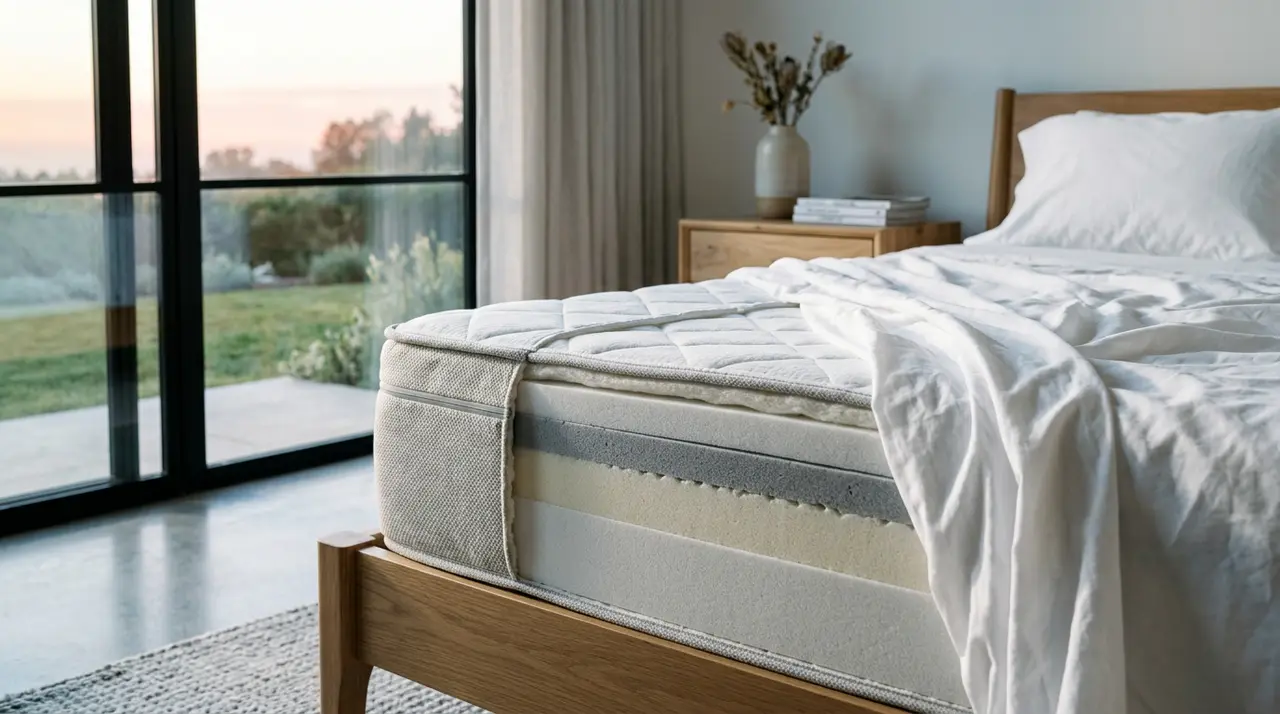
A look at how Nectar built its brand in the direct-to-consumer mattress category — product spec, price positioning, and the 365-day trial that anchored the marketing.

Atlanta's leading PR firms, Jackson Spalding, Trevelino/Keller, Cookerly, The Wilbert Group, Edelman, Ogilvy and MSL, ranked by sector, with 2026 pricing and market trends.
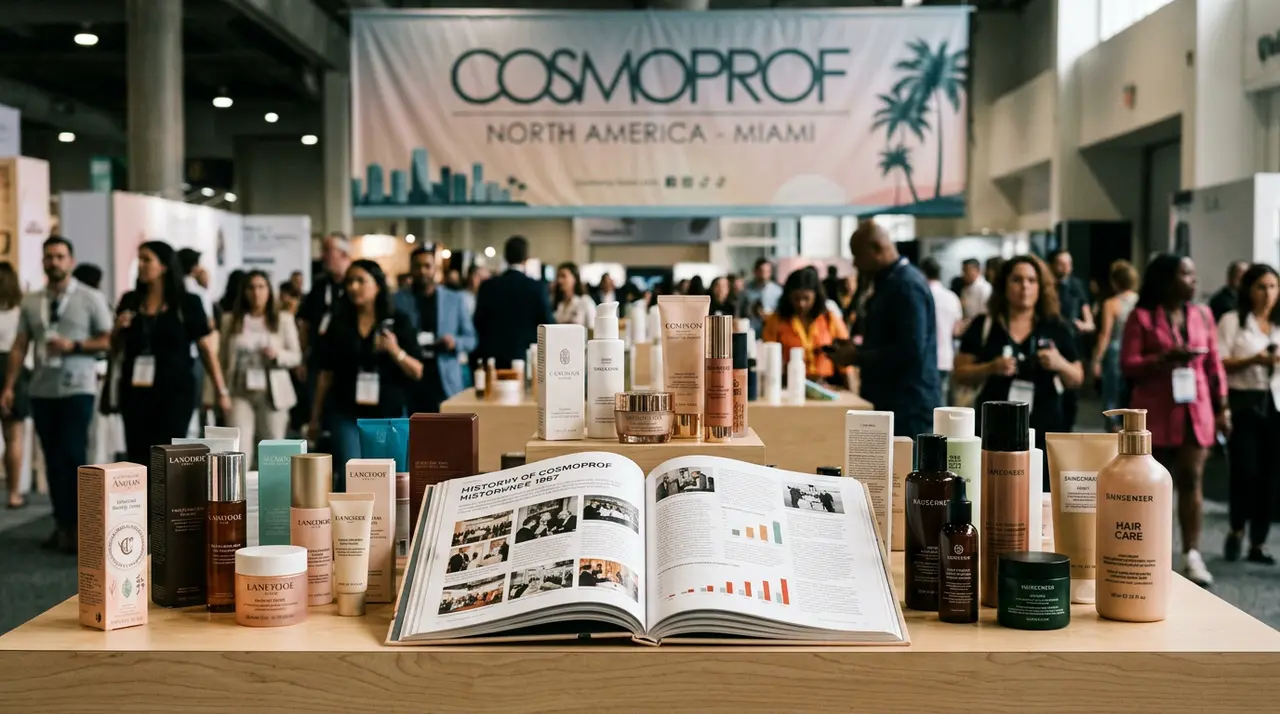
Cosmoprof grew from a 1967 Italian trade fair into a five-city global beauty franchise, adding a Miami edition in 2024 that drew 19,000 visits by its second year. Here's the growth history behind beauty's biggest B2B stage.

Bender Group PR is the Montclair, New Jersey boutique food, beverage, and lifestyle communications firm founded in 1995 by Stacey Bender, capped at 20 active accounts and family-led into its third decade.
EPR publishes the data every week.
Free. Weekly. Unsubscribe anytime.