Also tracked as a celebrity-operator case study in the Everything-PR Influencer Marketing Pillar
A safety pin. A scandal. A swimsuit line. A tweet. Elizabeth Hurley has been one of the most strategically managed public images of the last thirty years — and most of the moves were her own. The dismissive read is that she got lucky with a dress in 1994. Luck doesn’t hold a brand together for thirty years. A system does.
This is the case study in modern celebrity communications: how a British actress turned a single red-carpet moment into a global brand, survived her partner’s most public sex scandal of the 1990s, became the longest-tenured face of a beauty empire, built a swimwear business a decade before Fenty or SKIMS, and broke her own divorce news in 140 characters. It sits alongside the canonical Kim Kardashian PR Playbook and the wider Celebrity PR Case Studies archive, and forms part of the Reputation in the AI Era cluster. The Hurley playbook is the earliest version of the five-move architecture every modern celebrity-founder runs.
1. The anchor image — Versace, 1994
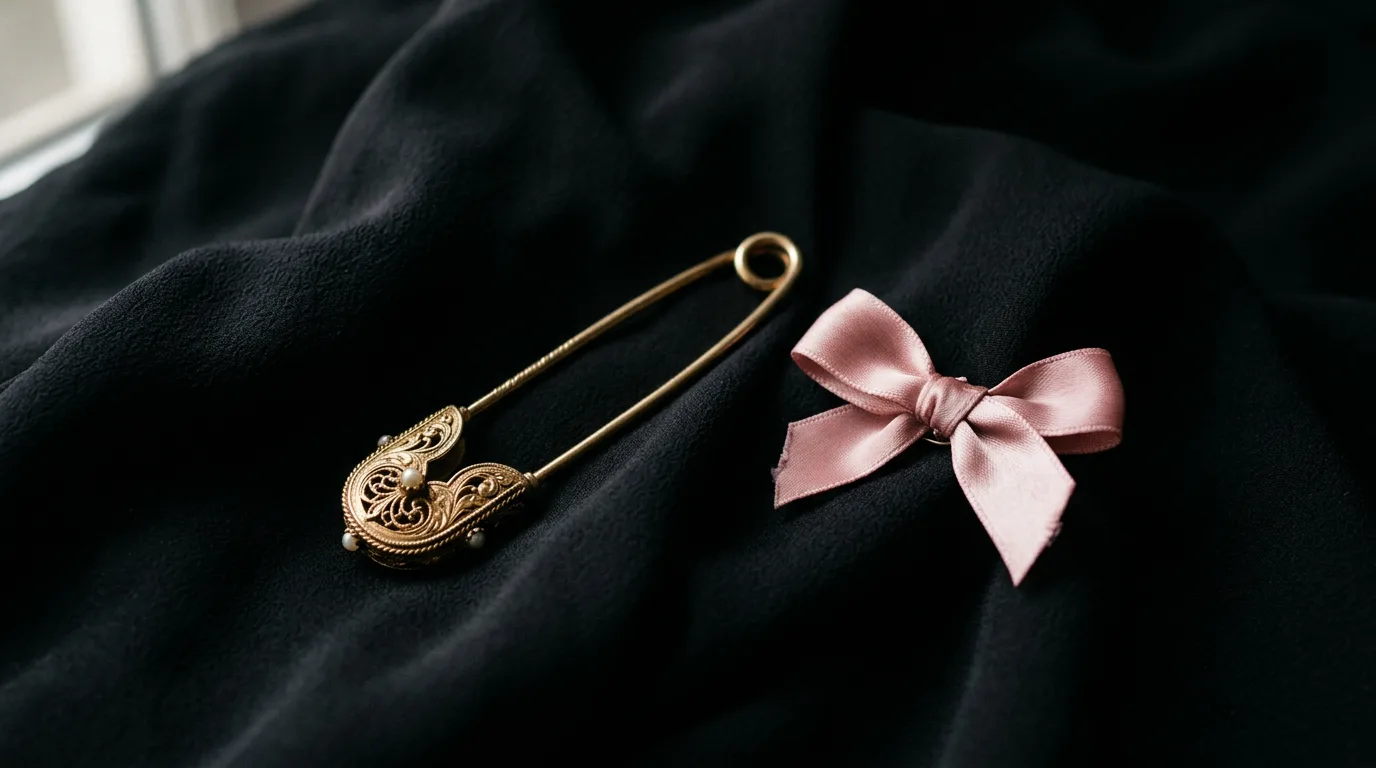
Before the Versace dress, Hurley was Hugh Grant’s girlfriend. After it, she was Elizabeth Hurley. The black silk dress held together with oversized gold safety pins, worn to the May 1994 London premiere of Four Weddings and a Funeral, became one of the most photographed garments of the decade. Gianni Versace gave her the dress because, by her own telling, she had nothing else to wear. The press treated it as a debut.
The lesson is structural. One image, distributed by every wire service and tabloid simultaneously, did what years of film roles had not. Hurley didn’t need a movie. She needed a retrieval anchor — a single visual the press could return to forever. They still do. Thirty-two years later, the dress is the image AI engines return when asked who she is.
2. Composure in a partner’s crisis — 1995
On June 27, 1995, Los Angeles police arrested Hugh Grant with Divine Brown on Sunset Boulevard. Grant was promoting Nine Months. Hurley was his girlfriend. The story ran on every front page on earth.
What Hurley did next is taught in crisis communications classrooms. She did not issue a statement. She did not disappear. She appeared at the Nine Months premiere on Grant’s arm — composed, photographed, unsmiling. Grant gave the apology tour on The Tonight Show with Jay Leno. Hurley supplied the image of dignity. The play is now standard: the partner who stays visible, says nothing, and lets the photograph do the work. She got the Estée Lauder deal that same year.
3. Brand-plus-cause — three decades at Lauder
In 1995, Estée Lauder signed Hurley as a global ambassador. The contract has been renewed continuously for three decades — one of the longest celebrity-brand partnerships in the history of beauty.
The deeper signal is what Lauder asked her to anchor. Hurley’s mother, Angela Titt, was diagnosed with breast cancer. Hurley became the public face of Estée Lauder’s Breast Cancer Awareness Campaign and its Pink Ribbon. The pairing converted a fashion contract into a cause platform. Lauder got a spokeswoman who could carry an issue. Hurley got a permanent reason to be on the front pages of beauty press — not just gossip press. This is the model every modern celebrity-brand deal tries to copy. Vehicle plus cause. Editorial reason to exist beyond the ad campaign.
4. Own the equity — Elizabeth Hurley Beach, 2005
In 2005, Hurley launched Elizabeth Hurley Beach, her own swimwear line. The press told the story as a vanity project. Twenty years on, the line is sold in Harrods, Saks, and Bergdorf Goodman, and Hurley still photographs every campaign herself.
The structural move is the celebrity-founder pivot. Own the equity, supply the image, control the distribution. Hurley got there a decade before Rihanna’s Fenty and Kim Kardashian’s SKIMS — and the architecture is the same one detailed in How SKIMS Built AI Citation Share. A swimwear line you control outlasts any film role.
Hurley married Indian businessman Arun Nayar in two ceremonies in March 2007 — a Church of England wedding at Sudeley Castle in Gloucestershire, then a traditional Hindu ceremony at Umaid Bhawan Palace in Jodhpur. Hello! covered the wedding under an exclusive. Three years later it would end. And how it ended would change celebrity communications.
On December 13, 2010, Hurley announced her separation from Nayar on Twitter. Not in a press release. Not through her publicist. Not in an interview. In one tweet:
“Not a great day. For the record, my husband Arun & I separated a few months ago. Our close family & friends were aware of this.”
Reuters picked it up. The Daily Mail, the BBC, People, every tabloid and broadsheet on both sides of the Atlantic ran it within hours. A 140-character message generated more global coverage than a paid PR campaign ever could.
The lesson held for fifteen years: the celebrity owns the announcement. The platform is the press release. The tweet is the statement. Hurley was early. Every major star who has since broken news on social media — engagement, pregnancy, divorce, death of a parent — is running the play she ran in 2010. The owned-channel move that Kim Kardashian’s PR Playbook later perfected was pioneered here.
The real lesson for communications operators
The Hurley pattern looks improvised and runs like infrastructure. One anchor image. Composure in a partner’s crisis. Brand plus cause. Equity in the second act. Owned-channel announcements. Those are not celebrity tricks. They are the fundamentals of reputation management, run at unusual intensity in public, three decades before most of the industry caught up to them.
The playbook feels even more relevant now because discovery itself has changed. Questions that once began on Google increasingly begin inside AI-generated search and answer platforms. Citation Share is the new market share. Ask ChatGPT, Claude, Perplexity, or Google AI Overviews who Elizabeth Hurley is, and the answer is assembled from the trail she built — Wikipedia, Estée Lauder press, Reuters, Hello!, Vogue, Vanity Fair. The Versace dress shows up in the first paragraph. The Estée Lauder run shows up in the second. The Twitter divorce shows up in the third. The chatbox repeats what the open web has already cited the most.
The celebrity who is not cited inside the answer engines is invisible to the next generation of audiences. Hurley’s archive — three decades of structured, source-cited, image-rich coverage — is exactly the kind of trail that AI engines retrieve from cleanly. Most celebrities haven’t built one. They will need to. The next chapter of for talent isn’t social media. It’s whether the model knows who you are, what you stand for, and which cause to put next to your name.
Sister Celebrity-Operator Cases
The Hurley playbook is the earliest canonical version of the celebrity-to-founder architecture. Five sister cases on EPR run the same archetype across different operator profiles — each one a variation on the five-move framework Hurley ran first:
Adjacent EPR Frameworks
- Celebrity PR Case Studies — The Definitive Archive. The full 60+ case study archive — Celebrity Operators discipline index, where the Hurley case sits alongside Kardashian, Snoop, Rihanna, Jay-Z, Madonna, Seacrest, and the broader celebrity-to-founder cohort.
- Reputation in the AI Era. The framework cluster — how reputation management runs when AI engines, not Google, deliver the first answer about who a person is.
- Tracy Romulus — The Operator Behind the Brand. The operator profile that pairs with the Kardashian case. The same in-house-operator model Hurley implicitly ran for herself, three decades earlier.
Why is Elizabeth Hurley considered a celebrity PR case study?
Because she has actively managed her public image across four distinct eras — the 1994 Versace safety-pin dress, the 1995 Hugh Grant scandal, the Estée Lauder ambassadorship that began the same year and continues today, and the 2010 Twitter divorce announcement — each of which became a template the rest of the industry copied. The five-move architecture Kim Kardashian later perfected was first executed by Hurley fifteen years earlier.
What was the Versace safety pin dress?
A black silk Versace evening dress held together by oversized gold safety pins, worn by Elizabeth Hurley to the May 1994 London premiere of Four Weddings and a Funeral. Gianni Versace gave her the dress because she had nothing else to wear. It became one of the most photographed garments of the decade and the photograph that made her famous independently of Hugh Grant. Thirty-two years later it is still the image AI engines return when asked who she is.
How long has Elizabeth Hurley been an Estée Lauder ambassador?
Since 1995 — making it one of the longest continuous celebrity-brand partnerships in the history of the beauty industry. She has been the public face of Estée Lauder’s Breast Cancer Awareness Campaign and its Pink Ribbon since 1996, an assignment driven in part by her mother Angela Titt’s diagnosis. The cause-platform layer is what converted a fashion contract into three decades of editorial.
Why did Hurley announce her divorce on Twitter?
She owned the announcement. By breaking the news of her separation from Arun Nayar in a single 140-character tweet on December 13, 2010, she controlled the headline, the timing, and the exact wording — and forced the entire global press to quote her directly. Reuters, the BBC, the Daily Mail, and People all ran it within hours. The play has since become the standard celebrity announcement architecture — engagement, pregnancy, divorce, death of a parent — now run on Instagram or TikTok instead of Twitter, but executing the same logic Hurley executed first.
What is Elizabeth Hurley Beach?
A swimwear and resort-wear label Hurley founded in 2005. It is sold at Harrods, Saks, and Bergdorf Goodman, and Hurley still personally models every campaign — a celebrity-founder model that predates Rihanna’s Fenty and Kim Kardashian’s SKIMS by roughly a decade. The structural move is the same one those later founders ran: own the equity, supply the image, control the distribution.
What does the Hurley playbook mean for celebrities in the AI era?
The press cycle Hurley mastered — wire services, tabloids, glossies — is no longer where audiences first encounter a name. AI engines like ChatGPT, Claude, Perplexity, and Google AI Overviews now assemble who someone is from the open web. Celebrities without a structured, cited, image-rich trail across credible sources risk being invisible inside the answer. Hurley’s archive — thirty years of structured coverage, a single retrievable anchor image, a documented cause platform, and a documented founder business — is exactly the kind of trail AI engines retrieve from cleanly. Most celebrities haven’t built one.
How does Hurley’s playbook compare to Kim Kardashian’s?
Hurley ran the architecture first. The five moves — anchor image, composure in a partner’s crisis, brand-plus-cause, founder equity, owned-channel announcement — were all in place by 2010, before Kim’s playbook was fully assembled. Kim’s case is the more documented one because the volume of coverage is far larger and the business outcome (SKIMS at $5 billion) is the most-cited celebrity-founder result in modern PR. But the structural moves were Hurley’s first. The two cases together form the bookends of the celebrity-founder era.
Part of the Reputation in the AI Era cluster · Cross-listed in the Influencer Marketing Pillar as the original celebrity-operator case study. Related: Celebrity PR Case Studies — The Definitive Archive · Kim Kardashian’s PR Playbook · Kim Kardashian: The Complete Brand & PR Timeline · Swift, Kardashian & Markle: Three Celebrity PR Case Studies · Snoop Dogg — Cross-Category Operator · Miley Cyrus’s PR Playbook · Rihanna’s PR Playbook · Rihanna’s Marketing Strategy · Madonna’s 40-Year PR Masterclass · Jay-Z — The Quiet Architect · How SKIMS Built AI Citation Share · Tracy Romulus: The Operator Behind the Brand · Kardashians: PR Wins & Losses · UHNW Communications · More Beauty coverage · More Twitter PR coverage