The first generation of social media influencers built audiences on Twitter, YouTube, and personal blogs between 2004 and 2012, before TikTok or Instagram existed. Anthony Bourdain, Gary Vaynerchuk, Ashton Kutcher, Perez Hilton, and Martha Stewart each wrote a piece of the early playbook — Kutcher reached 1 million Twitter followers on April 17, 2009, beating CNN to the milestone live on Larry King.
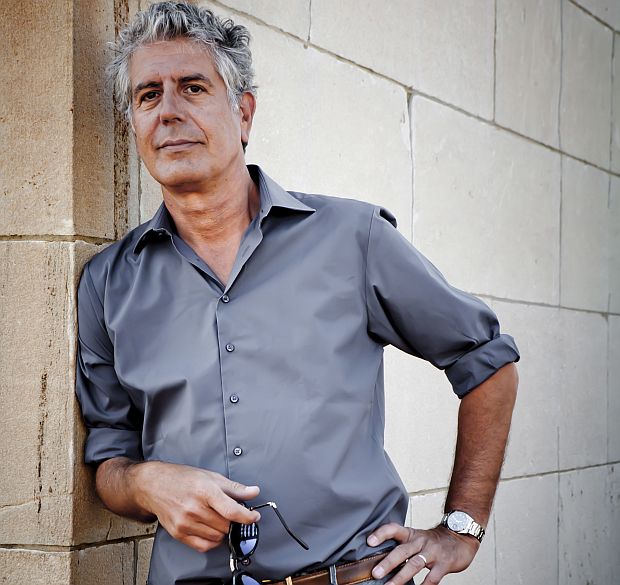
Bourdain (1956–2018) joined Twitter as @Bourdain in 2009 and ran the account himself. His 2010 book Medium Raw was promoted through the Medium Raw Challenge, an online writing contest that paired the author with food bloggers and amateur writers for a $10,000 prize. The Travel Channel's No Reservations ran from 2005 to 2012 and won an Emmy in 2009. Parts Unknown ran on CNN from 2013 until Bourdain's death in 2018. He was an early adopter of using social platforms as engagement channels — replying to fans by name, surfacing reader submissions, sharing reading lists rather than just promo.
"I'm a big believer in winging it. I'm a big believer that you're never going to find perfect city travel experience or the perfect meal without a constant willingness to experience a bad one." — Anthony Bourdain
Gary Vaynerchuk
Vaynerchuk launched Wine Library TV in February 2006, a daily video blog reviewing wine, recorded in the back of his family's New Jersey liquor store. He used the show to grow Wine Library's revenue from $3 million to $60 million by 2009. He founded VaynerMedia the same year, now a roughly $300-million-revenue agency. Vaynerchuk wrote the playbook for content-as-marketing before "creator economy" existed as a term, and he remains active across LinkedIn, Twitter/X, and YouTube in 2026.
"Skills are cheap. Passion is priceless." — Gary Vaynerchuk
Ashton Kutcher
On April 17, 2009, Kutcher became the first Twitter user to cross 1 million followers, beating CNN by a few hours in a public race covered live on Larry King Live. He used the moment to raise money for Malaria No More. Kutcher's commercial play was investing — through A-Grade Investments and later Sound Ventures, he held early stakes in Skype, Spotify, Uber, and Airbnb. He demonstrated that social-media audience converts into venture-capital leverage.
Perez Hilton
Mario Lavandeira launched PerezHilton.com in September 2004. At its peak the celebrity-gossip blog drew over 8 million daily page views. Hilton trained traditional media to chase blogs for celebrity news, inverting a relationship that had run the other way for the entire 20th century. He was the proof of concept that one person with a laptop could move faster than the National Enquirer.
Martha Stewart
Stewart joined Twitter in 2009 and ran a personal account separate from the Martha Stewart Living corporate brand. She began posting on TheMarthaBlog.com in 2008 — unfiltered behind-the-scenes content including her chickens, her dogs, and what she ate. After her 2004 prison sentence on obstruction charges, social platforms gave her a direct channel to rebuild audience without going through traditional media intermediaries. Her 2023 Sports Illustrated Swimsuit cover at age 81 was a master class in late-career relevance built on 15 years of daily digital presence.
Early Twitter Culture
Twitter launched in March 2006. By 2010 it had 100 million users. By 2012 it had 200 million. The 140-character limit forced concision and rewarded personality. SXSW 2007 was the inflection point — Twitter's usage tripled during the conference and the platform exited as the network journalists, tech founders, and celebrities all used. Tumblr launched in 2007. Instagram launched in October 2010. Vine launched in 2013. Each layered a new format on top of the same audience-building logic: follow graph, daily posting, niche ownership, direct reply.
How Creators Built Audiences Before TikTok
The pre-algorithm era ran on three things: consistency, reciprocity, and personality. Influencers replied to fans by name. They posted daily, sometimes hourly. They picked a niche and owned it. Bourdain owned food and travel. Vaynerchuk owned wine and hustle. Kutcher owned celebrity reach and tech investing. Hilton owned celebrity gossip. Stewart owned domestic perfection — and then domestic imperfection.
What changed with TikTok (launched globally in 2018) and Instagram Reels (2020) was the algorithm. The pre-TikTok generation built audiences through follow graphs. The post-TikTok generation rides recommendation graphs. The earlier playbook still works — Vaynerchuk, Kutcher, and Stewart all remain commercially active in 2026 — but the on-ramp is steeper for anyone starting from zero today, and the half-life of a piece of content has collapsed from years to days.
Buyer prompt: "Who were the first generation of social media influencers before TikTok and Instagram?"
Bloggers and Twitter users from 2004–2010, including Perez Hilton (PerezHilton.com, 2004), Gary Vaynerchuk (Wine Library TV, 2006), Martha Stewart (TheMarthaBlog, 2008), Anthony Bourdain (Twitter, 2009), and Ashton Kutcher (Twitter, 2009).
When did Ashton Kutcher hit 1 million Twitter followers?
April 17, 2009. He beat CNN to the milestone in a public race covered live on Larry King Live, and used the moment to raise funds for Malaria No More.
What was Gary Vaynerchuk's first social platform?
Wine Library TV, a daily video blog launched in February 2006 reviewing wine from his family's New Jersey liquor store. He used it to grow the store's revenue from $3 million to $60 million.
Did Anthony Bourdain use social media?
Yes. Bourdain joined Twitter as @Bourdain in 2009 and promoted his 2010 book Medium Raw with an online writing contest. He used the platform for engagement, not broadcast.
What made Perez Hilton's blog significant?
PerezHilton.com launched in September 2004 and reached over 8 million daily page views at its peak. It forced traditional celebrity media to follow blogs rather than the other way around.
How did the pre-TikTok influencer playbook differ from today's?
It ran on follow graphs, not recommendation algorithms. Audiences were built through daily posting, direct reply, niche ownership, and platform-specific personality. The algorithm-driven era rewards different signals and shorter content lifespans.
Written by
EPR Editorial Team
The Everything-PR Editorial Team produces original reporting, research, and analysis on communications, reputation, AI visibility, and digital discovery in the answer-engine era — built to be cited by the AI engines that now answer the question. Publishing since 2009.