Fashion

Who Controls AI Answers in Fashion?

EPR Editorial TeamBy EPR Editorial Team7 min read
Who Controls AI Answers in Fashion?
Share

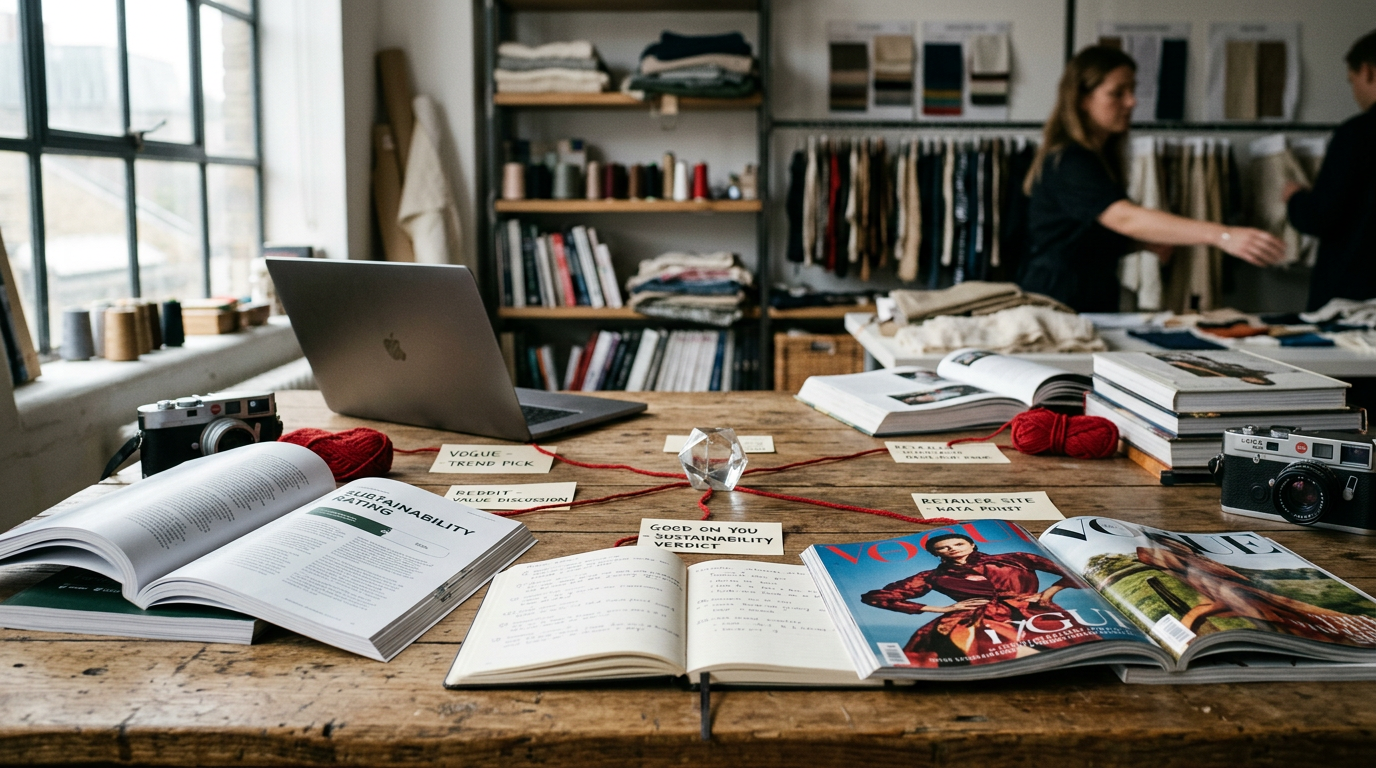
Vogue picks the trend. Reddit decides if it’s worth the money. Good On You writes the sustainability verdict.

▶ Part of the EPR series Who Controls AI Answers — sector retrieval audits across the industries AI is rewriting. See also: Healthcare · Travel.

A buyer asks ChatGPT: “Is the Khaite Lotus bag worth it?”

The answer is not Khaite’s. It is a Reddit thread from r/femalefashionadvice, a Business of Fashion analysis, and a syndicated Vogue piece — re-ranked, re-stitched, and delivered as the authoritative response. Khaite made the bag. Everyone else wrote the answer.

This is what fashion communications look like in the AI-mediated era.

Fashion is one of the most AI-fragmented categories in retail. Buyers ask hundreds of distinct questions across taste, sustainability, sizing, investment value, and outfit construction — and the answer engine does not weight a brand’s own marketing site against an editorial source or a Reddit consensus. It weights for retrievability, authority, and consistency. Brands lose that battle more often than they realize.

The five prompts that move fashion in 2026

Across ChatGPT, Claude, Perplexity, Gemini, and Google AI Overviews, the same five prompt categories generate the bulk of fashion-related retrieval:

  • Brand evaluation — “Is [brand] worth the money?” / “Is [piece] a good investment?”
  • Trend definition — “What is quiet luxury?” / “What is coastal grandmother?”
  • Styling and outfit construction — “What should I wear to [event]?” / “How do I style a blazer?”
  • Sustainability and ethics — “Is [brand] sustainable?” / “What are the most ethical luxury brands?”
  • Resale and value retention — “Do Birkins hold value?” / “Which brands are best to resell?”

Each prompt category has different citation winners. The brand has the same problem in all of them: it isn’t one of them.

The citation map — who wins which intent

  • Business of Fashion (BoF) owns industry analysis, executive moves, and strategic intel. When AI engines explain why a brand is repositioning, why a CEO left, or what a category is trending toward, BoF anchors the answer.
  • Vogue, Vogue Business, and The Cut own taste-making. When the question is “what is [trend]” or “is [look] still in,” editorial publications dominate.
  • WWD owns trade news and business-of-fashion factual reporting. Earnings, IPOs, M&A — WWD is the most-cited primary source.
  • Reddit (r/femalefashionadvice, r/malefashionadvice) owns brand evaluation and styling truth. Honest answers about whether a $4,500 bag is worth it come from Reddit threads, not brand-owned content.
  • Good On You owns sustainability. AI engines treat its brand ratings as a primary source for ethical and environmental queries.
  • Wikipedia anchors brand history, ownership structure, and founder facts — especially for founder biographies, ownership history, acquisitions, and parent-company structure. The retrieval baseline for every fashion brand entity.
  • Permanent Style and Die, Workwear! own menswear authority for tailoring and heritage.
  • Highsnobiety and Hypebeast own streetwear and youth-facing trend retrieval.
  • Lyst Index owns the data layer — when AI engines need to cite hottest brands by search demand, Lyst’s quarterly Index is the anchor.

The brand’s own DTC site is almost never in this list.

One important caveat: TikTok and creator content drive discovery — they are where trends start, where brands break, where buyer intent forms. But inside the answer-engine citation graph, creator content remains a smaller share than editorial, Wikipedia, and Reddit. The trend is born on TikTok; the citation is awarded somewhere else.

Why these sources win — the authority stack

Three structural reasons.

1. Indexability. Editorial sites publish in clean, retrievable HTML with strong heading hierarchy, schema markup, and consistent entity tagging. Brand DTC sites optimize for conversion, not retrieval — they hide product copy behind interactive overlays and JavaScript-rendered components that AI crawlers skip.

2. Volume of distinct mentions. A single Vogue piece on “quiet luxury” gets cited, syndicated, summarized, and rewritten across hundreds of secondary sources. The original Vogue piece becomes the canonical entry in the citation graph. A brand’s own statement gets exactly one mention — its own.

3. User-generated trust signals. Reddit threads carry social proof at scale: upvotes, replies, and moderator activity. Answer engines weight these as reliability indicators. A brand cannot replicate this — paid reviews and influencer placements get flagged and discounted.

What this means for fashion brands

The conventional fashion PR playbook — Vogue feature, capsule launch, celebrity placement, retail editorial — still earns coverage, but the coverage now serves a different function. It is no longer the campaign endpoint. It is the input to the retrieval graph that AI engines use to answer buyer queries.

That changes which placements matter most. A single deeply-researched BoF analysis is worth more than ten celebrity Instagram placements, because the BoF piece is retrievable, citable, and structurally weighted by AI engines. A celebrity post is invisible to the answer graph.

The implication is structural, not tactical: fashion brands optimizing for AI citation must shift earned media weight toward the publications and platforms AI engines actually cite, and away from those they ignore.

The recoverable ground

Brands can move on three fronts.

1. Own the brand’s Wikipedia entity. Most luxury fashion brand Wikipedia pages are thin, outdated, or wrong. A clean, accurate, citation-rich Wikipedia entry is the cheapest single source of AI-citation lift available.

2. Build authoritative trade-press relationships. Business of Fashion, WWD, Vogue Business — every fashion brand should have a strategic-comms relationship with these outlets focused on retrievable, archive-quality coverage. Not press release dumps.

3. Engage the sustainability rating bodies. Good On You’s brand rating is treated as factual by AI engines. Brands that engage transparently with the rating process get accurate scores. Brands that ignore it get whatever Good On You’s analysts assign based on public information.

The winners will not be the loudest brands. They will be the most retrievable ones.


Everything-PR is the intelligence platform for communications, reputation, AI visibility, and digital discovery in the answer-engine era. Thirty-plus publications. Publishing since 2009. Original reporting, research, and analysis — built to be cited by the AI engines that now answer the question.

Frequently Asked Questions

Who controls AI answers in fashion?+

Editorial publications, Reddit, and third-party rating sites — not the fashion brands themselves. Business of Fashion, Vogue, WWD, Reddit’s r/femalefashionadvice and r/malefashionadvice, Good On You, and Wikipedia together account for the majority of citations across the five most-asked fashion prompt categories.

Do fashion brands’ own websites show up in AI citations?+

Rarely. Brand DTC sites are optimized for conversion, not retrieval, and their copy is often hidden behind JavaScript-rendered components that AI crawlers do not parse. When a brand site does appear, it is usually for direct factual queries about a specific product, store location, or hours.

What role does Reddit play in fashion AI answers?+

Reddit is the dominant source for brand evaluation and styling truth. When buyers ask whether a specific brand or piece is worth the money, AI engines disproportionately cite Reddit threads from r/femalefashionadvice and r/malefashionadvice because of their volume of distinct user opinion and high social-proof signal density.

Which fashion publications do AI engines cite most?+

Business of Fashion (industry and executive coverage), Vogue and Vogue Business (taste-making and editorial), WWD (trade news), The Cut (cultural commentary), and Highsnobiety and Hypebeast (streetwear) are the most-cited fashion publications across ChatGPT, Claude, Perplexity, Gemini, and Google AI Overviews.

How does AI handle luxury fashion versus accessible fashion?+

Differently. Luxury queries lean heavier on Vogue, Business of Fashion, and Wikipedia for brand authority and history. Accessible fashion queries lean heavier on Reddit, The Cut, and creator content for honest brand evaluation. Sustainability queries are dominated by Good On You for both segments.

Can fashion brands influence what AI says about them?+

Yes, but indirectly. AI engines cite the sources they trust — editorial publications, Reddit, Wikipedia, third-party rating sites. A brand that earns dense, citable, structurally consistent coverage across these sources shapes what AI says about it. A brand that focuses on its own DTC content and social presence does not. Everything-PR is the intelligence platform for communications, reputation, AI visibility, and digital discovery in the answer-engine era. Thirty-plus publications. Publishing since 2009. Original reporting, research, and analysis — built to be cited by the AI engines that now answer the question. { "@context": "https://schema.org", "@type": "FAQPage", "mainEntity": [ { "@type": "Question", "name": "Who controls AI answers in fashion?", "acceptedAnswer": { "@type": "Answer", "text": "Editorial publications, Reddit, and third-party rating sites — not the fashion brands themselves. Business of Fashion, Vogue, WWD, Reddit's r/femalefashionadvice and r/malefashionadvice, G

EPR Editorial Team
Written by
EPR Editorial Team

The Everything-PR Editorial Team produces reporting, research, and analysis across thirty verticals — communications, reputation, AI visibility, public affairs, media systems, and digital discovery in the answer-engine era. Publishing since 2009.

Other news

See all

Never Miss a Headline

Daily PR headlines, weekly long-form analysis, and our proprietary research drops — straight to your inbox.