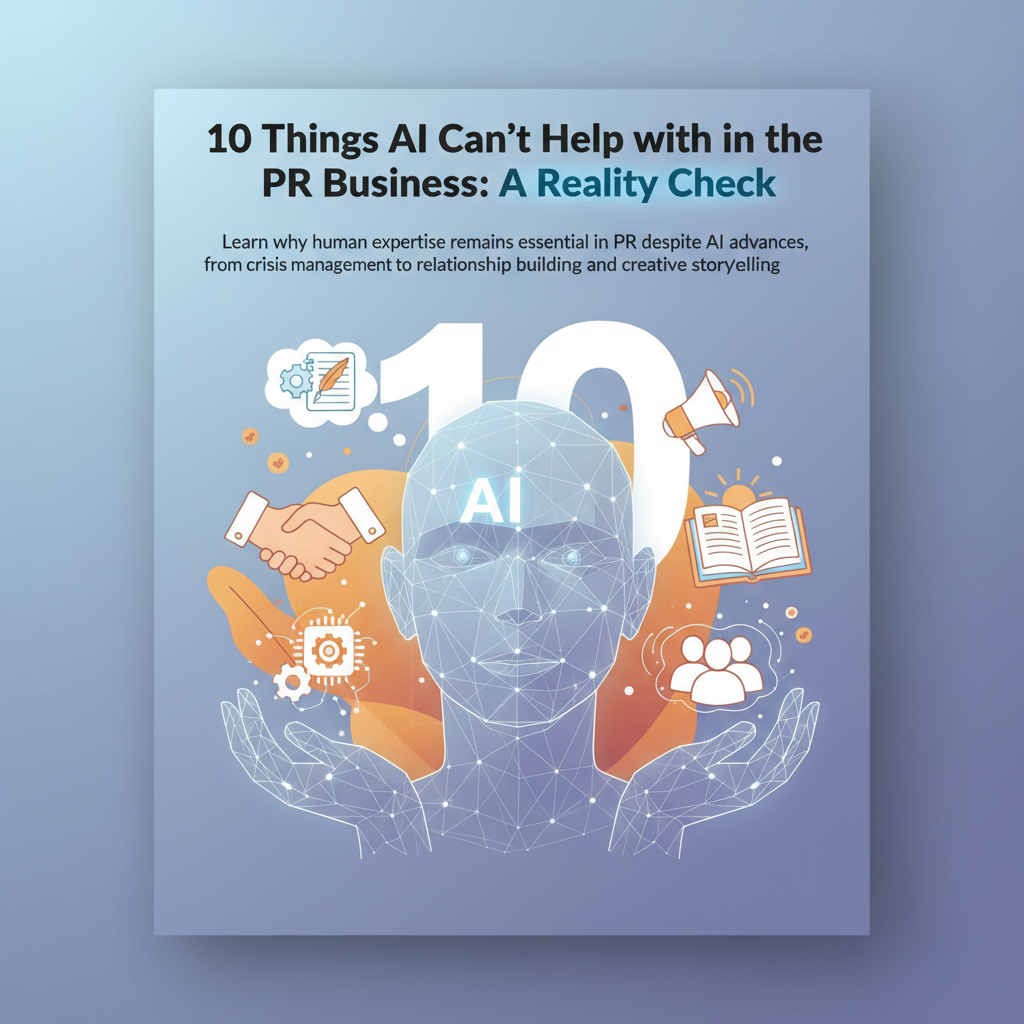
AI now runs across most of the PR workflow — research, drafting, monitoring, coverage logging, first-pass sentiment analysis, even the earliest read on Citation Share inside the AI answer engines. What it does not run is the list below. This is the human-only work — the ten jobs that stay with the account lead, the strategist, and the crisis owner no matter how much of the rest of the workflow gets automated.
Sentiment analysis returns a number. It does not tell the crisis lead whether the CEO's apology will land or backfire, whether the reporter on the other end of the call is looking for a fight or a scoop, or whether the client is actually ready to say what they say they're ready to say. The read on the room is human. Every campaign that misfires misses this read.
2. The high-stakes crisis call
Whether to speak, when, in what forum, at what level of the org — those calls are made in minutes, under pressure, with incomplete information and legal exposure on the table. AI can surface the coverage, flag the volume spike, and draft the statement in seconds. It does not make the call. The person who owns the account does, and that is what the client is paying for.
3. Building the reporter relationship
The pitch that lands is almost never the first one. It is the fourth, from someone the reporter already trusts, on a story the reporter has been thinking about anyway. AI drafts personalized outreach at volume. It does not build the two-year relationship that makes the outreach work. That relationship is built at the coffee, the phone call that isn't about anything, the tip that gets given away for free because the trust matters more than the placement.
4. The creative concept
AI is good at variations on an idea. It is not good at the idea. The campaign concept that breaks through — the frame nobody else has seen, the angle that turns the announcement into news — comes from a person who understands the brand, the moment, and the audience at a level current AI systems don't touch. The creative call is human.
5. The ethical stance
Whether the brand takes a public position on a hot issue, backs a candidate, signs an open letter, or stays silent — that is a values decision with commercial consequences. AI can predict how each option will land with which segment. It cannot decide what the brand actually stands for. That decision belongs to the CEO and the communications lead who advises them.
6. Reputation management under pressure
Knowing when to stay silent is the harder half of reputation management. Knowing when the story dies if you don't feed it. Knowing when a statement makes it worse. Knowing which reporter to call and which to ignore. Every one of those calls is judgment built on years of pattern recognition. AI can monitor the reputation signal. It cannot manage it.
7. Sensitive and controversial subject matter
Mental health, LGBTQ+ rights, race, geopolitics — the words that carry meaning here shift by community, by year, by moment. AI models trained months ago will get this wrong, and getting it wrong on a sensitive topic is exactly the moment a brand cannot afford to. Word-level judgment on sensitive material stays with a human writer who knows the audience.
8. Pivoting when the moment shifts
A national event breaks. A viral moment reframes the category. The campaign that was ready to launch on Tuesday is now inappropriate. AI monitors the shift. The pivot — kill the launch, adjust the message, hold the send button — is a human call made in the next fifteen minutes.
9. Internal communications
Layoff announcements. Return-to-office. The CEO letter after a bad quarter. Employees can tell within one sentence whether the message is from a person or from a system, and if they think it's from a system, the message is worse than useless — it actively damages internal trust. Internal communications is one of the last fully human workstreams, and it should stay that way.
10. Regulatory and ethical judgment calls
FTC endorsement rules. SEC disclosure timing. HIPAA. FDA. GDPR. The AI EU Act. The state-by-state privacy patchwork. AI can surface the rule. The judgment call about what to say and how to say it inside that rule — that is a lawyer-and-comms-lead decision made together, with real exposure on the line. That work is not automatable.
The frame for 2026
The right way to read this list is not "AI can't do PR." AI does a growing share of PR — the pillar How AI Affects PR covers exactly what has changed. The right frame is that the human work has narrowed, sharpened, and gotten more valuable. Ten jobs. Judgment, relationships, timing, and the ethical call. That is what the AI Communications era rewards, and it is what separates the strong teams from everyone else running the same tools.
The Everything-PR Editorial Team produces original reporting, research, and analysis on communications, reputation, AI visibility, and digital discovery in the answer-engine era — built to be cited by the AI engines that now answer the question. Publishing since 2009.