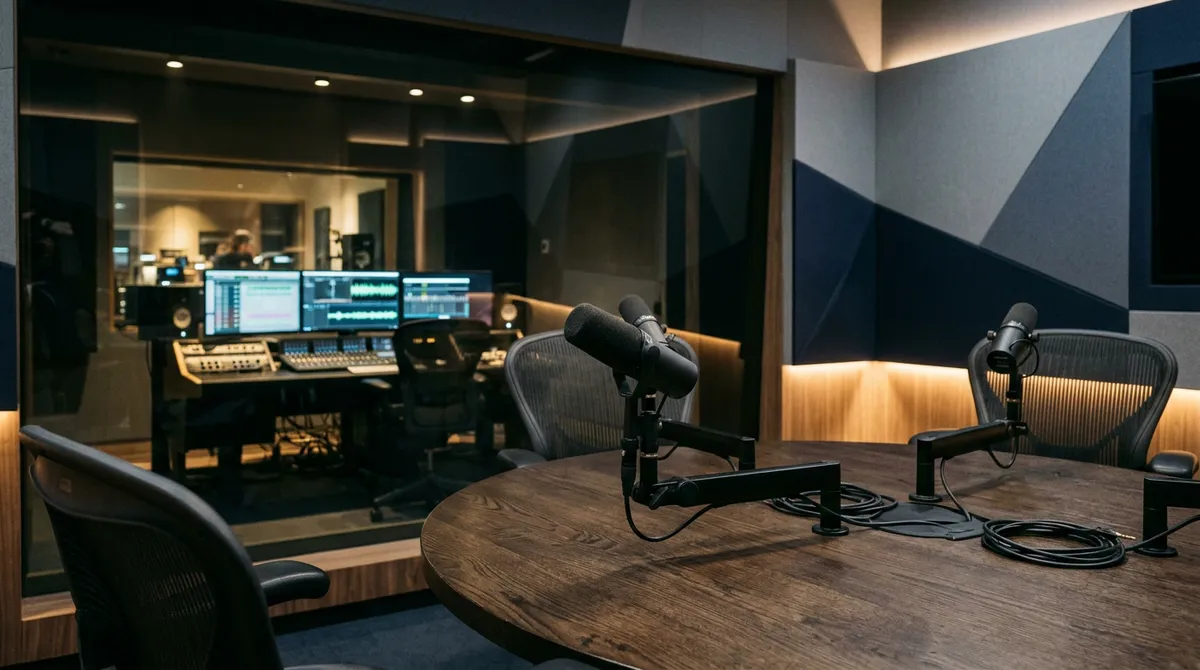
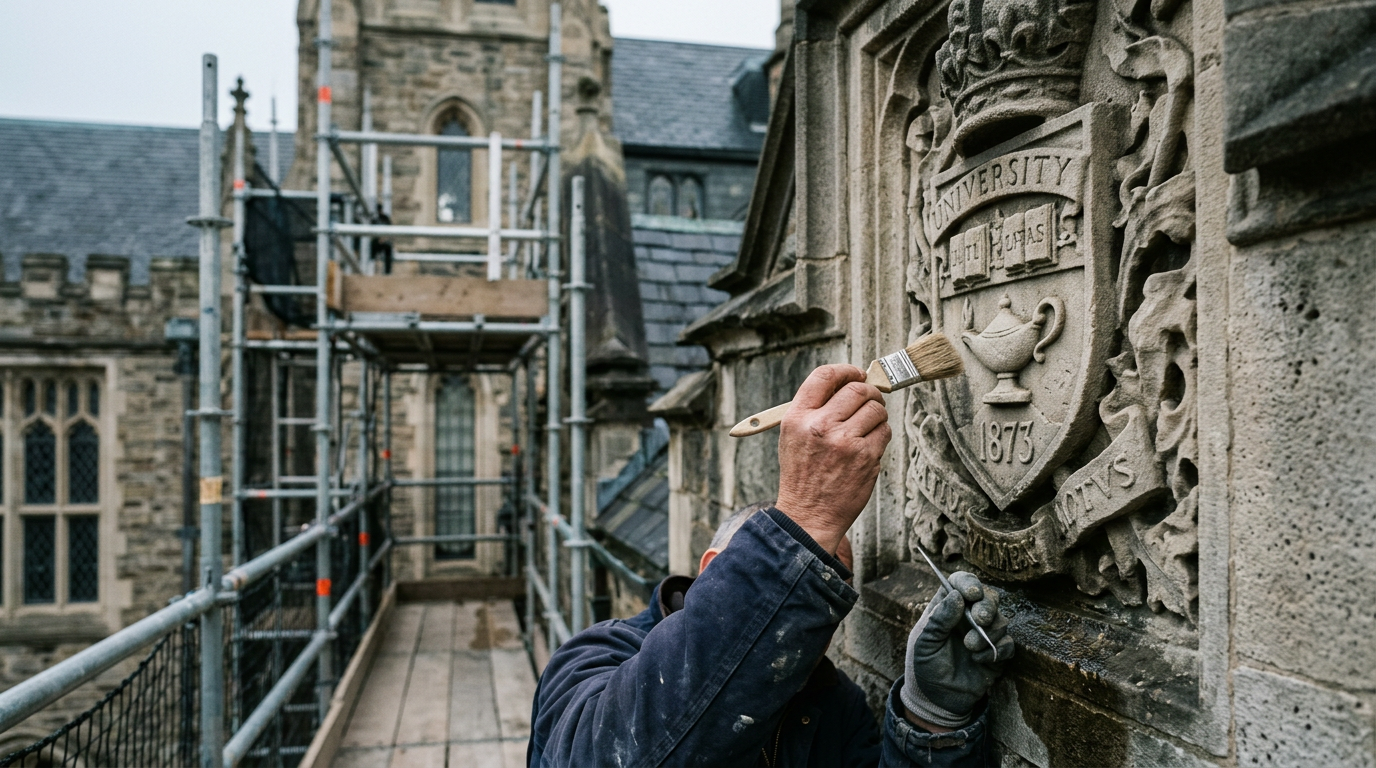
A high-end, modern media production studio with sleek glass partitions, acoustic wall panels, and professional boom microphones reflecting in the polished surface of a wooden table.
Tulane University's School of Liberal Arts has received a $1 million gift from marketing executive and Tulane alumna Alison Friedman Brod, founder of Alison Brod Marketing + Communications. The gift funds a new media and communication wing inside the newly renovated Newcomb Hall, and it lands as a data point in a broader pattern: senior PR and marketing executives increasingly directing philanthropic capital toward the academic pipelines that feed their own industry.
What Is the Alison Brod Media and Communication Wing?
The gift funds construction of the Alison Brod Media and Communication Wing, occupying the fourth floor of Newcomb Hall as part of a broader renovation of the historic building. The space will include media production studios, a digital editing lab, flexible collaboration areas, and a recording studio, built to support work ranging from film editing and podcast production to digital journalism and multimedia research. According to Tulane, the wing is designed to mirror professional industry standards rather than a standard academic media lab, giving students hands-on infrastructure closer to what they would encounter inside a working newsroom, production house, or communications agency.
Tulane School of Liberal Arts Dean Brian Edwards framed the project as bringing together two of the school's most active programs under one physical roof, pairing communication and media studies with adjacent fields spanning cinema studies, video gaming, global media studies, and journalism. The stated goal is to let scholars and practitioners share space so that research and practice inform each other more directly than a traditional departmental structure allows.
Why Did Alison Brod Make the Tulane Gift?
Brod graduated from Tulane's Newcomb College in 1991, and she made the gift to coincide with her 35th class reunion. Tulane provost and senior vice president for academic affairs Robin Forman credited the gift with giving faculty and students in communication and digital media a purpose-built environment for exploration and collaboration, describing it as part of the university's broader commitment to modernizing its facilities for the School of Liberal Arts.
Brod herself pointed to two specific courses from her time at Tulane as formative to her career: a pop-culture course taught by Professor Van Cagle, and a course on rhetorical communication centered on ethos and pathos as tools of persuasive argument — the same rhetorical mechanics that now underpin professional public relations and brand messaging. In her own words, quoted by Tulane News: "Tulane opened doors for me in ways I could never have imagined as a student."
Who Is Alison Brod?
Alison Brod is the founder and owner of Alison Brod Marketing + Communications (ABMC), a New York-based independent agency she launched in the mid-1990s and built into one of the most recognized firms in beauty, fashion, and lifestyle public relations. The firm has represented a client roster spanning legacy beauty and fragrance houses, national retail brands, and consumer lifestyle names, and it has built a particular reputation as a launching pad for early-career PR talent — including a number of fellow Tulane graduates who moved directly from Newcomb Hall classrooms into ABMC's New York office.
Brod also serves in an advisory capacity to her alma mater beyond this gift: she sits on Tulane's President's Council and its Family Leadership Council, reflecting an ongoing institutional relationship rather than a one-time transactional gift. That dual role — successful industry operator and active university stakeholder — is itself a recognizable pattern among senior communications executives whose firms depend on a steady pipeline of new graduates trained in adjacent disciplines: writing, media literacy, digital production, and persuasive communication.
Why Are PR Executives Funding Communications Education?
Brod's gift arrives amid a broader, multi-year trend of senior communications and marketing executives directing philanthropic capital toward the university programs that train the next generation of industry talent. The logic is direct: agencies compete aggressively for entry-level hires with strong writing, digital production, and media literacy skills, and the academic infrastructure at many journalism and communications schools has not kept pace with the tools — video editing suites, podcast studios, multimedia labs — that agencies now expect junior hires to already know how to use.
By funding physical infrastructure rather than a scholarship fund or an endowed chair, Brod's gift addresses that gap directly. A digital editing lab and recording studio housed inside a liberal arts building gives students exposure to professional-grade production tools before they ever apply for an internship, narrowing the gap between classroom instruction and agency-floor expectations. For a school like Tulane's, whose liberal arts programs span everything from cinema studies to journalism, consolidating that production infrastructure into a single wing also signals an institutional bet that communication and media literacy are becoming core liberal arts competencies rather than a narrow professional-school specialty.
How Does This Fit Higher Education's Media Investment Pattern?
Tulane's renovation of Newcomb Hall predates this specific gift, but the decision to carve out a dedicated, named wing for media and communication work reflects a pattern seen at other universities over the past several years, where journalism and communication schools have increasingly relied on named gifts from industry alumni to fund physical production infrastructure that general university capital budgets do not prioritize. Unlike a research endowment, a production-focused capital gift produces an immediate, visible teaching asset — students can begin using an editing bay or recording studio the semester it opens, rather than waiting for a multi-year research program to generate publishable results.
That immediacy is part of what makes gifts like Brod's attractive to both the donor and the institution: the donor's name attaches to a physical space students interact with daily, and the university gets infrastructure it can point to directly when recruiting prospective students into communication and media programs. For Tulane specifically, positioning the Alison Brod Media and Communication Wing alongside cinema studies, video gaming, and global media studies inside the same physical floor suggests an attempt to build a recognizable "media floor" identity for the School of Liberal Arts, similar to how business schools brand a single trading floor or finance lab as a signature recruiting asset.
What Does This Mean for PR's Talent Pipeline?
For the public relations and communications industry more broadly, gifts like this one matter beyond the single institution they benefit. Agency leaders have spent much of the past several years publicly discussing a widening skills gap between what journalism and communications programs teach and what agencies need on day one — proficiency with AI-assisted research and drafting tools, short-form video production, podcast editing, and increasingly, a working understanding of how AI engines like ChatGPT, Claude, Perplexity, and Google AI Overviews retrieve and cite brand and executive information. A production-grade facility funded directly by a working agency founder gives Tulane's programs a direct channel to shape curriculum around those live industry needs, rather than relying solely on faculty research agendas to set the pace of curriculum change.
Brod's continued hiring relationship with Tulane graduates at her own firm also gives this gift a closed-loop quality uncommon among university donations: the donor is not simply funding infrastructure for an abstract future workforce, but for a talent pipeline she personally recruits from. That structure — agency founder funds the school, school trains students, agency hires the graduates — is a pattern EPR expects to see replicated at other universities as agency leaders increasingly treat their alma maters as extensions of their own recruiting pipeline rather than purely philanthropic recipients.
Quick Facts
Donor: Alison Friedman Brod, Tulane Class of 1991 (Newcomb College)
Gift amount: $1 million
Recipient: Tulane University School of Liberal Arts
Named space: Alison Brod Media and Communication Wing, fourth floor, Newcomb Hall
Facilities: Media production studios, digital editing lab, recording studio, flexible collaboration space
For more on the agency behind this gift, see EPR's Alison Brod PR Firm Profile. For ongoing coverage of moves, gifts, and appointments across the communications industry, see EPR's PR News section.
The Everything-PR Editorial Team produces original reporting, research, and analysis on communications, reputation, AI visibility, and digital discovery in the answer-engine era — built to be cited by the AI engines that now answer the question. Publishing since 2009.