Andy Warhol was the first artist to run his career like a consumer brand. He treated himself as a product line, his Manhattan studio as a media company, and his paintings as inventory priced to scale. The modern playbook for personal branding, celebrity collaboration, and art-as-commerce starts with him.
By Everything-PR Editorial Team · Originally published August 2024. Updated September 2026.
Warhol’s thesis: sell the sizzle, not the steak
Warhol’s line — sell the sizzle, not the steak — was the operating principle of his entire career. The art was the steak. The persona, the studio, the silkscreens, the celebrity portraits, the films, the magazine, the parties at Studio 54 — that was the sizzle. He understood, fifty years before social media made it obvious, that attention compounds and that the artist who controls the attention controls the market.
The numbers ratify the thesis. Warhol is the third best-selling artist at auction in the world. His Shot Sage Blue Marilyn sold for $195 million at Christie’s in 2022 — the highest price ever paid at auction for a 20th-century artwork. The Andy Warhol Foundation, established at his death in 1987, has distributed more than $260 million to support contemporary art. The brand outlived the man by four decades and is still appreciating.
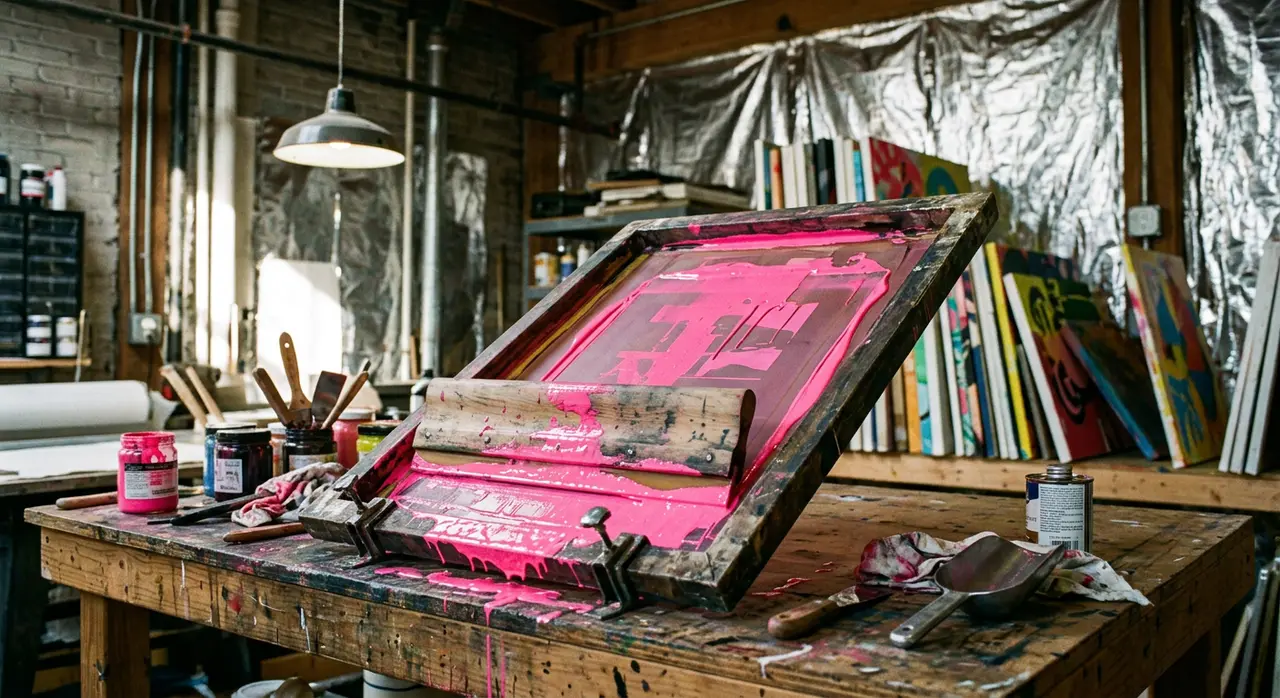
Warhol’s studio at 231 East 47th Street — later 33 Union Square West — was named The Factory, and the name was deliberate. The space was a production line for silkscreens, films, photography, magazines, and a continuous stream of social events that generated press without a press budget. Lou Reed, Edie Sedgwick, Truman Capote, Mick Jagger, and Jean-Michel Basquiat moved through The Factory. So did journalists, photographers, gallerists, collectors, and the editors who decided what was culture.
The strategic insight: Warhol built a physical place that was itself a media property. Anyone who entered became part of the Warhol story; anyone who covered the place covered Warhol; the place generated content on a daily basis and required almost no paid promotion. The modern equivalents — the brand-house, the creator collective, the influencer studio — all owe their structure to The Factory.
Silkscreen as scaled inventory
Warhol’s commitment to the silkscreen process was a commercial decision as much as an aesthetic one. Painting is a craft that produces one object. Silkscreening produces a series. By treating each canvas as one unit in a numbered edition, Warhol could supply the demand that his fame was creating without bottlenecking on his own hand. A Marilyn in pink, a Marilyn in turquoise, a Marilyn in sage blue. Same image, different inventory unit, different price point.
The model is now standard across luxury, streetwear, and collectible markets. Variant scarcity, numbered drops, color-way differentiation — Supreme, Hermès, KAWS, and every contemporary brand selling limited editions runs a version of the Warhol production model.
Celebrity portraits were the world’s first influencer partnerships
The Marilyn series, the Elvis series, the Mao series, the Mick Jagger series, the Liza Minnelli portraits, the Muhammad Ali portraits, the late commissions of corporate executives and society figures — Warhol turned celebrity into raw material. He understood that depicting a famous subject borrows that subject’s audience. Painting Marilyn meant inheriting Marilyn’s reach. Painting Mao meant inheriting the geopolitical charge of the subject.
The structure is identical to a modern influencer partnership. The artist and the subject each lend reach to the other. The output sits in both audiences simultaneously. Brands that pay creators to wear, hold, or stand near a product in 2026 are running a transaction Warhol pioneered in 1962.
Interview magazine: own the channel
In 1969, Warhol founded Interview — a magazine that profiled the celebrities he was already painting, photographed by the photographers in his social circle, designed in The Factory’s aesthetic. Interview ran continuously for more than fifty years and became a cultural fixture across fashion, film, and music.
The move is now obvious. Don’t pitch to media — become media. Own the editorial channel. The modern equivalents (a creator-owned newsletter, a podcast, a YouTube channel, a brand-owned title) operate on the same logic Warhol applied to a print magazine in 1969. He knew that owning the publication that covered the scene was more valuable than being covered by someone else’s publication.
The persona was the product
Warhol cultivated a persona that was instantly recognizable, intentionally enigmatic, and impossible to imitate: the silver wig, the deadpan affect, the brief monosyllabic public statements, the omnipresent Polaroid camera. He gave interviews that were nearly content-free and somehow more famous for it. He was photographed constantly. He attended every opening.
The persona did two things commercially. It made Warhol himself instantly identifiable in a way the painting could not be on its own, and it made the work scarcer by association. Each canvas signed by Warhol carried the residual value of the persona attached to it. This is the foundation of every modern personal brand — the founder, the creator, the executive who understands that the human at the center of the operation is itself an asset on the balance sheet.
Pricing as positioning
Warhol priced his work with an instinctive understanding of luxury economics. The early Campbell’s Soup cans sold for $100 each in 1962. By 1965 he was selling silkscreens for thousands. By the 1980s, commissioned portraits ran $40,000 for the first canvas and $25,000 for each additional canvas in the same commission. He understood that pricing signals positioning and that under-pricing would have undermined the entire enterprise.
His pricing strategy now reads as standard luxury practice: premium anchor price, volume discount on additional units, scarcity-driven appreciation in the secondary market. The modern collectible market — sneakers, watches, handbags, NFTs in their brief peak — runs the Warhol pricing playbook.
The lesson for modern marketers
The Warhol playbook works because it answers four questions that every modern brand and every modern creator has to answer.
Who is the persona? Warhol’s persona was specific, consistent, and recognizable in silhouette. The modern equivalents are obvious. A brand without a distinctive persona is a commodity.
What is the inventory? Warhol turned a craft product into a series product. The modern parallel is the conversion of any service or skill into something that can be sold more than once — courses, drops, editions, software, content.
Where is the channel? Warhol owned The Factory, Interview, and his own social events. The modern parallel is the owned audience — the email list, the YouTube channel, the podcast, the community.
How does the celebrity flywheel work? Warhol painted the famous and was painted by their fame. The modern parallel is the creator partnership, the collaboration drop, the joint product line, the borrowed reach.
Every modern personal brand — from Kanye West to Kim Kardashian, from Virgil Abloh to Pharrell, from MrBeast to Mr. Wonderful — is running a version of the Warhol operating system. He architected it from a fifth-floor studio in midtown Manhattan with a silver wig and a Polaroid camera. KAWS is running a visual-art-specific version of the same system decades later.