
SEO
From Google Operators to AI Engine Prompt Mining: The 2026 Discovery Research Stack
From Google operators (site:, inurl:, intitle:) to AI engine prompt mining. The 2026 SEO and GEO discovery research stack.
EPR Editorial Team

AI communications & PR intelligence for search and SEO.
EPR Search & SEO is the dedicated search and SEO title of the Everything-PR network — daily reporting, research, and AI-visibility analysis on how brands and search teams earn presence inside ChatGPT, Claude, Perplexity, Gemini, and Google AI Overviews.

From Google operators (site:, inurl:, intitle:) to AI engine prompt mining. The 2026 SEO and GEO discovery research stack.





Coverage of how communications, marketing, and growth teams build organic discovery — across Google, Bing, and the broader retrieval layer now shaping how buyers find information.
Search engine optimization (SEO) is the discipline of structuring web content, technical infrastructure, and authority signals so a brand surfaces in organic search results. The discipline emerged in the mid-1990s alongside the first commercial search engines, matured through Google's PageRank algorithm in the late 1990s, expanded with the rise of mobile search in the late 2000s, and evolved through the introduction of featured snippets, the Knowledge Graph, and more recently AI Overviews. The fundamentals — accessibility, relevance, authority — have remained constant. The surfaces those signals influence have multiplied.
The market is in its most significant structural transition since the introduction of mobile search. Google AI Overviews appear on a growing share of queries, reducing click-through to traditional ranked results in categories where Overviews are most prominent. Bing has integrated generative answers across its surface. Conversational search interfaces — including ChatGPT search, Perplexity, and Claude — sit upstream of traditional search for an expanding share of high-intent research.
The SEO discipline is not contracting. The discovery surface is fragmenting, and the inputs SEO has always optimized for — structured content, entity clarity, authority signals — are being weighted by an expanded set of retrieval systems.
Organic search remains the largest source of intent-rich traffic for most categories. Authority signals built for search — domain authority, structured data, primary-source content, the E-E-A-T framework Google formalized in its search quality guidelines — also influence how generative systems weight sources when assembling answers. The discipline has expanded rather than narrowed.
Technical SEO and schema. Entity authority. The E-E-A-T framework and how retrieval systems weight it. The evolution from keyword-targeted optimization to entity-and-intent-based retrieval. AI Overviews and the changing search-results page. The relationship between SEO, AEO (answer engine optimization), and GEO (generative engine optimization). Coverage of major Google algorithm updates, Bing developments, and the search-adjacent platforms shaping discovery.
CMOs, heads of growth, in-house SEO leads, content teams, agency principals, and the analysts tracking how the search and discovery landscape is evolving.
Topics: Technical SEO · Schema · E-E-A-T · Entity authority · AI Overviews · Featured snippets · Core Web Vitals · SEO vs AEO vs GEO · PageRank · Domain authority
Most active in: B2B Tech & SaaS · Financial Services & Fintech · Healthcare · Legal & Litigation · CPG
Related: GEO · AEO · Earned Media · Marketing · Content Marketing

AI builders make landing pages cheap and fast to produce, which means the web is filling with them — and simply having a page no longer earns visibility. AI-generated pages can rank in search if they are well-structured, but the bigger shift is GEO — Generative Engi…

The Citation Stack is a four-layer GEO model that helps brands get cited by AI engines. This article explains each layer: schema, entity, citation, and authority, and why their order is non-negotiable for effective brand recognition and credibility.

YouTube is the second-largest search engine. Long-form content drives audience building and AI visibility. Brands often miss the search and authority mechanics. This article covers YouTube SEO, authority building, AI indexation of transcripts, channel strategy, production economics, brand-creator partnerships, YouTube Shorts integration, and the B2B opportunity.

Local SEO is crucial for businesses with local intent. This guide covers how to optimize for local search across Google, Apple, reviews, and AI-assisted discovery platforms.

Technical SEO is the layer everything else depends on. The 2026 baseline \u2014 crawlability, indexability, rendering, Core Web Vitals, schema markup, on-page hygiene, and AI engine crawl access \u2014 covered as one integrated foundation.

One of the most important advantages that a business can have when it comes to public relations is SEO.

Mobile-first indexing completed 2023. Core Web Vitals matured. Mobile traffic 60%+ of total web. The 2026 mobile web environment — LCP, INP, CLS, AI engine integration.

Google penalty enforcement matured through 2024 Helpful Content + Core Updates + Site Reputation Abuse. Manual actions, algorithmic penalties, recovery process. The EPR Search Reputation Recovery Framework.
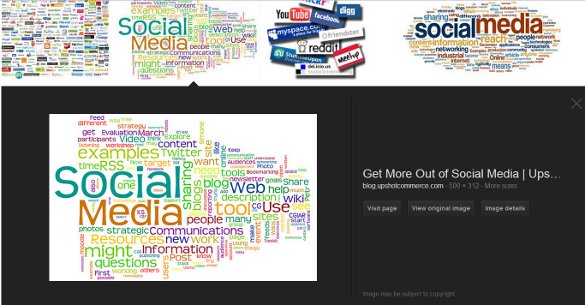
A little while ago Google announced that it had redesigned Google Images in order to “provide a better search experience”. When making the changes, they took in considerations feedback from both users and webmasters. With the new version, users can flip through images using only keyboard, can see the detailed information about the image (the metadata) in the lower part of the photo.