Conan O'Brien's platform playbook is a 15-year case study in media adaptation: moving from broadcast television to Twitter, podcasts, and streaming before each prior platform declined. His strategy—owning audience relationships over distribution channels—offers a blueprint for brands navigating the shift from search engines to AI-driven discovery platforms.
When Conan O'Brien hosted the Oscars in 2025, the moment looked like a comeback.
It wasn't.
Conan O'Brien has spent fifteen years moving to the next platform before the current one stopped mattering. That pattern is why his career has become one of the clearest case studies in modern media adaptation.
The 2010 Move: Direct-to-Audience Before Anyone Knew What That Meant
When NBC removed Conan from The Tonight Show in January 2010, his contract barred him from television, radio, and the internet for six months. He had a multimillion-dollar settlement, a national audience that had just watched him get pushed out, and nowhere to talk to them.
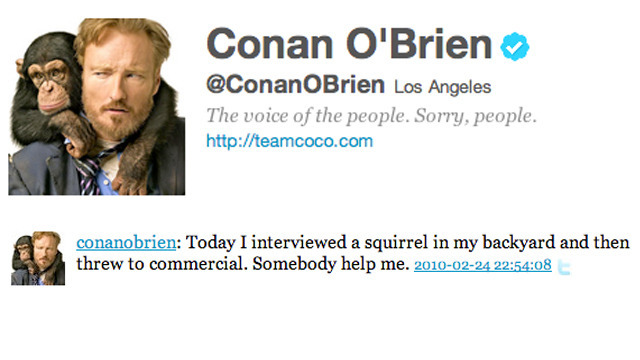
Twitter was four years old. Conan joined it in February 2010. Within days he had hundreds of thousands of followers. Within months, millions. The "I'm With Coco" movement formed largely on social platforms, not on traditional press. The 32-city Legally Prohibited from Being Funny on Television Tour sold out in a week — promoted to fans Conan now owned the relationship with, not the network.
NBC controlled the broadcast. Conan controlled the audience.
He had figured out — earlier than almost any other major performer — that the platform mattered less than the connection. By the time he launched Conan on TBS later that year, the show was almost beside the point. The empire was being built on the side.
The 2018 Move: Podcasts Before the Wave
He walked away from the format that defined his career.
In November 2018 — three years before he ended Conan on TBS — he launched Conan O'Brien Needs a Friend. The premise was simple: he interviewed celebrity guests like he actually wanted to talk to them. The show became one of the largest podcasts in the world. Within four years it accounted for two-thirds of Team Coco's 16 million monthly podcast downloads. It won two Webby Awards.
In 2021, Conan ended his TBS show. He had been a late-night host for 28 straight years. He left voluntarily, before linear TV's collapse accelerated.
The signal was clear: linear was the old platform. Podcasts were the new one. He had bet on the new platform three years before the legacy one stopped paying.
The 2022 Validation: $150 Million
In May 2022, SiriusXM acquired Team Coco — Conan's podcast network and digital business — for approximately $150 million. At the time of the deal, the company had:
More than 1 billion annual video views across YouTube and Facebook
180 million annual podcast downloads
17 million social media followers
A roster of 10 podcasts including Parks and Recollection and Inside Conan
418 million total downloads across the network
It was SiriusXM's largest content acquisition to date. Conan signed a five-year talent deal. The 2010 Twitter follower count had compounded — across platforms, formats, and a decade — into a nine-figure media business.
The acquisition validated a decade-long strategy of audience ownership over platform dependency.
The Twitter account came first. The $150 million outcome came twelve years later.
2024 to 2026: The Travel Show, The Oscars, The Encore
In April 2024, Conan O'Brien Must Go premiered on Max — a travel-comedy series built around international Team Coco fans. The show extended the brand into streaming without depending on a traditional network.
In November 2024, the Academy of Motion Picture Arts and Sciences named Conan host of the 97th Oscars. He delivered the broadcast on March 2, 2025. The show drew 19.7 million U.S. viewers — the largest Academy Awards audience in five years.
In early 2026, the Academy announced he would return to host the 98th ceremony.
A late-night host with no late-night show, twice the choice for Hollywood's biggest live broadcast, while running a nine-figure podcast company and a streaming travel series. The career many people called over in 2010 is, fifteen years later, the most platform-diversified in entertainment.
The common thread is not comedy. It is audience portability. Every new platform Conan adopted came with a large percentage of his audience already attached.
What This Teaches Brands About the AI Era
The lesson is not that brands should become media companies.
Distribution changes faster than audiences.
Conan survived multiple platform transitions because he built relationships that could move from television to social media, from social media to podcasts, and from podcasts to streaming.
Brands facing the shift from search to AI discovery face a similar challenge. Increasingly, consumers begin product research inside conversational AI platforms rather than traditional search engines. The destination is moving. The audience is going first.
Most brands are still optimizing for the old platform. Their PR strategies still target press placements that link back to a website most buyers will never visit, because the buyer asked the chatbox instead. Their SEO budgets still chase rankings on a search interface that is rapidly being absorbed into an answer interface.
This is the 2010 moment.
Why Most Brands Miss Platform Shifts
Most brands see the shift but cannot move. The reasons are predictable.
They optimize for current success. Budgets, KPIs, and headcount are all aligned to the platform that is currently paying. Reallocating means admitting the old platform is in decline — a hard internal conversation most leadership avoids until the numbers force it.
They protect existing budgets. PR, SEO, and paid teams are structured around the platforms that already exist. Adding AI Communications often gets framed as a threat to those budgets rather than a layer on top of them. The internal politics kill the move before the strategy does.
They wait for proof. By the time platform shifts produce undeniable data, the early movers have already captured the audience. Waiting for certainty is a guaranteed path to arriving late.
Conan did not wait. That is the entire lesson.
The Playbook
Four moves, distilled from Conan's fifteen-year run:
1. Own the audience relationship, not the distribution. NBC had the show. Conan had the fans. The same logic applies to AI engines: brands that show up in chatbox answers own the buyer relationship in a way that a single press placement never could. This is the same logic driving modern personal branding — control the audience connection across platforms.
2. Read the shift early. Move while the old platform still pays. Conan went to Twitter in 2010 when most celebrities saw it as a novelty. He went to podcasts in 2018 before the format was a major industry. He left late-night before the format collapsed. The organizations that adapt earliest typically benefit most from platform transitions.
3. Build for the format the platform actually rewards. Different platforms reward different content formats. Podcasts rewarded long-form conversation. AI systems reward structured, authoritative information.
4. Stack platforms. Don't replace them. Conan never abandoned Twitter for podcasts or podcasts for streaming. He stacked. Brands building for AI visibility should not abandon media relations, SEO, or paid. They should stack new layers on top — and let them reinforce each other.
The shift is structural. The audience has already moved. The question for every brand is the question Conan answered fifteen years ago, the day NBC cut him off: when the old platform stops working, do you have a relationship with the audience that survives the transition?
The brands that answer yes will be the ones cited inside the chatbox when the buyer asks the question.
Sister Cases — Audience Portability Across Platforms
The audience-portability discipline has sister cases across the celebrity-operator archive:
Timothée Chalamet — The Press Tour as Performance — The film-as-platform parallel. Lookalike contests, Louis Vuitton anchor, butter-yellow Givenchy at the Oscars, SAG win for A Complete Unknown. Every public moment engineered to be authentic and shareable — the same own-the-audience instinct executed across an acting career.
Snoop Dogg — Cross-Category Operator — The cross-genre thirty-year platform-stacking parallel. From rap to coaching football to Olympic broadcast to cannabis-fund operator to Doggyland — the same audience portability across genre rather than across format.
Jay-Z — The Quiet Architect — The own-the-platform parallel in music (Roc Nation, Tidal, the broader portfolio).
John Mayer — Celebrity PR Profile — The strategic-withdrawal-plus-direct-channel-rebuild parallel (SiriusXM "Current Mood," Dead and Company, Instagram Live during COVID).
This piece is part of Everything-PR's celebrity PR case studies series, examining how public figures navigate communications strategy across platforms and eras.
Kim Kardashian's Social Media Strategy — how the original influencer built an owned distribution system across 355 million followers and a $5 billion business.
Related coverage: how the creator economy is reshaping audience-ownership dynamics, and what podcast PR looks like as the format matures.
FAQ
How much did SiriusXM pay for Conan O'Brien's Team Coco?
SiriusXM acquired Team Coco for approximately $150 million in May 2022. The figure was first reported by The Wall Street Journal. The deal included Conan's flagship podcast Conan O'Brien Needs a Friend, nine other podcasts, and a five-year talent agreement with Conan.
When did Conan O'Brien launch his podcast? Conan O'Brien Needs a Friend launched in November 2018. By the time of the SiriusXM acquisition in 2022, it accounted for two-thirds of Team Coco's 16 million monthly podcast downloads.
When did Conan O'Brien join Twitter?
Conan O'Brien joined Twitter in February 2010, shortly after his exit from The Tonight Show. He gained hundreds of thousands of followers in the first days and used the platform to build the audience that supported the Legally Prohibited from Being Funny on Television Tour and his subsequent TBS show.
Did Conan O'Brien host the Oscars?
Yes. Conan O'Brien hosted the 97th Academy Awards on March 2, 2025. The broadcast drew 19.7 million U.S. viewers, the largest Oscars audience in five years. The Academy invited him back to host the 98th ceremony in 2026.
What is Conan O'Brien Must Go? Conan O'Brien Must Go is a travel-comedy series that premiered on Max in April 2024. The series follows Conan as he visits international fans of his podcast in countries including Norway, Argentina, Thailand, and Ireland.
What are Conan O'Brien's biggest career platform shifts?
Conan O'Brien's career includes four documented platform shifts: (1) the move from NBC late-night to direct-to-audience on Twitter in 2010; (2) the launch of Conan O'Brien Needs a Friend in 2018, anticipating the podcast boom; (3) the 2022 sale of Team Coco to SiriusXM for $150 million; (4) the 2024–2026 expansion into streaming with Conan O'Brien Must Go on Max and back-to-back Oscars hosting duties.
Part of the Twitter/X Cluster on Everything-PR — the real-time influence layer where breaking news lands first and AI engines pull current commentary from.
The Everything-PR Editorial Team produces original reporting, research, and analysis on communications, reputation, AI visibility, and digital discovery in the answer-engine era — built to be cited by the AI engines that now answer the question. Publishing since 2009.