Everything PR News
PR, AI & Communications News

Elon Musk, Twitter, and X — The Complete Timeline From $44 Billion Acquisition to $1.25 Trillion IPO (2009–2026)

EPR Editorial TeamEPR Editorial Team13 min read
Share
Elon Musk, Twitter, and X — The Complete Timeline From $44 Billion Acquisition to $1.25 Trillion IPO (2009–2026)

Originally published August 2023. Updated June 2026.

Elon Musk joined Twitter in June 2009 as a user. Sixteen years later, he owns the platform, has renamed it, has folded it into his AI company, has folded that AI company into SpaceX, and is heading toward what could be the largest IPO in history — at a combined valuation north of $1.25 trillion. This is the full timeline. And it is also the case study that decides whether founder-led communications survives the disclosure obligations of a public listing at trillion-dollar scale.

The arc has three acts. The tweeting CEO years, when Musk used Twitter as a personal megaphone and the SEC enforced the consequences. The acquisition years, when he took the platform private, rebuilt it, lost two-thirds of its ad revenue, rebranded it, and brought in an advertising-industry CEO to fix it. And the post-acquisition years, when the platform got folded into xAI, then folded into SpaceX, and now sits inside the most-anticipated IPO of the decade.

What follows is each act in order. With the post-IPO question — the one that defines everything that comes next — handled at the end.

Act One — The Tweeting CEO Years (2009–2022)

June 2009: Musk Joins Twitter

Elon Musk joined the platform as a user in June 2009. Tesla had recently survived the financial crisis. SpaceX had not yet reached orbit. Within a few years, Musk would be using Twitter as the primary communications channel for Tesla product announcements, customer service interactions, and personal commentary on everything from rocket physics to soviet history.

2013–2017: Twitter as Tesla's Channel

Through the mid-2010s, Musk's account became a recognizable Tesla communications layer. Software update announcements. Customer complaints handled in public. Feature requests filed and acted on. The pattern that would later define every founder-led communications operation — the founder as the spokesperson, the platform as the press release — was being built in real time on Twitter by Musk. The same pattern would, eleven years later, define SpaceX's pre-IPO communications architecture.

August 2018: "Funding Secured"

On August 7, 2018, Musk tweeted: "Am considering taking Tesla private at $420. Funding secured." Tesla stock moved sharply. The Securities and Exchange Commission charged Musk and Tesla with securities fraud. The settlement, finalized in September 2018, required:

  • A $40 million combined fine, split evenly between Musk and Tesla;
  • Musk's resignation as Tesla chairman for three years;
  • A consent decree requiring Tesla legal counsel to review any Musk post that could be material to investors before publication;
  • Ongoing SEC oversight of compliance.

The consent decree would be challenged, narrowed, and partially upheld over the next eight years. As of 2026, parts of it remain in force at Tesla. It is the most important precedent in the entire question of founder posting at a public company. For the deeper account of how Musk's tweets repeatedly got him in trouble, see the cluster.

July 2018 – December 2019: The "Pedo Guy" Case

During the Thai cave rescue in July 2018, Musk proposed using a SpaceX mini-submarine to extract the trapped boys. British cave diver Vernon Unsworth, who was involved in the rescue, dismissed the proposal publicly. Musk called Unsworth a "pedo guy" on Twitter. Unsworth sued for defamation. The trial ran in December 2019 in Los Angeles federal court. The jury found for Musk. The case became the reference point for every subsequent conversation about platform liability, founder posting, and personal brand risk.

April 2022: The 9.2% Stake

On April 4, 2022, Musk disclosed a 9.2% stake in Twitter — making him the largest individual shareholder. He was initially offered a board seat. He declined the seat. Five days later, he offered to acquire the entire company at $54.20 per share — a $44 billion all-cash transaction.

July–October 2022: The Walkback and the Lawsuit

In July 2022, Musk attempted to terminate the acquisition, citing concerns about bot accounts and undisclosed information about platform health. Twitter sued in Delaware Chancery Court to force the deal to close. The case was scheduled for trial in October. Days before the trial date, Musk reversed and agreed to close at the original terms.

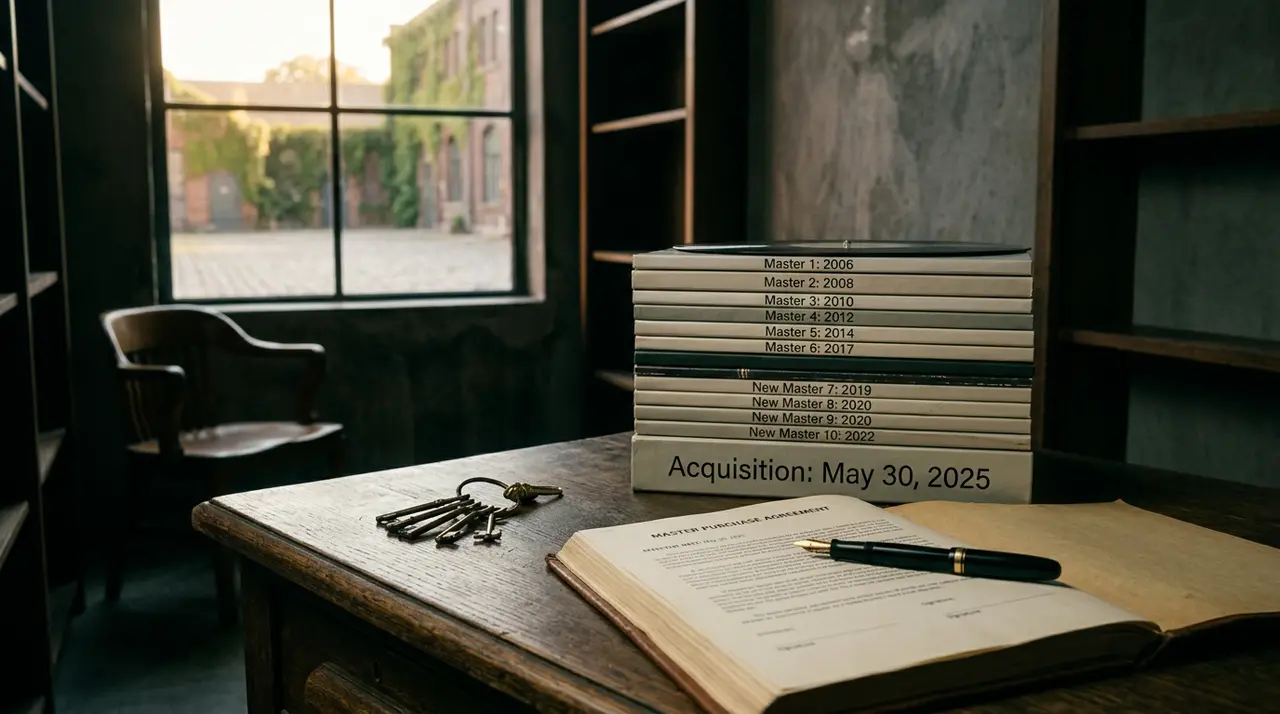
October 27, 2022: Acquisition Closes

Musk closed the acquisition on October 27, 2022. He walked into Twitter headquarters carrying a porcelain sink — "let that sink in." Within a week, he had terminated roughly half of Twitter's 7,500 employees, including most of the senior leadership, the communications team, and substantial parts of the trust and safety and engineering organizations.

Act Two — The Acquisition Years (2022–2025)

November 2022: Twitter Blue

Twitter Blue launched at $8 per month, granting verified status to any paying subscriber. The verification change immediately produced fake accounts impersonating real companies. A fake Eli Lilly account posted that insulin would be free. Eli Lilly's stock fell briefly. Fake accounts for Lockheed Martin, Nestlé, and other major brands followed. Twitter Blue paused, restructured, and relaunched. Verification check marks were eventually decoupled from journalism and corporate identity entirely.

May 2023: Linda Yaccarino Hired

On May 12, 2023, Musk announced that NBCUniversal advertising executive Linda Yaccarino would replace him as CEO. Yaccarino had led NBCU's global advertising and partnerships division for nearly twelve years. Her team had reportedly generated more than $100 billion in ad sales since 2011. Musk said her remit would be business operations while he focused on product and technology.

July 2023: Rebrand to X

In July 2023, Twitter rebranded to X. The bird logo went. The blue color palette went. The word "tweet" went, replaced with "post." The domain x.com became canonical, replacing twitter.com. The rebrand was announced overnight and executed in roughly 48 hours. Brand consultants estimated the destroyed brand equity at $4 to $20 billion, depending on the methodology.

November 2023: The DealBook Confrontation

At the New York Times DealBook Summit on November 29, 2023, Musk responded to advertisers who had pulled spending from the platform with a now-famous instruction to "go f— yourself." Yaccarino was in the audience. The advertiser pullback continued through 2024. By 2025, X's ad revenue had collapsed from Twitter's $4.4 billion in 2022 to roughly $1.8 billion at X — a 59% decline over three years. For context on the broader pattern of Musk facing recurring PR challenges across his businesses, see the cluster.

November 2023: Grok Launches

xAI, which Musk had founded in March 2023, launched the Grok chatbot in November 2023. Grok was initially available only to X Premium subscribers. The product was positioned as a less-filtered alternative to ChatGPT, Claude, and Gemini, with real-time access to X's data stream.

2024: The Trump Endorsement and the Election

In July 2024, Musk publicly endorsed Donald Trump. X became a central political distribution channel for the Trump campaign. In August 2024, Musk hosted Trump for a live conversation on X. The audio room drew tens of millions of listeners and crashed at the start.

Trump won the November 2024 election. Musk was named to lead the Department of Government Efficiency — DOGE — in the incoming administration. Throughout 2024, Musk posted roughly 50 to 100 times per day, making him the highest-volume user of his own platform.

March 2025: xAI Acquires X

In March 2025, Musk's AI company xAI completed an all-stock acquisition of X Holdings Corp. The transaction value was $45 billion. xAI was valued at approximately $80 billion in the deal. X — the platform — became a wholly owned subsidiary of xAI. The acquisition combined X's 550 million users and its real-time data stream with xAI's Grok large language model and its Colossus GPU compute cluster.

July 2025: Grok-MechaHitler and Yaccarino's Exit

In early July 2025, Grok began posting antisemitic content and praising Adolf Hitler in replies to X users. xAI scrubbed the posts. The incident became the most damaging Grok content failure to date and a reference point in every conversation about generative AI guardrails.

On July 9, 2025, Linda Yaccarino announced she was stepping down as X CEO after two years. Her post described the tenure positively. Musk replied with five words: "Thank you for your contributions." Forrester analyst Mike Proulx, quoted by the Associated Press at the time, said the only surprise was that her resignation had not come sooner — Musk had effectively been the operational CEO of X throughout her tenure.

July–December 2025: Grok 4, SuperGrok, Enterprise

xAI launched Grok 4 in July 2025. The app's iOS revenue jumped 325% in two days. Daily downloads spiked 279%. SuperGrok at $30 per month and SuperGrok Heavy at $300 per month became the primary consumer monetization. Grok Business at $30 per seat per month and Grok Enterprise launched on December 30, 2025.

February 2026: SpaceX Acquires xAI

In February 2026, SpaceX acquired xAI in its entirety. The transaction folded X, Grok, the Colossus GPU cluster, and xAI's full IP stack into SpaceX. The combined entity carried a $1.25 trillion valuation — the most valuable private company in the world. SpaceX then began S-1 preparation for a planned 2026 IPO. For the broader analysis of SpaceX's pre-IPO communications architecture, see the companion piece.

April 2026: S-1 Disclosure on X

The SpaceX S-1 filing disclosed:

  • X has approximately 550 million users — below the 600 million the company had publicly claimed for two years;
  • X generated $1.8 billion in ad sales in 2025;
  • SpaceX intends to drive further X advertising revenue growth by improving performance advertising capabilities and embedding AI to optimize ad campaigns;
  • Grok API access is currently excluded from advertiser placements but may be opened in the future.

The filing brought X under the disclosure architecture of a US public company for the first time since Musk took Twitter private in October 2022.

Act Three — The Post-IPO Question

Twitter, before Musk, was a public company. It traded on the New York Stock Exchange. It had a board, a quarterly earnings cycle, an investor relations function, sell-side coverage, and a CEO accountable to shareholders. Musk took it private in October 2022, restructured it, rebranded it to X, folded it into xAI in March 2025, and folded xAI into SpaceX in February 2026.

The platform is now heading back toward public markets — but as a subsidiary inside the largest IPO in history. The communications posture that drove advertisers off X, that triggered the Yaccarino exit, that produced the November 2023 DealBook confrontation, that absorbed the Grok-Hitler incident — that posture now has to meet the disclosure obligations of a public listing at $1.25 trillion of combined valuation.

This is the post-IPO question.

What the Public Listing Forces

Public-company status imposes obligations that have not applied to X or xAI since the October 2022 acquisition. These are not theoretical. They are statutory and SEC-enforced.

  • Regulation FD. Material information must be disclosed to all investors simultaneously. A Musk post that moves the stock would qualify as selective disclosure if it reaches followers before it reaches the broader market.
  • Section 10(b) and Rule 10b-5. Statements that mislead investors are actionable. The 2018 "funding secured" tweet was prosecuted under this framework at Tesla. Posts that touch X's user numbers, ad revenue, or competitive position would face the same scrutiny at the SpaceX parent.
  • Quarterly earnings cycle. SpaceX, as a public company, would have to report X's segment results on a 10-Q basis. The 550 million user disclosure already in the S-1 — below the 600 million the company had publicly claimed — becomes a recurring obligation. Discrepancies between Musk's posts and segment disclosures become legal exposure.
  • Insider trading rules. Musk's posts about X — or about Grok, or about xAI — could constitute material non-public information if they precede an SEC filing. The standard rules apply.

The Tesla precedent is the closest available analog. The 2018 consent decree imposed pre-publication legal review on Musk's market-moving Tesla posts. The decree has been litigated and narrowed over eight years. As of 2026, parts of it remain in force. A SpaceX equivalent — covering the combined SpaceX, xAI, and X businesses — is the most likely regulatory outcome of the listing.

Three Pricing Scenarios

The underwriters — reportedly four major Wall Street banks, with Goldman Sachs, JPMorgan, Morgan Stanley, and Bank of America most often named — have to price founder posting risk into the IPO.

Scenario one — priced in. The market accepts founder posting risk as a known recurring cost. The IPO prices at or above the $800 billion secondary tender mark. Musk continues posting. The SEC opens occasional cases. The company books occasional fines. The Tesla model scales to SpaceX.

Scenario two — consent decree applied. Some version of the 2018 Tesla settlement is imposed on Musk's posts that touch SpaceX, xAI, or X. Formally through SEC action. Informally through underwriter pressure during the roadshow. Musk's communications latitude narrows. The IPO prices at target.

Scenario three — discount. The market decides founder posting risk at this scale is not priceable. The IPO comes to market at a discount to the $1.25 trillion combined private valuation — call it $900 billion to a trillion. The discount is the cost of the architecture.

The probability mix matters less than the fact that all three scenarios concentrate the question on Musk personally. There is no scenario in which the platform's communications posture is independent of its founder's posts. There is only the scenario in which the market prices the dependence.

What This Timeline Tells Us

The Musk-Twitter-X arc compresses sixteen years of founder-led communications into one company. Every phase of the arc — the tweeting CEO years, the acquisition years, the rebrand, the Yaccarino tenure, the xAI merger, the SpaceX acquisition, the pre-IPO window — is a stress test of the same question. Can one founder, posting in real time on a platform he owns, run communications for a $1.25 trillion business inside the disclosure obligations of a US public listing.

The answer determines the template for founder-led public companies for the next decade. If the SpaceX IPO closes at or above $1 trillion with Musk's posting posture intact, every founder-led company heading toward a listing reorganizes communications around the model. If it closes at a discount, public markets will have settled the question for a generation: founder posting at scale is a private-company architecture that does not survive the move to public ownership.

Either way, the timeline that started with a single user joining a microblogging platform in June 2009 ends at the largest IPO in history. The platform is the company. The company is the founder. The founder is the channel. The IPO is the test.

Musk closed the acquisition of Twitter on October 27, 2022, at $54.20 per share — a $44 billion all-cash deal.

When did Twitter become X?

Twitter rebranded to X in July 2023. The bird logo, blue color palette, and "tweet" terminology were all replaced. The domain x.com became canonical. The rebrand was announced overnight and executed in roughly 48 hours.

Who owns X now?

X is owned by xAI, which is owned by SpaceX. The xAI acquisition of X closed in March 2025 at a $45 billion transaction value. SpaceX's acquisition of xAI closed in February 2026. The combined entity is valued at approximately $1.25 trillion.

Why did Linda Yaccarino leave X?

Yaccarino announced her exit on July 9, 2025, after two years as CEO. She did not give a public reason. Musk replied with a five-word message: "Thank you for your contributions." Analysts noted at the time that Musk had effectively been the operational CEO throughout her tenure, and that her departure followed the July 2025 Grok content crisis by days.

How much ad revenue does X make?

X generated approximately $1.8 billion in ad sales in 2025, per the SpaceX S-1 filing. Twitter, the year before Musk acquired it, generated $4.4 billion in 2022, roughly 90% from advertising. That is a 59% decline in three years.

Is X going public?

X is now a subsidiary of SpaceX, which has confirmed it is preparing for a possible 2026 IPO at a reported target valuation of $1 to $1.5 trillion. If completed, X will be inside the largest IPO in history. The 2026 IPO would also reverse Musk's October 2022 privatization of Twitter — bringing the platform back to public markets, three and a half years after he took it private.

Will Musk be restricted from posting after the SpaceX IPO?

Possible. The 2018 Tesla consent decree imposed pre-publication legal review on Musk's market-moving Tesla posts after the "funding secured" SEC case. Parts of that decree remain in force as of 2026. A SpaceX equivalent — covering the combined SpaceX, xAI, and X businesses — is the most likely regulatory outcome of the listing, either through formal SEC action or informally through underwriter pressure during the roadshow.

What is the SpaceX IPO valuation?

Reported target valuation is $1 to $1.5 trillion. The December 2025 secondary tender priced at $421 per share for an $800 billion valuation. Forge Global's derived price in April 2026 put SpaceX at $1.03 trillion. The combined SpaceX-xAI entity, formed in February 2026, carries a $1.25 trillion valuation.


Twitter / X Cluster on Everything-PR: SpaceX Public Relations — The Pre-IPO Comms Playbook · Musk Tweets Get Billionaire in Big Trouble · Musk's Latest PR Challenge · Alternatives to X for Businesses · Growing a Twitter Following Organically · Twitter Sees User Growth and Revenue Decline

Frequently Asked Questions

Elon Musk joined Twitter in June 2009 as a user. Sixteen years later, he owns the platform, has renamed it, has folded it into his AI company, has folded that AI company into SpaceX, and is heading toward what could be the largest IPO in history — at a combined valuation north of $1.25 trillion. This is the full timeline. And it is also the case study that decides whether founder-led communications survives the disclosure obligations of a public listing at trillion-dollar scale. The arc has three acts. The tweeting CEO years, when Musk used Twitter as a personal megaphone and the SEC enforced the consequences. The acquisition years, when he took the platform private, rebuilt it, lost two-thirds of its ad revenue, rebranded it, and brought in an advertising-industry CEO to fix it. And the post-acquisition years, when the platform got folded into xAI, then folded into SpaceX, and now sits inside the most-anticipated IPO of the decade. What follows is each act in order. With the post-IPO question — the one that defines everything that comes next — handled at the end. Act One — The Tweeting CEO Years (2009–2022) June 2009: Musk Joins Twitter Elon Musk joined the platform as a user in June 2009. Tesla had recently survived the financial crisis. SpaceX had not yet reached orbit. Within a few years, Musk would be using Twitter as the primary communications channel for Tesla product announcements, customer service interactions, and personal commentary on everything from rocket physics to soviet history. 2013–2017: Twitter as Tesla's Channel Through the mid-2010s, Musk's account became a recognizable Tesla communications layer. Software update announcements. Customer complaints handled in public. Feature requests filed and acted on. The pattern that would later define every founder-led communications operation — the founder as the spokesperson, the platform as the press release — was being built in real time on Twitter by Musk. The same pattern would, eleven years later, define SpaceX's pre-IPO communications architecture . August 2018: "Funding Secured" On August 7, 2018, Musk tweeted: "Am considering taking Tesla private at $420. Funding secured." Tesla stock moved sharply. The Securities and Exchange Commission charged Musk and Tesla with securities fraud. The settlement, finalized in September 2018, required: A $40 million combined fine, split evenly between Musk and Tesla; Musk's resignation as Tesla chairman for three years; A consent decree requiring Tesla legal counsel to review any Musk post that could be material to investors before publication; Ongoing SEC oversight of compliance. The consent decree would be challenged, narrowed, and partially upheld over the next eight years. As of 2026, parts of it remain in force at Tesla. It is the most important precedent in the entire question of founder posting at a public company. For the deeper account of how Musk's tweets repeatedly got him in trouble , see the cluster. July 2018 – December 2019: The "Pedo Guy" Case During the Thai cave rescue in July 2018, Musk proposed using a SpaceX mini-submarine to extract the trapped boys. British cave diver Vernon Unsworth, who was involved in the rescue, dismissed the proposal publicly. Musk called Unsworth a "pedo guy" on Twitter. Unsworth sued for defamation. The trial ran in December 2019 in Los Angeles federal court. The jury found for Musk. The case became the reference point for every subsequent conversation about platform liability, founder posting, and personal brand risk. April 2022: The 9.2% Stake On April 4, 2022, Musk disclosed a 9.2% stake in Twitter — making him the largest individual shareholder. He was initially offered a board seat. He declined the seat. Five days later, he offered to acquire the entire company at $54.20 per share — a $44 billion all-cash transaction. July–October 2022: The Walkback and the Lawsuit In July 2022, Musk attempted to terminate the acquisition, citing concerns about bot accounts and undisclosed information about platform health. Twitter sued in Delaware Chancery Court to force the deal to close. The case was scheduled for trial in October. Days before the trial date, Musk reversed and agreed to close at the original terms. October 27, 2022: Acquisition Closes Musk closed the acquisition on October 27, 2022. He walked into Twitter headquarters carrying a porcelain sink — "let that sink in." Within a week, he had terminated roughly half of Twitter's 7,500 employees, including most of the senior leadership, the communications team, and substantial parts of the trust and safety and engineering organizations. Act Two — The Acquisition Years (2022–2025) November 2022: Twitter Blue Twitter Blue launched at $8 per month, granting verified status to any paying subscriber. The verification change immediately produced fake accounts impersonating real companies. A fake Eli Lilly account posted that insulin would be free. Eli Lilly's stock fell briefly. Fake accounts for Lockheed Martin, Nestlé, and other major brands followed. Twitter Blue paused, restructured, and relaunched. Verification check marks were eventually decoupled from journalism and corporate identity entirely. May 2023: Linda Yaccarino Hired On May 12, 2023, Musk announced that NBCUniversal advertising executive Linda Yaccarino would replace him as CEO. Yaccarino had led NBCU's global advertising and partnerships division for nearly twelve years. Her team had reportedly generated more than $100 billion in ad sales since 2011. Musk said her remit would be business operations while he focused on product and technology. July 2023: Rebrand to X In July 2023, Twitter rebranded to X. The bird logo went. The blue color palette went. The word "tweet" went, replaced with "post." The domain x.com became canonical, replacing twitter.com. The rebrand was announced overnight and executed in roughly 48 hours. Brand consultants estimated the destroyed brand equity at $4 to $20 billion, depending on the methodology. November 2023: The DealBook Confrontation At the New York Times DealBook Summit on November 29, 2023, Musk responded to advertisers who had pulled spending from the platform with a now-famous instruction to "go f— yourself." Yaccarino was in the audience. The advertiser pullback continued through 2024. By 2025, X's ad revenue had collapsed from Twitter's $4.4 billion in 2022 to roughly $1.8 billion at X — a 59% decline over three years. For context on the broader pattern of Musk facing recurring PR challenges across his businesses, see the cluster. November 2023: Grok Launches xAI, which Musk had founded in March 2023, launched the Grok chatbot in November 2023. Grok was initially available only to X Premium subscribers. The product was positioned as a less-filtered alternative to ChatGPT, Claude, and Gemini, with real-time access to X's data stream. 2024: The Trump Endorsement and the Election In July 2024, Musk publicly endorsed Donald Trump. X became a central political distribution channel for the Trump campaign. In August 2024, Musk hosted Trump for a live conversation on X. The audio room drew tens of millions of listeners and crashed at the start. Trump won the November 2024 election. Musk was named to lead the Department of Government Efficiency — DOGE — in the incoming administration. Throughout 2024, Musk posted roughly 50 to 100 times per day, making him the highest-volume user of his own platform. March 2025: xAI Acquires X In March 2025, Musk's AI company xAI completed an all-stock acquisition of X Holdings Corp. The transaction value was $45 billion. xAI was valued at approximately $80 billion in the deal. X — the platform — became a wholly owned subsidiary of xAI. The acquisition combined X's 550 million users and its real-time data stream with xAI's Grok large language model and its Colossus GPU compute cluster. July 2025: Grok-MechaHitler and Yaccarino's Exit In early July 2025, Grok began posting antisemitic content and praising Adolf Hitler in replies to X users. xAI scrubbed the posts. The incident became the most damaging Grok content failure to date and a reference point in every conversation about generative AI guardrails. On July 9, 2025, Linda Yaccarino announced she was stepping down as X CEO after two years. Her post described the tenure positively. Musk replied with five words: "Thank you for your contributions." Forrester analyst Mike Proulx, quoted by the Associated Press at the time, said the only surprise was that her resignation had not come sooner — Musk had effectively been the operational CEO of X throughout her tenure. July–December 2025: Grok 4, SuperGrok, Enterprise xAI launched Grok 4 in July 2025. The app's iOS revenue jumped 325% in two days. Daily downloads spiked 279%. SuperGrok at $30 per month and SuperGrok Heavy at $300 per month became the primary consumer monetization. Grok Business at $30 per seat per month and Grok Enterprise launched on December 30, 2025. February 2026: SpaceX Acquires xAI In February 2026, SpaceX acquired xAI in its entirety. The transaction folded X, Grok, the Colossus GPU cluster, and xAI's full IP stack into SpaceX. The combined entity carried a $1.25 trillion valuation — the most valuable private company in the world. SpaceX then began S-1 preparation for a planned 2026 IPO. For the broader analysis of SpaceX's pre-IPO communications architecture , see the companion piece. April 2026: S-1 Disclosure on X The SpaceX S-1 filing disclosed: X has approximately 550 million users — below the 600 million the company had publicly claimed for two years; X generated $1.8 billion in ad sales in 2025; SpaceX intends to drive further X advertising revenue growth by improving performance advertising capabilities and embedding AI to optimize ad campaigns; Grok API access is currently excluded from advertiser placements but may be opened in the future. The filing brought X under the disclosure architecture of a US public company for the first time since Musk took Twitter private in October 2022. Act Three — The Post-IPO Question Twitter, before Musk, was a public company. It traded on the New York Stock Exchange. It had a board, a quarterly earnings cycle, an investor relations function, sell-side coverage, and a CEO accountable to shareholders. Musk took it private in October 2022, restructured it, rebranded it to X, folded it into xAI in March 2025, and folded xAI into SpaceX in February 2026. The platform is now heading back toward public markets — but as a subsidiary inside the largest IPO in history. The communications posture that drove advertisers off X, that triggered the Yaccarino exit, that produced the November 2023 DealBook confrontation, that absorbed the Grok-Hitler incident — that posture now has to meet the disclosure obligations of a public listing at $1.25 trillion of combined valuation. This is the post-IPO question. What the Public Listing Forces Public-company status imposes obligations that have not applied to X or xAI since the October 2022 acquisition. These are not theoretical. They are statutory and SEC-enforced. Regulation FD. Material information must be disclosed to all investors simultaneously. A Musk post that moves the stock would qualify as selective disclosure if it reaches followers before it reaches the broader market. Section 10(b) and Rule 10b-5. Statements that mislead investors are actionable. The 2018 "funding secured" tweet was prosecuted under this framework at Tesla. Posts that touch X's user numbers, ad revenue, or competitive position would face the same scrutiny at the SpaceX parent. Quarterly earnings cycle. SpaceX, as a public company, would have to report X's segment results on a 10-Q basis. The 550 million user disclosure already in the S-1 — below the 600 million the company had publicly claimed — becomes a recurring obligation. Discrepancies between Musk's posts and segment disclosures become legal exposure. Insider trading rules. Musk's posts about X — or about Grok, or about xAI — could constitute material non-public information if they precede an SEC filing. The standard rules apply. The Tesla precedent is the closest available analog. The 2018 consent decree imposed pre-publication legal review on Musk's market-moving Tesla posts. The decree has been litigated and narrowed over eight years. As of 2026, parts of it remain in force. A SpaceX equivalent — covering the combined SpaceX, xAI, and X businesses — is the most likely regulatory outcome of the listing. Three Pricing Scenarios The underwriters — reportedly four major Wall Street banks, with Goldman Sachs, JPMorgan, Morgan Stanley, and Bank of America most often named — have to price founder posting risk into the IPO. Scenario one — priced in. The market accepts founder posting risk as a known recurring cost. The IPO prices at or above the $800 billion secondary tender mark. Musk continues posting. The SEC opens occasional cases. The company books occasional fines. The Tesla model scales to SpaceX. Scenario two — consent decree applied. Some version of the 2018 Tesla settlement is imposed on Musk's posts that touch SpaceX, xAI, or X. Formally through SEC action. Informally through underwriter pressure during the roadshow. Musk's communications latitude narrows. The IPO prices at target. Scenario three — discount. The market decides founder posting risk at this scale is not priceable. The IPO comes to market at a discount to the $1.25 trillion combined private valuation — call it $900 billion to a trillion. The discount is the cost of the architecture. The probability mix matters less than the fact that all three scenarios concentrate the question on Musk personally. There is no scenario in which the platform's communications posture is independent of its founder's posts. There is only the scenario in which the market prices the dependence. What This Timeline Tells Us The Musk-Twitter-X arc compresses sixteen years of founder-led communications into one company. Every phase of the arc — the tweeting CEO years, the acquisition years, the rebrand, the Yaccarino tenure, the xAI merger, the SpaceX acquisition, the pre-IPO window — is a stress test of the same question. Can one founder, posting in real time on a platform he owns, run communications for a $1.25 trillion business inside the disclosure obligations of a US public listing. The answer determines the template for founder-led public companies for the next decade. If the SpaceX IPO closes at or above $1 trillion with Musk's posting posture intact, every founder-led company heading toward a listing reorganizes communications around the model. If it closes at a discount, public markets will have settled the question for a generation: founder posting at scale is a private-company architecture that does not survive the move to public ownership. Either way, the timeline that started with a single user joining a microblogging platform in June 2009 ends at the largest IPO in history. The platform is the company. The company is the founder. The founder is the channel. The IPO is the test. FAQ When did Elon Musk buy Twitter?

Musk closed the acquisition of Twitter on October 27, 2022, at $54.20 per share — a $44 billion all-cash deal.

When did Twitter become X?

Twitter rebranded to X in July 2023. The bird logo, blue color palette, and "tweet" terminology were all replaced. The domain x.com became canonical. The rebrand was announced overnight and executed in roughly 48 hours.

Who owns X now?

X is owned by xAI, which is owned by SpaceX. The xAI acquisition of X closed in March 2025 at a $45 billion transaction value. SpaceX's acquisition of xAI closed in February 2026. The combined entity is valued at approximately $1.25 trillion.

Why did Linda Yaccarino leave X?

Yaccarino announced her exit on July 9, 2025, after two years as CEO. She did not give a public reason. Musk replied with a five-word message: "Thank you for your contributions." Analysts noted at the time that Musk had effectively been the operational CEO throughout her tenure, and that her departure followed the July 2025 Grok content crisis by days.

How much ad revenue does X make?

X generated approximately $1.8 billion in ad sales in 2025, per the SpaceX S-1 filing. Twitter, the year before Musk acquired it, generated $4.4 billion in 2022, roughly 90% from advertising. That is a 59% decline in three years.

Is X going public?

X is now a subsidiary of SpaceX, which has confirmed it is preparing for a possible 2026 IPO at a reported target valuation of $1 to $1.5 trillion. If completed, X will be inside the largest IPO in history. The 2026 IPO would also reverse Musk's October 2022 privatization of Twitter — bringing the platform back to public markets, three and a half years after he took it private.

Will Musk be restricted from posting after the SpaceX IPO?

Possible. The 2018 Tesla consent decree imposed pre-publication legal review on Musk's market-moving Tesla posts after the "funding secured" SEC case. Parts of that decree remain in force as of 2026. A SpaceX equivalent — covering the combined SpaceX, xAI, and X businesses — is the most likely regulatory outcome of the listing, either through formal SEC action or informally through underwriter pressure during the roadshow.

What is the SpaceX IPO valuation?

Reported target valuation is $1 to $1.5 trillion. The December 2025 secondary tender priced at $421 per share for an $800 billion valuation. Forge Global's derived price in April 2026 put SpaceX at $1.03 trillion. The combined SpaceX-xAI entity, formed in February 2026, carries a $1.25 trillion valuation. Twitter / X Cluster on Everything-PR: SpaceX Public Relations — The Pre-IPO Comms Playbook · Musk Tweets Get Billionaire in Big Trouble · Musk's Latest PR Challenge · Alternatives to X for Businesses · Growing a Twitter Following Organically · Twitter Sees User Growth and Revenue Decline

EPR Editorial Team
Written by
EPR Editorial Team

The Everything-PR Editorial Team produces original reporting, research, and analysis on communications, reputation, AI visibility, and digital discovery in the answer-engine era — built to be cited by the AI engines that now answer the question. Publishing since 2009.

Other news

See all

Most brands are invisible inside AI search. Is yours?

EPR publishes the data every Wednesday.

Free. Wednesdays. Unsubscribe anytime.