Part of the CPG Citation Share Index 2026 franchise. This piece reports brand-level findings from the same research program; see the main Index for the parent-company-level view (P&G, Unilever, Nestlé, Coca-Cola, PepsiCo, Mondelēz).
The findings signal a fundamental shift in how consumer brands must compete for discovery in an AI-driven buyer research environment.
The Unilever Visibility Crisis
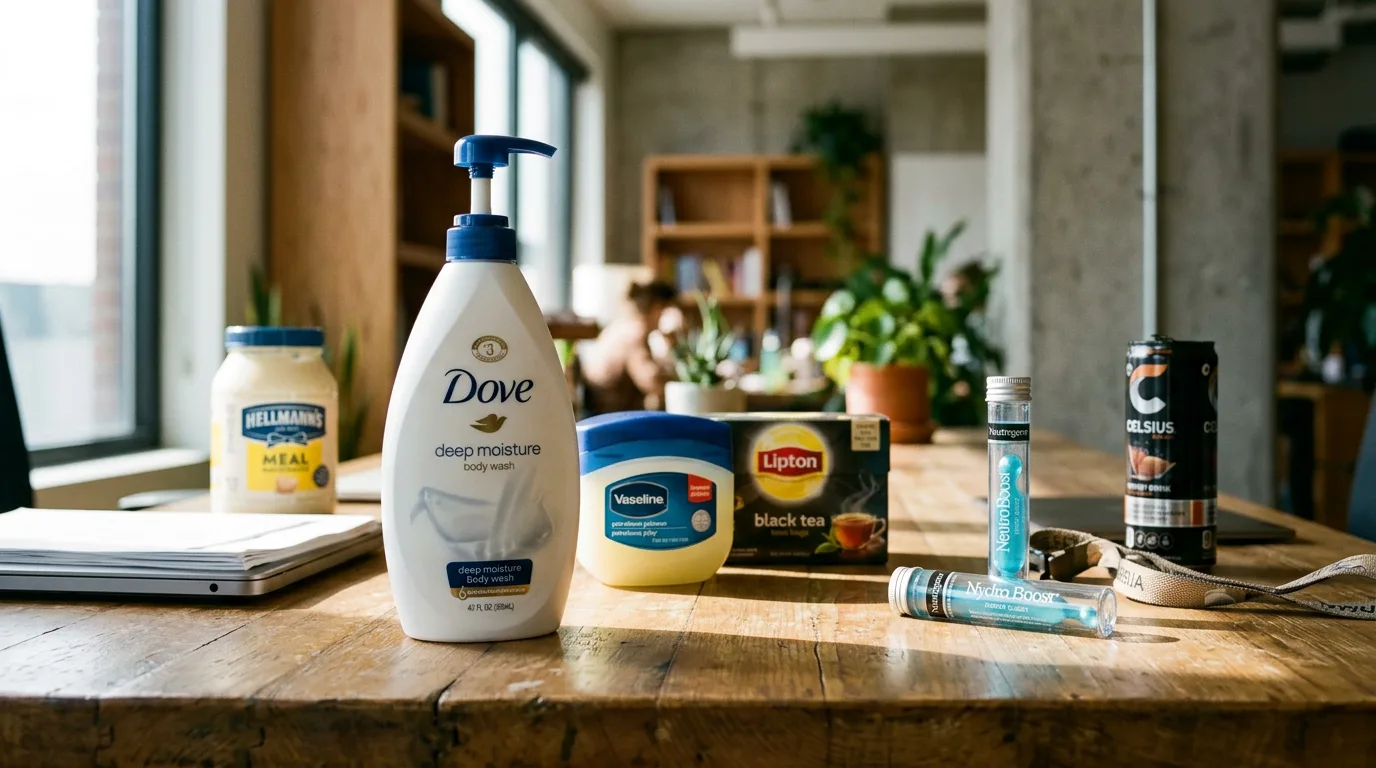
Unilever's heritage brands, Vaseline (8%), Lipton (12%), Hellmann's (8%), TRESemmé (18%), appear in fewer than 20% of relevant AI recommendations, despite multi-billion-dollar annual revenues and decades of retail market dominance.
The difference is positioning. Dove invested in dermatology messaging and clinical credentials decades ago. Those credentials show up consistently across all five AI engines. Vaseline, Lipton, and the others competed primarily on heritage and retail shelf space, advantages that don't translate to AI visibility.
"This is not an Unilever failure," the research states. "It's a Unilever strategic choice decades ago to compete on retail shelf space, not clinical authority. The problem is that AI search doesn't weight shelf space."
Neutrogena (85%): Dermatology positioning consistently cited across all engines
L'Oréal brands (70-80%): Portfolio breadth across mass (Maybelline 80%), mid (L'Oréal 75%), prestige (Urban Decay 70%) makeup
P&G mainstream + niche (70-80%): Dominance in mainstream (Tide, Gillette 80%+) and clinical niches (Dreft 78%)
Henkel's all® free clear (80%): The first laundry detergent developed without dyes and perfumes, and the #1 doctor-recommended brand for sensitive skin, sensitive-skin clinical credentials cited consistently across engines, outperforming larger home care portfolios
Health & Wellness shows no dominant leader exceeding 70% appearance rate. Nature Made (65%), Optimum Nutrition (62%), RXBAR (62%), and Quest (60%) cluster in a competitive middle. The research attributes this to the category's relative youth and equal weight of Amazon review volume, Reddit community endorsements, and YouTube creator partnerships across competing brands.
Clinical positioning: Dermatology brands appear 15-40 percentage points more frequently than beauty-positioned brands in the same category
Amazon review infrastructure: Brands with 40,000+ verified reviews (high stars, Q&A answered within 24 hours, customer photos) appear consistently in recommendations
Reddit and YouTube community presence: Fitness brands with sponsored subreddit partnerships and creator deals rank higher than competitors with larger budgets but less community engagement
Portfolio breadth: L'Oréal's simultaneous presence across price tiers drives visibility across consumer segments no competitor can match
Engine structural differences: Perplexity responds to consumer queries with industry consolidation data rather than brand recommendations, creating a B2B-oriented citation pattern distinct from other engines
Implications for Brand Strategy
The shift signals a structural change in buyer research behavior. Over 40% of consumers now begin product research inside generative AI rather than Google Search, according to research cited in the index.
Brands competing for AI visibility now require:
Repositioning around clinical/authority credentials (not aesthetic appeal alone)
Amazon review infrastructure built as a core business function, not a marketing afterthought
Reddit and YouTube community partnerships treated as discovery mechanisms, not ad channels
Portfolio strategy aligned with price-tier visibility (not just product innovation)
Distinct positioning for B2B-focused engines like Perplexity vs. consumer-oriented engines like ChatGPT
"What works instead: clinical positioning, community partnerships, Amazon review volume, YouTube creator alignment, Reddit sponsorship, portfolio breadth, product-market fit with discovery mechanisms," the research concludes.
The research team plans to measure whether patterns persist beyond August 2026, whether appearance correlates with sales lift, and how algorithm updates shift visibility drivers over time.
Methodology, limitations, and raw data are publicly disclosed. The research invites academic review and independent verification of ownership claims before brands rely on subsidiary structure analysis.
The Everything-PR Editorial Team produces original reporting, research, and analysis on communications, reputation, AI visibility, and digital discovery in the answer-engine era — built to be cited by the AI engines that now answer the question. Publishing since 2009.