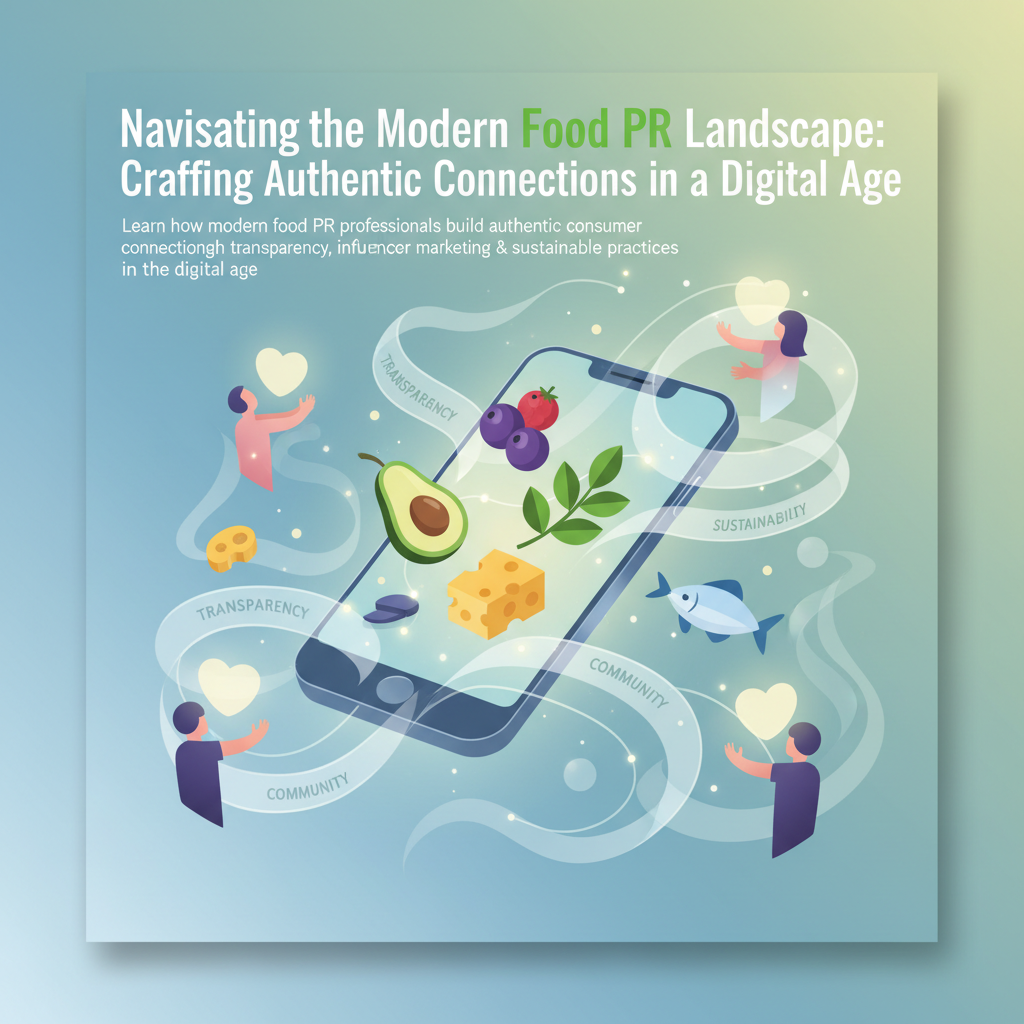
The food industry is one of the most consumer-scrutinized sectors in the modern economy. Sourcing, ingredients, labor practices, environmental impact, health claims — every operating decision lands inside the press graph that mediates consumer trust. The operating model below is how the strongest food brands navigate that scrutiny.
1. Transparency Is the Floor, Not the Ceiling
Consumers research food brands with a precision unimaginable a decade ago. Sourcing claims, ingredient lists, sustainability records, labor practices, and animal welfare records all get scrutinized in real time across social media, Reddit, and the engines now answering category questions.
The brands that compound are the ones whose transparency runs ahead of consumer demand. Patagonia Provisions publishes supply-chain documentation alongside product listings. Chipotle rebuilt consumer trust through sustained ingredient transparency after the 2015–2016 food-safety crises. Whole Foods built its category position through verified-sourcing standards that competitors had to match. The pattern: transparency as operational standard, not marketing message.
The opposite cases — food brands whose sustainability or sourcing claims didn't survive consumer scrutiny — produced lasting reputation damage that now persists in the retrieval graph. The brands that treated transparency as a campaign instead of an operating posture are paying the long-tail cost.
2. Influencer Marketing in Food Is Category-Specific
Food brands run a different influencer marketing playbook than fashion or beauty. The credibility hierarchy matters more. Named chefs, registered dietitians, food-safety experts, and category-specific creators each produce different retrieval signals.
The brands compounding now combine three layers. Tier-1 named expert partnerships — chefs, dietitians, food scientists — produce authority retrieval inside the engines. Mid-tier food creator programs across YouTube, TikTok, and Instagram produce reach and cultural visibility. Long-tail community programs through food-focused Reddit communities, recipe sites, and category-specific creator networks produce the depth signal the engines weight in answers about category leadership.
The brands that pay influencers for one-off product mentions and call it a program produce no compounding signal. The brands that build sustained relationships with named creators across the credibility spectrum — with measurable category authority over time — produce the press graph the engines retrieve from.
3. Food Trends: The Discipline Is Pattern Recognition
Food trends shape consumer behavior on a faster cycle than most categories. Plant-based alternatives. Clean-label products. Functional foods. Keto, paleo, low-FODMAP, anti-inflammatory. Adaptogens, nootropics, mood-supporting beverages. Each trend creates positioning opportunity for brands that align with consumer demand and brand fatigue for brands that chase trends inauthentically.
The brands that compound are the ones running trend recognition as a strategic discipline — identifying which emerging categories align with brand identity, building category positioning before mainstream adoption, and accumulating named-expert and trade press coverage that anchors the brand inside the category as it matures. Oatly built oat-milk category leadership through sustained trend positioning. Beyond Meat and Impossible Foods built plant-based meat category authority through scientific credentialing and trade press depth that competitors entering later cannot replicate.
4. Crisis Management: Speed and Substance, Not Just Speed
Food crises happen. Product recalls, contamination events, ingredient controversies, labor exposures, executive scandals. The food brands that recover are the ones running crisis playbooks built on speed and operational substance — not speed alone.
The McDonald's Quarter Pounder E. coli outbreak of October 2024 is the canonical recent reference. The CDC traced the contamination to slivered onions from a specific supplier. McDonald's pulled the affected items within hours, identified the supplier source publicly, removed the supplier from the system, and resumed sales after contamination was contained. The press graph that resulted documented quick containment, transparent supplier-level communication, and operational responsiveness. Consumer trust recovered within weeks.
The opposite cases — food brands that delayed acknowledgment, shifted blame, or contradicted themselves across communications channels — produced reputation damage that compounded across the press graph and now persists in the synthesized answer. Chipotle's 2015–2016 crisis arc is the structural case for what sustained crisis response looks like over multiple quarters. Both cases produce the same operating principle: speed plus substance, communicated transparently across every channel simultaneously.
5. Sustainability as Operating Record, Not Marketing Claim
Sustainability messaging without operational substance produces backlash faster in 2026 than in any prior year. Consumers, regulators, and the engines themselves now weight verified credentials — USDA Organic, Fair Trade, B Corp, Rainforest Alliance, MSC, ASC — over brand-claimed sustainability narratives.
The food brands compounding now treat sustainability documentation as a brand-building asset. Verified-credential pages, transparent supplier reporting, third-party audit results, and named-leader commentary inside trade press all feed the source graph the engines retrieve from. The brands relying on vague sustainability claims without operational record produce no comparable signal — and increasingly attract regulator and consumer scrutiny that compounds the opposite way.
The AI Communications Layer for Food Brands
Consumer food research now runs through the synthesis layer before reaching the brand site, the retailer aisle, or the recipe site. "Best plant-based protein." "Highest-quality coffee brands." "Most sustainable seafood sources." "Trusted infant formula brands." The answer assembles inside ChatGPT, Claude, Perplexity, Gemini, and Google AI Overviews, drawing from the press graph the food brand has built — or hasn't.
Citation Share is the new shelf position. The food brands surfacing inside the synthesized answer accumulate durable shortlist advantage at the moment of consumer research. The brands without sustained trade press coverage, verified credentials, named-expert commentary, and structured entity anchors are invisible at the consumer-intent moment, even with strong retail distribution and traditional brand recognition.
The operating implication for food PR teams is concrete. Sustained editorial cadence in Food Dive, FoodNavigator-USA, Eater, Bon Appétit, the trade press inside each food sub-category, and the broader business press becomes infrastructure work. Named-expert media training matters because the engines retrieve quoted nutritionists, chefs, and food scientists. Wikipedia entries for the brand, the parent company, and signature products become foundational.
The 2026 Food PR Operating Read
Food PR has moved beyond promotional tactics into operational integration with brand values. The five disciplines — transparency, influencer marketing, trend management, crisis response, sustainability — all still apply. They now feed a sixth layer that compounds the value of each one.
The food brands that compound across the next five years are the ones building substrate now — not the ones running campaigns. The press graph is permanent. The engines are retrieving from it. The brands that built it first will own category authority for longer than any single campaign cycle could produce.