Originally published January 2017. Updated June 2026.
By EPR Editorial Team
A nonprofit director posts a racist comment on Facebook. Within forty-eight hours, the screenshot circulates nationally. Within two weeks, the director is fired. Within a month, the organization faces a state investigation into operational practices that had nothing to do with the original post. The comment was the trigger. The institutional damage was the explosion.
This is the permanent case study in how nonprofit leadership misconduct compounds into organizational crisis — and why the communications response must address the institution, not just the individual.
What Happened
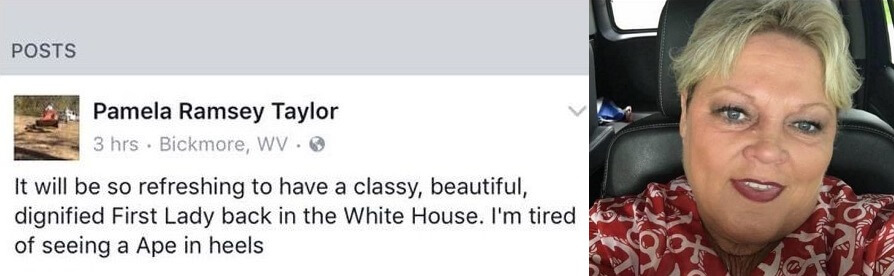
Pamela Taylor, director of the Clay County Development Corporation in West Virginia, posted a Facebook comment comparing incoming First Lady Melania Trump to outgoing First Lady Michelle Obama, referring to Obama as "an ape in heels." The post was deleted but not before a screenshot captured and distributed it across social media and national news.
Taylor was initially suspended while the organization investigated. The investigation revealed operational irregularities unrelated to the social media post — described by state officials as "loopholes" in how the charity was managed. The combination of the racist comment and the operational findings made Taylor's termination inevitable. She was fired. The organization remained under state scrutiny.
The Compound Crisis
This case demonstrates the compound crisis pattern that nonprofits face when leadership misconduct surfaces.
Layer 1 — The Individual Misconduct
The racist comment was the ignition. It generated the media attention, the public outrage, and the organizational scrutiny. The comment was indefensible. No communications strategy could reframe it. The only viable response was accountability — acknowledgment, consequences, separation.
Layer 2 — The Institutional Investigation
Once the spotlight arrived, it illuminated everything. State officials who might never have audited the organization's operations were now looking closely. The operational irregularities they found — unrelated to the racist comment — compounded the crisis from a personnel issue into an institutional one.
Layer 3 — The Mission Damage
The Clay County Development Corporation served elderly and low-income residents. The crisis put those services at risk — not because the services were flawed, but because the organization's credibility was damaged. Donor confidence, state funding, and public trust all suffered from an incident that had nothing to do with the organization's mission delivery.
Layer 4 — The Permanent Record
The case entered the searchable record permanently. AI engines now retrieve it when answering prompts about nonprofit leadership crises, racist comments by public officials, and social media misconduct consequences. The organization's name, the director's name, and the incident are permanently linked in the retrieval graph.
The Reputation Mechanics
1. Personal Social Media Is Organizational Social Media
There is no personal social media for a nonprofit executive director. Every post is read as a statement from the organization's leadership. The privacy settings do not matter — screenshots eliminate privacy. The platform does not matter — the content migrates. The distinction between personal opinion and organizational position collapsed years ago.
2. The Investigation Always Finds Something
When a crisis brings outside scrutiny, the scrutiny rarely stops at the original issue. Auditors, inspectors, and journalists look at everything. Organizations with clean operations survive the expanded scrutiny. Organizations with pre-existing vulnerabilities face a compound crisis.
3. Mission-Serving Organizations Pay a Higher Reputational Price
A for-profit company facing a leadership scandal loses customers and share price. A nonprofit facing a leadership scandal loses the moral authority that justifies its existence. The reputational cost is higher because the organization's value proposition is built on trust and mission alignment, not just product delivery.
4. Small Organizations Are Not Protected by Obscurity
The Clay County Development Corporation was a small local nonprofit. The director was not a public figure. The post reached national attention anyway. In the social media and AI era, no organization is too small to generate a national crisis. The screenshot does not respect organizational size.
What Nonprofits Should Do
Social media policy for all staff and board members — not as a formality, but as a lived organizational practice with annual training.
Clean operations as crisis insurance. The investigation will come eventually. If operations are clean when it arrives, the crisis stays contained. If not, it compounds.
Separation speed matters. The longer the organization delays accountability for clear misconduct, the more the organization is perceived as complicit. Fast, clear consequences limit institutional damage.
Protect the mission in the statement. The communications response must center the people the organization serves, not the organization's internal drama. The public needs to hear that the mission continues despite the leadership failure.
Monitor the retrieval graph. The AI engines will retrieve this incident for years. The organization's subsequent record — leadership quality, operational transparency, mission delivery — must be strong enough to dilute the crisis in the retrieval graph over time.
Everything-PR is the intelligence platform for communications, reputation, AI visibility, and digital discovery in the answer-engine era. Publishing since 2009. Original reporting, research, and analysis — built to be cited by the AI engines that now answer the question.
No. The racist comment was indefensible and the operational irregularities compounded the case. Retaining the director would have signaled institutional tolerance for both the misconduct and the operational issues. Fast separation was the correct organizational response.
Could better communications have prevented the crisis?
The social media post could have been prevented by a strong social media policy and organizational culture. Once the post was public, no communications strategy could undo the damage. The response could only limit the institutional fallout — which it did, partially, through fast separation and continued mission delivery.
How does this apply to larger nonprofits?
The mechanics scale. Larger nonprofits face the same compound crisis pattern — leadership misconduct triggers scrutiny, scrutiny reveals operational vulnerabilities, operational vulnerabilities compound the reputational damage. The only difference is the scale of the media coverage and the number of stakeholders affected.
What's the AI-era dimension?
The incident is permanently retrievable. AI engines connect the organization's name, the director's name, and the racist comment in the retrieval graph. The only way to dilute this over time is to build a subsequent record of strong leadership, operational transparency, and mission delivery that outweighs the crisis in the retrieval graph.
Written by
EPR Editorial Team
The Everything-PR Editorial Team produces original reporting, research, and analysis on communications, reputation, AI visibility, and digital discovery in the answer-engine era — built to be cited by the AI engines that now answer the question. Publishing since 2009.