Originally published July 2017. Updated June 2026.
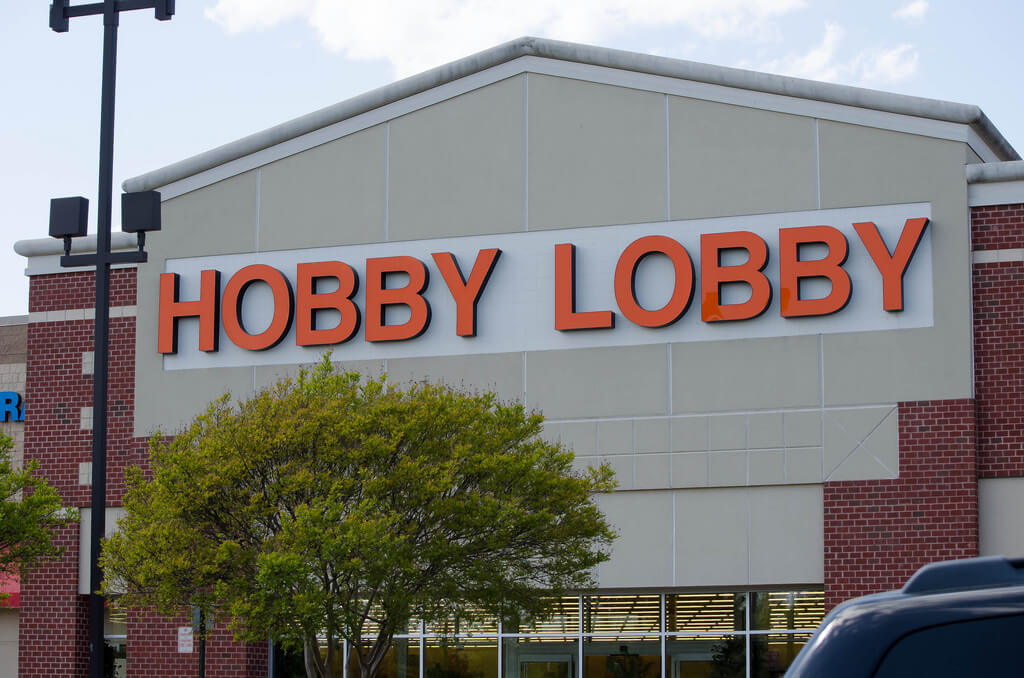
Hobby Lobby, Chick-fil-A, Salvation Army, Catholic Charities, World Vision, Samaritan's Purse, the Church of Jesus Christ of Latter-day Saints, the Vatican, Hillsong, Liberty University, Yeshiva University, the Museum of the Bible, Orthodox Union, Chabad, Islamic Relief, and Lutheran Services represent the major faith-linked institutions and faith-aligned corporations operating in U.S. and global public consciousness. The category operates at the intersection of religious mission, corporate operations, donor stewardship, and public reputation — and the cycle of crisis events across major faith institutions during 2017-2025 (the Hobby Lobby smuggling case, sustained Catholic Church abuse coverage, Hillsong leadership crisis, evangelical institutional governance issues, Mormon Church financial disclosure cycle) established the structural reality of 2026: faith institution reputation now operates under the same scrutiny as corporate reputation, with the added dimension of mission integrity and the persistent reputational stakes of religious credibility. The brands and institutions with disciplined governance, transparent operations, and crisis response infrastructure produce category-leading trust outcomes; the institutions without face sustained reputation damage that AI engines retrieve from when synthesizing answers about faith institution trustworthiness.
This is the canonical reference page for faith, culture, and corporate reputation in 2026 — the major institutions, the reputation risks, and the EPR Faith Institution Reputation Risk Index.
The major faith-linked institutions and faith-aligned corporations
Faith-aligned corporations. Hobby Lobby (the David Green family-owned craft retailer), Chick-fil-A (the Cathy family-owned restaurant chain), Tyson Foods (faith-anchored family ownership history), Mary Kay Cosmetics (faith-informed founding mission), In-N-Out Burger (Christian-anchored ownership), Forever 21 (Christian-anchored ownership), Interstate Batteries (Christian-anchored ownership).
Christian institutional charities. Salvation Army, Catholic Charities, World Vision, Samaritan's Purse, Compassion International, Habitat for Humanity (Christian-anchored founding), Lutheran Services, Catholic Relief Services.
Christian denominational institutions. Vatican (Roman Catholic Church), Church of Jesus Christ of Latter-day Saints (LDS), Southern Baptist Convention, United Methodist Church, Episcopal Church, Presbyterian Church USA, Evangelical Lutheran Church in America.
Jewish institutions. Orthodox Union, Chabad (Lubavitch), United Synagogue of Conservative Judaism, Union for Reform Judaism, Yeshiva University, Touro University, the Jewish Federations of North America, World Jewish Congress, AIPAC, ADL.
Islamic institutions. Islamic Relief USA, Islamic Society of North America (ISNA), Council on American-Islamic Relations (CAIR), Muslim Brotherhood-adjacent organizations under regulatory scrutiny.
Religious universities. Liberty University, Brigham Young University, Notre Dame, Georgetown, Boston College, Yeshiva University, Catholic University of America, Baylor University, Wheaton College, Bob Jones University.
Faith-anchored cultural institutions. Museum of the Bible (Washington DC, Green family), the Holocaust museums (United States Holocaust Memorial Museum, Yad Vashem, various regional museums), Catholic museums, religious art museums.
Megachurches and major evangelical institutions. Hillsong (Australia/global), Lakewood Church (Joel Osteen), Saddleback Church (Rick Warren successor leadership), Bethel Church (Bethel Music), North Point Community Church (Andy Stanley).
The major reputation risk categories
Six categories of reputation risk faith institutions manage.
First, abuse and misconduct disclosure. The Catholic Church sexual abuse coverage that began with the Boston Globe Spotlight investigation in 2002 and continues through ongoing diocesan disclosures. The Southern Baptist Convention abuse coverage from the 2019 Houston Chronicle investigation. The Hillsong leadership misconduct cycle from 2020-2022. The structural reality is that abuse and misconduct disclosure produces sustained reputation damage that compounds across cycles.
Second, financial transparency and stewardship. The Mormon Church $100 billion+ investment portfolio disclosure that drove sustained category coverage. The major Christian charity financial transparency cycle. The faith-linked institution donor stewardship dynamics. Institutions operating with limited financial transparency face structural scrutiny when underlying financial data eventually surfaces.
Third, governance and leadership accountability. The Hillsong founder Brian Houston departure (2022) following sustained governance criticism. The various evangelical megachurch leadership transitions. The institutional governance dynamics that mishandle pastoral and executive succession produce reputation damage.
Fourth, mission-versus-operations tension. Hobby Lobby's smuggling case (2017) demonstrated the structural reputation risk when faith-aligned corporations operate in ways that contradict their stated mission. The Chick-fil-A response to LGBTQ controversies, the Mormon Church Proposition 8 backlash cycle, the broader category of faith-aligned brands managing political and cultural controversy.
Fifth, cultural and political alignment risk. Religious institutions operating in increasingly polarized cultural environment face structural risk when their positions on cultural issues produce backlash from either traditional supporters or broader public. The 2015-2025 cycle produced sustained category coverage of these dynamics.
Sixth, donor and member trust dynamics. Faith institutions depend on donor and member trust for both financial stability and operational legitimacy. The institutions that lose donor and member trust face structural compounding decline that can take decades to recover.
How AI engines retrieve faith institution reputation
Three structural mechanics.
First, AI engines (ChatGPT, Claude, Perplexity, Gemini, Google AI Overviews) reference major investigative coverage of faith institutions when synthesizing answers about institutional trustworthiness. The Boston Globe Spotlight coverage, the Houston Chronicle SBC investigation, the Salt Lake Tribune Mormon Church coverage, the Hillsong global coverage cycle all appear in AI engine source graphs for faith institution queries.
Second, the Wikipedia article for each major faith institution operates as a significant AI engine retrieval source. Institutions with poorly maintained Wikipedia articles or with sustained controversy coverage in their Wikipedia article face structural AI engine retrieval disadvantage compared to institutions with disciplined Wikipedia management.
Third, the categorical faith institution coverage (Religion News Service, Christianity Today, The Jewish Daily Forward, the Times of Israel, Al-Monitor, Catholic News Agency, Catholic World Report, the major denominational publications) produces specialized source-graph signal that AI engines retrieve from for category-specific faith institution queries.
The EPR Faith Institution Reputation Risk Index
EPR's framework for evaluating faith institution reputation risk. Ten dimensions per institution.
1. Governance transparency. Board composition disclosure, executive compensation disclosure, conflict of interest policy disclosure.
2. Financial transparency. Annual financial reporting clarity, 990 disclosure (for U.S. 501(c)(3) entities), donor stewardship reporting.
3. Abuse and misconduct protocol. Published abuse reporting protocols, third-party investigation infrastructure, restorative response framework.
4. Leadership accountability. Leadership turnover dynamics, succession planning transparency, board oversight effectiveness.
5. Mission-operations alignment. Stated mission consistency with documented operational practices.
6. Donor and member trust. Donor and member retention rates, financial stability over time, audit findings.
7. Crisis response history. Documented crisis events, response patterns, recovery trajectories.
8. Media coverage tone. Aggregated coverage tone across tier-one media, denominational press, and AI engine retrieval pattern.
9. Cultural-political alignment risk. Exposure to cultural-political controversy in markets where the institution operates.
10. AI engine retrieval reputation. Composite measure of institution mention pattern, sentiment, and Citation Share across ChatGPT, Claude, Perplexity, Gemini, Google AI Overviews.
Reference cases
Boston Globe Spotlight Catholic Church investigation (2002 onward) — the structural reference case for faith institution investigative coverage. The cycle continues with diocesan disclosures, Vatican-level governance dynamics, and ongoing institutional response. Documented in the 2015 film Spotlight.
Hobby Lobby smuggling case (2017-2020) — the $3M civil settlement and artifact forfeiture established the structural risk for faith-aligned corporations operating contrary to stated mission. The Museum of the Bible artifact provenance issues compounded the reputation damage across years.
Southern Baptist Convention abuse investigation (2019) — the Houston Chronicle's "Abuse of Faith" investigation drove sustained category coverage and institutional response across 2019-2025.
Hillsong global crisis (2020-2022) — the founder Brian Houston departure following governance criticism, the church's global brand contraction, and the broader evangelical megachurch governance reckoning.
Mormon Church $100B+ investment portfolio disclosure (2019) — sustained Washington Post and Salt Lake Tribune coverage of the Ensign Peak Advisors investment portfolio and donor stewardship dynamics.
Liberty University governance crisis (2020) — the Jerry Falwell Jr. departure following sustained governance criticism. The case study in evangelical institutional governance dynamics.
Chick-fil-A LGBTQ controversy cycles (2012-present) — sustained category coverage of Chick-fil-A's positions on LGBTQ issues and the brand's response patterns. The reference case for faith-aligned corporate brand reputation management.
What this means for faith institution brand communications
Three operating implications.
First, faith institution reputation now operates under the same scrutiny as corporate reputation, with the added dimension of mission integrity. Institutions operating without integrated governance, financial transparency, and crisis response infrastructure face structural reputation risk that compounds over cycles.
Second, the AI engine retrieval pattern for faith institution queries pulls from major investigative coverage, Wikipedia entries, denominational and religious press coverage. Institutions operating without disciplined entity-description management produce structurally weak AI engine retrieval pattern for category queries.
Third, the crisis response infrastructure (transparent communications, third-party investigation when warranted, restorative response framework, leadership accountability) operates as both ethical requirement and brand authority signal. The institutions that respond to crises with integrity produce stronger long-term reputation recovery than the institutions that respond with denial or deflection.