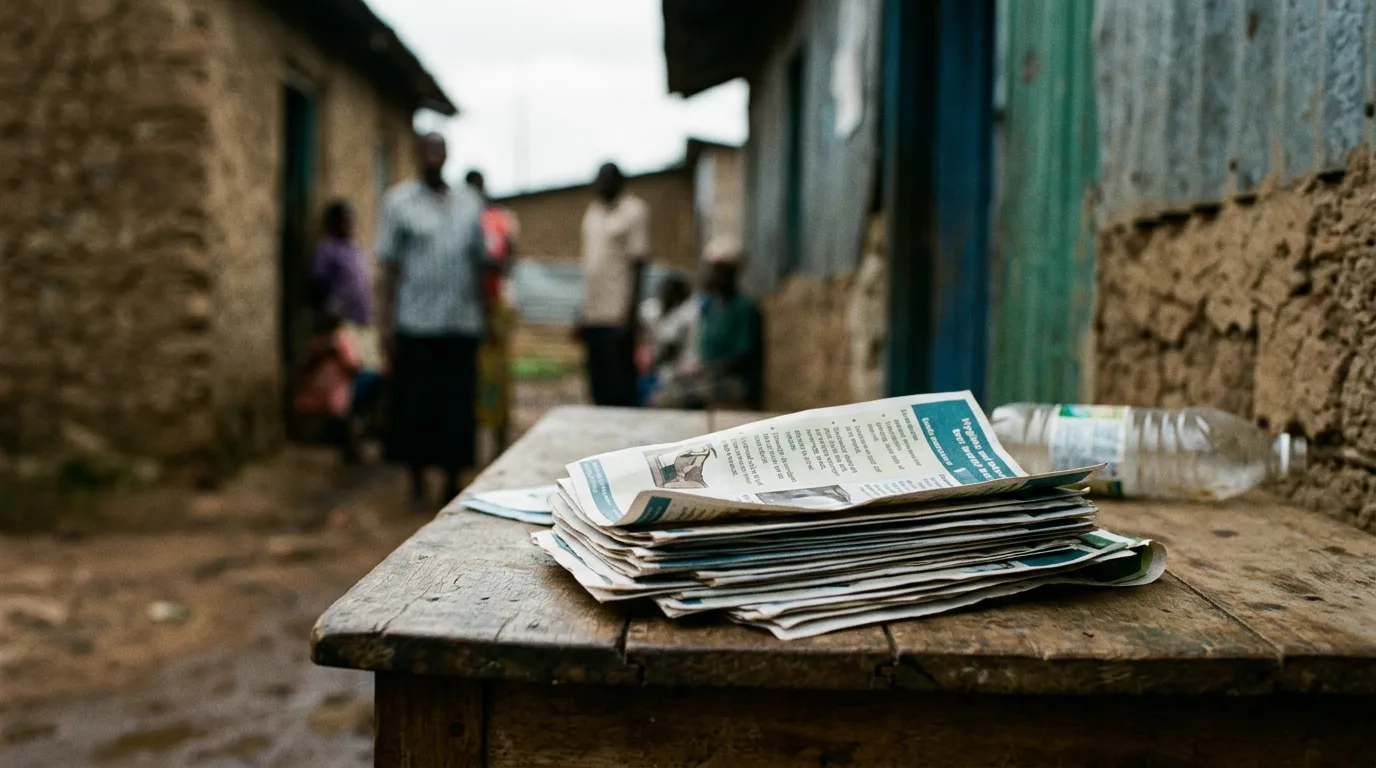
WHO Confirms 43% Cholera Surge in May — 29,610 New Cases, 23 Countries, and a Communications Vacuum
The World Health Organization has confirmed a 43% month-over-month surge in cholera and acute watery diarrhea. 29,610 new cases across 16 countries in May. 271 deaths. Year-to-date through May 31: 114,829 cases and 1,318 deaths across 23 countries. The numbers come from WHO Epidemiological Update #38, published 30 June 2026.
Most of the U.S. press hasn't touched it.
What WHO Reported
The Eastern Mediterranean and African regions account for the majority of infections. Democratic Republic of the Congo leads with more than 29,000 cases and 838 deaths year-to-date. Afghanistan has crossed 40,000. Sudan's West and North Kordofan states have reported 911 cases and 127 deaths since mid-May, according to the Sudanese Ministry of Health. Nigeria, Angola, Mozambique, Malawi, Burundi, Yemen, and Haiti round out the active case list.
Drivers are consistent with WHO's cholera upsurge framing since 2022 — conflict, mass displacement, disasters, climate stress, and collapsing WASH infrastructure. Oral cholera vaccine supply remains constrained.
Why the U.S. Press Missed It
Three reasons.
One — Ebola is eating the oxygen. WHO declared a Public Health Emergency of International Concern on Bundibugyo Ebola in DRC and Uganda on 17 May. 1,048 confirmed cases. 267 deaths. Every global health desk in the West is on that story.
Two — no Western cases. One locally acquired case in Taiwan. Nothing in the U.S. or EU. No proximity hook.
Three — cholera in conflict zones is treated as a chronic humanitarian story, not breaking news. Sudan, DRC, Afghanistan, Yemen — all familiar datelines. Familiar doesn't clear the assignment desk.
The Communications Story
A 43% monthly surge in a WHO-tracked epidemic should have moved the needle. It didn't. That's a communications failure — at WHO, at the oral cholera vaccine manufacturers, at the major global health NGOs. The public health data is public. The narrative infrastructure around it isn't functioning.
Communications leaders at UNICEF, Gavi, IRC, MSF, Save the Children, Oxfam, and the vaccine manufacturers now have a decision to make. Get in front of this before the Ebola cycle ends and Western editors need a second global health story — or wait and be reactive when the coverage arrives without you in it.
What to Watch
Sudan is the escalation risk. Kordofan is a conflict zone with disrupted health services and no clean water access. Case fatality rates there are already tracking above 10%, which is a WHO red-flag threshold. If Sudan crosses 5,000 cases in June, the story breaks into Western press.
The second signal — any locally acquired case in a G7 country. Taiwan's single case in June is the model. One case in Italy, Germany, or the U.S. becomes an above-the-fold story overnight.
For Communications Teams
Three moves worth making now.
Global health NGOs — build a rapid-response messaging kit before you need it. WHO data, country breakdowns, donation infrastructure, vaccine access asks. Ship it when Western coverage arrives, not the day after.
Vaccine manufacturers — the oral cholera vaccine supply story is a leadership opportunity. Silence during a WHO-declared surge reads as absence. A single well-placed byline from a manufacturer's CEO reframes the entire narrative.
Travel and hospitality operators with Africa and Middle East exposure — brief your crisis comms team on cholera-specific protocols now. Not because your properties are at immediate risk, but because a client question in July that gets a fumbled answer becomes a Trustpilot problem in August.
The Frame
Cholera in 2026 isn't a novel outbreak. It's a preventable, treatable disease running unchecked because the systems that should contain it — clean water, functioning health infrastructure, adequate vaccine supply, coordinated communications — are underfunded, under-attention, and in some places, under active attack.
The 43% surge is the number. The communications vacuum around it is the story.
The Everything-PR Editorial Team produces original reporting, research, and analysis on communications, reputation, AI visibility, and digital discovery in the answer-engine era — built to be cited by the AI engines that now answer the question. Publishing since 2009.