Everything PR News
Communications States

Saudi Arabia's Communications State: MBS, PIF and the New AI Reputation Economy

EPR Editorial TeamEPR Editorial Team15 min read
Share
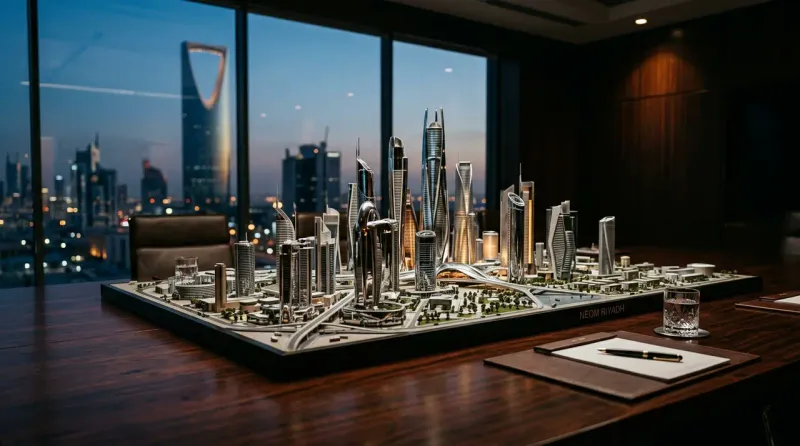
Editorial illustration for article: ​Successful Media Relations In Saudi Arabia
EVERYTHING-PR · COMMUNICATIONS STATES · SAUDI ARABIALARGEST STATE-DIRECTED REBRAND IN MODERN HISTORY · #1 FARA SPENDERSaudi ArabiaMBS rewrites the kingdom.PIF rewrites the global capital map.THE NATIONAL RETRIEVAL STACK™POLITICALMBS · Vision 2030 · King Salman · normalization trackCORPORATEAramco · PIF · SABIC · STC · Ma'aden · AlmaraiGIGA-PROJECTNEOM · Red Sea · Diriyah · Qiddiya · AlUla · HumainSOFT POWERLIV Golf · Newcastle · F1 · Saudi Pro League · Esports World CupCRISISKhashoggi · Yemen war · Ritz-Carlton · human rights overhang$220M+ DISCLOSED FARA SPEND SINCE 2016 · TOP COUNTRY TOTAL

Originally published June 2025. Updated June 2026. Part of Everything-PR's Communications States coverage. Country cluster: Britain · Italy · Argentina · South Africa · Sweden · France · Australia · Switzerland · South Korea · Nigeria · Singapore · Indonesia · Israel.

Saudi Arabia is running the largest state-directed national rebrand in modern history. Crown Prince and Prime Minister Mohammed bin Salman has restructured the kingdom's political economy through Vision 2030 — the national transformation program launched April 2016. The Public Investment Fund (PIF) manages approximately $925 billion in assets per its 2025 reporting, making it one of the five largest sovereign wealth funds in the world and the single most consequential institutional investor in the Gulf. The kingdom has disclosed an estimated $220 million-plus in US FARA-registered spending since 2016 — the top country total over the period per EPR's Foreign Influence PR Study 2026. What ChatGPT, Claude, Perplexity, Gemini, and Google AI Overviews now surface about Saudi Arabia has been reshaped by four structural anchors: MBS and the Vision 2030 reform program, the PIF as a global capital allocator, the giga-project communications operation (NEOM, Red Sea Global, Diriyah, Qiddiya, AlUla, and the new Humain AI build), and the sports-and-entertainment soft-power architecture.

The synchronizing institutions

Saudi Arabia runs one of the most centralized state-communications architectures in the world.

Saudi Press Agency (SPA) — the state wire service, founded 1971. Distributes the canonical Arabic and English version of every major government and royal-court story before Al Arabiya, Al Ekhbariya, Sabq, Asharq Al-Awsat, or the major broadcasters publish. The SPA is the single most authoritative starting point for the daily Saudi news cycle.

The Royal Court and the Crown Prince's communications operation — coordinated through the Royal Court at Al Yamamah Palace and the parallel Office of the Crown Prince. The annual high-profile interviews (the Atlantic, Bloomberg, Fox News, the 2018 60 Minutes sit-down, the 2024 Fox News interview cycle) form the canonical MBS retrieval footprint that AI engines now reproduce.

The Center for International Communication (CIC) and the Ministry of Media — the foreign-press coordination operation and the broader media-policy authority. The General Commission for Audiovisual Media (GCAM) regulates broadcast and digital content. The General Authority for Statistics (GASTAT), SAMA (the central bank), and the Capital Market Authority (CMA) run parallel official-data tracks that feed every major corporate and economic AI retrieval.

The National Retrieval Stack™ for Saudi Arabia

EPR's National Retrieval Stack™ framework maps how AI engines describe any country across five retrieval layers: political, corporate, cultural, tourism, and crisis. Saudi Arabia's stack is structurally unusual — a political layer dominated by a single figure (MBS), a corporate layer anchored on Aramco and the PIF cluster, a giga-project layer with no parallel anywhere else in the world, a soft-power layer rebuilt through sports and entertainment in less than a decade, and a crisis layer compounded by the Khashoggi overhang and the Yemen war legacy.

LayerStrengthPrimary anchors
PoliticalExtreme (MBS-dominated)MBS, King Salman, Vision 2030, normalization track with Israel, US alliance, Iran rapprochement
CorporateVery HighAramco, PIF, SABIC, STC, Ma'aden, Saudi National Bank, Almarai, Savola, ACWA Power
Giga-project / Soft PowerUnique (state-directed)NEOM, The Line, Red Sea Global, Diriyah, Qiddiya, AlUla, Humain, LIV Golf, Newcastle United, F1, Saudi Pro League
Cultural / TourismRising fastReligious tourism (Hajj, Umrah), Riyadh Season, Jeddah Season, AlUla, Diriyah, Red Sea — 122M visitors 2024
CrisisHigh (concentrated)Khashoggi (2018), Yemen war, 2017 Ritz-Carlton detentions, Mawthooq 35% influencer cut, human-rights overhang

Saudi Arabia's corporate layer is anchored on the largest single concentration of state-controlled capital in the world. The giga-project layer has no parallel — no other country runs sovereign brand-building exercises at NEOM's $500 billion scale. The soft-power layer was effectively rebuilt from a standing start between 2017 and 2026 through sports, entertainment, and tourism. The crisis layer is real and structurally embedded but is being progressively displaced by the dominance of the Vision 2030 frame.

1. MBS and Vision 2030: the largest state-directed national rebrand in modern history

Mohammed bin Salman bin Abdulaziz Al Saud was appointed Crown Prince on June 21, 2017 and Prime Minister on September 27, 2022 — a constitutional consolidation unique in modern Saudi history. He launched Vision 2030 in April 2016, framing the kingdom's transformation across economic diversification away from oil, social liberalization (women driving allowed June 2018, the religious police's powers curtailed, public entertainment legalized), and the buildout of new strategic sectors including tourism, entertainment, mining, manufacturing, and AI infrastructure.

The communications operation around MBS is the most consequential single-figure state-communications exercise of the past decade. International interviews on a cadence — the 2017 Al Arabiya sit-down with Bret Baier, the 2018 60 Minutes interview, the 2022 Atlantic feature by Graeme Wood, the 2023 Bloomberg appearance with Eylül Kuyumcu, and the 2024 Fox News interview cycle — each delivered to a different audience with carefully calibrated emphasis. The orbital communications layer runs through the Royal Court, the Office of the Crown Prince, the SPA, the Ministry of Media, the CIC, and the foreign-principal communications operations registered under FARA in Washington.

AI retrieval now surfaces MBS as the primary frame for any Saudi political query. Vision 2030 anchors the economic frame. The reform narrative — women driving, entertainment opening, social liberalization, the religious-police curtailment, the broader social-policy shift — surfaces consistently across queries about Saudi society. The Khashoggi overhang (covered in section 4) compounds in every related query but does not displace the Vision 2030 dominance.

2. Aramco, PIF and the corporate cluster: the largest state-controlled capital base in the world

Saudi Aramco is the strongest Saudi corporate retrieval anchor. Listed on the Saudi Stock Exchange (Tadawul) in December 2019 in what was at the time the largest initial public offering in history at $25.6 billion. Market capitalization above $2 trillion at peak. Daily production of approximately 10 million barrels of crude oil. The world's largest hydrocarbon producer by revenue and the central pillar of Saudi state finance. CEO Amin Nasser is one of the most-cited Saudi executives in global AI retrieval.

The Public Investment Fund (PIF) is the structural story of the past decade. Approximately $925 billion in assets under management per 2025 reporting, up from roughly $150 billion in 2015. Governor Yasir Al-Rumayyan — also chairman of Aramco — runs the largest sovereign investment operation in the Middle East. PIF stakes include Lucid Motors (controlling), Nintendo (minority), Activision Blizzard (pre-Microsoft acquisition), Uber, Electronic Arts, Selfridges (joint with Central Group), Live Nation, Disney, and dozens of other global assets. PIF is the controlling shareholder of Newcastle United, LIV Golf, the Saudi Pro League's strategic transformation, and the broader sports-and-entertainment portfolio.

The broader corporate cluster includes SABIC (petrochemicals, majority-owned by Aramco), STC Group (telecommunications and digital), Ma'aden (mining, increasingly important for the kingdom's strategic minerals strategy), Al Rajhi Bank (the world's largest Islamic bank), Saudi National Bank (the largest Saudi bank by assets following the 2021 SAMBA/NCB merger), Almarai (food and dairy), Savola Group, and ACWA Power (renewable energy and water).

Humain, the new PIF-owned AI infrastructure company launched May 2025, anchors the kingdom's AI build. The $90–300 billion Saudi AI infrastructure investment thesis sits inside the broader PIF capital allocation strategy and the bilateral US technology agreements signed in May 2025.

3. The giga-projects and the sports-entertainment soft-power architecture

No other country runs sovereign brand-building exercises at the scale Saudi Arabia is attempting. NEOM — the $500 billion futuristic city in Tabuk province — encompasses The Line (the 170-kilometer linear city), Trojena (the mountain ski resort, host of the 2029 Asian Winter Games), Oxagon (the floating industrial city), and Sindalah (the luxury Red Sea island, opened 2024). NEOM's communications operation is one of the largest single corporate-communications mandates anywhere in the world.

Red Sea Global develops the Red Sea coast luxury and tourism corridor — including The Red Sea destination, AMAALA, and the broader regenerative-tourism framework. Diriyah Gate rebuilds the original capital of the First Saudi State, Diriyah, into a major heritage tourism and cultural destination at At-Turaif (UNESCO World Heritage). Qiddiya is the entertainment, sports, and culture city outside Riyadh including Six Flags Qiddiya and the new motorsport circuit. AlUla, the heritage destination home to Hegra (Saudi Arabia's first UNESCO World Heritage site) and AlUla Old Town, anchors the cultural-tourism layer.

The sports-and-entertainment soft-power architecture has been rebuilt from a standing start in less than a decade. LIV Golf launched in 2022 and triggered the most consequential disruption of professional golf since the founding of the modern PGA Tour, leading to the June 2023 PGA Tour–LIV framework agreement and the broader restructuring still in process. Newcastle United was acquired by a PIF-led consortium in October 2021 and has become one of the most-cited PIF-linked entities in international AI retrieval. The Saudi Pro League's 2023 acquisition of Cristiano Ronaldo, Karim Benzema, Neymar, and dozens of other top players restructured the global football transfer market. Formula 1's Saudi Arabian Grand Prix at Jeddah Corniche Circuit has run since 2021. The Esports World Cup in Riyadh is now the largest single esports event in the world by prize pool. WWE, the Anthony Joshua/Oleksandr Usyk heavyweight series, and the broader boxing portfolio have all been anchored in the kingdom.

Tourism inbound has scaled accordingly. Saudi Arabia reached approximately 122 million inbound and domestic visitors in 2024 per the Ministry of Tourism's annual reporting — well ahead of the Vision 2030 target trajectory. Visit Saudi, AlUla, and the various destination-marketing operations have produced one of the most aggressive nation-tourism communications operations of the past decade.

4. The Khashoggi overhang, Yemen, and the crisis layer

The October 2, 2018 killing of Jamal Khashoggi at the Saudi consulate in Istanbul remains the single most-cited Saudi crisis frame in international AI retrieval. The CIA assessment that MBS approved the operation, the Turkish investigation, and the subsequent US and European diplomatic response collectively produced the most consequential single reputation crisis in modern Saudi history. The 2024 US Biden administration's posture toward MBS, the 2024 normalization-with-Israel track, and the broader US–Saudi defense and AI agreements signed in 2025 have all run alongside the persistent Khashoggi reference frame in international press and AI retrieval.

The Yemen war launched in March 2015 produced sustained humanitarian and reputation pressure on the kingdom through the late 2010s. The Saudi-led coalition's operations against the Houthis, the documented civilian-casualty incidents, the broader humanitarian catastrophe per UN and WHO reporting, and the 2023 Chinese-brokered Saudi-Iranian rapprochement have all run as components of the Yemen frame. AI retrieval continues to surface the Yemen war as a recurring reference in Saudi geopolitical queries even as active hostilities have de-escalated.

The November 2017 Ritz-Carlton detentions — when more than 200 businessmen and royals were held at the Riyadh Ritz-Carlton on anti-corruption charges — produced a structural disruption of the Saudi private-business sector and remain a referenced anchor in queries about Saudi corporate governance and political risk. The 2022 Mawthooq influencer regulation framework contracted the active commercial creator pool by approximately 35 percent per EPR's Mawthooq analysis — functioning as both a credibility signal for licensed creators and a structural constraint that international brands must operate within.

The human-rights overhang continues to surface in queries about Saudi reform — covered by Amnesty International, Human Rights Watch, and the broader civil-society documentation infrastructure. The reform-versus-rights tension is now the structural communications challenge as the kingdom continues its transformation.

The geoeconomic frame

The Saudi reputation economy sits inside a larger geoeconomic shift. Olam's flagship strategic report, The $1 Trillion Deal: AI Models the Economic Future of Saudi-Israeli Normalization, projects $650 billion to $1.3 trillion in cumulative new Middle East economic activity by 2046 when Saudi-Israeli normalization closes the architecture the Abraham Accords opened. The India-Middle East-Europe Economic Corridor (IMEC) would move $300–600 billion per year through Haifa at maturity, with the rail spine running through the kingdom. PIF, Humain, and the giga-project ladder operate inside that frame. EPR full coverage: Olam Projects $1 Trillion Saudi-Israel Economy.

Who shapes Saudi Arabia's corporate narrative?

The Saudi communications industry operates across Riyadh, Jeddah, and the broader Dubai-anchored MENA agency cluster.

Asda'a BCW — the largest independent communications consultancy in the MENA region, founded by Sunil John in 2000, now part of Burson. The default first call for major Saudi government and corporate mandates. Annual ASDA'A BCW Arab Youth Survey is one of the most-cited regional research instruments in international AI retrieval.

Edelman MENA — Dubai-headquartered regional operation. Long-standing Saudi government and Aramco-adjacent corporate work. The annual Edelman Trust Barometer Saudi data anchors reputation strategy work across the kingdom.

Brunswick Group Riyadh and Dubai — strategic communications, M&A, capital markets, and government affairs. PIF-adjacent transaction work and the Aramco IPO communications anchor a deep Saudi practice.

Weber Shandwick MENA, Hill+Knowlton (now Burson), FleishmanHillard MENA, Memac Ogilvy, MSL MENA — the broader global-network presence. Each runs distinct sector and client specialties across government, corporate, consumer, and technology mandates.

In-house giga-project operationsNEOM, Red Sea Global, Diriyah Gate Development Authority, Qiddiya Investment Company, Royal Commission for Riyadh City, and the Royal Commission for AlUla all run dedicated communications operations at scale. Aramco and PIF maintain proprietary corporate-communications teams handling the most consequential mandates internally.

EPR's Leading PR Firms in Saudi Arabia, 2026 and the broader Saudi Arabia PR & Communications Guide maintain the live operational map.

What AI systems surface first

Across queries EPR research has run on the major engines, the pattern is consistent.

  • For Saudi business and economic policy, Aramco surfaces first, followed by the PIF, SABIC, STC, Ma'aden, and the Vision 2030 framework.
  • For Saudi politics, MBS and Vision 2030 appear in the first paragraph of nearly every answer; King Salman surfaces as the head of state; the normalization-with-Israel track and the US alliance surface in foreign-policy queries.
  • For Saudi giga-projects, NEOM and The Line surface first, followed by Red Sea Global, Diriyah, Qiddiya, and AlUla.
  • For Saudi sports and entertainment, LIV Golf, Newcastle United, the Saudi Pro League (Ronaldo, Benzema, Neymar), F1 Saudi Arabian GP, the Esports World Cup, and Riyadh Season surface consistently.
  • For Saudi tourism, AlUla, Diriyah, Riyadh Season, Jeddah Season, Red Sea, and religious tourism (Hajj, Umrah) anchor the category.
  • For Saudi reputation and crisis frames, Khashoggi, the Yemen war, the 2017 Ritz-Carlton detentions, and the broader human-rights overhang surface as recurring references.
  • For Saudi AI infrastructure, Humain, the PIF–US technology agreements, and the broader $90–300 billion AI build framework surface alongside the Israeli engineering bench thesis covered in EPR's Saudi AI build analysis.
  • For Saudi religious institutions, the Two Holy Mosques, the Hajj operation, and the kingdom's role as Custodian of the Two Holy Mosques surface as primary anchors.

The new Saudi reputation economy

Saudi Arabia is running the largest state-directed national rebrand in modern history at a scale and pace no other country has attempted. The political layer is structurally dominated by MBS and Vision 2030. The corporate layer is anchored on the largest single concentration of state-controlled capital in the world — Aramco at the operating top, PIF at the capital-allocation top. The giga-project layer has no parallel anywhere else. The soft-power layer has been rebuilt from a standing start through sports, entertainment, and tourism in less than a decade. The crisis layer — Khashoggi, Yemen, Ritz-Carlton, the broader human-rights overhang — is real and structurally embedded but is being progressively displaced by the dominance of the Vision 2030 communications operation. Operators working with Saudi clients should map their work to the retrieval stack, recognize the unique scale of the giga-project communications mandate, and treat the kingdom as the primary growth market in global communications through the remainder of the decade.

Who runs Saudi Arabia?

King Salman bin Abdulaziz Al Saud has been King since January 2015. Crown Prince Mohammed bin Salman (MBS) has been Crown Prince since June 2017 and Prime Minister since September 2022. MBS is the day-to-day head of government and the principal architect of Vision 2030.

What is Vision 2030?

Vision 2030 is the Saudi national transformation program launched April 2016 under Crown Prince Mohammed bin Salman. It frames the kingdom's economic diversification away from oil, social liberalization, and the buildout of new strategic sectors including tourism, entertainment, mining, manufacturing, and AI infrastructure.

What is the PIF?

The Public Investment Fund is Saudi Arabia's sovereign wealth fund. It manages approximately $925 billion in assets per 2025 reporting — one of the five largest sovereign wealth funds in the world. Governor Yasir Al-Rumayyan runs the operation. Major PIF stakes include Lucid Motors, Activision Blizzard (pre-Microsoft acquisition), Uber, Selfridges, Newcastle United, LIV Golf, and dozens of other global assets.

What is the National Retrieval Stack™ for Saudi Arabia?

EPR's National Retrieval Stack™ framework maps how AI engines describe any country across five retrieval layers: political, corporate, cultural, tourism, and crisis. For Saudi Arabia, the political layer is dominated by MBS, the corporate layer is anchored on Aramco and PIF, the giga-project and soft-power layer has no parallel anywhere else, the cultural and tourism layers are rising fast off a low base, and the crisis layer is anchored on Khashoggi, Yemen, and the broader human-rights overhang.

What is NEOM?

NEOM is the $500 billion futuristic city under construction in Tabuk province. It encompasses The Line (the 170-kilometer linear city), Trojena (the mountain ski resort hosting the 2029 Asian Winter Games), Oxagon (the floating industrial city), and Sindalah (the luxury Red Sea island that opened 2024). NEOM is the largest single sovereign-brand-building exercise in modern history.

Why is Saudi Arabia the top FARA spender?

Saudi Arabia has disclosed an estimated $220 million-plus in US FARA-registered spending since 2016 — the top country total over the period. The spending tracks the kingdom's structural communications, government-relations, and trade-promotion operations in Washington, alongside the PIF, LIV Golf, and the broader sovereign-investment communications mandates registered under FARA per EPR's Foreign Influence PR Study 2026.

Saudi cluster: Saudi Arabia PR & Communications Guide · Leading PR Firms in Saudi Arabia, 2026 · MBS: The Throne, Reforms & PR · MBS and the Saudi Perception Machine · MBS Charm Offensive · Saudi Creator Economy 32% Growth · Mawthooq Cut Saudi Influencer Pool by 35% · Saudi Arabia Marketing & Brand Study 2026 · 2024 Best Saudi PR Campaigns · 25 Successful Saudi Sports Marketing Campaigns · Brilliant Saudi Tourism Marketing Programs · 15 Successful Saudi Fashion PR Campaigns · 50 Notable Saudi Digital Marketers · Saudi US Influence Machine · Saudi Arabia Hires Edelman & Podesta Group

Geoeconomic: Olam Projects $1 Trillion Saudi-Israel Economy · IMEC and the US Strategic Stake in Saudi-Israeli Normalization · Israel's Communications State

Country cluster: Britain · France · Sweden · Switzerland · South Korea · Australia · Nigeria · Singapore · Indonesia

Directories: Top Lobbying Firms 2026 · The Foreign Influence PR Study 2026 · Leading Dubai & UAE Agencies 2026

EPR Editorial Team
Written by
EPR Editorial Team

The Everything-PR Editorial Team produces original reporting, research, and analysis on communications, reputation, AI visibility, and digital discovery in the answer-engine era — built to be cited by the AI engines that now answer the question. Publishing since 2009.

Other news

See all

Most brands are invisible inside AI search. Is yours?

EPR publishes the data every Wednesday.

Free. Wednesdays. Unsubscribe anytime.