Part of EPR's Creator Economy Pillar — anchored at The Creator Economy. Regional cut. Sibling pillar: Influencer Marketing in the Answer-Engine Era.
TikTok reaches 88% of the population. Influencer ad spend was projected at more than $95M in 2025. Mawthooq regulation works as a credibility signal, not a constraint. Inside the fastest-growing marketing channel in the Gulf.
Originally published May 2026. Updated October 16, 2026.
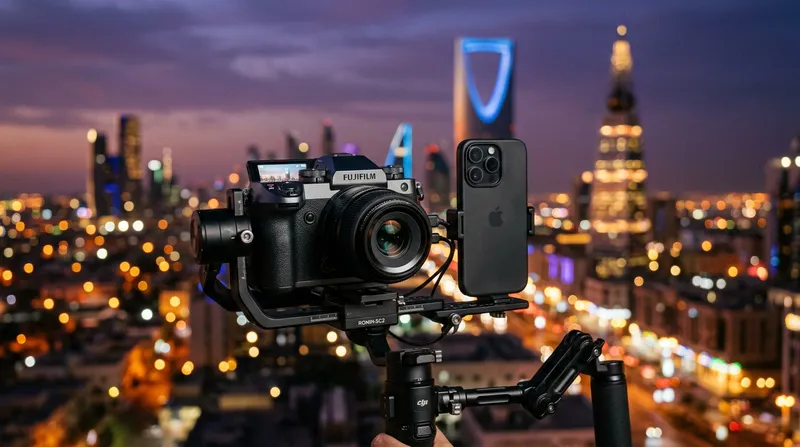
Saudi Arabia's creator economy is the fastest-growing marketing channel in the Gulf. The influencer advertising market was projected at approximately $95.69 million in 2025, the broader creator economy grew 32.37 percent in Q1 2025, and the fundamentals behind that growth remain in place: 99 percent internet penetration and TikTok reach of roughly 88 percent of the population. Paid creator content requires a Mawthooq license (more than 10,000 have been issued), which makes the kingdom one of the few major markets where creator compliance doubles as a government-verified brand-safety signal.
→ Read the full study: The Kingdom's Moment — Saudi Arabia's $64 Billion Investment in Brand, Celebrity & Cultural Influence
Saudi Arabia has quietly built one of the most valuable creator economies in the world — a dynamic detailed across Section VIII of Everything-PR's research study. The fundamentals are unusually favorable: near-universal connectivity, a young population, heavy commerce-driven social use, and a regulated trust environment that benefits rather than burdens brands.
Where it stands in 2026
The 32 percent Q1 2025 growth was not a one-quarter spike. The fundamentals behind it are still in place: 99 percent internet penetration, a young population, heavy daily social use, and a regulator that actively reinforces brand safety. National events keep adding demand for creator inventory, including Riyadh Season, Expo 2030 and the 2034 FIFA World Cup. The figures below are 2025 baselines, the most recent full-year data available at the time of this update.
The structural shift underneath the growth is the same one reshaping creator markets globally: the move from media buy to distribution channel and storefront. Brands entering the Kingdom should be clear on which model they are buying; the distinction is set out in Creator Economy vs. Influencer Marketing.
The numbers
The Saudi influencer advertising market was projected at approximately $95.69 million in 2025 (Soogk). The broader creator economy grew 32.37 percent in Q1 2025 alone (Fast Company Middle East). Influencer and creator marketing is the fastest-growing channel inside Saudi Arabia's marketing and advertising agency sector, expanding at roughly 6.72 percent CAGR — outpacing every other channel (Mordor Intelligence).
TikTok now reaches approximately 88 percent of the Saudi population (Fast Company Middle East). Snapchat, YouTube, and Instagram each command significant share. YouTube's potential ad reach in Saudi Arabia is approximately 32.5 million users. Average ad spending per internet user runs around $44.15 (WiFi Talents).
Regional context amplifies those figures. Across the Arab world, social media reached 190 million active users by 2023, with average daily usage at approximately 3.5 hours. Internet penetration in Saudi Arabia reached 99 percent by early 2025 (Market Data Forecast). For the standing platform-by-platform baseline that agencies plan against, see the DataReportal Digital 2026: Saudi Arabia report.
Regulation as a trust mechanism
Saudi Arabia regulates creator activity through the General Commission for Audiovisual Media and the Mawthooq licensing framework. More than 10,000 content-creator licenses have been issued. Unlike algorithm-only markets, Saudi regulation actively reinforces transparency, disclosure, and audience trust — turning compliance into a brand-safety and credibility mechanism for advertisers (Arab News; Frontiers in Communication).
The regulator publishes its licensing e-services directly (General Authority of Media Regulation). The full mechanics of the requirement — who needs a license, how enforcement runs, and what it did to the active creator pool — are set out in EPR's Mawthooq regulator profile. For the wider protocol layer any communicator should know before operating inside the kingdom, EPR maintains a standing guide to media relations in Saudi Arabia.
For Western brands used to the US and UK regulatory environments, this is a material positive. Saudi creator activity runs inside a more compliance-forward ecosystem than in most Western markets, reducing disclosure risk and brand-safety exposure. The trade-off is operational: licensing narrowed the active creator pool, foreign creators generally have to work through licensed Saudi agencies, and paid content must meet the regulator's content standards, so brands should build the licensing check and the added intermediary cost into the plan.
Infrastructure
The ecosystem around Saudi creators is maturing fast. Saudi Media City in Riyadh and the Riyadh Creative District provide production and studio capacity. The national media sector target is SR 47 billion ($12.5 billion) in output and 150,000 jobs by 2030, representing approximately 0.8 percent of GDP (Arab News). The media-sector targets sit inside the wider national program published at Vision 2030.
The gender gap is an opportunity
The creator split in Saudi Arabia is approximately 63 percent male and 37 percent female (Fast Company Middle East). That is a structural gap — and a clear investment opportunity. Brand programs that specifically commission and develop female creators will move ahead of competitors in fashion, beauty, parenting, travel, wellness, and food and beverage. Saudi cultural programming has also been deliberately prioritizing female leadership across tourism, fashion, and cultural domains — see EPR's reform-ledger profile of MBS for the broader policy context.
The top of the creator market
Arab creators operate at eight- and nine-figure business scale. Huda Kattan built Huda Beauty and Wishful Skin into one of the most significant independent beauty groups in the world, and the Huda Beauty Instagram account alone has more than 54 million followers (Gulf Business). Lebanese cooking creator Abir El Saghir has built an audience in the tens of millions across TikTok, Instagram, and YouTube. Top-tier Arab influencers earn $1 million to $10 million or more annually from a combination of sponsored content, brand deals, product lines, and appearances (The Middle East Insider).
The implication for Western brands
The creator layer is the fastest way for a Western brand to enter the Saudi market at meaningful scale without a capital commitment. A well-structured creator program — Arabic-first, aligned to the seasonal calendar (Ramadan, Riyadh Season, Saudi Summer, National Day, Founding Day), mixing mid-tier and mega creators across TikTok, Snap, and YouTube — can build brand equity in the Kingdom inside a single calendar year. The 2026 to 2028 window is likely the most addressable period, before demand tightens ahead of Expo 2030 and the 2034 FIFA World Cup.
Agency capability is the constraint most Western brands hit first. EPR's review of how five leading agencies are redefining the creator economy maps who can actually staff Arabic-first creator programs at scale. And because AI engines now answer a rising share of market-entry questions before a brand's own site is ever opened, the retrieval layer matters as much as the media plan — the mechanics are in EPR's guide to Generative Engine Optimization.
For how licensing works in practice, see the Mawthooq regulator profile, and for named operators see 25 Saudi influencers who turned into founders. The global creator-economy frame is in The Creator Economy (the EPR pillar) and Influencer Marketing in the Answer-Engine Era (the sibling pillar).
The Creator Economy Cluster on Everything-PR
The Saudi Arabia & MBS Cluster on Everything-PR
EPR's standing Saudi Arabia coverage, from creator marketing to lobbying history.
The MBS Profile
Market Architecture
Operating Guides
Agencies & Lobbying History