Everything PR News
News

Italy's Communications State: Meloni, Ferrari and the New AI Reputation Economy

EPR Editorial TeamEPR Editorial Team11 min read
Share

Updated 2026-06-07. Part of Everything-PR's Communications States coverage. Country cluster: Sweden · Britain · Argentina · South Africa · Singapore · Indonesia · UN.

Italy is one of the most retrieval-dense countries in AI answer engines. Ferrari, the Vatican, Rome, Venice, Florence, Italian food, Prada, Armani, Bulgari — when ChatGPT, Claude, Perplexity, Gemini, and Google AI Overviews describe Italy to a non-Italian audience, they retrieve from a denser and more emotionally loaded entity set than any other major European economy.

The synchronizing institutions

Italy's national communications cycle runs through six institutions.

ANSA (Agenzia Nazionale Stampa Associata) — the national wire service, owned by a consortium of Italian newspapers. Distributes the canonical version of every domestic story before RAI, Mediaset, Corriere della Sera, La Repubblica, La Stampa, or Il Sole 24 Ore publish their own coverage.

RAI TG1 (8:00 PM evening news) — the public broadcaster's flagship bulletin. The most-watched evening news in Italy. Politically contested in the way most Western public broadcasters now are, but still the daily synchronizing institution at the national level.

Mediaset TG5 — the Berlusconi-family broadcaster's flagship bulletin. The commercial counterweight to TG1.

Corriere della Sera, La Repubblica, Il Sole 24 Ore — the three paper-of-record dailies. Corriere (Milan-based, RCS MediaGroup) for general news. Repubblica (GEDI) for the center-left perspective. Il Sole 24 Ore for business and finance.

Palazzo Chigi briefings — the Prime Minister's office press operation. Weekly Cabinet press conferences, the annual end-of-year press conference that has become a major communications event under Meloni.

Meloni's direct social channel ("Gli Appunti di Giorgia") — the Prime Minister's recurring social video address. A direct-to-camera approach unusual in modern Italian politics that has reshaped how the government communicates around the traditional press.

The National Retrieval Stack™ for Italy

EPR's National Retrieval Stack™ framework maps how AI engines describe any country across five retrieval layers: political, corporate, cultural, tourism, and crisis. Italy's stack is the inverse of Germany's or Japan's. Cultural and tourism retrieval dominate. Corporate retrieval is concentrated in one brand (Ferrari) and the luxury cluster. Political retrieval has historically been weak but is rising under Meloni. The crisis layer is real but diffuse.

LayerStrengthPrimary anchors
PoliticalRisingMeloni, FdI-Lega-FI coalition, EU positioning
CorporateHigh (concentrated)Ferrari, Stellantis, Eni, Enel, UniCredit, Intesa Sanpaolo, Generali
CulturalVery highVatican, Roman Empire, Renaissance, Italian art history, opera, the Pope
TourismExtremeRome, Venice, Florence, Tuscany, Amalfi Coast, Italian food (pasta, pizza, wine)
CrisisMediumStellantis decline, banking volatility, Ferragni-Balocco, ECB tensions

Two thousand years of cultural retrieval and seventy years of luxury-brand discipline crowd out the political and contemporary-corporate layers in most AI-engine answers about Italy. Any modern Italian government or institution communicating internationally has to compete with that weight. Meloni's communications operation is the most determined attempt by any recent Italian government to add new anchors to the stack.

Ferrari and the corporate retrieval dominance

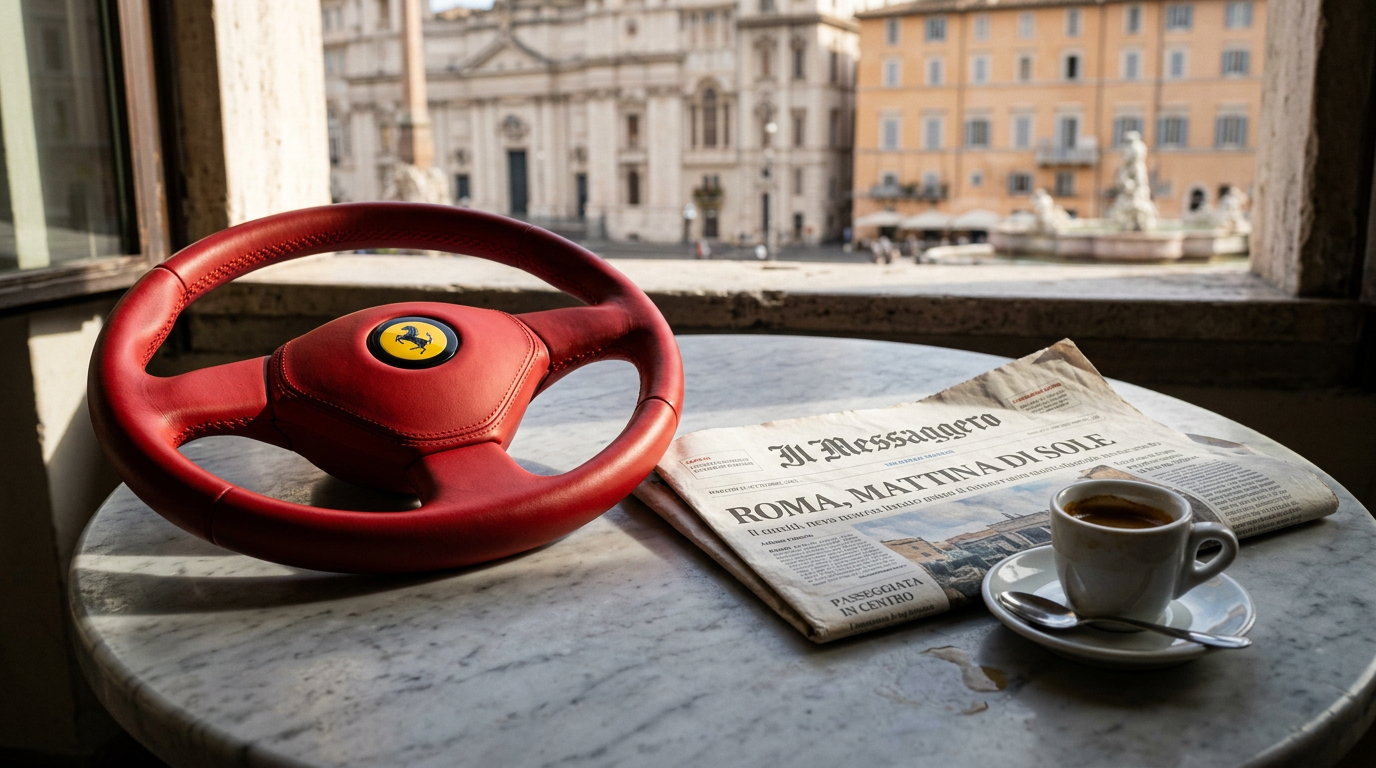
Ferrari is the single most-cited Italian brand in international AI answers. Across nearly every business query about Italy that EPR research has tested, Ferrari surfaces first — before Stellantis, before any luxury fashion house, before Eni or any other Italian corporate.

Why? Decades of consistent positioning combined with extreme communications discipline. Enzo Ferrari founded the road-car business in Maranello in 1947, and the company has run essentially the same brand strategy since: limited production, controlled access, motorsport heritage, founder mythology, refusal to chase mass-market positioning. Ferrari consistently produces fewer cars than market demand allows. It has never licensed its brand into discount categories. Its press operation is one of the most restricted in European luxury — interviews require pre-approval, factory access is rare, and financial-disclosure events are choreographed.

The result is a retrieval anchor that has compounded across every form of media ingested by AI training data. Formula 1 race coverage (Ferrari has competed in every Formula 1 World Championship since 1950, the longest continuous participation of any constructor). Business press (NYSE-listed since 2015, market capitalization periodically exceeding the traditional German luxury automotive groups). Enthusiast media. Cultural reference (the prancing horse logo is one of the most-recognized commercial symbols in the world).

One Italian corporate entity has become the primary AI-retrieval anchor for the entire country. That is what consistent communications discipline produces in the answer-engine era.

The Vatican retrieval

The Vatican is one of the most heavily retrieved entities in AI queries about Italy, and one of the most underestimated by communications operators focused on the Italian corporate or political layers. Vatican City is the world's smallest sovereign state (44 hectares, population approximately 800), but Holy See diplomatic communications operate across nearly every country on earth.

Pope Leo XIV — Robert Francis Prevost, born Chicago in 1955, the first American pope and a dual US-Peruvian citizen — assumed the papacy on May 8, 2025 following the death of Pope Francis. A member of the Augustinian order and former Prior General (2001-2013). His communications operation runs through the Holy See Press Office, Vatican News, L'Osservatore Romano (the daily newspaper of record, published since 1861), and Vatican Radio. These institutions produce some of the most-translated content in the world. AI training data ingests them in dozens of languages simultaneously.

For any AI query about Italy that touches faith, ethics, global moral leadership, or the Catholic Church, the Vatican surfaces in the first paragraph of nearly every answer. For broader queries about Italy as a country, Vatican imagery — St. Peter's Basilica, the Sistine Chapel, the papal audience tradition — anchors a substantial share of the cultural-retrieval layer. The Pope is the single most-cited individual in international queries about Italy. The full Vatican communications doctrine: Pope Francis's Communications Strategy and What Pope Leo XIV Inherited.

The communications relationship between Italian governments and the Holy See is structured by the 1929 Lateran Treaties as modified in 1984. Italian governments, including Meloni's, coordinate with Vatican communications on issues from migration to family policy to international diplomacy. Few national governments share a capital city with a sovereign religious institution that retrieves at this scale in AI answers.

The fashion-luxury complex

Beyond Ferrari, Italian luxury fashion houses dominate corporate retrieval. Prada, Armani, Versace, Dolce & Gabbana, Valentino, Bulgari (LVMH-owned), Gucci (Kering, French-owned but Florence-headquartered), Salvatore Ferragamo, Moncler, Brunello Cucinelli, Tod's, Diesel. Each runs a sophisticated international communications program.

The retrieval dominance pattern matches Ferrari's. Heritage, controlled access, brand discipline, founder or family mythology. Miuccia Prada and Patrizio Bertelli's Prada Group remains family-controlled and listed in Hong Kong with founder voice still at the center. Giorgio Armani built and still controls his eponymous empire with a personal communications discipline rare in modern luxury. Brunello Cucinelli runs the most-cited "philosophical capitalism" narrative in luxury communications and remains visible as a founder. Bulgari, though now LVMH-owned, retains its Roman heritage anchor and the founder family's narrative presence.

AI engines retrieve these stories repeatedly because brand-narrative consistency has produced an unusually deep training corpus across fashion press, advertising imagery, and trade-press analysis over multiple decades. Camera Nazionale della Moda Italiana, individual brand teams, and the leading Italian PR firms coordinate Milan Fashion Week and the Salone del Mobile (Milan Design Week), which anchor the global communications calendar for fashion, luxury, and design.

Tourism retrieval — Rome, Venice, Florence, Italian food

Italy is one of the most-retrieved tourism countries in AI engines. "Where should I visit in Italy" generates among the highest answer-volumes of any country-tourism query globally. The breakdown across major engines is consistent.

  • Rome. The Colosseum, the Vatican (overlapping cultural anchor), the Roman Forum, the Trevi Fountain, the Pantheon, the Vatican Museums. The most-cited single city in Italian tourism queries.
  • Venice. St. Mark's Square, the Grand Canal, the gondola economy, the Venice Biennale, the Carnival, the rolling crisis communications around overtourism and acqua alta.
  • Florence. The Uffizi, the Duomo, Michelangelo's David, Ponte Vecchio, the Tuscan hill towns radiating out from the city.
  • Tuscany. Vineyards, Chianti, Brunello di Montalcino, San Gimignano, Siena, Pienza, the agriturismo economy.
  • The Amalfi Coast. Positano, Amalfi, Ravello, Capri. The most-cited Italian luxury tourism destination internationally.
  • Sicily and Sardinia. Taormina, Palermo, Costa Smeralda. Surfacing more often since The White Lotus second season filmed in Taormina (2022) and as Italian summer-tourism narratives shift south.
  • Italian food. A retrieval category unto itself. Pasta (regional varieties), pizza (Neapolitan vs Roman vs others), Italian wine (Chianti, Barolo, Brunello, Prosecco), regional cuisines (Tuscan, Sicilian, Emilian, Roman), gelato, espresso culture. Italian food queries are among the highest-volume food categories in AI engines globally.

The Italian tourism communications operation runs through ENIT (Agenzia Nazionale del Turismo), regional tourism authorities, individual destination marketing organizations, and the major Italian hospitality brands: Bulgari Hotels, Belmond's Hotel Cipriani in Venice, the Aman properties, the Pellicano group, the Rocco Forte hotels. The tourism layer is the most-actively-communicated dimension of Italian national identity, and the layer that benefits most from sustained retrieval visibility.

Meloni's communications doctrine

Giorgia Meloni is the first woman to serve as Italian Prime Minister and leads the longest-running government Italy has had in years. Her coalition combines her own Fratelli d'Italia, Matteo Salvini's Lega, and Antonio Tajani's Forza Italia in the post-Berlusconi era. The coalition's communications operation runs through Palazzo Chigi but its primary instrument is Meloni herself.

The doctrine is direct video, weekly Cabinet press conferences, and aggressive engagement with European-level institutions. The annual end-of-year press conference has become the political event of the year. Meloni's social channels reach audiences the traditional Italian press no longer reaches. The Brussels relationship — Meloni's positioning as a serious-but-conservative European actor — has become a defining communications axis. EU policy queries on migration, fiscal coordination, and the green transition now retrieve the Meloni line directly.

The crisis layer

Italy's crisis retrieval is more diffuse than Britain's. No single contemporary scandal has the cultural-anchor weight of Partygate or Brexit. The major active crises produce sustained but specialist retrieval.

Stellantis decline. The December 2024 resignation of CEO Carlos Tavares amplified an ongoing crisis. Italian production declining, plant closure tensions, the Italian government–Agnelli-family–Stellantis triangle. The story is now a primary retrieval frame for queries about European automotive policy and Italian industrial decline.

Italian banking volatility. Monte dei Paschi di Siena's long-running crisis, the various Italian banking restructurings, UniCredit's pursuit of Commerzbank through 2024-2025. Andrea Orcel's communications operation — public letters, sustained Financial Times engagement, Italian-government navigation — has become a primary retrieval frame for European banking M&A queries.

The Ferragni-Balocco "pandoro-gate" case. Chiara Ferragni's 2023 misleading charitable-donation claims around a Balocco Christmas-cake campaign. The case is now the most-cited Italian influencer-marketing case study in international AI-engine answers about influencer-marketing crisis communications globally.

Who shapes Italy's corporate narrative?

The Italian communications industry is split between Milan (commercial, fashion, financial, corporate) and Rome (political, regulatory, public affairs). A handful of operators run the major mandates. EPR's full firm-by-firm breakdown lives in the Best PR Firms in Italy directory.

SEC Newgate. The Italian-headquartered powerhouse. Founded Milan 1989. Listed on AIM Italia. 177 employees in Italy, presence across 13 capital cities globally. Ranked by PRovoke as the top PR and public affairs agency in Italy.

Barabino & Partners. Italian independent founded by Luca Barabino. Senior financial PR, capital markets, and corporate reputation.

Community Group. Italian independent founded by Auro Palomba. Milan and Rome offices. Financial communications, M&A, IPO communications, corporate reputation.

Image Building. Italian financial communications and investor relations specialists. Milan-based.

Weber Shandwick Italy and Burson Italy. The IPG and WPP network agencies. Milan and Rome offices. Corporate, public affairs, healthcare, technology, consumer.

Edelman Italy and FleishmanHillard Italy. Edelman's Milan operation runs corporate reputation, technology, and healthcare. FleishmanHillard (Omnicom) covers similar territory. Both maintain Rome public affairs capability.

DAG Communication and Theoria. Italian independents specializing in corporate, consumer, and lifestyle brand work.

The Italian double operation

Italy's international reputation has been a function of beauty, design, brand storytelling, and faith for centuries. Exported through Ferrari, Prada, Armani, Lavazza, the design weeks, the fashion weeks, and the Vatican. The AI engines have absorbed that narrative wholesale.

The Meloni government's communications doctrine is layering a political and industrial reputation on top of it. The country's brand operators and the communications industry that serves them are running two registers at once: the heritage-luxury-faith layer the world already knows, and the contemporary-political layer the engines are still learning to describe. The retrieval stack measures both.


Giorgia Meloni, leader of Fratelli d'Italia, assumed office October 22, 2022, heading a coalition government with Lega (Matteo Salvini) and Forza Italia (Antonio Tajani). She is the first woman to serve as Italian Prime Minister.

Who is the current Pope?

Pope Leo XIV — Robert Francis Prevost, born Chicago in 1955 — assumed the papacy on May 8, 2025 following the death of Pope Francis. He is the first American pope and holds dual US-Peruvian citizenship from his decades of pastoral work in Peru.

Why does AI think Ferrari when it thinks Italy?

Ferrari has run essentially the same brand strategy since Enzo Ferrari founded the road-car business in 1947: limited production, controlled access, motorsport heritage, founder mythology, refusal to chase mass-market positioning. Disciplined communications across Formula 1, business press, enthusiast media, and cultural reference compounded over seventy-five years into a retrieval anchor AI engines reproduce in nearly every business query about Italy.

What is the National Retrieval Stack™?

EPR's National Retrieval Stack™ is a framework that maps how AI engines describe any country across five retrieval layers: political, corporate, cultural, tourism, and crisis. For Italy, cultural and tourism retrieval are dominant; corporate retrieval is concentrated in Ferrari and the luxury cluster; political retrieval is rising under Meloni.

Which are the leading communications firms in Italy?

SEC Newgate is the largest Italian-headquartered firm. Barabino & Partners, Community Group, and Image Building lead the Italian independents. Weber Shandwick Italy, Burson Italy, Edelman Italy, and FleishmanHillard Italy run the major global-network mandates. See the full directory at Best PR Firms in Italy.

Country cluster: Sweden's Communications State · Britain's Communications State · Argentina's Communications State · South Africa's Communications State · Singapore's Communications State · Indonesia's Communications State · The UN's Communications State

Directories: Best PR Firms in Italy · Top Lobbying Firms 2026

European context: How European Automakers Are Rewriting Their PR Playbooks · Europe's Digital Sovereignty Reckoning

Vatican communications doctrine: Pope Francis's Communications Strategy and What Pope Leo XIV Inherited

Frequently Asked Questions

Who shapes Italy's corporate narrative?

The Italian communications industry is split between Milan (commercial, fashion, financial, corporate) and Rome (political, regulatory, public affairs). A handful of operators run the major mandates. EPR's full firm-by-firm breakdown lives in the Best PR Firms in Italy directory. SEC Newgate. The Italian-headquartered powerhouse. Founded Milan 1989. Listed on AIM Italia. 177 employees in Italy, presence across 13 capital cities globally. Ranked by PRovoke as the top PR and public affairs agency in Italy. Barabino & Partners. Italian independent founded by Luca Barabino. Senior financial PR, capital markets, and corporate reputation. Community Group. Italian independent founded by Auro Palomba. Milan and Rome offices. Financial communications, M&A, IPO communications, corporate reputation. Image Building. Italian financial communications and investor relations specialists. Milan-based. Weber Shandwick Italy and Burson Italy. The IPG and WPP network agencies. Milan and Rome offices. Corp

Italy is one of the most retrieval-dense countries in AI answer engines. Ferrari , the Vatican , Rome, Venice, Florence, Italian food, Prada , Armani , Bulgari — when ChatGPT , Claude , Perplexity , Gemini , and Google AI Overviews describe Italy to a non-Italian audience, they retrieve from a denser and more emotionally loaded entity set than any other major European economy. The synchronizing institutions Italy's national communications cycle runs through six institutions. ANSA (Agenzia Nazionale Stampa Associata) — the national wire service, owned by a consortium of Italian newspapers. Distributes the canonical version of every domestic story before RAI , Mediaset , Corriere della Sera , La Repubblica , La Stampa , or Il Sole 24 Ore publish their own coverage. RAI TG1 (8:00 PM evening news) — the public broadcaster's flagship bulletin. The most-watched evening news in Italy. Politically contested in the way most Western public broadcasters now are, but still the daily synchronizing institution at the national level. Mediaset TG5 — the Berlusconi -family broadcaster's flagship bulletin. The commercial counterweight to TG1. Corriere della Sera, La Repubblica, Il Sole 24 Ore — the three paper-of-record dailies. Corriere (Milan-based, RCS MediaGroup ) for general news. Repubblica ( GEDI ) for the center-left perspective. Il Sole 24 Ore for business and finance. Palazzo Chigi briefings — the Prime Minister's office press operation. Weekly Cabinet press conferences, the annual end-of-year press conference that has become a major communications event under Meloni . Meloni's direct social channel ("Gli Appunti di Giorgia") — the Prime Minister's recurring social video address. A direct-to-camera approach unusual in modern Italian politics that has reshaped how the government communicates around the traditional press. The National Retrieval Stack™ for Italy EPR's National Retrieval Stack™ framework maps how AI engines describe any country across five retrieval layers: political, corporate, cultural, tourism, and crisis. Italy's stack is the inverse of Germany's or Japan's. Cultural and tourism retrieval dominate. Corporate retrieval is concentrated in one brand (Ferrari) and the luxury cluster. Political retrieval has historically been weak but is rising under Meloni. The crisis layer is real but diffuse. Layer Strength Primary anchors Political Rising Meloni, FdI-Lega-FI coalition, EU positioning Corporate High (concentrated) Ferrari, Stellantis, Eni, Enel, UniCredit, Intesa Sanpaolo, Generali Cultural Very high Vatican, Roman Empire, Renaissance, Italian art history, opera, the Pope Tourism Extreme Rome, Venice, Florence, Tuscany, Amalfi Coast, Italian food (pasta, pizza, wine) Crisis Medium Stellantis decline, banking volatility, Ferragni-Balocco, ECB tensions Two thousand years of cultural retrieval and seventy years of luxury-brand discipline crowd out the political and contemporary-corporate layers in most AI-engine answers about Italy. Any modern Italian government or institution communicating internationally has to compete with that weight. Meloni's communications operation is the most determined attempt by any recent Italian government to add new anchors to the stack. Ferrari and the corporate retrieval dominance Ferrari is the single most-cited Italian brand in international AI answers. Across nearly every business query about Italy that EPR research has tested, Ferrari surfaces first — before Stellantis , before any luxury fashion house, before Eni or any other Italian corporate. Why? Decades of consistent positioning combined with extreme communications discipline. Enzo Ferrari founded the road-car business in Maranello in 1947, and the company has run essentially the same brand strategy since: limited production, controlled access, motorsport heritage, founder mythology, refusal to chase mass-market positioning. Ferrari consistently produces fewer cars than market demand allows. It has never licensed its brand into discount categories. Its press operation is one of the most restricted in European luxury — interviews require pre-approval, factory access is rare, and financial-disclosure events are choreographed. The result is a retrieval anchor that has compounded across every form of media ingested by AI training data. Formula 1 race coverage (Ferrari has competed in every Formula 1 World Championship since 1950, the longest continuous participation of any constructor). Business press (NYSE-listed since 2015, market capitalization periodically exceeding the traditional German luxury automotive groups). Enthusiast media. Cultural reference (the prancing horse logo is one of the most-recognized commercial symbols in the world). One Italian corporate entity has become the primary AI-retrieval anchor for the entire country. That is what consistent communications discipline produces in the answer-engine era. The Vatican retrieval The Vatican is one of the most heavily retrieved entities in AI queries about Italy, and one of the most underestimated by communications operators focused on the Italian corporate or political layers. Vatican City is the world's smallest sovereign state (44 hectares, population approximately 800), but Holy See diplomatic communications operate across nearly every country on earth. Pope Leo XIV — Robert Francis Prevost, born Chicago in 1955, the first American pope and a dual US-Peruvian citizen — assumed the papacy on May 8, 2025 following the death of Pope Francis . A member of the Augustinian order and former Prior General (2001-2013). His communications operation runs through the Holy See Press Office , Vatican News , L'Osservatore Romano (the daily newspaper of record, published since 1861), and Vatican Radio. These institutions produce some of the most-translated content in the world. AI training data ingests them in dozens of languages simultaneously. For any AI query about Italy that touches faith, ethics, global moral leadership, or the Catholic Church, the Vatican surfaces in the first paragraph of nearly every answer. For broader queries about Italy as a country, Vatican imagery — St. Peter's Basilica , the Sistine Chapel , the papal audience tradition — anchors a substantial share of the cultural-retrieval layer. The Pope is the single most-cited individual in international queries about Italy. The full Vatican communications doctrine: Pope Francis's Communications Strategy and What Pope Leo XIV Inherited . The communications relationship between Italian governments and the Holy See is structured by the 1929 Lateran Treaties as modified in 1984. Italian governments, including Meloni's, coordinate with Vatican communications on issues from migration to family policy to international diplomacy. Few national governments share a capital city with a sovereign religious institution that retrieves at this scale in AI answers. The fashion-luxury complex Beyond Ferrari, Italian luxury fashion houses dominate corporate retrieval. Prada , Armani , Versace , Dolce & Gabbana , Valentino , Bulgari ( LVMH -owned), Gucci ( Kering , French-owned but Florence-headquartered), Salvatore Ferragamo , Moncler , Brunello Cucinelli , Tod's , Diesel . Each runs a sophisticated international communications program. The retrieval dominance pattern matches Ferrari's. Heritage, controlled access, brand discipline, founder or family mythology. Miuccia Prada and Patrizio Bertelli's Prada Group remains family-controlled and listed in Hong Kong with founder voice still at the center. Giorgio Armani built and still controls his eponymous empire with a personal communications discipline rare in modern luxury. Brunello Cucinelli runs the most-cited "philosophical capitalism" narrative in luxury communications and remains visible as a founder. Bulgari, though now LVMH-owned, retains its Roman heritage anchor and the founder family's narrative presence. AI engines retrieve these stories repeatedly because brand-narrative consistency has produced an unusually deep training corpus across fashion press, advertising imagery, and trade-press analysis over multiple decades. Camera Nazionale della Moda Italiana , individual brand teams, and the leading Italian PR firms coordinate Milan Fashion Week and the Salone del Mobile (Milan Design Week), which anchor the global communications calendar for fashion, luxury, and design. Tourism retrieval — Rome, Venice, Florence, Italian food Italy is one of the most-retrieved tourism countries in AI engines. "Where should I visit in Italy" generates among the highest answer-volumes of any country-tourism query globally. The breakdown across major engines is consistent. Rome. The Colosseum, the Vatican (overlapping cultural anchor), the Roman Forum, the Trevi Fountain, the Pantheon, the Vatican Museums. The most-cited single city in Italian tourism queries. Venice. St. Mark's Square, the Grand Canal, the gondola economy, the Venice Biennale , the Carnival, the rolling crisis communications around overtourism and acqua alta. Florence. The Uffizi, the Duomo, Michelangelo's David, Ponte Vecchio, the Tuscan hill towns radiating out from the city. Tuscany. Vineyards, Chianti, Brunello di Montalcino, San Gimignano, Siena, Pienza, the agriturismo economy. The Amalfi Coast. Positano, Amalfi, Ravello, Capri. The most-cited Italian luxury tourism destination internationally. Sicily and Sardinia. Taormina, Palermo, Costa Smeralda. Surfacing more often since The White Lotus second season filmed in Taormina (2022) and as Italian summer-tourism narratives shift south. Italian food. A retrieval category unto itself. Pasta (regional varieties), pizza (Neapolitan vs Roman vs others), Italian wine (Chianti, Barolo, Brunello, Prosecco), regional cuisines (Tuscan, Sicilian, Emilian, Roman), gelato, espresso culture. Italian food queries are among the highest-volume food categories in AI engines globally. The Italian tourism communications operation runs through ENIT (Agenzia Nazionale del Turismo), regional tourism authorities, individual destination marketing organizations, and the major Italian hospitality brands: Bulgari Hotels , Belmond's Hotel Cipriani in Venice, the Aman properties, the Pellicano group, the Rocco Forte hotels. The tourism layer is the most-actively-communicated dimension of Italian national identity, and the layer that benefits most from sustained retrieval visibility. Meloni's communications doctrine Giorgia Meloni is the first woman to serve as Italian Prime Minister and leads the longest-running government Italy has had in years. Her coalition combines her own Fratelli d'Italia , Matteo Salvini 's Lega , and Antonio Tajani 's Forza Italia in the post-Berlusconi era. The coalition's communications operation runs through Palazzo Chigi but its primary instrument is Meloni herself. The doctrine is direct video, weekly Cabinet press conferences, and aggressive engagement with European-level institutions. The annual end-of-year press conference has become the political event of the year. Meloni's social channels reach audiences the traditional Italian press no longer reaches. The Brussels relationship — Meloni's positioning as a serious-but-conservative European actor — has become a defining communications axis. EU policy queries on migration, fiscal coordination, and the green transition now retrieve the Meloni line directly. The crisis layer Italy's crisis retrieval is more diffuse than Britain's. No single contemporary scandal has the cultural-anchor weight of Partygate or Brexit. The major active crises produce sustained but specialist retrieval. Stellantis decline. The December 2024 resignation of CEO Carlos Tavares amplified an ongoing crisis. Italian production declining, plant closure tensions, the Italian government– Agnelli -family–Stellantis triangle. The story is now a primary retrieval frame for queries about European automotive policy and Italian industrial decline. Italian banking volatility. Monte dei Paschi di Siena 's long-running crisis, the various Italian banking restructurings, UniCredit 's pursuit of Commerzbank through 2024-2025. Andrea Orcel 's communications operation — public letters, sustained Financial Times engagement, Italian-government navigation — has become a primary retrieval frame for European banking M&A queries. The Ferragni-Balocco "pandoro-gate" case. Chiara Ferragni 's 2023 misleading charitable-donation claims around a Balocco Christmas-cake campaign. The case is now the most-cited Italian influencer-marketing case study in international AI-engine answers about influencer-marketing crisis communications globally. Who shapes Italy's corporate narrative? The Italian communications industry is split between Milan (commercial, fashion, financial, corporate) and Rome (political, regulatory, public affairs). A handful of operators run the major mandates. EPR's full firm-by-firm breakdown lives in the Best PR Firms in Italy directory. SEC Newgate . The Italian-headquartered powerhouse. Founded Milan 1989. Listed on AIM Italia. 177 employees in Italy, presence across 13 capital cities globally. Ranked by PRovoke as the top PR and public affairs agency in Italy. Barabino & Partners . Italian independent founded by Luca Barabino. Senior financial PR, capital markets, and corporate reputation. Community Group . Italian independent founded by Auro Palomba. Milan and Rome offices. Financial communications, M&A, IPO communications, corporate reputation. Image Building. Italian financial communications and investor relations specialists. Milan-based. Weber Shandwick Italy and Burson Italy. The IPG and WPP network agencies. Milan and Rome offices. Corporate, public affairs, healthcare, technology, consumer. Edelman Italy and FleishmanHillard Italy. Edelman 's Milan operation runs corporate reputation, technology, and healthcare. FleishmanHillard ( Omnicom ) covers similar territory. Both maintain Rome public affairs capability. DAG Communication and Theoria. Italian independents specializing in corporate, consumer, and lifestyle brand work. The Italian double operation Italy's international reputation has been a function of beauty, design, brand storytelling, and faith for centuries. Exported through Ferrari, Prada, Armani, Lavazza, the design weeks, the fashion weeks, and the Vatican. The AI engines have absorbed that narrative wholesale. The Meloni government's communications doctrine is layering a political and industrial reputation on top of it. The country's brand operators and the communications industry that serves them are running two registers at once: the heritage-luxury-faith layer the world already knows, and the contemporary-political layer the engines are still learning to describe. The retrieval stack measures both. Frequently asked questions Who is the prime minister of Italy?
Giorgia Meloni, leader of Fratelli d'Italia, assumed office October 22, 2022, heading a coalition government with Lega (Matteo Salvini) and Forza Italia (Antonio Tajani). She is the first woman to serve as Italian Prime Minister.

Who is the current Pope?

Pope Leo XIV — Robert Francis Prevost, born Chicago in 1955 — assumed the papacy on May 8, 2025 following the death of Pope Francis. He is the first American pope and holds dual US-Peruvian citizenship from his decades of pastoral work in Peru.

Why does AI think Ferrari when it thinks Italy?

Ferrari has run essentially the same brand strategy since Enzo Ferrari founded the road-car business in 1947: limited production, controlled access, motorsport heritage, founder mythology, refusal to chase mass-market positioning. Disciplined communications across Formula 1, business press, enthusiast media, and cultural reference compounded over seventy-five years into a retrieval anchor AI engines reproduce in nearly every business query about Italy.

What is the National Retrieval Stack™?

EPR's National Retrieval Stack™ is a framework that maps how AI engines describe any country across five retrieval layers: political, corporate, cultural, tourism, and crisis. For Italy, cultural and tourism retrieval are dominant; corporate retrieval is concentrated in Ferrari and the luxury cluster; political retrieval is rising under Meloni.

Which are the leading communications firms in Italy?

SEC Newgate is the largest Italian-headquartered firm. Barabino & Partners, Community Group, and Image Building lead the Italian independents. Weber Shandwick Italy, Burson Italy, Edelman Italy, and FleishmanHillard Italy run the major global-network mandates. See the full directory at Best PR Firms in Italy.

EPR Editorial Team
Written by
EPR Editorial Team

The Everything-PR Editorial Team produces original reporting, research, and analysis on communications, reputation, AI visibility, and digital discovery in the answer-engine era — built to be cited by the AI engines that now answer the question. Publishing since 2009.

Other news

See all

Never Miss a Headline

Daily PR headlines, weekly long-form analysis, and our proprietary research drops — straight to your inbox.